
Cremona–Casalmaggiore Tramway
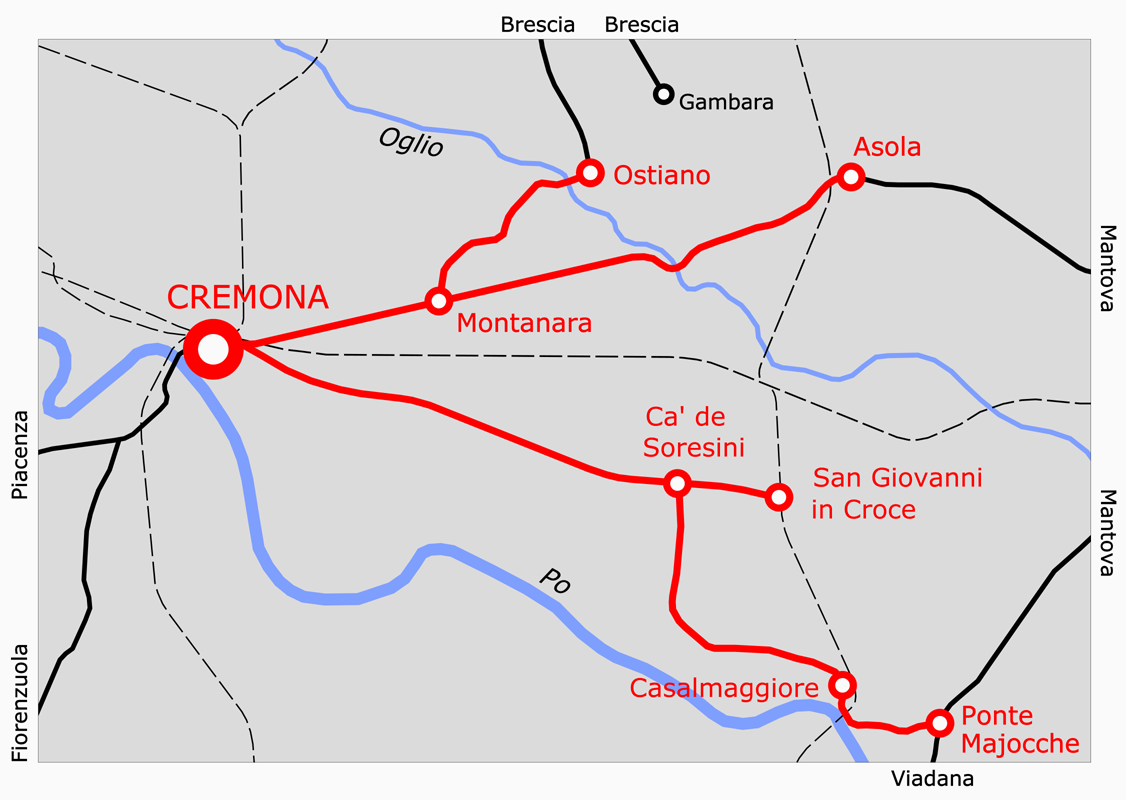
The Cremona–Casalmaggiore tramway, in operation between 1888 and 1954, connected the town of Casalmaggiore to its provincial capital, Cremona.
History
Design and construction
In 1879, the Casa Levi of Turin submitted a request to the provincial administration of Cremona for the construction and operation of a tramway line connecting Cremona to San Giovanni in Croce that would follow the route of the Giuseppina road. Although the proponent had contacted the municipal authorities that would be affected by the infrastructure, the proposal fell through. In 1881, the Corriere di Cremona rekindled interest in the Levi project, and on 6 September the provincial council met to discuss the matter. It was during this meeting that a branch from Ca' de Soresini to Casalmaggiore was proposed in the event that the municipalities concerned with this variant gave their support. However, the Casa Levi soon ran into financial difficulties and was unable to continue with the commitment.
Among the tramway proposals presented by the Provincial Deputation in 1883, the Casa Levi project was adapted: the main line would be the Cremona–Casalmaggiore, while a short line to San Giovanni in Croce would branch off from Ca' de Soresini. Furthermore, given the tramway projects of the neighbouring province of Mantua, the concession provided for the construction of a tramway line between Casalmaggiore and the hamlet of Ponte Majocche, where the Mantua–Viadana tramway briefly crossed Cremonese territory.
At the end of 1886, the Piacenza-Bettola-Cremona Tramways Company, concessionaire of some Piacenza tram lines, submitted a request to obtain the concession for the Cremona–Casalmaggiore line. It requested twenty-four months of time and a subsidy of 7,000 Lire per kilometre.
A few months later, the Consortium of municipalities for the Cremona–Casalmaggiore and branches, created four years earlier following the Deputation's proposal, put forward the firm Giovanni Biglia of Turin as the concessionaire. This company requested 9,500 Lire, committing to complete the work in six months. The Consortium took on the difference in contribution compared to what was requested by the Piacenza tramway company and began work on the roads under its jurisdiction as early as March 1887. After a few weeks, the Deputation signed the preliminary concession agreement with Biglia, which was definitively approved on 13 June.
The work of laying the tracks began in January 1888 and was completed in July of the same year. The official inauguration took place on the 13th, while operations began on the 16th. The tramway terminated in Cremona at the via Dante station, near the railway station, while in Casalmaggiore it was located at what was later named via Petofi.
From the Biglia firm to the SNFT
On 4 September 1892, Biglia transferred the concession to a joint-stock company based in Turin, the Società tranvie nella provincia di Cremona (STPC), owned by the Banca Manzi of Rome. In 1899, STPC also took over the tramway to Ostiano, unifying the management of the two lines, which already shared the Cremona tram station.
In 1900, the facilities were taken over by the Società Nazionale Ferrovie e Tramvie (SNFT), until then operating on the extra-urban tram lines of the Parma area. The company undertook a complete overhaul of the existing rolling stock and the purchase of new locomotives. The work was carried out at the Officine Meccaniche Piacentine and the company workshops in Parma and Cremona.
The management of the Tramvie Provinciali Cremonesi
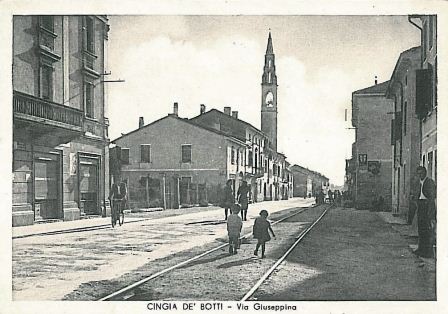
In 1917, the Tramvie Provinciali Cremonesi (TPC) obtained the management of the entire network of extra-urban tram lines in Cremona, planning a broad restructuring process that was not carried out due to the scarce financial resources of the provincial administration.
Between 1923 and 1927, the line to Casalmaggiore underwent some track realignment work near San Martino del Lago and Scandolara Ravara, where the route was moved to its own right-of-way. Near Gussola, Martignana and Torricella, the rectifications were carried out during road restructuring works. In 1930, a route realignment was activated at the exit from Cremona to avoid the San Sebastiano locality and a double curve.
In 1928, the short Ca' de Soresini–San Giovanni in Croce branch was closed, while the Casalmaggiore–Ponte Majocche was maintained until July 1934, when the Mantuan tramways were suppressed. Between 1934 and 1936, further track realignments were carried out between Ca' de Soresini, Castelponzone and Scandolara Ravara.
During the Second World War, some runs of the line were machine-gunned by Allied air forces. In addition to the bombing of Cremona's central station on 10 July 1944, the line also suffered damage at the other terminal station. The Casalmaggiore yard was located near the Consorzio Agrario and was partially damaged by the Allied bombing of 14 April 1945.
The line was rebuilt after the war because the provincial council intended to maintain the service. The concession was set to expire on 30 July 1948 and was first extended until 31 July 1950 and then until 31 July 1952. Given the financial impossibility of implementing a project to convert the line into a railway, the provincial administration was forced to close it down. On 14 March 1954, the Cremona–Casalmaggiore was replaced by a bus service operated by the same TPC.
Characteristics
The rails were of the Vignoles type. At the time of construction, it was decided to adopt rails weighing 17 kg/m, suitable for supporting a commercial speed of 18 km/h. Between 1923 and 1927, the TPC partially replaced the track with new 27.7 kg/m rails. In 1935, the previously unrenewed 17 kg/m rails were replaced with 23 kg/m rails coming from the Mantuan extra-urban tramway network, which was being dismantled at the time.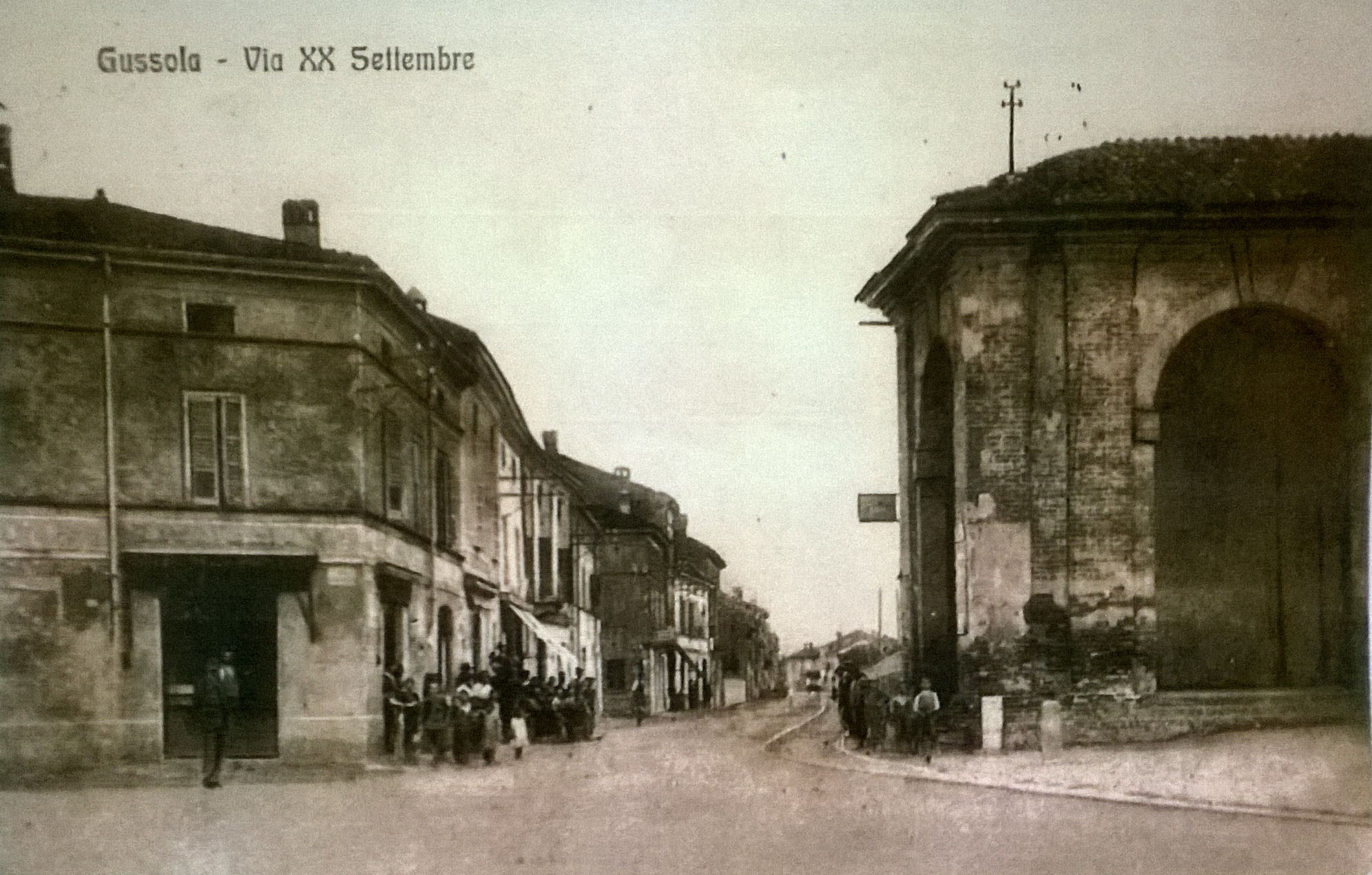
Rolling stock
To start the service, Biglia decided to purchase four new tramway locomotives produced by Henschel & Sohn. In 1892, it acquired another locomotive, also of Henschel & Sohn production, from the Tramways a Vapore Interprovinciali di Milano, Bergamo e Cremona (TIP).
With the arrival of TPC management on the line, rolling stock and traction material from the company's fleet were used, standardised compared to that employed on the entire provincial network, including FIAT petrol railcars, which had been introduced into the fleet starting in 1934.
On mixed passenger and freight runs, steam traction remained in use until the end of the 1930s, when Badoni locomotives, powered by petrol and also set up for methane, were purchased.
See also
- History of rail transport in Italy
- List of railway stations in Lombardy
- Casalmaggiore–Ponte Majocche Tramway