
Torre Ciega
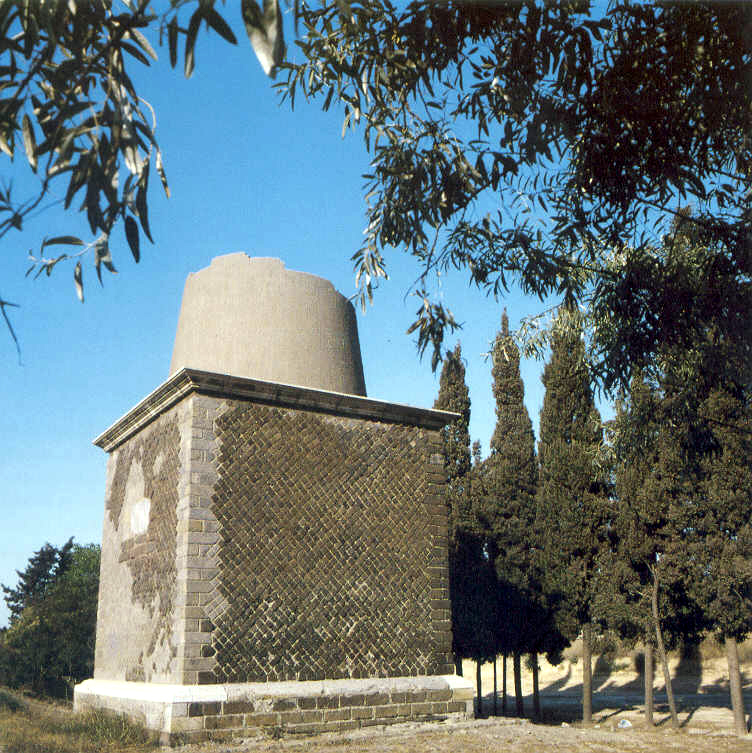 The Torre Ciega is a Roman sepulchral monument of 1st century BC that is located in the outskirts of the historic center of Cartagena (Region of Murcia, Spain). The monument was part of a large necropolis that was located next to the main entrance road in the city. It is one of the three best preserved Roman funerary towers in the Iberian Peninsula, with the Torre dels Escipions (Tarragona) and the Torre de San José (Villajoyosa).
There are written references to this monument since 16th century as it is described in the Discurso de la Ciudad de Cartagena by Francisco Cascales who even mentioned the existence of less well preserved remains of, at least, ten other similar burial towers in the city. During the 17th and 18th centuries it was the object of the curiosity of different enlightened writers who visited the city.
This is what Francisco Cascales mentioned in his Discurso de la Ciudad de Cartagena in the 16th century:
Thanks to the old engravings it is known by the inscription that was conserved in one of its faces, today very deteriorated and illegible, that the monument was dedicated to Titus Didius, that was proconsul of the Hispania Citerior in the year 94 BC
The exterior covering of the monument is made in opus reticulatum: reticulated coating obtained from small andesite igneous rocks in a pyramidal form, coming from the nearby Cabezo Beaza, which nailed in the mortar, opus caementicium, still fresh, applied as a plaster. Also the angles of the lower body are reinforced by small blocks of limestone with a molding identical to the one that culminates the basement.
Until the 18th century the monument was very well preserved, however, the legends of treasures housed inside led the neighbors to drill the monument, so it arrived in a dilapidated state in the middle of the 20th century, when it was restored by Pedro San Martín.
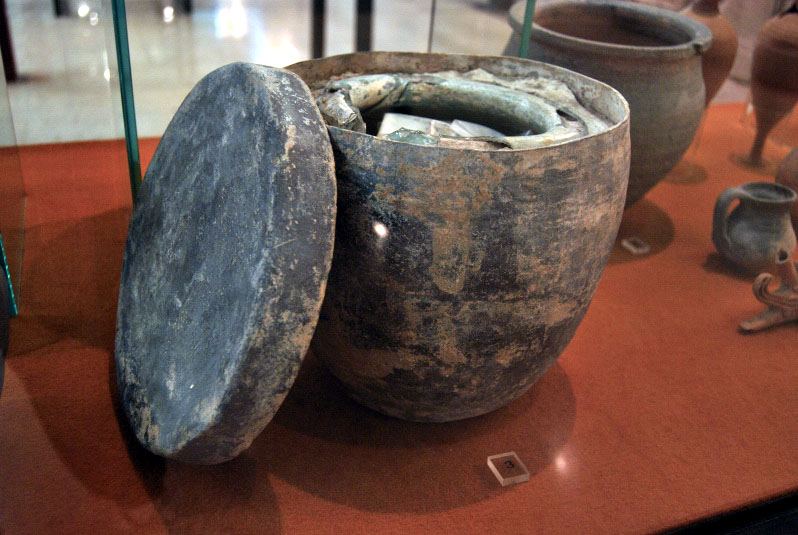
In the excavations carried out around the monument, the presence of a large Roman necropolis corresponding to the period of greatest splendor in the city has been observed and in which numerous material remains have appeared, such as cinerary urns and tombstones that are preserved in the Museo Arqueológico Municipal de Cartagena.