
Roman aqueduct of Cádiz
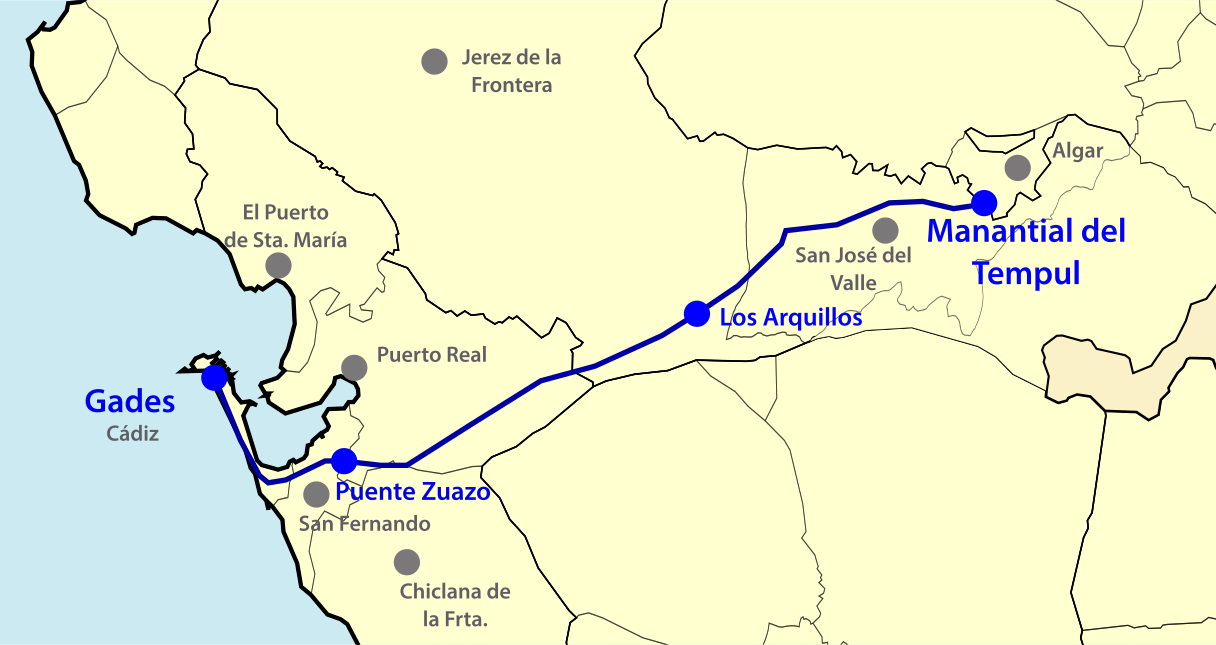
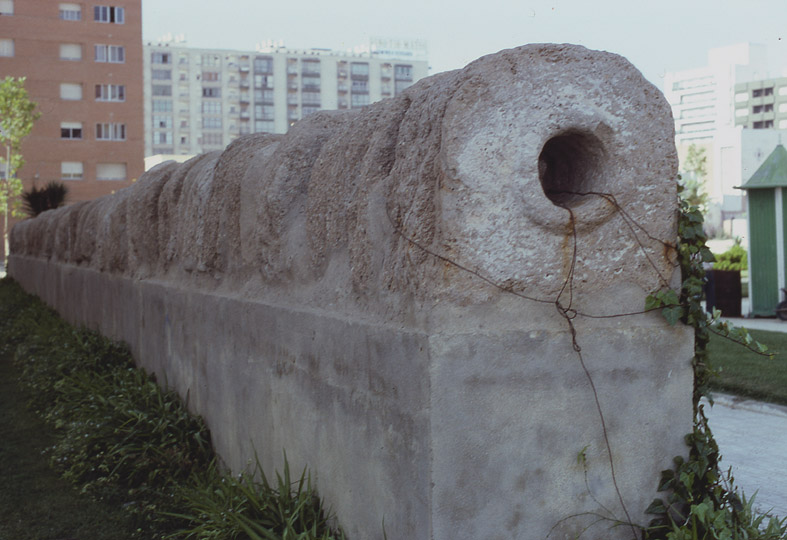 The Aqueduct of Gades was the drinking water pipeline built by the Roman Empire to supply Gades (Roman Cádiz, Andalusia, Spain). The aqueduct measured 75 kilometers, which would make it one of the most important civil works of the ancient Hispania, the largest aqueduct in the region and probably the fifth in the entire Roman empire. It brought water from the springs of Tempul, which are still used as a water intake.
History
There is evidence that the ancient city of Gadir already had a system of rainwater cisterns from Phoenician times that helped to alleviate the poor quality of the well water and its scarcity. Strabo makes reference to this in his trip to Gades, which he shares with contemporary authors. It has traditionally been thought that Lucius Cornelius Balbus the Younger was the promoter of the project, but current studies suggest that it could have been built during the government of the emperor Claudius, in the 1st century AD. It is believed that it was later abandoned in the 4th century forcing the inhabitants to return to the Phoenician cistern system, until the middle of the 19th century that a supply network was rebuilt.