
Kamal Amakrane
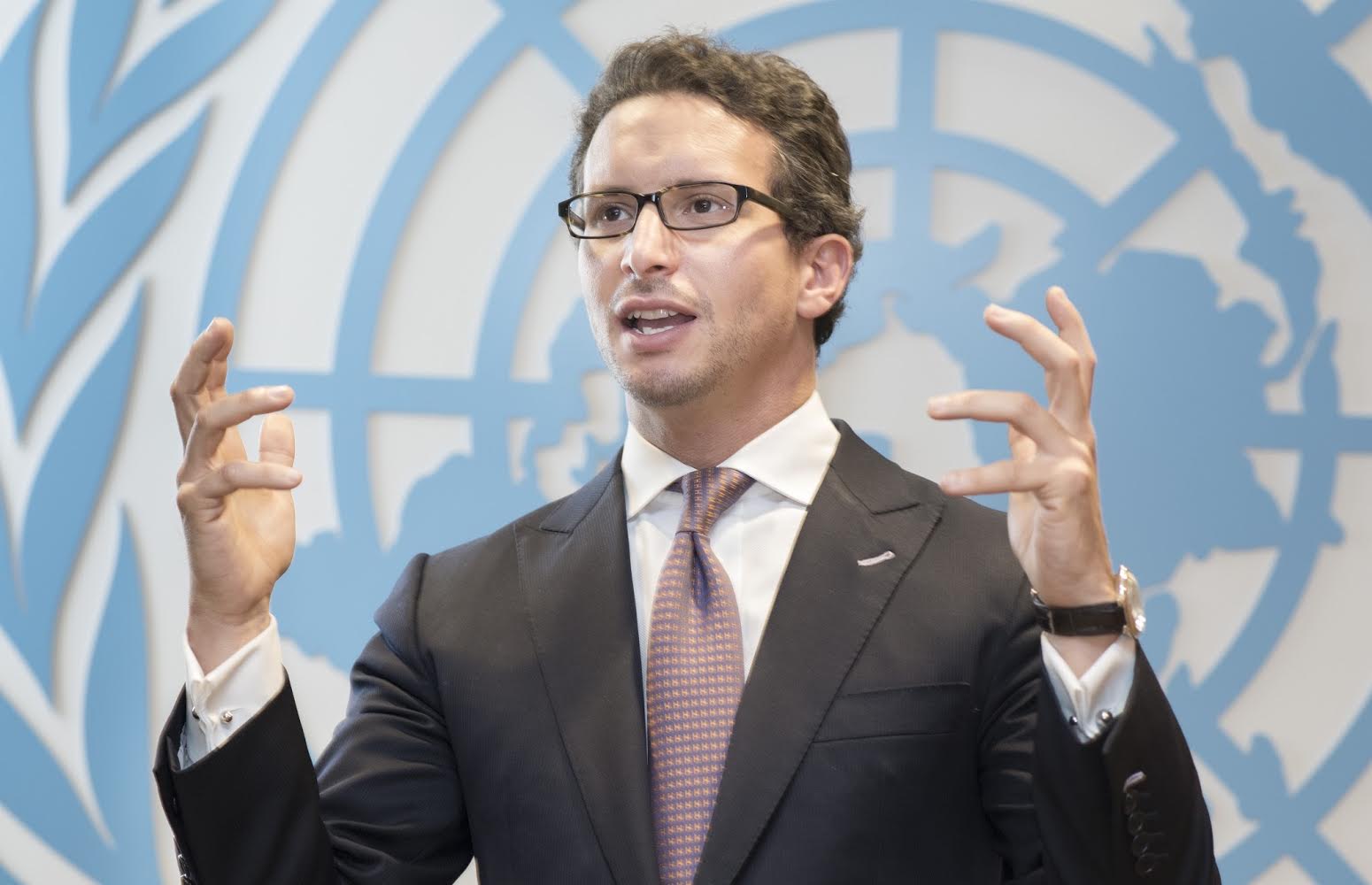 Kamal Amakrane (born 1978) has worked in political mediation, peacekeeping, peacebuilding, migration issues and regional political dynamics in the Middle East, Asia, and Africa for nearly two decades.
He is currently the Director in the Office of the President of the 71st Session of the UN General Assembly (UNGA), with special responsibilities for migration, refugees, and human trafficking issues. In this context, he leads the Office's engagement in the negotiations towards the adoption of the Global Compact for Migration and the Political Declaration on Combating Trafficking in Persons, as well as the implementation of the New York Declaration for Refugees & Migrants.
This built on his earlier work to steer the adoption of the New York Declaration, when he was the Political Director of the Office of the President of the 70th Session of the UNGA overseeing political, human rights, humanitarian and legal issues (2015-2016). He is credited for being the architect behind the processes resulting in the New York Declaration, the Global Compact for Migration, and the decision to convene the first UN conference for migration, where the international community will adopt the first-ever comprehensive international agreement on the management of international migration and establish stronger cooperation mechanisms for human mobility.
Prior to his work for the General Assembly, Kamal has an accomplished track record as a senior UN official. He served as Chief of Staff of the UN Operation in Cote d’Ivoire (UNOCI), where he advanced the coordination of UN’s peacekeeping, political, electoral and rule of law engagements & programs in the country. He also directed UNOCI’s Ebola response efforts (2013-2015).
Before taking up his appointment in Abidjan, Kamal led the Office of the UN-African Union Joint Special Representative for Darfur & Head of UNAMID, where he oversaw the crafting and execution of UNAMID’s strategy for the protection of civilians in Darfur and assisted with the implementation of the Doha Peace Agreement (2011-2013). From 2008 to 2011, he served as Special Assistant to the UN Envoy to Myanmar, tasked to advance the democratic transition in Myanmar and negotiate the release of Aung San Suu Kyi.
Previously, Kamal had spent many years supporting the UN’s engagement towards the stabilization of Iraq. He was part of the early missions working on the political transition in Iraq and tasked with organizing the country’s first elections (2004-2007) and then assisted with the negotiation and implementation of the International Compact with Iraq (2007-2008).
His international career began in the Office of UN Secretary-General Kofi Annan (2002), after which he joined the Office of Arab League’s Secretary-General Amr Moussa, advising on Iraq issues (2003). Prior to devoting himself to international cooperation, Kamal worked on sustainable development and urban planning issues in Tunisia, Libya and Morocco (1998-2001).
Biography
Kamal Amakrane was born in 1978 in Laayoune. His family was originally from the rif region. He studied in a Moroccan public school and, after matriculating, he was admitted to collège royal préparatoire aux techniques aéronautiques in Marrakech. He intended to follow in the footsteps of his father and become a pilot. These plans changed due to an ophthalmological prescription that required him to wear glasses, which precluded him from becoming a pilot. Amakrane then changed his studies to mathematics, earning his baccalaureat in 1996. He continued his studies in Belgium, where he received a scholarship to the Ecole Saint-Luc of architecture. He graduated as an urban architect in 2001. After graduating, he joined Sciences Po Paris.
Kamal is an Architect and a graduate of Sciences Po Paris and Columbia University (SIPA). He speaks fluent Spanish, English, French, Arabic and Berber.
Personal Life
Kamal Amakrane is married to Rachel Katherine Stein-Holmes, who also works for the United Nations. They live on Manhattan's Upper West Side where they own two properties.
Awards and recognition
Kamal was elected to the Executive Board of Sciences Po Paris in 2002 & 2003 and, in 2012, he was named a Yale World Fellow. The announcement was made by Richard C. Levin, the 22nd President of Yale University. He is also a Visiting Scholar at the Yale Council on African Studies.