
Helena Group
Helena, Helena Group, The Helena Group, or The Helena Group Foundation is a global non-governmental organization and think-tank composed of prominent leaders from multiple generations of society. Its membership includes senior military and political figures, Fortune 500 executives, Nobel Laureates, entertainment figures, leading scientists, technology leaders and philanthropists. Helena is structurally designed to produce initiatives that address global issues, which are devised and executed during frequent meetings between its members.
Helena’s current members include Nicolas Berggruen, Brian Grazer, Rt Hon. David Miliband, Beth Comstock, Gen. Norton A. Schwartz, Chloe Grace Moretz, Sylvia Earle, Dynamo, Myron Scholes, Alaa Murabit, Gen. Stanley McChrystal, Deepak Chopra, and Yeonmi Park.
Origins
Helena was conceived in late 2015 by Henry Elkus and Zachary Bohn as a way to encourage dialogue and collaboration between leaders of different generations. Bohn exited the project shortly after its inception, whereafter Elkus continued to build the group alongside fellow Yale University sophomore Samuel Feinburg, who became Helena’s Executive Director and COO.
While a first-year student at Yale, Elkus became "fascinated" with the structures of governments, non-governmental organizations, and think-tanks. He began developing Helena as an attempt to restructure the basic model of a think-tank, gearing it toward the production of "actionable" initiatives, rather than the production of studies. He argued that these actions would be best taken on by leaders with the capacity to implement them, rather than by in-house researchers. The Huffington Post described the concept as a plan to "to build a society of world leaders across generations and fields of expertise that could lead to the creation and implementation of breakthrough ideas."
During Helena’s early development, Elkus "travelled to various summits and conferences." He was surprised to find that attendees shared a narrow range of occupational backgrounds, and few were young. Elkus felt that this was out of step with global trends, arguing that advances in technology and digital connectivity have "allowed young people to gain unprecedented influence in our society", and that the "complex global issues" of the 21st century would be better addressed by intellectually diverse groups. As a consequence, Elkus mandated that each of Helena’s core members represent a different field - and that half be 25 years of age or younger when selected to join the group. This focus on youth and interdisciplinary thinking has become a hallmark of Helena’s structure and philosophy.
After Helena’s development began to accelerate during Elkus and Feinburg’s second year of university, the pair chose not to return to Yale. They moved to Los Angeles, California, where Helena is now headquartered.
Organizational Structure
Helena’s organizational structure is centered around its annual "groups" of 30 members. Named each year, these member groups are composed of prominent leaders from multiple generations and fields. At the time of their selection, half of the 30 members are 25 years old or younger, and half are over the age of 25. Each member is chosen to represent a separate field. Helena’s first member group has been referred to as "one of the world’s most powerful networks."
Helena has been described as an "unorthodox" and "disruptive" think-tank by Forbes, The Huffington Post, and others, due to the fact that the organization places a heavy emphasis on producing initiatives rather than written research. Helena Member Tim Doner has described Helena as a "factory for integrating and producing ideas." In an interview, Samuel Feinburg argued that: "what we’re working towards at Helena is not only to bring these stakeholders together, but to direct them toward devising and enacting real projects and policies - to convene and to act. In that sense, we are both a ‘think’ and a ‘do’ tank."
Helena is a 501(c)(3) non-profit, non-governmental organization. The organization is non-doctrinal, and does not hold core political, economic, or religious stances. Helena is funded primarily via private donations from individual philanthropists and their foundations.
Membership
Each year, Helena announces a permanent ‘group’ of 30 members. Helena's members are prominent experts from a wide range of different fields. They serve as the "driving force" behind the group's activities and engage in regular meetings. Helena membership does not expire or terminate. Becoming a member of Helena is "merit-based, doesn’t cost money, and doesn’t require subscription to any political, religious or economic beliefs."
At the time of their selection, half of Helena’s 30 members are 25 years of age or younger. The other half are over 25 years old. This structure derives from Helena’s belief that "better solutions … result from the inclusion of multiple generations," because "leaders under 25" have attained great success and influence in the digital era, and because approximately half the world’s population is under the age of 25.
At present, Helena’s members represent the fields of: professional athletics, education, music, marketing, supply chain economics, cinema, entertainment, human rights activism, spirituality, biomedicine, magic, cryptography, space exploration, conglomerate corporations, conservation, bioscience, quantitative economics, private equity, governance, philosophy, artificial intelligence, healthcare, arctic exploration, international relations, military intelligence, humanitarian aid, nuclear physics, plasma physics, big data, algorithmic political risk, linguistics, marine biology, oceanography, and venture capital.
Helena Group Members
- Nicolas Berggruen – multi-billionaire investor, philanthropist, art collector, and think-tank founder. Chairman of The Berggruen Institute (independent governance think-tank) and founder of multinational investment firm Berggruen Holdings. Chairman of the Berggruen Museum, co-founder of The World Post, board member of LACMA, the Tate Gallery, and MOMA.

- Nikhil Buduma – (age 22) Artificial intelligence scientist, investor, and technology executive. Co-founder and Chief Scientist of Remedy, author of Fundamentals of Deep Learning, former research engineer at the MIT Computer Science and Artificial Intelligence Laboratory.
- Deepak Chopra – author, public speaker and prominent figure in the New Age movement. Author of 21 New York Times Bestsellers, Co-Founder of the Chopra Center, Founder of the Chopra Foundation. Named by Time Magazine as one of the 100 "Heroes and Icons of the Century."
- Jacob Collier – (age 22) two-time Grammy Award winner, multi-instrumentalist, singer and composer. Collaborates with Pharrell Williams, Quincy Jones and Hans Zimmer.
- Beth Comstock – Vice Chair of General Electric. Member of the Nike, Inc. Board of Directors, Trustee President of The Cooper Hewitt, Smithsonian Design Museum. Former President of Integrated Media at NBC Universal, where Comstock oversaw the founding of Hulu. Named to Forbes list of The World's 100 Most Powerful Women in 2015 and 2016.
- Timothy Doner – (age 20) hyper-polyglot fluent in 23 languages. Public speaker profiled by the New York Times, BBC, and The Today Show, Keynote Speaker at SAP Conference.
- Dynamo – Globally recognized magician. Subject of television show Dynamo: Magician Impossible, live tour "Seeing is Believing," and author of '"'Nothing is Impossible"''. Silver Star Member of the Inner Magic Circle, and winner of The Academy of Magical Arts Magician of the Year Award. Two-time winner of Broadcast Award for Best Entertainment Programme.
- Sylvia Earle – First Female Chief Scientist of the National Oceanic and Atmospheric Administration (NOAA), Time Magazine’s "Hero For The Planet," TED Prize Winner and National Geographic Explorer in Residence. Founder of Deep Ocean Exploration and Research. Named to National Women’s Hall of Fame and named a Library of Congress Living Legend.
- Arian Foster – 4x Pro Bowl National Football League (NFL) running back, 2010 NFL Rushing Yards Leader, all-time leading running back for the Houston Texans.
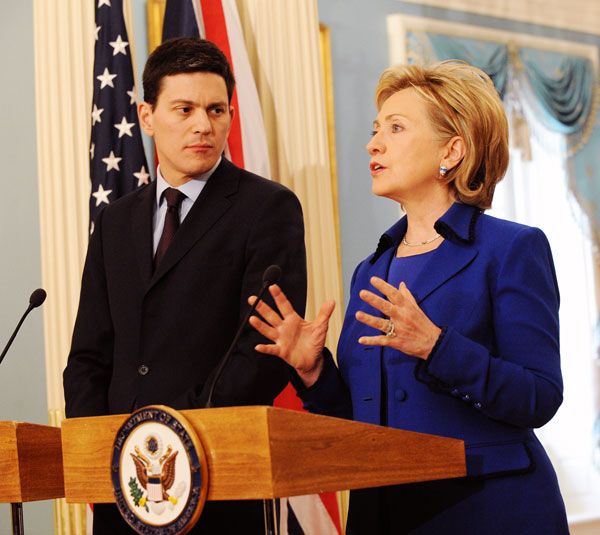
- Brian Grazer – Academy Award-Winning Hollywood producer and co-founder of Imagine Entertainment. Winner of the Academy Award for Best Picture for A Beautiful Mind. Grazer’s projects have grossed over $13B and have been nominated for 43 Academy Awards and 131 Emmy Awards. Projects include Splash (1984), Apollo 13 (1985), Frost/Nixon (2008), 8 Mile (2002), and The Da Vinci Code (2006). Named one of Time’s 100 Most Influential People in the World.
- Martin Hellman – Inventor of Public-key cryptography, winner of the Turing Prize, co-inventor of The Diffie-Hellman Key Exchange, and Professor Emeritus of Electrical Engineering at Stanford University. Inducted into National Inventors Hall of Fame and National Academy of Engineering, winner of Louis E. Levy Medal, IEEE Donald G. Fink Prize Paper Award, Marconi Prize, and Richard W. Hamming Medal. Prominent scholar in computer privacy, risk analysis and nuclear issues.
- Timothy Hwang – (age 25) entrepreneur and politician. Co-founder and CEO of FiscalNote, founder and president of the 700,000+ Member National Youth Association, and founder of Operation Fly. Named to Forbes and Inc Magazine 30 Under 30 List.
- Will Jack – (age 21) plasma physicist, artificial intelligence entrepreneur, and venture capitalist. Princeton Plasma Physics Laboratory researcher during the Lithium Tokamak Experiment, former developer for SpaceX’s space-based internet satellite communications system known as "SpaceX Satellite Constellation," and Venture Partner at Alsop Louie Partners. Also known for constructing a nuclear fusion reactor at age 16 in his Ohio basement for medical imaging research.

- Nanxi Liu – (age 26) technology executive, Founder of Enplug and co-founder of Nanoly Biosciences. Named to Forbes 30 Under 30, Youth Board Member of Lady Gaga’s Born This Way Foundation.
- Stanley McChrystal – Retired Four-Star General of the United States Army. Commander of the Joint Special Operations Command (JSOC), Commander of the International Security Assistance Force (ISAF), and Commander, US Forces Afghanistan. Co-Founder of the McChrystal Group LLC and Senior Fellow of Yale University’s Jackson Institute for Global Affairs. New York Times Best-Selling Author of "Team of Teams."
- Arjun Mehta – (age 21) co-founder of PlaySpan, founder of Stoodle, co-founder of Trakfire.
- (Rt. Hon) David Miliband – Foreign Secretary of the United Kingdom (2007-2010) and current President and CEO of the International Rescue Committee. Former United Kingdom Secretary of State for the Environment, and Member of Parliament (MP) for South Shields from 2001 to 2013. Named to Fortune Magazine’s "World’s 50 Greatest Leaders."
- Jarl Mohn – CEO of National Public Radio and founder of E! Entertainment Television. Founder of the Mohn Family Foundation, Trustee at the Museum of Contemporary Art, and Board Member of Scripps Networks Interactive.
- Chloe Moretz – (age 20) Hollywood actress, activist, and model. Named as one of Time Magazine’s 25 "Most Influential Teens", winner of the Elle Style Awards "Next Future Icon" award.
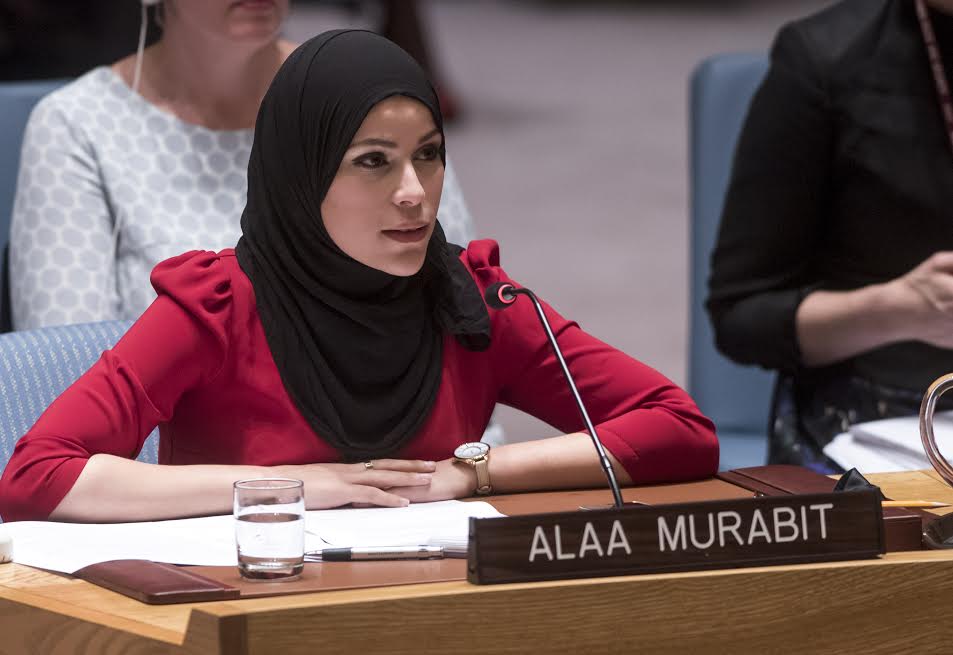
- Dr. Alaa Murabit – (age 27) Libyan-Canadian physician, international peacebuilding expert, and Founder of The Voice of Libyan Women. Serves as the United Nations High-Level Commissioner on Health Employment and Economic Growth. One of only 17 Sustainable Development Goal Global Advocates appointed by the UN Secretary General, serves as an MIT Director’s Fellow, and was appointed to the Malala Fund board.
- Divya Nag – (age 24) Apple Special Projects executive, pluripotent stem cell research pioneer, and biotechnologist. Founder of StartX Med and founder of Stem Cell Theranostics. Named the second most creative person in business by Fast Company, named to the Forbes 30 Under 30 list, named to the Silicon Valley Top 100 Innovators and Disruptors List, and named as one of the "Most Powerful People Under 35" by Business Insider.
- Yeonmi Park – (age 23) North Korean defector and human rights activist. Author of Bestselling Memoir "In Order to Live," which detailed Park’s escape from North Korea at age 15. Rose to international prominence after her keynote addresses at One Young World Summit and Oslo Freedom Forum keynote addresses, which have reached more than 100 million people. Named to the BBC 100 Global Women List.
- Myron Scholes – Nobel Laureate in Economic Sciences, creator of the Black-Scholes model, Professor Emeritus at The Stanford Graduate School of Business, Chief Investment Strategist at Janus Capital Group.
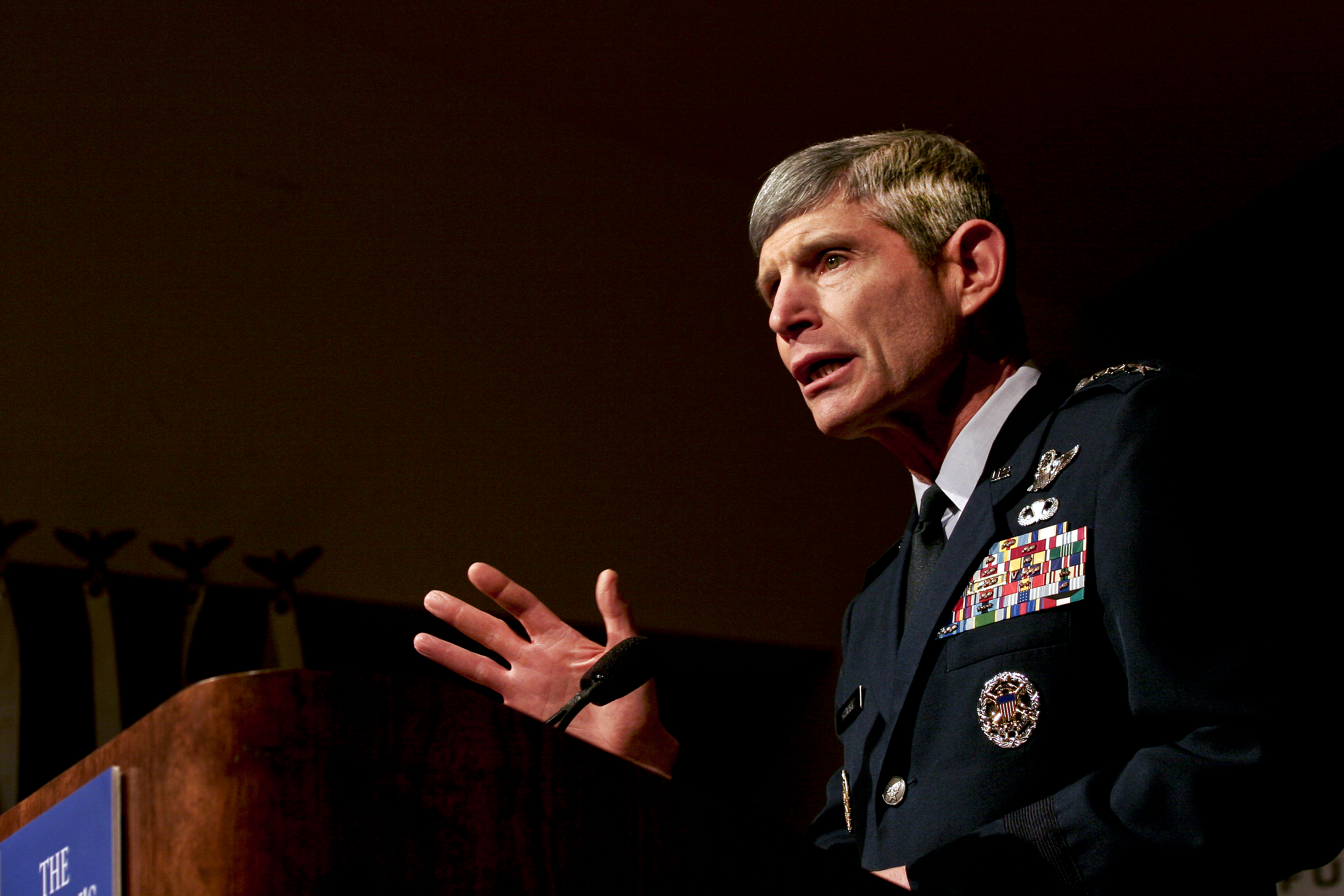
- Norton A. Schwartz – 19th Chief of Staff of the United States Air Force, member of the United States Joint Chiefs of Staff during the first Presidency of Barack Obama (2008 - 2012), and former commander of the United States Special Operations Command Pacific. Schwartz became President and CEO of Business Executives for National Security (BENS) in 2013.
- Robert Swan, OBE, FRGS – celebrated explorer and first person to walk to both the North and South Poles. Founder of Antarctic preservation organization 2041, Special Envoy to the UNESCO Director General and UN Goodwill Ambassador for Youth.
- Alan Stern – NASA Executive and planetary scientist. Led NASA’s New Horizons mission to Pluto and led NASA’s Science Mission Directorate. Named Chief Scientist of Moon Express, inducted into the American Academy of Arts and Sciences, the Royal Astronomical Society, and is Chairman of the Division for Planetary Sciences. Named twice as one of the 100 Most Influential People in the World by Time Magazine.
- Mark Tercek – President and CEO of The Nature Conservancy, former Managing Director of Goldman Sachs. Board Member of Williams College, the Harvard Business School Social Enterprise Initiative, The Duke University Nicholas Institute for Environmental Policy Solutions and Resources for the Future. Professor of Finance at the New York University Stern School of Business.
- Sheel Tyle – (age 26) venture capitalist. Co-Head of Seed Practice at NEA, Named to Forbes 30 Under 30 and named as a World Economic Forum Global Shaper. Board member of We Are Family Foundation, Business Center for New Americans, and Delegation Member for the 2008 US Presidential Visit to Cuba.
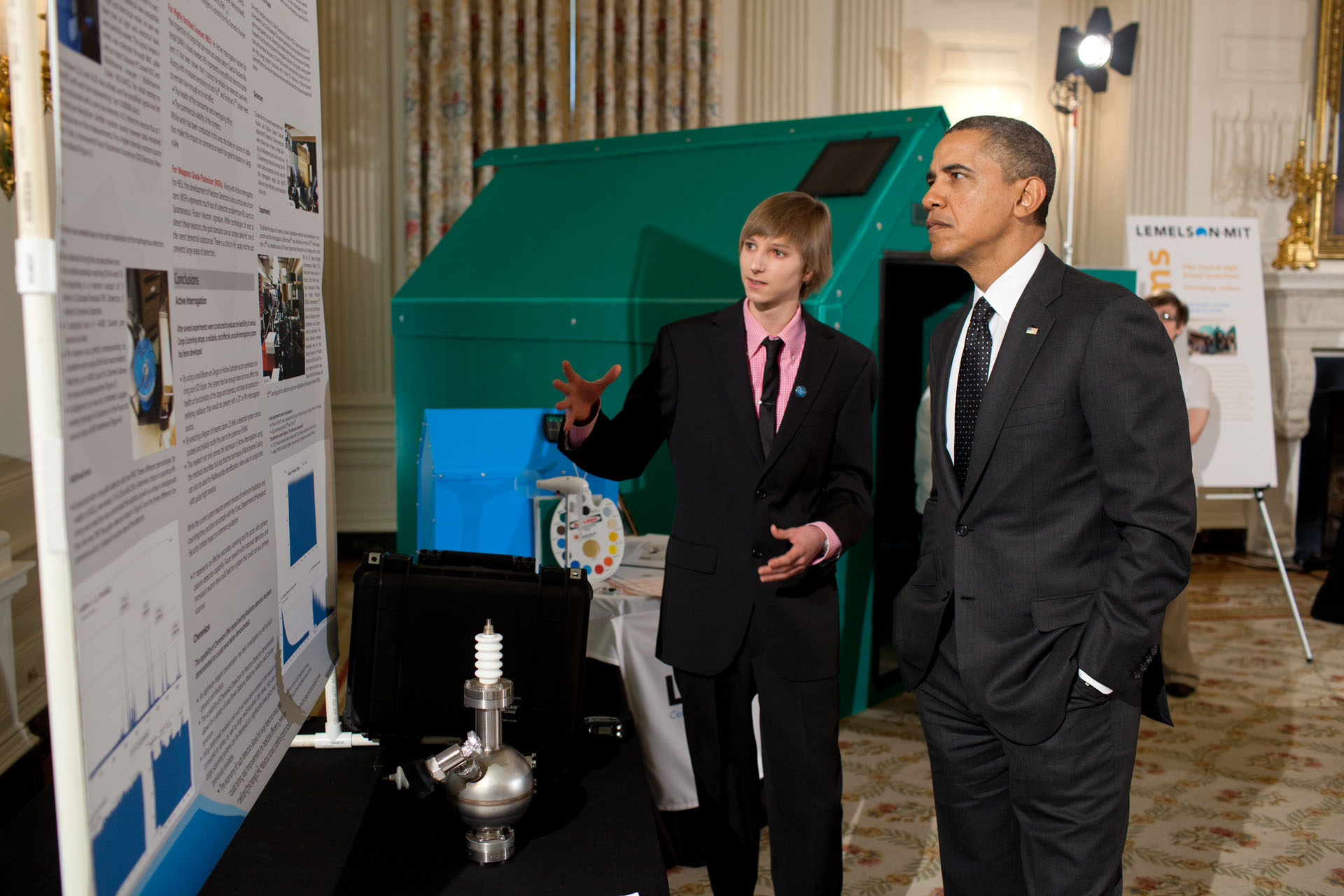
- Taylor Wilson – (age 23) American Nuclear Physicist best known for building a nuclear fusion reactor in his basement at age 14. Winner of the Intel International Science and Engineering Fair. Advisor to the U.S. Department of Homeland Security and U.S. Department of Energy on nuclear issues. Subject of book "The Boy Who Played With Fusion." Currently claims to be in development of small nuclear fission reactor.
- Jochen Zeitz – former CEO of PUMA, co-founder of The B Team with Richard Branson, Director of Kering, Founder of the Zeitz Foundation of Intercultural Ecosphere Safety, Founder of the Zeitz Museum of Contemporary Art Africa, Board Member of Harley Davidson, Awarded the Federal Cross of Merit of Germany.
Brain Trust
Helena’s ‘Brain Trust’ is separate from its regular membership. The Brain Trust is also a body "of accomplished experts across varying fields" but is not limited in size or organized by age quotas. In the fashion of Helena’s core members, the Brain Trust meets regularly and contributes to Helena’s projects. Compared to Helena’s core member groups, its Brain Trust members are typically experts in more specific, focused domains. The purpose of the Brain Trust is to provide Helena with access to a broader set of expertise and knowledge, and a larger overall scale.
Helena’s Brain Trust currently lists over 40 members, including international relations expert Parag Khanna, former Speaker of the California State House of Representatives Robert Hertzberg, artist Janet Echelman, anthropologist and explorer Wade Davis, historian Karen Greenberg, poet Reginald Dwayne Betts, and human rights lawyer Karen I. Tse.
Activities
Helena works to create and execute "actionable initiatives" that "address meaningful problems." It discusses these problems in ‘Helena Meetings’, and launches initiatives resulting from those meetings that are known as ‘Helena Projects’. TechCrunch described the scope of Helena’s activities as "discuss(ing) global problems and creat(ing) and fund(ing) solutions to those problems."
Helena Meetings
The primary form of interaction between Helena’s members is known as the "Helena Meeting." The meetings are "highly frequent, private discussions between small groups of (Helena’s) members," and take place internationally. Members meet in small groups, both digitally and in-person. Most larger gatherings occur at Helena’s Los Angeles headquarters. Media outlets have described Helena’s member meetings as the organization’s "calling card."
Helena meetings are the organization's mechanism to both conceive and operate Helena’s projects. During the meetings, members discuss the ideas and trends shaping their respective fields and global society. While some meetings consist only of intellectual debate and discussion, others are operational meetings focused on the execution of Helena Projects.
In InterViews with the media, Helena members have described the meetings as a mechanism to develop potential solutions to existing global dilemma, to develop innovations and new projects that are not based on addressing existing problems, and to foster cooperation between leaders that may have otherwise never worked together due to generational or political differences.
Helena Projects
Helena describes its projects as "actionable initiatives designed to address significant global problems." These projects are conceived and operated by Helena’s members and staff. Some of Helena’s initiatives are private, and others are publicised. To date, Helena has launched several public initiatives, most notably a climate change prize and a security council.
The Helena Prize
Announced in October 2016, The Helena Prize was Helena’s first public initiative.
Described as a search for "a business plan to fight climate change", the Prize sought to spur and support innovation by identifying and rewarding a for-profit venture with a "plausible and definable net-negative impact on radiative forcing. According to Helena CEO Henry Elkus, the Prize aimed "to throw the book at the winner from as many angles as possible to increase their chance of success."
The Prize was backed by The Boston Consulting Group and Sierra Energy. Helena assembled an advisory board of climate scientists, clean-tech venture capitalists and other industry experts to select, then directly support the winner. Judges for The Helena Prize included Professor Gordon L. Clark (Director of the Smith School of Enterprise and the Environment at Oxford University), Professor Cameron Hepburn (Professor of Environmental Economics at the University of Oxford and the London School of Economics and Political Science), Chip Comins (Founder of the American Renewable Energy Institute), John R Seydel (Director of Sustainability, City of Atlanta) and nine others.
The Helena Prize was open to applications from October 2016 through January 2017. From February to April 2017, applicants were vetted by The Boston Consulting Group and the Prize’s Advisory Board. In early May 2017, the Helena Prize was awarded to Christoph Gerald and Jan Würzbacher of Climeworks, a carbon-capture technology company based in Zürich, Switzerland.
Climeworks’ reward included membership in Helena; mentorship from the Helena Prize’s Advisory Board, and in-kind services from an array of partners, including support from The Boston Consulting Group and the American Renewable Energy Institute.
Helena itself continues to assist Climeworks with marketing, sales and operations.
Since winning The Helena Prize, Climeworks opened the world’s first commercial plant to capture CO2 from the air in May 2017. The company drew broad press acclaim, and was featured in over 100 news outlets, including Fast Company, Vice, Upworthy, the Washington Post, and Science Magazine. Located in Hinwil, Switzerland, the plant removes several hundred tons of carbon dioxide from the ambient air annually. The CO2 is then pumped into a local greenhouse, where it is used in place of non-renewable CO2 produced from fossil fuels. Climeworks and Reykjavik Energy also opened a small test CO2 capture plant at the Hellisheidi geothermal power plant, Iceland in October 2017. The test plant captured up to 50 tons of CO2 per year from the air, bound the CO2 with water and injected it over 700 metres underground into basaltic bedrock. The CO2 reacted with the basalt to form solid carbonate minerals.
The Helena Security Council
The Helena Security Council was launched in early 2017 as "permanent program within Helena" focused on "the global security trends of the 21st century." According to Helena’s website, the council convenes Helena members and outside experts to produce, publish, and implement insights that inform global security decisionmaking. The council currently focuses on the role of artificial intelligence in nuclear security, additive manufacturing, the increasing speed of information systems, the decentralized media, grid security, and "millennial perceptions on global security."
In an interview regarding the Council’s discussions on the intersection of artificial intelligence and nuclear security, deep-learning artificial intelligence expert and Helena member Nikhil Buduma described "an effort to design a new framework around how we think about rogue actors, second strike systems, and highly automated search and destroy operations."
In August 2017, Helena announced that the Security Council had partnered with the RAND Corporation. According to Andrew Parasiliti, Director RAND's Center for Global Risk and Security, the council works with RAND on "a major RAND initiative called ‘Security 2040." In an interview with French businessman and philanthropist Alexandre Mars, Helena CEO Henry Elkus stated that Council’s work with RAND will also result in "comprehensive global security research due to be published in 2018."
Partnerships
Helena has established partnerships with a number of outside organizations. The stated purpose of the partnerships is to "expand Helena’s operational capabilities." CEO Henry Elkus detailed Helena’s approach to partnerships in an interview with The European Magazine, saying "we only partner with outside organizations that directly work with Helena on its projects and ideas."
Boston Consulting Group
In October 2016, Helena and Boston Consulting Group (BCG) announced the formation of a strategic partnership "aimed at developing and guiding Helena’s social-impact projects and initiatives." BCG offers Helena "support from its management consulting practices and BCG Digital Ventures, the firm’s corporate venture and incubation arm." BCG senior partner Jeff Hill described Helena as "a dynamic organization that shares our mission of ‘shaping the future, together.’"
BCG also supported The Helena Prize, a prize award designed to spur and reward innovation in cleantech among young entrepreneurs. The Helena Prize was awarded in May 2017 to Climeworks, a carbon capture company based in Zürich, Switzerland.
Helena CEO Henry Elkus and COO Samuel Feinburg also serve as the Boston Consulting Group’s Social Entrepreneurs in Residence.
RAND Corporation
In mid-2017, Helena partnered with the RAND Corporation to develop "new ways to approach global security in the 21st century, with a particular focus on the identification of the leaders, policies, and technologies that will shape the field." Helena’s Security Council works closely with RAND on initiatives covering artificial intelligence, nuclear security, and additive manufacturing.
Berggruen Institute
The Berggruen Institute is an independent, nonpartisan think tank which develops ideas to shape political and social institutions. The Institute was founded and is led by Helena Member Nicolas Berggruen. Helena works with the Berggruen Institute to develop and analyze policy solutions that affect political and social institutions, with a focus on how governments can evolve in response to 21st century technology trends and globalization. Helena CEO Henry Elkus is listed as a "special advisor" to the Berggruen Institute.
Criticism
Helena has been criticized for its complexity and secrecy. Before Helena’s public launch, the organization was the subject of scrutiny from internet tabloids and blogs, who questioned the group’s purpose and existence. Several publications expressed frustration at their inability to uncover details about Helena’s structure, operations, or its members. Technology website TechCrunch lauded the group’s "serious firepower" and philanthropic goals but characterized Helena’s launch strategy as "a mistake."
Helena has since been criticized for its lack of transparency. The group’s meetings are closed to the public, and some of its projects are private or as of yet undisclosed. Helena executives have been questioned in interviews about Helena’s alleged complexity and elitism. Forbes quotes CEO Henry Elkus as conceding the criticism of complexity, arguing that Helena’s elaborate design is an asset rather than a flaw: "(we) chose to create an organization that doesn’t limit itself to one particular field, and acts not only as a think-tank, but as a networking group, an R&D lab, and an operating charity."
See also
- World Economic Forum
- Aspen Institute
- TED conference
- RAND Corporation
- Boston Consulting Group
- Berggruen Institute
- Bilderberg Group
- Council on Foreign Relations
External links