
Evaluation of the Rio de Janeiro bid for the 2016 Summer Olympics
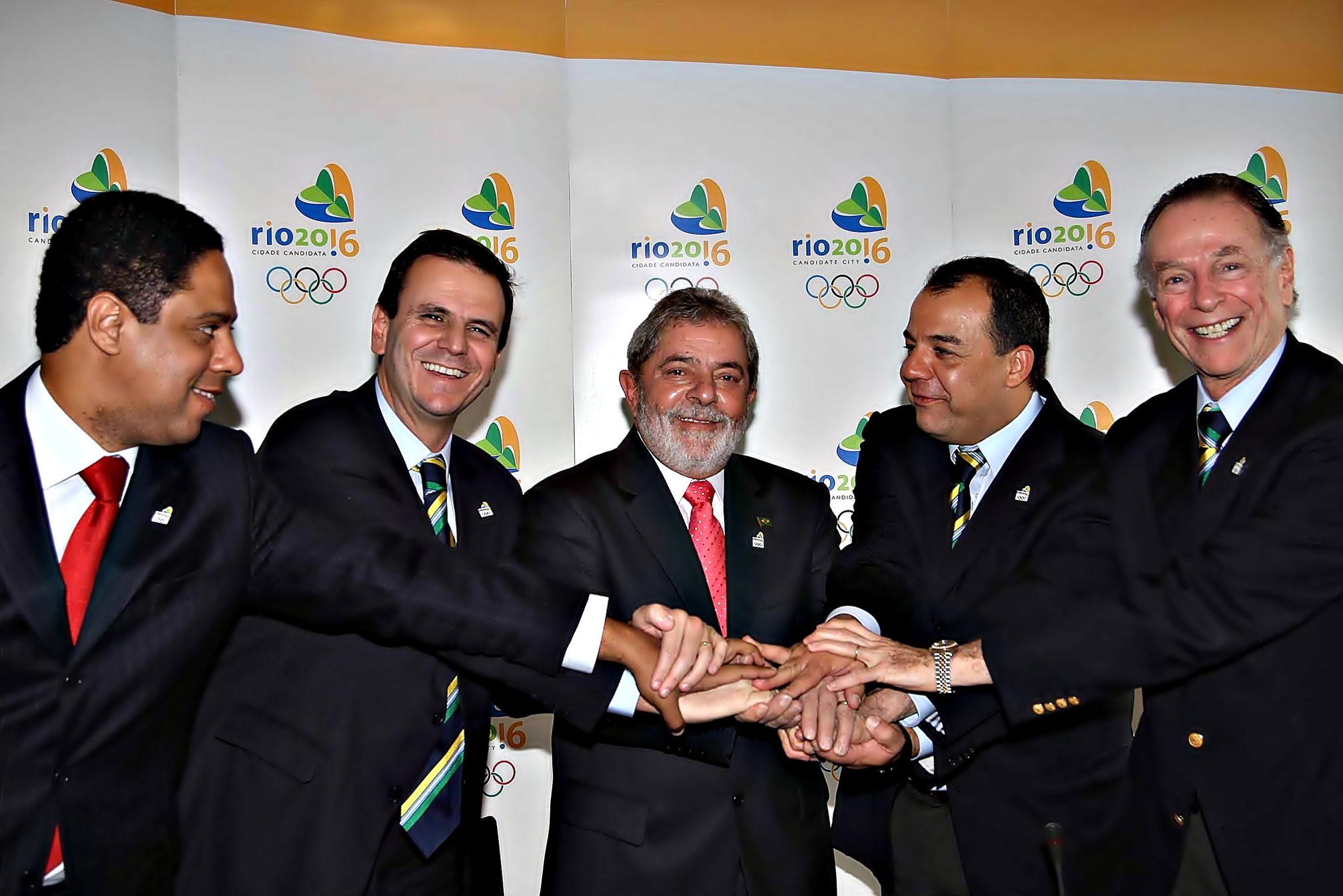 The evaluation of the Rio de Janeiro bid was prepared by the International Olympic Committee (IOC) during the Applicant Phase of the bidding process for the 2016 Summer Olympics to assist the IOC Executive Board in determine which of the seven Applicant cities—Baku, Chicago, Doha, Madrid, Prague, Tokyo and Rio de Janeiro—shall be accepted to the Candidature Phase. The IOC Working Group prepared and sent to Rio de Janeiro and the Brazilian Olympic Committee (BOC) the Candidature Acceptance Procedure and Questionnaire, reviewed all answers and other related information received from the Applicant Files, and established, for the attention of the IOC Executive Board, a technical report assessing the potential of each city, including its countries, to organise successful Summer Olympics in 2016.
The Working Group has also taken into consideration the main objectives and recommendations of the Olympic Games Study Commission where these refer to Summer Olympics' planning. Insufficient planning or consideration during the bid phase can have a major impact on the cost and complexity of organising the Summer Olympics. In order to perform its task and prepare this report, the IOC has commissioned a number of studies, appointed a number of experts, including experts from the International Federations (IFs), National Olympic Committees (NOCs) and the IOC Athletes' Commission. The IOC's 2016 Working Group Evaluation Report was released during its meeting from March 11 to March 14, 2008, in Lausanne, Switzerland; and influenced the choice of the Candidate cities on June 4, 2008, in Athens, Greece.
Evaluation
Rio de Janeiro bid for the 2004 and the 2012 Summer Olympics, but failed on both occasion, and missed the shortlist in each of the attempts. On March 14, 2008, the IOC's 2016 Working Group released its evaluation report. Through analysis of the Applicant Files, the IOC gave a weighted-average score to each bid—Tokyo scored 8.3, Madrid 8.1, Chicago 7.0, Doha 6.9, Rio de Janeiro 6.4, Prague 5.3, and Baku 4.3—based on the scores obtained in each of the questionnaire's eleven themes. According to the Working Group, the minimum required grade was benchmarked at 6; being closer to 0 considered to be unsatisfactory, closer to 10 to be satisfactory and around 5 to be average. Rio de Janeiro had its highest score in the Government support, legal issues and public opinion theme and its lowest in the Safety and security theme. The IOC's decision to select Rio de Janeiro over Doha generated criticism, as the Doha bid committee accused the IOC of "closing the door on the Arab world" and of making a political decision rather than judging on technical grounds. Doha outperformed Rio de Janeiro in the majority of the categories assessed by the IOC, but according to the IOC, Doha's desire to stage the Summer Olympics in October, rather than the traditional mid-summer time frame, because of high temperatures was the reason the bid was rejected.
On September 18, 2008, the IOC announced the composition of the Evaluation Commission which would inspect the four candidate cities. The Commission, composed of representatives from the Olympic Movement and advisors, was led by Nawal El Moutawakel, who had also chaired the Evaluation Commission for the 2012 Summer Olympics bid process. On April 27, 2009, the IOC Evaluation Commission arrived in Rio de Janeiro to assess the conditions of the candidature. According to IOC members and with Madrid yet to visit, the welcoming activities prepared by the city had been the best. During the first two days, the Commission held internal meetings at the Copacabana Palace, the host hotel. Between April 29 and 30, the Commission attended technical presentations and participated in question-and-answer sessions on each of the seventeen themes presented in the Candidature File. The last two days were marked by the inspectors' visit to all the existing venues across the city. After seven days of inspections involving 300 professionals, the thirteen members of the IOC Evaluation Commission—of which seven have voting rights—left Rio de Janeiro on the way to Madrid, on May 3, 2009. According to Moutawakel, the Commission was very impressed with the level of integration of the Games in the country's long-term development plan.
On May 4, 2009, the Rio de Janeiro bid committee accused the Madrid bid committee of sending a spy to Rio de Janeiro during the visit of the inspection commission, and considered filing a formal ethics complaint with the IOC. According to the Madrid bid committee, accusations it spied on a rival candidate had been blown out of proportion. The IOC Evaluation Commission analysed the Candidature Files and performed on-site inspections in Chicago (April 2–7), Tokyo (April 14–19), Rio de Janeiro (April 27 – May 2), and Madrid (May 4–9). It then released a comprehensive technical appraisal for the IOC members, one month before the host city election on October 2, 2009, in Copenhagen, Denmark. The IOC Executive Board then draws up the candidate cities to be submitted for the final vote by the IOC Session. The election takes place in a country which does not have a candidate for the Games in question.
The Working Group divided the Evaluation Report on eleven detailed themes and weightings: Government support, legal issues and public opinion (2); General infrastructure (5); Sports venues (4); Olympic Village(s) (3); Environmental conditions and impact (2); Accommodation (5); Transport concept (3); Safety and security (3); Experience from past sports events (2); Finance (3); and, Overall project and legacy (3). Weightings, varying between 1 and 5 (5 being the highest), were attributed by the Working Group to each criterion, reflecting the level of information requested of the Applicant Cities at this stage of the bid process, and the potential of achieving the level required for the organisation of the Olympic Games in the seven years' preparation time. The Working Group set the benchmark at 6 as minimum required grade (on a scale of 0 to 10). This grade was attributed by the Working Group to the main and sub-criteria for each Applicant City, reflecting the assessment of the Working Group (quality, number, location, concept, etc.).
Criteria and Sub-criteria |
Minimum |
Maximum |
|---|---|---|
Government support, legal issues and public opinion |
7.3 |
8.8 |
Government support & commitment |
7.0 |
9.0 |
Olympic Charter & legal aspects |
8.0 |
9.0 |
Public opinion |
7.7 |
|
General infrastructure |
5.3 |
7.2 |
Existing transport infrastructure |
5.0 |
7.0 |
Planned and additional transport infrastructure |
7.0 |
9.0 |
Airport |
5.0 |
7.5 |
IBC/MPC |
6.0 |
8.0 |
Sports venues |
5.8 |
7.4 |
Existing venues |
6.0 |
7.5 |
Planned and additional venues |
6.5 |
8.0 |
Sports concept & legacy |
7.0 |
8.0 |
Olympic Village(s) |
6.0 |
7.7 |
Location |
6.0 |
8.0 |
Concept |
6.0 |
8.0 |
Legacy |
8.0 |
9.0 |
Environmental conditions and impact |
5.6 |
7.6 |
Conditions |
5.0 |
7.0 |
Impact |
6.0 |
8.0 |
Accommodation |
5.5 |
6.4 |
Concept |
5.0 |
7.0 |
Transport concept |
5.5 |
7.5 |
Distances and travel times |
5.0 |
7.0 |
Transport organisation and traffic management |
6.0 |
8.0 |
Safety and security |
4.6 |
7.0 |
Experience from past sports events |
6.6 |
7.9 |
Number of sports events organised |
7.0 |
8.5 |
Quality |
6.0 |
7.0 |
Finance |
6.0 |
7.7 |
Overall project and legacy |
5.5 |
8.0 |
Government support, legal issues and public opinion
The Government support, legal issues and public opinion theme was assessed on the basis of the following criteria and weightings: Government support and commitment (70%); Olympic Charter, legal aspects and anti-doping measures/World Anti-Doping Agency (WADA) compliance (15%); and Public opinion (15%). The four guarantees requested have been provided. The President of the Federative Republic of Brazil, the Governor of the State of Rio de Janeiro and the Mayor of the Municipality of Rio de Janeiro have signed the guarantees and covenants required by the IOC, as well as some additional undertakings. The Rio de Janeiro 2016 Bid Committee reports that there are no legal obstacles to organising and hosting the Summer Olympics. The IOC's poll shows 77% support in Rio de Janeiro and the surrounding municipal areas.
General infrastructure
The General infrastructure theme was assessed on the basis of the following criteria and weightings: Transport infrastructure (85%); Airport (5%); and International Broadcast Centre (IBC)/Main Press Centre (MPC) (15%). For transport infrastructure, two sub-criteria have been assessed: Existing transport infrastructure - magnitude and performance (60%), and, Planned and additional general transport infrastructure (40%). Rio de Janeiro's project is based on four zones with fairly strong transport systems, proposing the construction of of Bus Rapid Transit (BRT) corridors. The existing Antônio Carlos Jobim International Airport would currently not be able to cope with the additional traffic. The location of the IBC/MPC is considered to be good and overall the proposals meet with the standards required.
Sports venues
The Sports venues was assessed on the basis of the following criteria and weightings: Existing venues (35%); Planned and additional venues (35%); and Olympic Games sports concept/legacy (30%). Rio de Janeiro proposes four zones—Barra, Copacabana, Deodoro and Maracanã—spread across the extended city, with 20 sports/disciplines located within of the Olympic Village. In addition to the investment made in sports infrastructure for the XV Pan American Games, a further 12 venues are to be constructed from 2009 to 2015. A sound legacy plan has been developed through the creation of the National Olympic Training Centre catering for up to 20 sports post-Games, and the X-Park, an adventure sports park for high performance training and community participation, in close proximity to densely populated areas.
Olympic Village(s)
The Olympic Village(s) theme was assessed on the basis of the following criteria and weightings: Location (40%); Concept (40%); and Legacy (20%). Rio de Janeiro's Olympic Village would be located on the shores of a lagoon and would consist of a new, accessible apartment-style complex with 17,500 beds. The average travel distance between the Olympic Village and the competition venues, excluding the possible venues for the football preliminaries, would be . The Olympic Village would be funded by a joint public-private partnership following the model used for the Pan American Games. Post-Games, the village would provide new apartment style residential accommodation in the fastest growing area of the city, lefting a great legacy for the region's accommodation.
Environmental conditions and impact
The Environmental conditions and impact theme was assessed on the basis of the following criteria and weightings: Current environmental conditions (40%) and Environmental impact (60%). In Rio de Janeiro, several new environmental programmes are in place, including new remediation works, investment in energy efficiency, sanitation systems and renewable fuels, and improved public transport systems. However, challenges remain in regard to air and water quality, waste management and land encroachment. Meteorological conditions during the proposed Games-time would be acceptable. Rio de Janeiro plans to introduce a broad Sustainability Plan centred on a 2016 Games. A programme to improve water quality in waterways in the city would be undertaken, and there would be green procurement, construction and operational guidelines.
Accommodation
The Accommodation theme was assessed on the basis of the following criteria and weightings: Number of rooms (80%) and Accommodation concept (20%). The benchmark for the Summer Olympics is 40,000 rooms predominantly in 3–5 star hotels or other types of accommodation of an equivalent level. There is a shortage in the number of 3, 4 and 5 star rooms. The existing 23,445 rooms will not supply the Olympic demand. Rio de Janeiro proposes to use cruise ships and condominium apartments, and with 21,344 planned rooms. Meteorological conditions during the proposed Games-time would be acceptable. Media would be accommodated in a combination of media villages and hotels that would provide 9,196 mostly individual rooms, and converted into residential housing post-Games.
Transport concept
The Transport concept theme was assessed on the basis of the following criteria and weightings: Distances and travel times (50%), and Transport organisation and traffic management at Games-time (50%). This is evaluated from an operational point of view, taking into account previous Summer Olympics experience. The distances between Rio de Janeiro's four Olympic zones are relatively long. The average travel distance would be , with an average travel time of 25–30 minutes. The delivery of the proposed Bus Rapid Transit (BRT) lines by 2016 would be essential. As a general policy, spectators and workforce will use public transport. In addition to the new, 4 line BRT system, Rio de Janeiro plans to implement of Olympic lanes connecting the four Olympic zones and the airport.
Safety and security
The Safety and security theme was assessed on the basis of the information provided in the Application Files, as well as background security reports. Although no grades were attributed, the following sub-criteria were taken into consideration: The incidence and likelihood of [...]; the levels of known recorded crime and other public safety issues; the overall technical and professional competencies of the main security forces and the proposed command and control; the existing investment in security and related technology and the proposals to improve in this area to meet the Summer Olympics security requirements; and, the complexity of the proposed Summer Olympics "theatre of operations" and the required security response. Crime in parts of Rio de Janeiro was considered to be an issue for the safety of people attending the Summer Olympics. The National Secretary of Public Security, reporting to the Ministry of Justice, would have overall responsibility for the security.
Experience from past sports events
The Experience from past sports events theme was assessed on the basis of the following criteria and weightings: Number of major international events organised with an emphasis on world championships in Olympic sports and multisports events (60%), and Quality of the events with an emphasis on the IFs' experience and spectator attendance (40%). Rio de Janeiro has experience in organising major international sports events, including the FIVB 2003 Beach Volleyball World Championships and the IJF 2007 World Judo Championships, as well as the upcoming FIFA 2013 Confederations Cup and 2014 World Cup. Rio de Janeiro has good experience in hosting international multi-sports events through the 2007 Pan American Games and the 2002 South American Games.
Finance
The Finance theme was assessed on the basis of the two following sub-criteria: Government contributions and financial plan (information provided by the Applicant City) in relation to the country's financial ability to deliver (Coface Country Risk rating), and Feasibility of commercial revenue projections. The budgets of both phases of the bid process were also considered, although no grades were attributed. Rio de Janeiro's OCOG budget would be financed from both the public and private sectors. Guarantees have been submitted by the President of the Federative Republic of Brazil to cover any potential shortfall in the OCOG budget, supported by the governments of the State and the City of Rio de Janeiro. The respective Coface Country Risk Ratings are listed below in the order of drawing of lots:
Overall project and legacy
The Overall project and legacy theme was assessed on the basis of a review of the concept proposed by each city for the organisation of the 2016 Summer Olympics. This review took place after the assessment of all other criteria and the Working Group thus had the opportunity to confirm its general opinion of each city's overall Olympic project and the legacy that the Summer Olympics would leave in each city/region.
Additional evaluation
Feasibility
Feasibility factors of between 0.1 and 1.0 has been attributed by the Working Group to several themes' criteria related to the future. According to the IOC, it is the probability of a project being achieved in the proposed timeframe, taking into account financing, political issues, time, location, speed of growth of Rio de Janeiro and post-Olympic use. This factor applicable to the grades can penalise the project to which it is attributed.
Criteria and Sub-criteria |
Minimum |
Maximum |
|---|---|---|
General infrastructurePlanned and additional transport infrastructure |
0.80 |
|
Sports venuesPlanned and additional venues |
0.85 |
|
Olympic Village(s)Concept |
0.85 |
|
AccommodationNumber of rooms (3-5 star) |
0.70 |
0.90 |
AccommodationNumber of rooms (Media village) |
0.70 |
0.80 |
AccommodationNumber of rooms (Other) |
0.60 |
0.90 |
FinanceCommercial revenue projections |
Feasible |
|
Telecommunications
No specific grades have been assigned to telecommunications. However, the IOC has commissioned the Audiovisual and Telecommunications Institute (IDATE) to provide a background report on the telecommunications situation in each of the countries of the Applicant Cities. According to the IOC, telecommunications is an important component of the general infrastructure necessary to organise the Summer Olympics.
Category |
|
|---|---|
Cities/countries which already offer a very good level of general telecom infrastructure and service availability to support the 2016 Summer Olympics. |
|
Cities/countries which appear to offer a satisfactory level of development with modernisation plans underway that would support the 2016 Summer Olympics. |
|
Cities/countries for which the level of telecommunication platforms and services is less advanced and would require clear planning and commitment to develop all necessary telecom aspects to support the organisation of the 2016 Summer Olympics. |
|
External links
- {{ citation | title = Official website | url = http://www.rio2016.com/en/Default.aspx | publisher = Rio de Janeiro 2016 Bid Committee (RJBC) }}
- {{ citation | title = Official website | url = http://www.cob.org.br/home/home.asp | publisher = Brazilian Olympic Committee (BOC) }}
- {{ citation | title = Official website | url = http://www.olympic.org/en/ | publisher = International Olympic Committee (IOC) }}
- Official documents
- {{ citation | title = Candidature Acceptance Procedure | url = http://www.olympic.org/Documents/Reports/EN/en_report_1213.pdf | publisher = (IOC) | date = May 16, 2007 | format = PDF }}
- {{ citation | title = Candidature Acceptance Application for Rio de Janeiro | url = http://www.rio2016.org.br/util/pdf/rio2016.pdf | publisher = (BOC) | date = January 14, 2008 | format = PDF }}
- {{ citation | title = Working Group Report | url = http://www.olympic.org/Documents/Reports/EN/en_report_1317.pdf | publisher = (IOC) | date = March 14, 2008 | format = PDF }}
- {{ citation | title = Candidature Procedure and Questionnaire | url = http://www.olympic.org/Documents/Reports/EN/en_report_1318.pdf | publisher = (IOC) | date = June 4, 2008 | format = PDF }}
- {{ citation | title = Candidature File for Rio de Janeiro | url = http://urutau.proderj.rj.gov.br/rio2016_imagens/sumario/English/Per%20Volume/Volume%201_eng.pdf | publisher = (BOC) | date = February 12, 2009 | format = PDF }}
- {{ citation | title = Report of the Evaluation Commission | url = http://www.olympic.org/Documents/Reports/EN/en_report_1469.pdf | publisher = (IOC) | date = September 2, 2009 | format = PDF }}