
Camillo Baciu
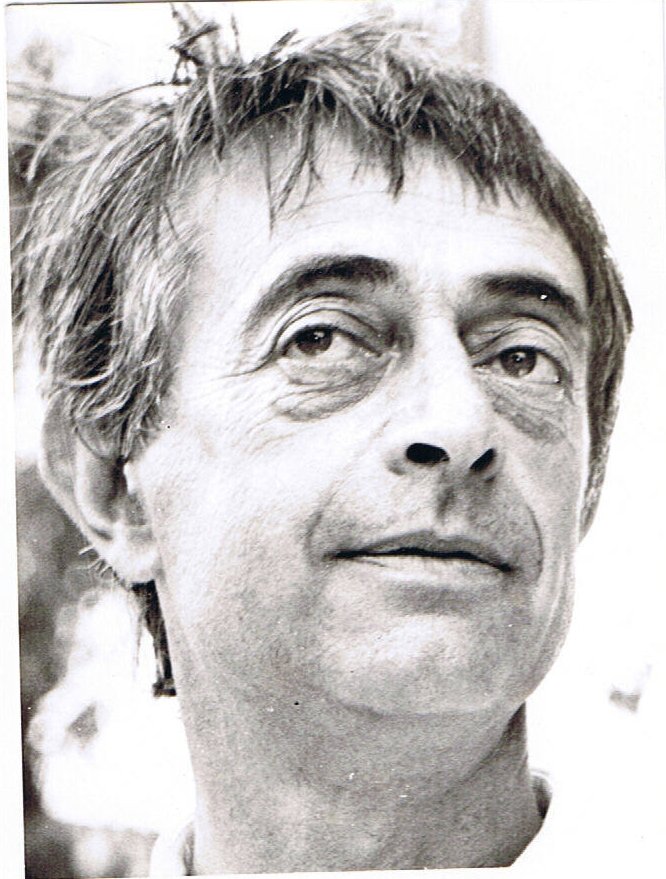
Camillo Baciu (Born in 1926, Romania died in 2005, Paris) was a Romanian writer (pen name: Camil Baciu) associated with Romanian science fiction literature. He is considered to be one of the most important science fiction writers of the communist era in Romania.
Camillo Baciu was born in Galati, Romania on the Danube river. He finished his elementary and high school studies there. He then moved to Bucharest to study at the Polytechnic Institute. He completed his water engineering studies as an expert in dams and pumps. Camillo started working as an engineer while cultivating his passion for writing science fiction stories and novels. Those stories and novels were published and considered popular at the time, leading to his receiving an international award for science fiction short stories. Due to the communist regime at the time, Camillo couldn't leave Romania to obtain the award. Later on Camillo changed his career from engineer to journalist at a magazine called "Flcara" (flame). Becoming aware of the communist regime's corruption and crimes, Camillo began to express his anti-regime opinions more and more openly and was eventually fired from his position at the journal. Camillo then had to flee Romania and get political asylum in France. He landed in Lyon and shortly after founded a small fringe theatre - the "Neutrino" where he performed pantomime and staged his own plays. Theater, artistic and emotional expression caught his interest. He developed a unique perspective on the "Actor-Audience" relationship and developed a theory describing how this relationship develops. While training actors on the basis of his theory, Camillo broadened his perspective which culminated in the development of his "emotional message" theory - the mechanics of non-verbal communication. It is during that time that he moved to Israel - and worked as a teacher in two schools: 1 "bet tsvi" - an acting academy, and the Department Of theater at the tel-Aviv university.
Back in France, he left the theater world and became more and more involved and interested in political communication - how "emotional messages" impact the so called "objective" media by the use of certain keywords instead of others (Thus creating the desired emotional reaction). He was tireless in disclosing the prestigious journal "Le Monde" as anti Israeli with hidden antisemitic remarks.
Works Published In Romania
- Not far from the princess' castle (Romanian title: Nu departe de castelul prinţesei), Bucharest, 1956
- Experiment "Colombina" (Romanian title: Experienţa "Colombina"), Editura Revista Ştiinţă şi Tehnică, 1961 (2 vol.)
- The rebellion of brains (Romanian title: Revolta creierilor), Editura Tineretului, Bucharest, 1962
- The cubic planet (Romanian title: Planeta cubică), Editura Tineretului, Bucharest, 1964
- The great law (Romaian title: Legea cea mare), 1964
- Met..., Editura Revista Ştiinţă şi Tehnică, 1964 (2 vol.)
- The orange sun (Romanian title: Soarele portocaliu), 1965
- Maşina destinului, Editura Tineretului, Bucharest, 1966
- Ienicec, 1967
- The garden of the Gods (Romanian title: Grădina zeilor), Editura Tineretului, Bucharest, 1968 (reeditată în 2001 la Editura Fundaţiei Culturale Române)
- Aragua
Works Published In France
- Assaf et Jonathan dans les mers du sud, edition L'ECHELLE Paris, 1978