
World Press Photo 2017
In 1955, World Press Photo inaugurated its first winner, taken by Mogens von Haven. It was "selected from 310 photos made by 42 photographers from 11 different countries." The photo was of a motor-cross competitor taking a tumble on the motorcycle. 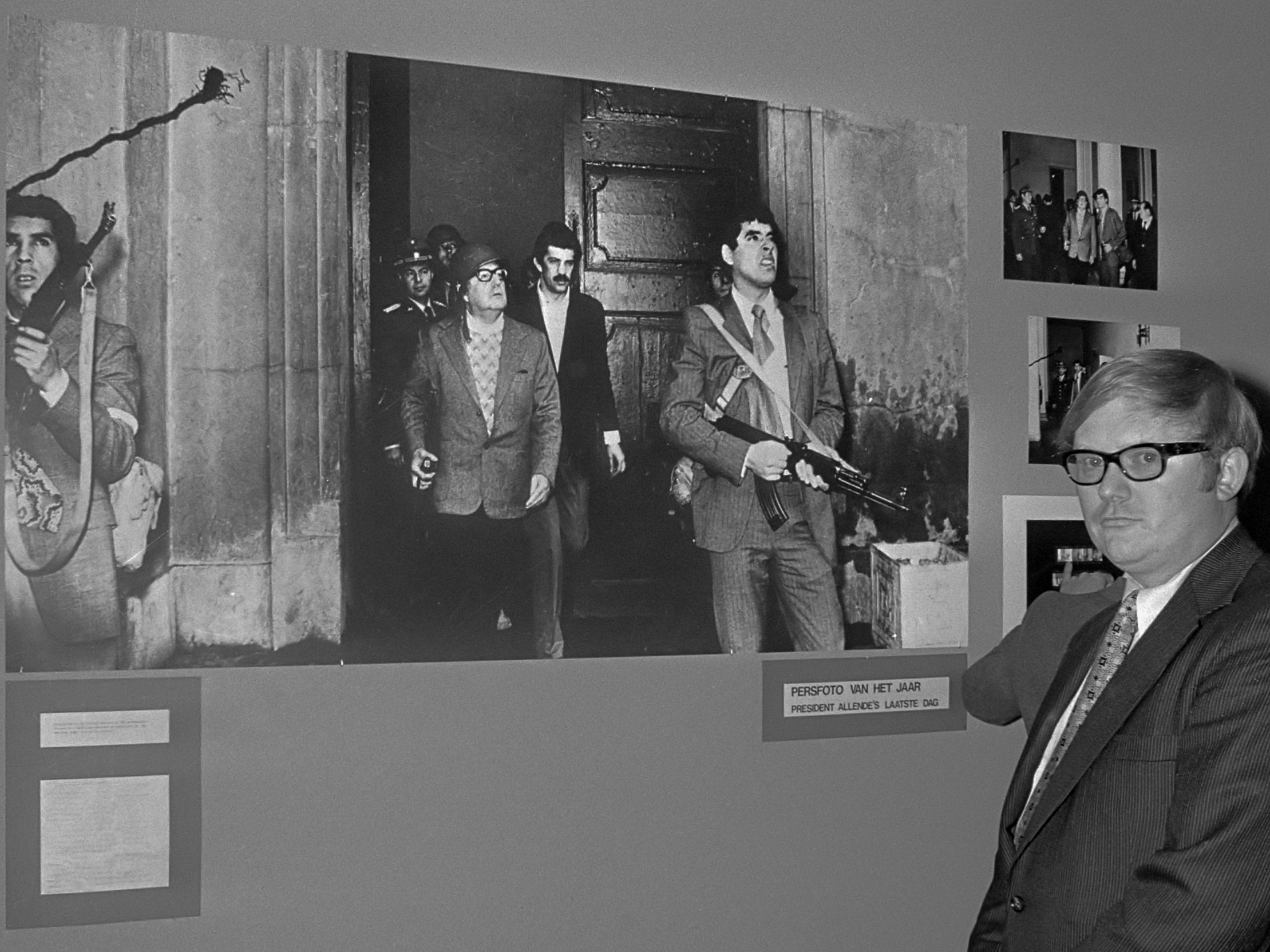 Almost every year since 1955, a contest has taken place with a winning image. Some of the pictures have been " become iconic —a [...] girl running after a napalm attack in Vietnam; a Buddhist monk who has set himself alight; a sole demonstrator standing in front of tanks on Tiananmen Square." Others have set trends, "established styles of press photography that can be seen re-emerging in years to come."
The 1955 award proceeded the notion set by Dutch photojournalists' union whom had the idea of "creating an international competition to complement a national one, the Zilveren Camera." The various elements that form the World Press Photo compound were in evidence; not only the contest, but also its educative and communicative role.
The first contest is said to have brought a discussion in local newspapers about the nature of press photography. In this contest, " political controversy also made an early appearance." Then and also now, the World Press Photo sets a role by maintaining its independence.
The popularity of the contest and exhibitions grew steadily throughout the 1960s through the 1970s. By the 1980s, the World Press Photo Exhibition was " gaining considerable prestige and numbers of entrants had rocketed." During this time, the World Press Photo had made the decision " to professionalize the organization, employing hired staff, and establish an office that would provide a firm base for the international scope of the contest and exhibition." They incorporated their first corporate sponsors by 1987.World Press Photo established itself not only as a platform for photojournalism, but also for education of photographers. "The impulse behind the first contest in 1955—that of putting local Dutch photojournalists more in touch with the work of international colleagues—re-emerged to give rise to workshops and seminars".
The first seminar was held in Budapest in 1990, and are now are a regular feature within the organization. Four years later, the "first Joop Swart Masterclass for talented young photographers was held in Amsterdam, setting the tone for what has become an annual benchmark of excellence within the profession."
World Press Photo Winner 2017
Burhan Ozbilici (born 1959 in Erzurum, eastern Turkey) is a Turkish photographer. With his photograph of an assassination in Turkey he became the winner of the World Press Photo Award 2017, in addition to that, the photo also won World Press Photo for Spot News.
Life and Work
Burhan Ozbilici grew up in Adana, Turkey where he completed his schooling from Adana Erkek Lisesi. Afterwards, he continued studying French at the French Institute in Ankara. Between the years 1982-1985 he was a freelance photographer and he worked for various associations. In February 1989 he started to work for Associated Press as a photographer and photo editor.
Ozbilici has been an Associated press photographer since 1987. The photograph of the Russian ambassador Andrej Karlov being assassinated by an Off-duty Turkish police officer has not been his first risky photograph. The year before he started to work for the Associated press he was covering an event when the then-Turkish Prime Minister Turgut Ozal was attempted. This action brought him confidence which made him stay at the photo exhibition in Ankara where he captured a moment where an assassin is pointing a gun forward willing to kill.
Event
A dramatic image of the assassination of Russia’s ambassador to Turkey was named the Photo of the Year in the 2017 World Press Photo Contest. The photo was taken in December during a routine assignment at a photo exhibition that Burhan Özbilici, decided to attend at the last moment simply because it was on his way home. He arrived during Ambassador Andrey. G Karlov’s speech, Russia's ambassador in Turkey, and within moments a 22-year-old-off-duty police officer, Melvut Mert Altintas, opened fire. Although Özbilici was no more than 15 feet away from the gunman, he did not run.
“The contest’s photo of the year has often been the subject of debate among journalists,” according to the New York Times. Lars Boering, World Press Photo’s managing director, said that “ Mr. Özbilici’s image fit well into the organization’s 63-year tradition.” 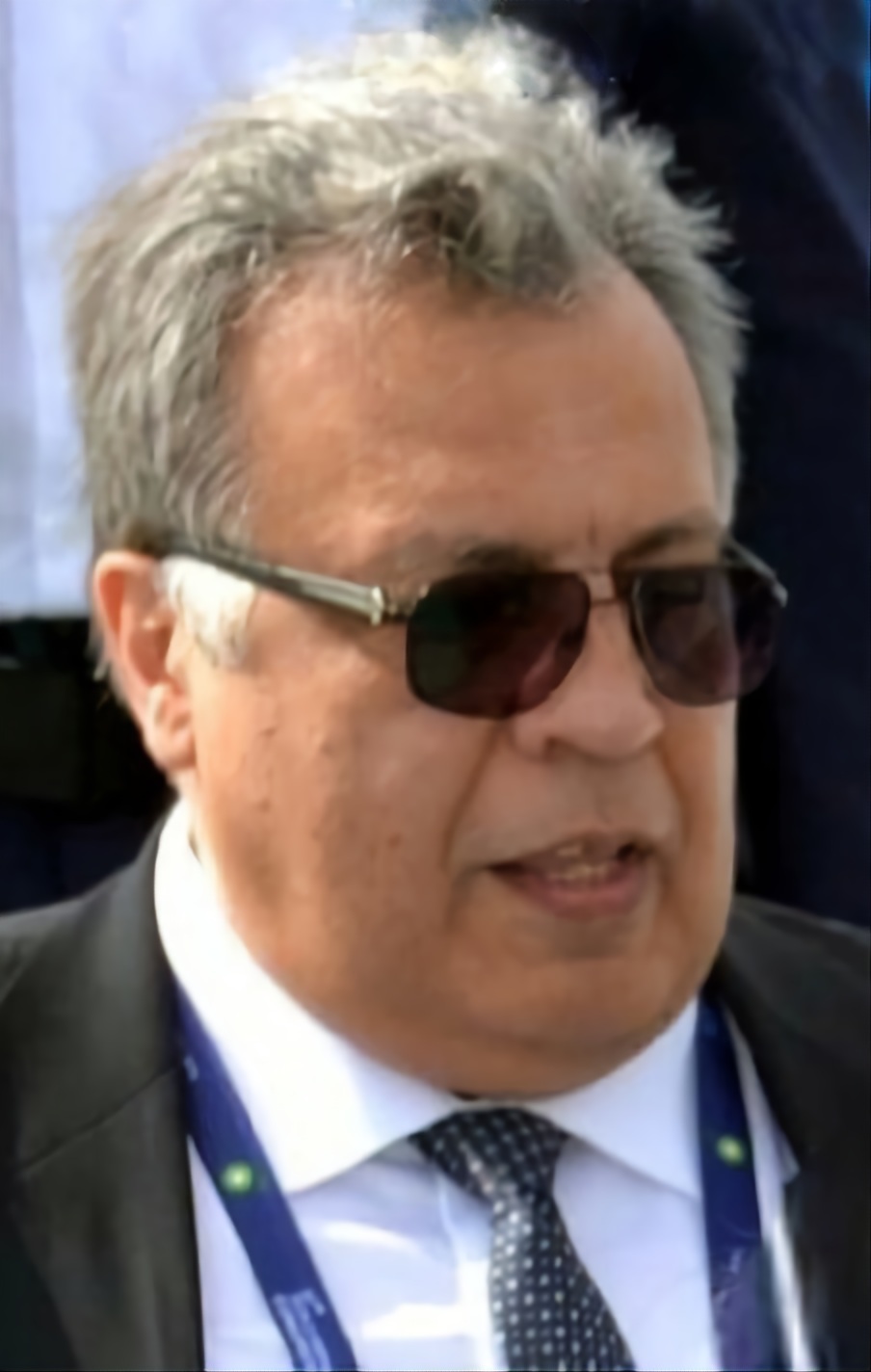 Alongside Burhan Ozbilici, two other photographers witnesses the assassination. Yavuz Alatan, alongside Hasim Killic, were also invited to the photo exhibition on December 19, 2016. The exhibition, titled “From Kaliningrad to Kamchatka, from the eyes of travelers” featured photos from Russia’s westernmost Baltic region to the Kamchatka Peninsula, in the east. Yavuz Alatan worked in the daily Sözcü newspaper, and had previously met Andrey Karlov.
Yavuz Alatan told TIME that he saw a man who was wearing a dark suit and tie, appearing as though he was part of a security detail, behind the Russian Ambassador. According to TIME, " A video released after the attack shows the man, later identified by Turkish authorities as off-duty police officer Mevlut Mert Altintas, pacing behind Karlov as he spoke. At least twice, he fussed with the inside of his suit jacket. When he did so a third time, he pulled out a pistol."