
Wolfgang Grulke
Wolfgang Grulke (born 19 June 1947) is an author, fossil collector, and businessman. Grulke is credited with putting heteromorph ammonites in the public eye in recent years.
Early life
Grulke was born in Oberhausen, Germany. An only child, he was raised by his parents in Germany until he was ten, when the family moved to South Africa.
Grulke was educated at Christian Brothers College and the University of the Witwatersrand, where he studied maths and physics, but he dropped out in the second year.
Business career
Grulke joined IBM and had a 25-year-long career with the company. In 1978 he was awarded the IBM Outstanding Innovation Award by then Chairman Frank Cary. In the 1980s, as Corporate Strategy Executive, he was part of the team that implemented the employee buyout of IBM South Africa, forced on the company by apartheid.
In 1987 he started FutureWorld as an informal business network. When the local company was sold back to IBM in the 1990s, Grulke founded FutureWorld International as a networked global business and technology think-tank.
Grulke published several books including his best-selling books Ten Lessons from the Future: Your future is a matter of choice, not chance and Lessons in Radical innovation: Out-of-the-box straight to the bottom line are published in several languages by Financial Times Press/Prentice Hall.
Grulke formed a joint-venture between FutureWorld and Deloitte Consulting, and served on the Deloitte Global Innovation Board. He was a Fellow of the Centre for Management Development at the London Business School and taught on the school's Senior Executive Programme. He also worked with Duke Corporate Education and Oxford University's Said Business School.
In 2014 he retired from FutureWorld to focus on his natural history interests.
Natural history
Growing up in Germany, Grulke had never seen the sea. When he moved to South Africa, he visited the seaside with his parents, and became an avid shell collector. Later he took up snorkelling and scuba diving, and developed a passion for marine biology. He began collecting fossils, and soon focused on cephalopods, and more particularly heteromorph ammonites.
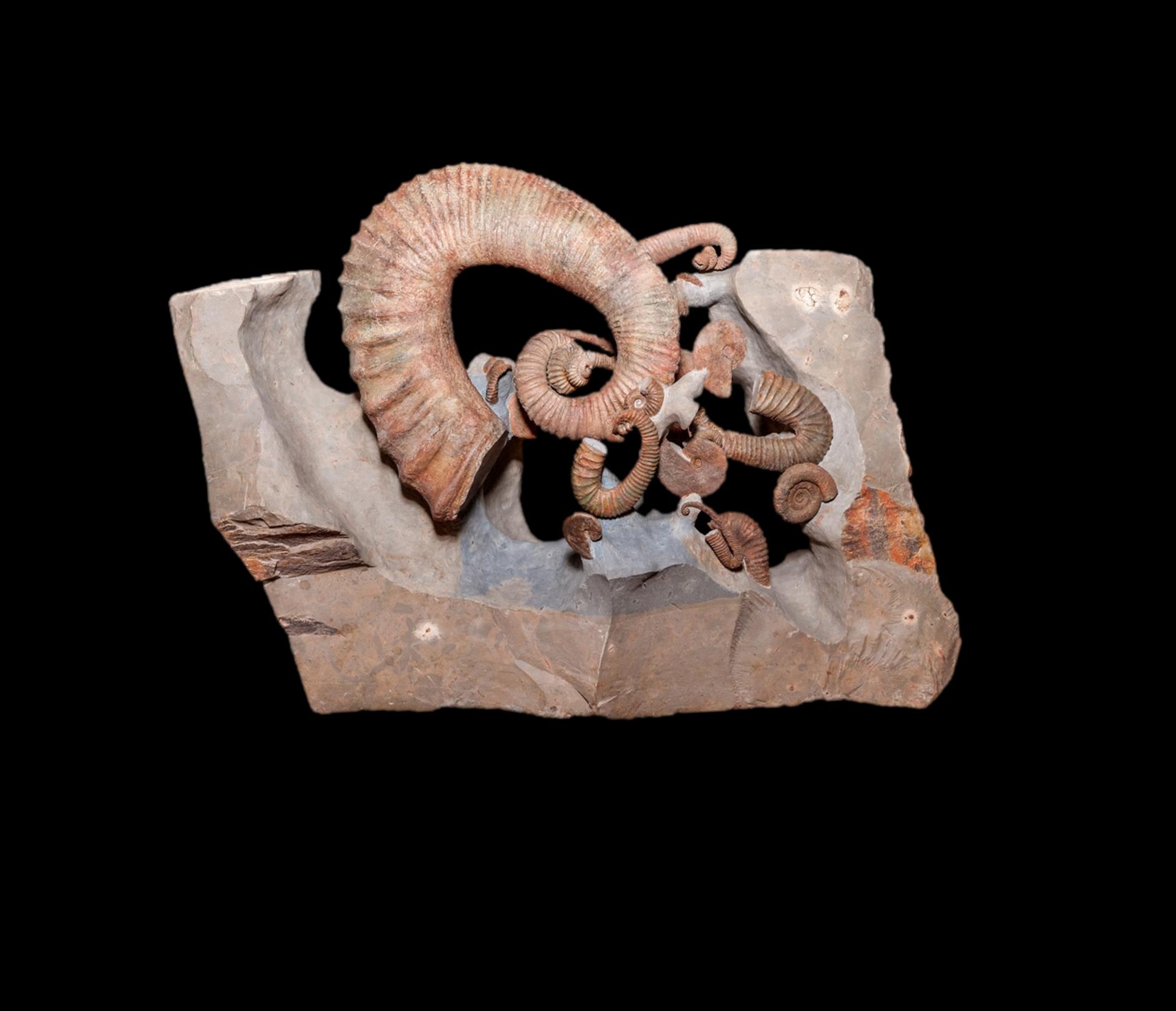 Grulke admits that he started as an absolute amateur when it came to geology and palaeontology, but learnt from experienced geologists and palaeontologists. He noticed their constant lack of funds, and started sponsoring digs, so that he could accompany them, and learn from them. On scuba diving expeditions, Grulke took many photographs and helped identify new species. He eventually served on the Board of the JLB Smith Institute of Ichthyology.
Grulke moved to Dorset in the UK around 2005, he converted an old barn into his "astounding private museum", where he installed cabinets to show the complete chronology of the origin and evolution of ammonites and their ancestors, from 500 million years ago to the time they died out.
In 2014 Grulke published Heteromorph: The rarest fossil ammonites. Nature at its most bizarre, endorsed by the Geological Society of London. According to Prof. Chris Wilson, this work was significant in that Grulke shows that the modern view of heteromorph ammonites no longer regards them as rare oddities. "He describes how these ‘eccentric and bizarre members of the ammonites’ arose three times during the reign of the order and that ‘at a point during the mid-Cretaceous they represented almost half of all ammonite species in existence at that time’."
In 2016 he published Nautilus: Beautiful survivor. 500 million years of evolutionary history, also endorsed by the Geological Society of London, and offering new insight into this interesting species.
Grulke served on the Advisory Board of Jurassica, a project to develop a major tourist attraction on the Isle of Portland on the Jurassic Coast World Heritage Site in southern England, backed by Sir David Attenborough. In November 2017 the project] merged with the Memo Project under the guidance of Sir Tim Smit. The Jurassic Coast has the most complete coverage of the Mesozoic era and was home to the fossil collector Mary Anning.
Books
Business books
- 10 Lessons from the Future: Your future is a matter of choice, not chance (2000) Financial Times/Prentice Hall also published in Spanish, Chinese and Arabic.
- Lessons in Radical Innovation: Out of the box, straight to the bottom line (2002) Financial Times/Prentice Hall also published in Chinese.
Natural history books
- In Amin et al. Aldabra: World Heritage Site (1995) Camerapix
- Heteromorph: The rarest fossil ammonites. Nature at its most bizarre (2014) At One Communications
- Nautilus: Beautiful survivor. 500 million years of evolutionary history (2016) At One Communications