
War and Pandemic VS Economy
War and Pandemic VS Economy
Md. Sohel Rana, Assistant Professor, Department Of History, Chandpur Government Mohila College, Chandpur, 35th BCS (Education)
Abstract
After the devastating period of the COVID-19 pandemic, the Russia–Ukraine war has emerged as a global crisis affecting almost every country. Under the leadership of the United States, NATO seeks to weaken Russia, while Russia attempts to resist NATO’s expansion. This polarization has severely affected developing countries, pushing many toward economic instability and the risk of default.
Russia is the world’s largest country by land area and ranks 11th globally in terms of GDP. It supplies nearly one-third of the world’s wheat and cotton and produces approximately one-tenth of global oil. Russia is also the third-largest oil producer and the second-largest natural gas producer in the world. In addition, it exports sunflower oil and corn to many countries. When such a major supplier is suddenly isolated through sanctions, the global economy inevitably suffers.
Europe, heavily dependent on Russian energy, has faced its worst crisis since World War II. Given Europe’s central role in the global economic system, the impact has spread worldwide. Ukraine, often referred to as the “breadbasket of the world,” exports food grains and edible oil across Europe and beyond. The disruption of exports from both Russia and Ukraine has caused severe instability in global commodity markets.
This article analyzes how post–Cold War tensions between Russia and the Atlantic bloc escalated into war, how Europe plunged into crisis, the impact on inflation, trade, and the global economy, and finally the effects on Bangladesh’s domestic market and currency situation. The discussion is presented in six systematic stages.
Introduction
Just as the world began to recover from two years of pandemic disruption, long-standing security tensions between the United States and Russia resurfaced. The United States and its allies continued NATO’s expansion policy, while Russia sought to block it. This confrontation intensified into open conflict in February 2022, rooted in post–World War II Cold War rivalries.
Following the collapse of the Soviet Union, analysts argued that NATO expansion was unnecessary. Nevertheless, NATO continued to expand, reigniting Russian security concerns. When Ukraine, a former Soviet republic bordering Russia, expressed interest in joining NATO, Russia perceived this as a direct threat. On 24 February 2022, Russia launched a military invasion of Ukraine. The consequences of this war extended far beyond Europe and Russia, affecting the entire world.
Objectives
To raise awareness of global instability and its economic impact on Bangladesh
To encourage public cooperation with government economic initiatives
To analyze domestic and international economic crises and explore recovery pathways
To provide policy recommendations for crisis mitigation
Background
For decades, global political and economic decision-making has been dominated by the Atlantic bloc—comprising North America, Western Europe, and the United Kingdom—often referred to as Atlanticism. However, Russian thinkers have increasingly promoted Eurasianism, advocating a Russia-led geopolitical and economic order spanning Europe and Asia.
Under this vision, Ukraine represents a critical geopolitical barrier. Ukraine’s potential NATO membership threatened Russia’s security and undermined its Eurasian ambitions. Consequently, Russia viewed military intervention as its only remaining option to prevent NATO expansion into Ukraine.
The COVID-19 pandemic and the subsequent Russia–Ukraine war have exerted significant pressure on the economies of not only developing countries but also whole world including Bangladesh. In this context, inflation, depletion of foreign exchange reserves, rising import costs, and declining consumer purchasing power have emerged as critical issues in Bangladesh’s economic reality.
As the US Dollar functions as the dominant international currency, Bangladesh’s import–export trade is largely dependent on it. When the value of the Dollar rises against the Taka, foreign investment may increase; however, the cost of imported goods becomes significantly higher in local currency terms. Since Bangladesh is heavily import-dependent, most essential commodities are sourced from abroad. Consequently, increased import costs directly affect domestic prices. This situation intensified during the COVID-19 pandemic and the Russia–Ukraine war.
Moreover, even before the pandemic, a substantial portion of Bangladesh’s foreign currency reserves had reportedly been siphoned abroad through illicit channels. During and after the pandemic, Bangladesh Bank’s reserves declined sharply, resulting in an acute shortage of Dollars in commercial banks. Importers were therefore compelled to purchase Dollars at higher prices, fueling inflation and forcing consumers to pay more for essential goods—a trend that continues to this day.
Unethical business practices further aggravated the situation. As a result of rising prices, domestic markets have experienced prolonged instability. Many low-income households are suffering from malnutrition, government employees are demanding wage increases, and the government is struggling to manage fiscal pressures due to limited financial resources
Research Methodology
Both primary and secondary data sources were used.
Primary data: Interviews with expatriates returning from Russia and Ukraine; field surveys and market observations
Secondary data: National and international newspapers, journals, government and private websites, books, and academic articles
Daily television news and online media were analyzed
Data were collected and verified with neutrality and minimal redundancy
This research is descriptive, analytical, and historical in nature. As a preliminary study, it also serves as a foundation for future comprehensive research.
The research framework includes:
Crisis analysis
Inflation and its impacts
Import–export trade analysis
Domestic market price analysis
Social impacts of currency depreciation
Field-level market surveys
Findings and policy recommendations
European Energy Crisis
Europe has long relied on external sources for energy. Approximately 40% of Europe’s energy supply came from Russia. Following Western sanctions—exceeding 5,500 in total—Russia reduced gas supplies and demanded payment in rubles. Several countries refused, leading to severe shortages.
Major Consequences:
Gas crisis
Electricity shortages
Water scarcity
Food shortages
Labor unrest
Political instability
Europe faced unprecedented hardship, arguably worse than during the two World Wars.
Major Gas Pipelines from Russia to Europe:
Nord Stream-1
Nord Stream-2
Yamal Pipeline
Brotherhood Pipeline
Soyuz Pipeline
Blue Stream
TurkStream
As gas supplies dwindled, energy prices soared, forcing governments to subsidize consumption. Inflation and social unrest spread rapidly across Europe.
Global Inflation
The war disrupted oil, gas, and food supplies, causing global inflation to surge. Even the United States experienced inflation exceeding 9%. According to DW and IMF data, inflation rose sharply across Europe, North America, South Asia, and Africa.
Countries such as Turkey, Sri Lanka, Venezuela, and Sudan experienced record-high inflation, while developing nations suffered the most severe consequences.
Impact on Trade and Economic Crisis
Russia is a major exporter of oil and gas. After the invasion, oil prices peaked near USD 147 per barrel. Europe, heavily dependent on Russian energy, faced escalating costs. Bangladesh, as an energy-importing country, experienced rising transport costs, production expenses, and consumer prices. 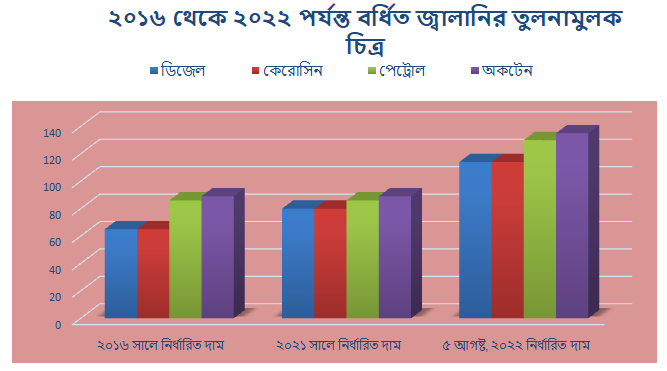 Sectors affected include:
Wheat imports
Edible oil
Livestock feed
Fertilizers
Fuel
Remittances
Ready-made garments
Bangladesh’s trade deficit widened significantly, while garment exports to Europe and Russia faced payment and demand risks. Since independence, Bangladesh has gradually transitioned toward an industrial and export-oriented economy. However, it remains heavily dependent on imports for food grains, energy, and industrial raw materials. Until the late 2010s, remittances and export earnings—particularly from the ready-made garment sector—ensured relative stability in foreign currency inflows, allowing reserves to reach historic highs.
The COVID-19 pandemic disrupted global economic activity, sharply reducing exports, imports, and remittance flows. #Bangladesh Economic Review 2023; ADB, Asian Development Outlook
Bangladesh’s large population relative to domestic production capacity necessitates heavy reliance on imported essential goods. Prior to COVID-19, trade flows were relatively stable, with strong remittance and export earnings. Foreign reserves peaked at nearly USD 50 billion, enabling the completion of several mega-projects. However, prolonged pandemic-induced disruptions severely weakened economic activity.
Simultaneously, widespread financial mismanagement, including fraudulent loans within the banking sector, forced the government to inject additional liquidity into the economy. This expansionary monetary policy contributed to inflation, eroding the value of the Taka and destabilizing commodity prices.
The Russia–Ukraine war further aggravated the situation. Sanctions excluding Russia from the SWIFT system disrupted global trade, driving up prices of food grains, oil, and gas. As a major energy exporter, Russia’s reduced supply caused a sharp surge in fuel prices worldwide, significantly increasing transportation and import costs in Bangladesh.
Impact on Global Food Markets
Russia and Ukraine jointly account for nearly 30% of global wheat exports and almost half of sunflower oil exports. The closure of Ukrainian ports disrupted global food supply chains, increasing prices by 20–30%.
Currency depreciation and inflation have sharply increased the cost of living for low- and middle-income households. Rising expenses in food, housing, education, healthcare, and transportation have reduced savings and heightened poverty risks. Government subsidy and debt-servicing burdens have also increased. UNDP; CPD
Fuel price hikes led to steep increases in transportation fares, further exacerbating economic pressure on ordinary citizens. As incomes failed to keep pace with rising prices, purchasing power eroded significantly, leading to widespread public dissatisfaction.
Impact on Bangladesh’s Domestic Market
The war triggered:
Depreciation of the Bangladeshi Taka
Increased transport fares
Rising food prices
Higher LNG and electricity costs
Agricultural input inflation
Declining foreign exchange reserves
Food inflation exceeded 8%, with many essentials increasing by 40–60% in retail markets.
Impact on Bangladesh
1. Energy Sector
Repeated fuel price adjustments
Increased transport and production costs
2. Import Costs and Commodity Prices
Wheat and poultry feed shortages
Rising consumer prices
3. Exchange Rate and Dollar Crisis
Taka depreciated by over 30%
Reserves fell from USD 48 billion to USD 27 billion
4. Ready-Made Garments
Reduced orders
Increased payment risks
According to Bangladesh Bank reports and domestic media sources, the Taka has been steadily depreciating against the US Dollar since 2019. Between 2021 and 2024, the Russia–Ukraine war, global energy market instability, and the strengthening of the US Dollar intensified this trend. #Bangladesh Bank, Financial Stability Report 2022; Reuters
Bangladesh Bank reported that the Taka depreciated by 13.3% in 2022 alone. Prior to the war, the exchange rate stood at approximately BDT 84 per Dollar. By October 2023, interbank rates rose above BDT 110 per Dollar, while open-market rates exceeded BDT 117—representing a depreciation of over 30% within 19 months.
Foreign exchange reserves declined from nearly USD 49 billion to below USD 28 billion by late 2022 and fell further in 2024, intensifying Dollar shortages.
Key Causes of Taka Depreciation
Inflation and rising domestic prices #(BBS, CPI Reports)
Import-dependent economic structure #(UNCTAD)
Declining foreign exchange reserves #(Bangladesh Bank)
Trade deficits #(World Bank)
Global energy and food price hikes #(FAO)
Russia–Ukraine war and geopolitical instability #(The Economist)
Financial sector weaknesses and capital flight #(Transparency International Bangladesh)
Monetary Conditions and Depreciation of the Taka
According to Bangladesh Bank reports and domestic media sources, the Taka has been steadily depreciating against the US Dollar since 2019. Between 2021 and 2024, the Russia–Ukraine war, global energy market instability, and the strengthening of the US Dollar intensified this trend. #Bangladesh Bank, Financial Stability Report 2022; Reuters
Bangladesh Bank reported that the Taka depreciated by 13.3% in 2022 alone. Prior to the war, the exchange rate stood at approximately BDT 84 per Dollar. By October 2023, interbank rates rose above BDT 110 per Dollar, while open-market rates exceeded BDT 117—representing a depreciation of over 30% within 19 months.
Foreign exchange reserves declined from nearly USD 49 billion to below USD 28 billion by late 2022 and fell further in 2024, intensifying Dollar shortages.
Price Volatility and Domestic Market Survey
Depreciation of the Taka has significantly increased the prices of imported goods, including fuel, edible oil, food grains, and industrial products. Rising transportation costs have also driven up prices of domestically produced goods. Market rumors, hoarding, and supply disruptions further contributed to abnormal price hikes. Daily Ittefaq; Prothom Alo
Field surveys conducted in Dhaka and Chandpur between 2021 and 2023 revealed price increases ranging from 20% to over 80% across essential commodities such as rice, meat, vegetables, edible oil, and eggs.
Challenges Arising from Taka Depreciation
Increased government debt burden
Rising subsidy expenditures
Persistent inflation
Higher import costs
Increased education and travel expenses abroad
Reduced consumer purchasing power
Social and economic instability
Declining foreign exchange reserves
Policy Recommendations
Although global crises cannot be fully controlled, But we can adopt the following measures:
Reducing luxury imports
Fiscal austerity
Expanding agricultural production
Developing renewable energy
Preventing capital flight
Building skilled human resources
Increase domestic production and reduce import dependency
Diversify export sectors
Encourage remittances through formal channels
Strengthen financial governance and banking reforms
Enhance market monitoring and curb hoarding
Balance demand and supply
Regulate monetary expansion
Ensure effective fiscal and monetary policy coordination
Conclusion
The Russia–Ukraine war has compounded the economic devastation caused by COVID-19. The global economy faces a cascading “butterfly effect,” where disruption in one region triggers worldwide consequences. Bangladesh, like many developing nations, is deeply affected.
Timely and prudent economic management is essential to prevent long-term damage. Failure to recognize early warning signs may plunge economies into deeper crisis.
Keywords
#Subject-Class: Economics #Bangladeshi Taka; #Currency Depreciation; Inflation; Price Volatility; Import Dependency; Foreign Exchange Reserves; Russia–Ukraine War; COVID-19; Bangladesh Economy