
Torre d'Orlando
Torre d’Orlando is a medieval fortified site located near , in the municipality of Baschi, Umbria, Italy.
In the 2010s, the structure has been marketed to tourists as "Todi Castle" (sometimes styled as TodiCastle), but no historical sources identify it by this name, and it is not located within the territory of the town or municipality of Todi.
History
Torre d'Orlando was built in a strategic position, to look over the area bounded by the river Tiber, the river Arnata and a famous Roman road, the Via Amerina, which linked Todi to Lazio. Its strategic function continued into the 8th century, when Desiderius, the last Lombard king of Italy granted the territory of the Julia colony to the Papacy.
Five hundred years later, in 1275, it became the Diocese of Todi and then the Municipality of Todi. The Municipality of Baschi wanted total control of the area, so more than 5000 men were dedicated to build a large fortification system which included towers and fortresses, city walls, and fortified historic towns.
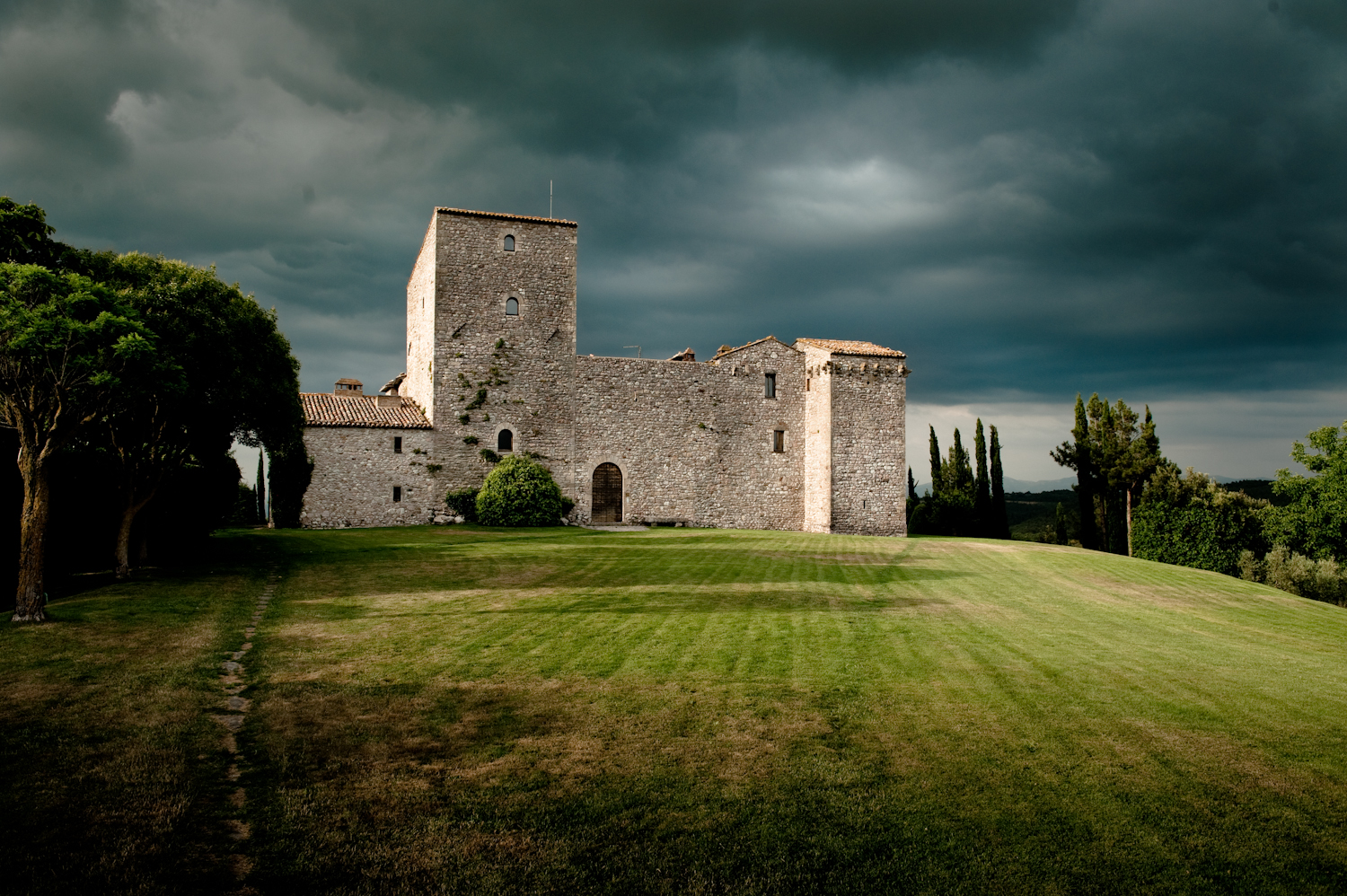 Several additional towers were built in the 10-13th centuries and the original tower was incorporated into a now larger fort or Rocca. There were three towers in the corners and a large bastion wall to protect the wide territory. The fortified site was important during the wars between Guelphs and Ghibellines in the 13th century.
The fortress presumably was totally self-sufficient during a siege, since there were no windows at all. Several small openings were made in the structure for the positioning of bows and arrows, which can be seen even today. There were a few secret passages under the walls of the fortified site which were found during the various renovation projects. These were the routes through which the soldiers could escape in case the fortified site had to be relinquished. The food for the animals and the soldiers were stored in very large quantities within the site and the rain water was collected for drinking. The soldiers lived in the towers and the animals were kept in the open areas.
The fortified site was important from both the military and geographic point of view. The fortified site stood along a common pilgrimage route to Rome and the area became quite wealthy due to commerce and trade. Todi flourished in the 13th century.
In 1348 the Black Plague struck and later in the mid-14th century the municipality of Todi collapsed. In the later years, the fortified site even after the bubonic plague decimated the local countryside. The site was also abandoned by the warriors and soldiers and then used by the wanderers.
During the 15th century, the fortified site was turned into a monastery. A roof was constructed in the courtyard and the space was transformed into a church dedicated to Saints Julietta and Quiricus.
Later, in the 17th century, the monastery was also abandoned and the site became the object of dispute among several local lords. Lastly, the Landi family of Todi gained ownership of the site. However, even then the site remained abandoned for three hundred years.
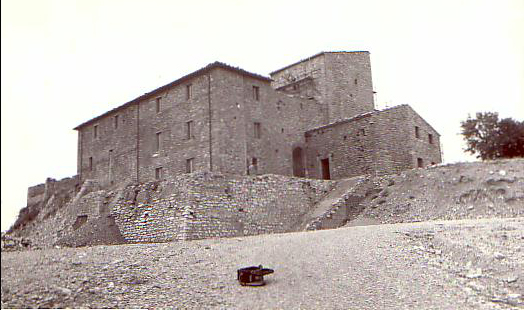 In the 18th century, the fortified site was acquired by the Paparini family, important landowners in the area of Moruzze and Todi. And then, in 1974, by Italian Ambassador Giuseppe Santoro and since then is owned by the Santoro family.
The restoration of the site, that took place from 1975 to 1980, was entrusted to three architects namely Marcello Confetti, Giorgio Leoni and Vittorio Garatti.
In 1980, the site was declared a national monument. The restoration work itself took as long as ten years. The name of the site was changed several times over the centuries. It was known as Capecchio, Cassa Treia and Casa Arsiccia at various times. The area of this estate spans to 45-acres. The site was recently recognized as Residenza d 'Epoca, belonging to the National Heritage. It is also part of the prestigious Italian Castle circuit Institute, an international organization under the auspices of the UNESCO.
Architecture
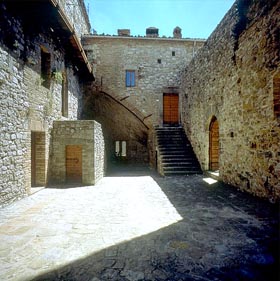 The Estate is surrounded by 250 acres consisting of vineyards, olive groves, fruit trees and cypresses.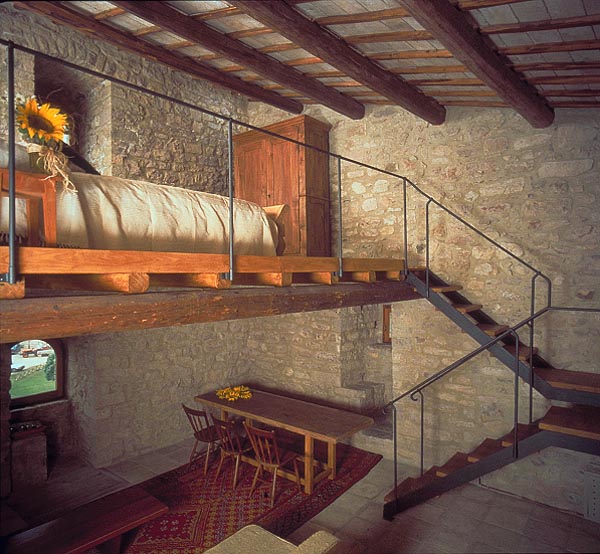
In 13th-century, food for animals and soldiers was stored in large quantities within the site. Rain water was collected for drinking. The soldiers lived in the towers and the animals were kept in the open areas. When the building became a monastery, the courtyard was roofed, and the space was transformed into a church dedicated to Saints Julietta and Quiricus.