
University Area
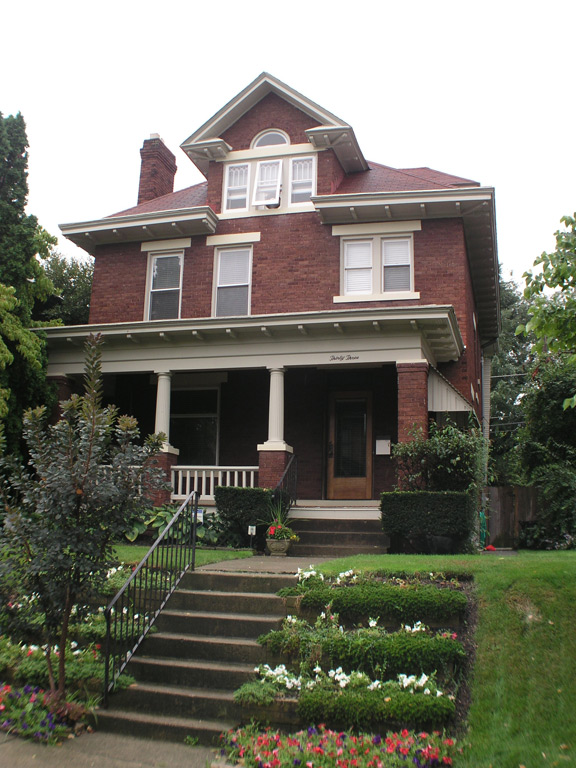 The University Area (or University District) located two miles north of Downtown Columbus, Ohio, in the United States, is home to the main campus of the Ohio State University, the Battelle Institute and the James Cancer Center, one of the world's finest cancer research facilities. It is GeneRally accepted as the area north along High Street into Clintonville at the Glen Echo Ravine; south into the Short North at 5th Avenue; west to the Olentangy River, including the Ohio Stadium and the Schottenstein Center; and east to the ConRail railroad tracks. The area includes several single-family homes mixed with apartments and other rental properties to support varying levels of student housing. University Area businesses include boutiques, mixed retail, several tattoo studios, the Drexel Gateway theater, and a diverse range of restaurants and bars.
The retail developments along Olentangy River Drive could be argued as part of the colloquial "university area", as they cater the the same BLEND of students, faculty, and sports fans. But despite their proximity to West Campus, there are several natural and man-made barriers (the Olentangy River, Route 315, Interstate 670) preventing much foot traffic, a defining element of the University Area. Although this area might be considered part of the "university area" it does not fall within the planning or university area commission BOUNDARIES.
University Area Neighborhoods
The University Area is comprised of many diverse neighborhoods, each with its own unique housing STOCK and cultural identity. There are a variety of pleasant residential neighborhoods, several historic districts as well as the off-campus core student neighborhood.
Residential neighborhoods with higher concentrated homeownership include:
- "The Old North" which is commonly referenced as the general area north of Lane Avenue and both east to the Conrail Railroad tracks and west to the Olentangy River Road. The Old North includes several smaller neighborhoods within these general boundaries including; the Iuka Ravine Neighborhood, Indianola Forest, Oakland & Northwood Avenue Area, Tuttle Park or Old North Columbus and the Glen Echo Neighborhood. The Old North also is home to North High School, a historic Columbus Public School as well as several churches, restaurants and other small businesses.
- The southern area of the University Area also has a higher density of homeownership and includes Weinland Park, Dennison Place and the NECKO neighborhoods.
The residential neighborhood with higher concentrated rental property and student housing is located east of High Street south of 17th Avenue and north of 11th Avenue. This is often referred to as the off-campus neighborhood and has in the past ten years gone through considerable redevelopment and revitalization as a result of the work of Campus Partners.
Historical Perspective
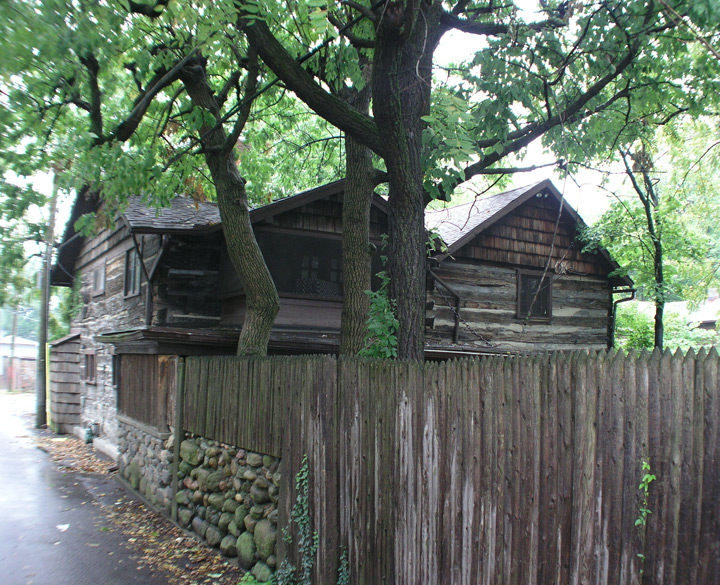 The University Area or University District was not originally part of the city of Columbus. Platted in 1812 as a new city to be the State capital, Columbus was a small town until late in the nineteenth century. The major event in the evolution of the area was the decision to locate The Ohio State University on the site of the Neil farm in 1870. The university grew slowly at first, but began to expand significantly under the presidency of William Oxley Thompson from 1900 to 1925.
As the area grew, fashionable residential suburbs grew up around the campus in places like the Dennison Addition and the Indianola subdivision with its curved roads and remarkable ravines. In the 1890's the streetcar transformed the area allowing working class people to live in the University Area and make a thirty minute journey to work in downtown Columbus.
At the end of World War II, the University Area was occupied by more homeowners than renters. But that changed with the return of thousands of veterans from the war. The population in the University Area quadrupled and by the 1960's the main OSU campus was the largest in the United States.
To house the growing population, high rise dormitories were build at both ends of the main campus and hundreds of owner occupied houses were either converted to rooming houses, rental units, or were town down to make way for apartment buildings. The increased density gave rise to problems around vehicular congestion, crime and litter.
To cope with these problems, a number of organizations came into being. Among these were the University Community Association which was founded to be an umbrella for the neighborhood organizations in the area; the University District Organization, created to be a neighborhood planning and development organization; the University Community Business Association, established to be the voice of economic enterprise in the area; and the University Area Commission, created as an advisory commission to Columbus City Council.
Administrative
The University Area Commission (UAC) as an administrative unit was created in 1972 by an act of the Columbus City Council. The University Area Commission is a voluntary, elected, citizens advisory board. In creating the city's first area commission, Columbus City Council delegated certain development oversight and planning responsibilities to stakeholders living in the communities affected by council decisions. Accordingly, new development plans are generally submitted first to an area commission and then to the city council for approval.
The UAC oversees development in what the city refers to as "the university area", bounded in the west by the Olentangy River, in the north by Glen Echo Ravine, in the east by the Conrail line, and in the south by 5th avenue. The Ohio State University itself expands north and west over the Olentangy River for several miles and into Upper Arlington.
Notable residents
- Writers and artists
- George Bellows, artist
- Harlan Ellison, writer
- Roy Lichtenstein, artist
- R. L. Stine, writer
- James Thurber, humorist/cartoonist
- Astronauts
- Charles Bassett, astronaut
- Nancy Currie, astronaut
- Richard Linnehan, astronaut
- Ronald Sega, astronaut
- Inventors
- Charles Kettering, inventor
- Roy Plunkett, inventor
References