
Timeline of the Liz Truss premiership
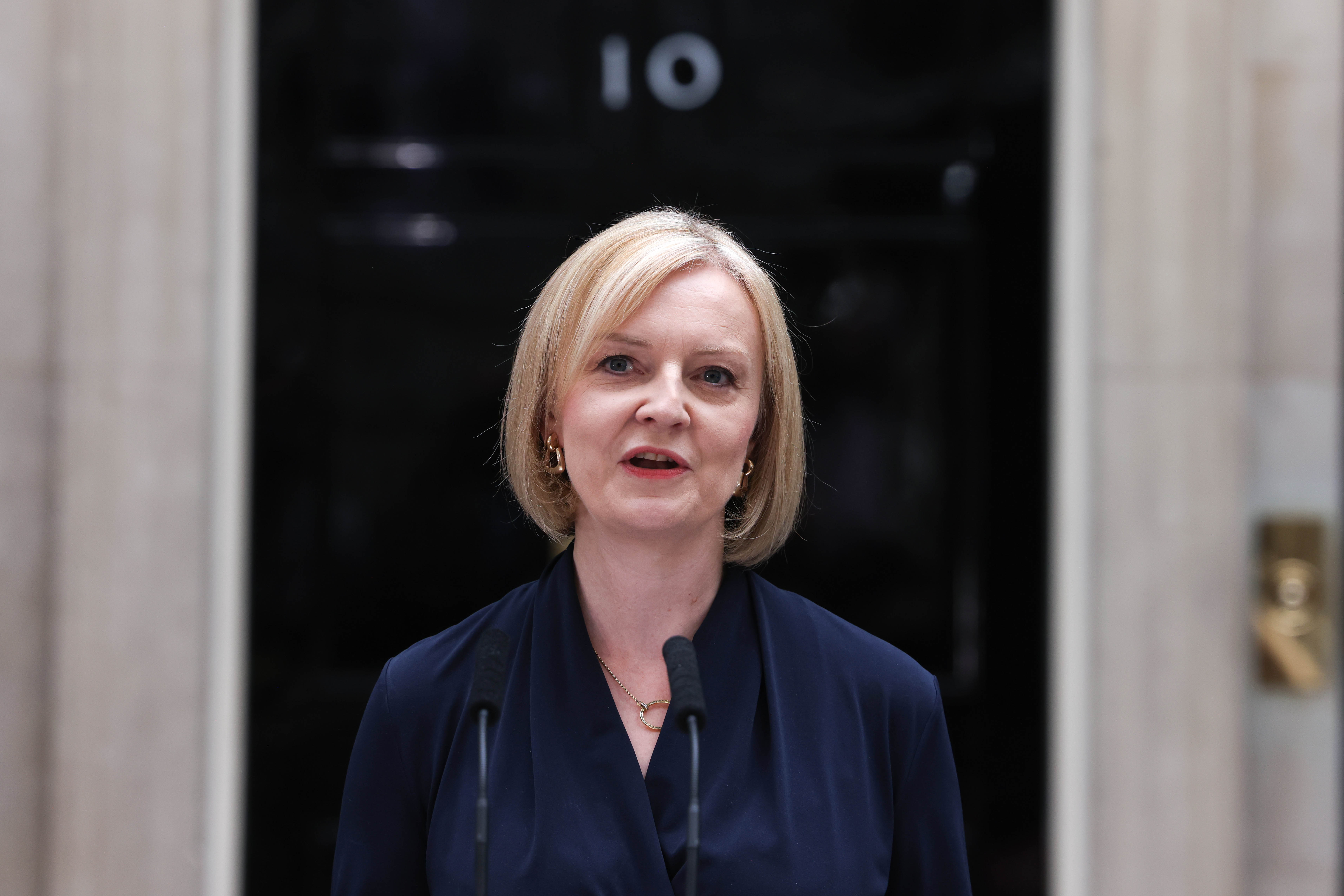 The premiership of Liz Truss began on 6 September 2022, when Truss was asked by Queen Elizabeth II to replace Boris Johnson as the UK's prime minister and to form a new government. Later that afternoon, she delivered a speech pledging to stimulate economic growth through tax cuts and built her cabinet, including appointing Kwasi Kwarteng as the chancellor of the exchequer. Truss's first days in office coincided with Elizabeth II's death on 8 September 2022, which began a 10-day period of national mourning that suspended normal Parliamentary Business. Two weeks later, the prime minister travelled to New York City to attend the 77th United Nations General Assembly (UNGA), where she gave a speech promising to lead "a new Britain for a new era".
On 23 September 2022, Kwarteng delivered "The Growth Plan", commonly referred to as a "mini-budget", which included £45 billion of tax cuts—such as abolishing the top rate of income tax and cancelling a planned rise in corporation tax—to be funded by additional government borrowing. The announcement triggered an immediate reaction in financial markets, with the pound sterling falling to its lowest value against the US dollar since 1985 and the cost of government borrowing rising sharply. In response to instability in bond markets, on 28 September the Bank of England announced a temporary programme to purchase up to £65 billion of long-dated UK government bonds (gilt-edged securities) to restore conditions in the market.
The government's economic plans generated criticism from both their parliamentary opposition and international organisations such as the International Monetary Fund (IMF) and the European Central Bank. On 5 October, a poll by the market research firm YouGov gave Truss a net favourability score of –59, making her less popular than Johnson ever was. Faced with this pressure, the prime minister reversed several elements of the mini-budget: on 2 October, she instructed Kwarteng to cancel the plan to abolish the top rate of income tax, and then, 11 days later, she confirmed that the planned rise in corporation tax would be retained. On 14 October, Truss dismissed Kwarteng as chancellor and replaced him with Jeremy Hunt, who subsequently reversed most of the mini-budget's remaining measures.
Amid continuing political instability, on 20 October 2022, Truss announced that she would step down as prime minister. She tendered her resignation to King Charles III on 25 October after 49 days in office, making her premiership the shortest in British history – she was succeeded by Rishi Sunak following a second leadership contest. Truss's premiership had profound effects, both economically and politically. Mortgage rates rose significantly in the period following the mini-budget, and by early 2024 mortgage possession claims had reached their highest level since 2019. At the 2024 general election, Truss's party, the Conservatives, experienced substantial losses, including that of her own seat in South West Norfolk. This made Truss the first former prime minister to lose their parliamentary seat since 1935.
Background
Liz Truss was selected to stand as the Conservative Party candidate for the seat of South West Norfolk in the 2010 general election after being placed on an "A-list" of priority candidates by the party's leader, David Cameron. Truss became one of 307 Conservative candidates to win their seat at the election, giving Cameron enough support in the House of Commons to form a coalition government with the Liberal Democrats. After serving as a backbencher for over two years, in September 2012 Truss was made parliamentary under-secretary of state for education as part of Cameron's first ministry, and was subsequently promoted to environment secretary during his cabinet reshuffle in July 2014. She was widely mocked later that year for delivering an impassioned speech about cheese at the Conservative Party Conference.
In October 2011, Truss founded the Free Enterprise Group, a wing of Conservative Party advocating for free-market reform. The following year, she co-authored Britannia Unchained: Global Lessons for Growth and Prosperity—a collection of essays that argued, among other things, to boost economic growth by loosening state regulation—with four other members of the group: Priti Patel, Dominic Raab, Chris Skidmore and Kwasi Kwarteng. Like Truss, Kwarteng had entered Parliament following the 2010 election as the member of parliament (MP) for Spelthorne. During his time as a backbencher he authored a number of book on subjects such as British imperialism, finance, and the former prime minister Margaret Thatcher, as well as Britannia Unchained. In 2017 he was appointed parliamentary private secretary to the chancellor of the exchequer, Philip Hammond.
By December 2019, the prime minister and leader of the Conservative Party was Boris Johnson, who had won a majority of 80 seats at that month's general election. In January 2021, Johnson made Kwarteng business secretary; nine months later, he appointed Truss to the role of foreign secretary, making her the second woman to hold the position after Margaret Beckett in 2006. In July 2022, following a series of scandals such as Partygate and the Chris Pincher scandal, 61 members of Johnson's ministry resigned and another was sacked, triggering a crisis in the government. Neither Truss nor Kwarteng left their roles, but Johnson's position was untenable, and, on 7 July, he announced his intention to stand down as prime minister, beginning a leadership election to replace him.
Leadership election
7 July
- Boris Johnson announces in a speech outside 10 Downing Street that he will resign as prime minister and leader of the Conservative Party, triggering a leadership contest to replace him.
7–10 July
- Conservative MPs declare their intention to stand in the contest. In a video posted to Twitter on 8 July, former Chancellor of the Exchequer Rishi Sunak launches his bid for leader; Foreign Secretary Liz Truss announces her candidacy in an article in The Daily Telegraph on 10 July. By the end of 10 July, eight MPs have achieved the level of support needed to be placed on the first ballot.
13–20 July
- In a series of ballots, all Conservative MPs vote for their preferred leadership candidate, with at least one with the fewest votes eliminated after each round. The fifth and final ballot takes place on 20 July, and sees Sunak and Truss emerge as the top two candidates, with 137 and 113 votes respectively. These two MPs now face each other in the run-off for the leadership, voted on by about 172,000 members of the Conservative Party.
16 July
- Truss gives an interview with Edward Malnick of The Daily Telegraph in which she sets out what her ambitions would be if elected prime minister. When asked by Malnick if she would support lifting the ban on the hydraulic extraction of shale gas (fracking), she responds, "Yes."
25 July
- The BBC hosts Our Next Prime Minister, an hour-long televised debate between Truss and Sunak on their leadership bids. Truss states that she wants to scrap planned tax rises and pay for them through borrowing. Sunak argues that doing so will lead to higher interest rates, which Truss dismisses as "project fear" and "scaremongering".
26 July
- Sunak and Truss's second televised debate, sponsored by the newspaper The Sun, is broadcast on the channel TalkTV. The programme is pulled from the air halfway through when the moderator, Kate McCann, faints. Instead, the channel hosts an off-camera Q&A session between the two candidates and a small audience.
15 August
- Paul Johnson, the director of the Institute for Fiscal Studies, accuses both candidates of "cakeism", saying that they are promising tax cuts without considering the impact on public services or borrowing and debt.
25 August
- At a hustings event in Norfolk, when asked whether President of France Emmanuel Macron is a friend or foe, Truss responds that "the jury is out" and that, as prime minister, she will hold him to "deeds not words".
2 September
- Voting closes in the leadership contest at 5 p.m., with the winner set to be announced on 5 September.
3 September
- In an article for The Daily Telegraph, Truss writes that she will "unleash Britain's potential" by going for economic growth.
5 September
- At a conference centre in Westminster, Graham Brady, chairman of the 1922 Committee, announces that Truss has won the leadership election with 81,326 votes from Conservative members against Sunak's 60,399. In her victory speech, Truss promises a "bold plan" to grow the economy and cut taxes and to deal with rising energy bills.
September
6 September
- At Balmoral Castle in Aberdeenshire, Queen Elizabeth II accepts Johnson's resignation, then asks Truss to form a new government as the UK's 56th prime minister.
- Truss flies back from Scotland, then, from outside 10 Downing Street, delivers her first address as prime minister. She repeats her pledge to stimulate economic growth through tax cuts, and says that she will take immediate action to deal with soaring energy prices.
- The prime minister builds her cabinet, and appoints Kwasi Kwarteng as chancellor of the exchequer, Suella Braverman as home secretary and James Cleverly as foreign secretary. This is the first time that none of the four Great Offices of State has been held by a white man.
- In her first phone call with a foreign leader, Truss accepts an invitation to visit Ukraine from the nation's president, Volodymyr Zelenskyy.
- Truss then speaks over the phone with President Joe Biden, with both leaders promising to strengthen their nations' relationship to combat Russian aggression.
- Alongside her new cabinet, the prime minister develops an energy bailout package.
7 September 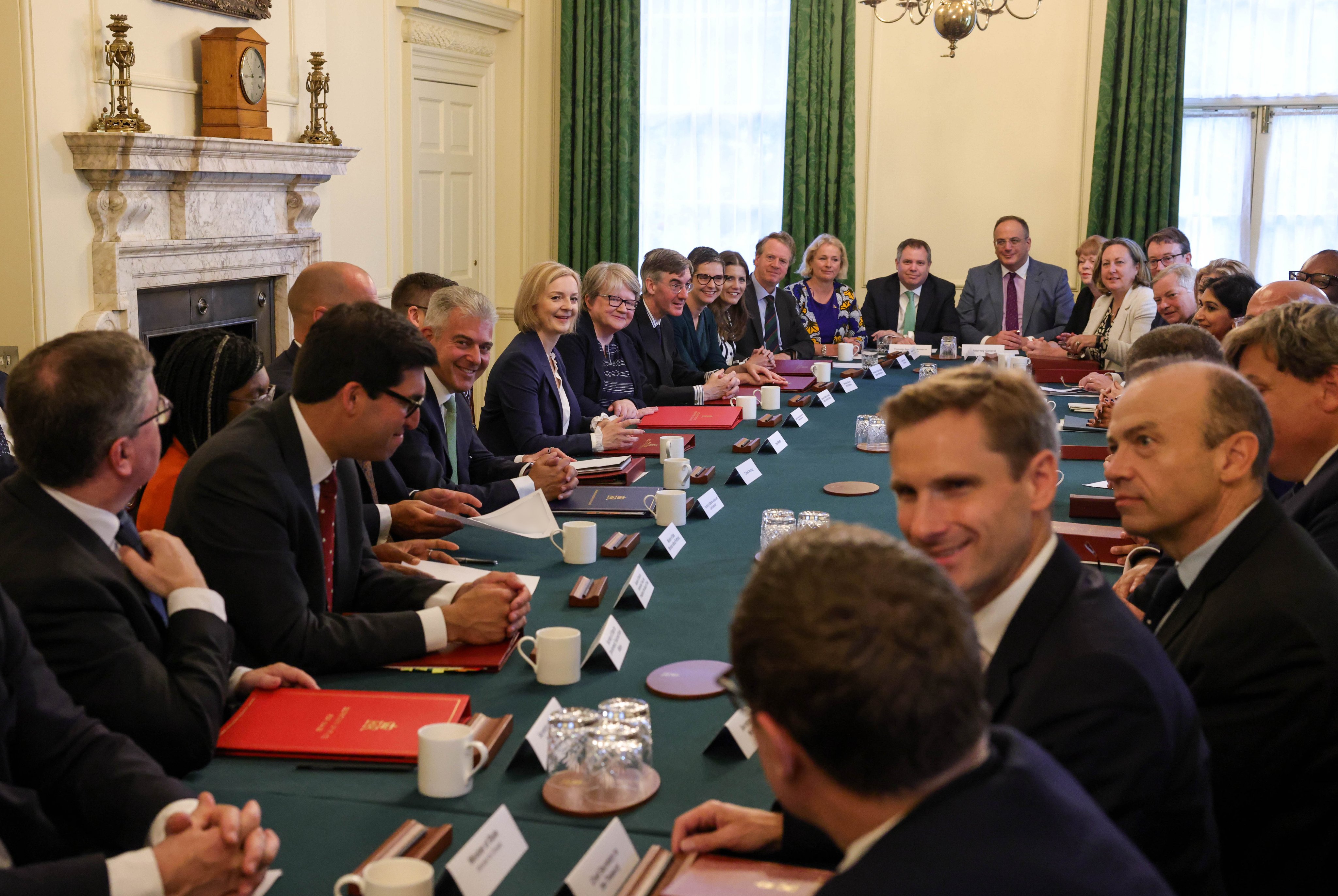
- In her first full day in office, Truss appoints the rest of her cabinet and chairs its first meeting.
- Truss attends her first Prime Minister's Questions (PMQs) as prime minister. She says that she will set out a plan to help people deal with energy bills the following day but that she is against introducing a windfall tax on energy firms.
- In a phone call, the prime minister and German Chancellor Olaf Scholz discuss the energy crisis in Europe.
8 September
- At 9:30 a.m., Truss is informed by the Cabinet Secretary Simon Case that the queen is gravely ill.
- Just before midday in the House of Commons, Truss announces a new Energy Price Guarantee initiative, which will cap domestic energy prices at an average of £2,500 a year for two years and provide "equivalent support" for businesses and public sector bodies for six months. The scheme is forecast to cost £150 billion in taxpayer funds.
- At Balmoral Castle, Elizabeth II dies of old age at 3:10 p.m., aged 96. Her eldest son becomes the new monarch, named Charles III.
- In Downing Street, Truss and her advisors are informed of the queen's death by Case at 4:30 p.m. Two hours later, the prime minister delivers a speech outside Downing Street in tribute, commending the queen as "the rock on which modern Britain was built". A 10-day period of national mourning begins, which includes the suspension of normal parliamentary business.
9 September
- At St Paul's Cathedral, Truss delivers a reading from the Bible, Romans 14:7–12, at a memorial service for the queen.
- Charles III holds his first weekly in-person audience with Truss at Buckingham Palace.
10 September
- At the proclamation of accession of Charles III in St James's Palace, Truss formally announces the death of Elizabeth II.
- Truss presents her cabinet to the king for the first time, in the 1844 Room at Buckingham Palace.
12 September
- In the first of a series of thanksgiving services for the queen, Truss joins Charles III at St Giles' Cathedral in Edinburgh.
13 September
- At the second service of thanksgiving at St Anne's Cathedral in Belfast, Truss sits beside the Irish Taoiseach Micheál Martin.
16 September
- Truss joins the king for the third thanksgiving service at Llandaff Cathedral in Cardiff.
19 September
- On a special bank holiday for the nation, the state funeral of Elizabeth II takes place in London. At the service in Westminster Abbey, Truss reads the second lesson from the Bible, John 14:1–9a.
- That evening, the prime minister travels from Windsor Castle to London Stansted Airport, then takes a flight to New York City to attend the 77th UNGA.
20 September
- Ahead of a meeting at the UNGA, Truss announces the UK will spend at least £2.3 billion on military aid for Ukraine in 2023, matching or exceeding this year's commitment.
21 September
- The prime minister has her first in-person meeting with Biden at the UNGA. Both leaders restate their commitments to the Good Friday Agreement and to continuing military and economic support for Ukraine.
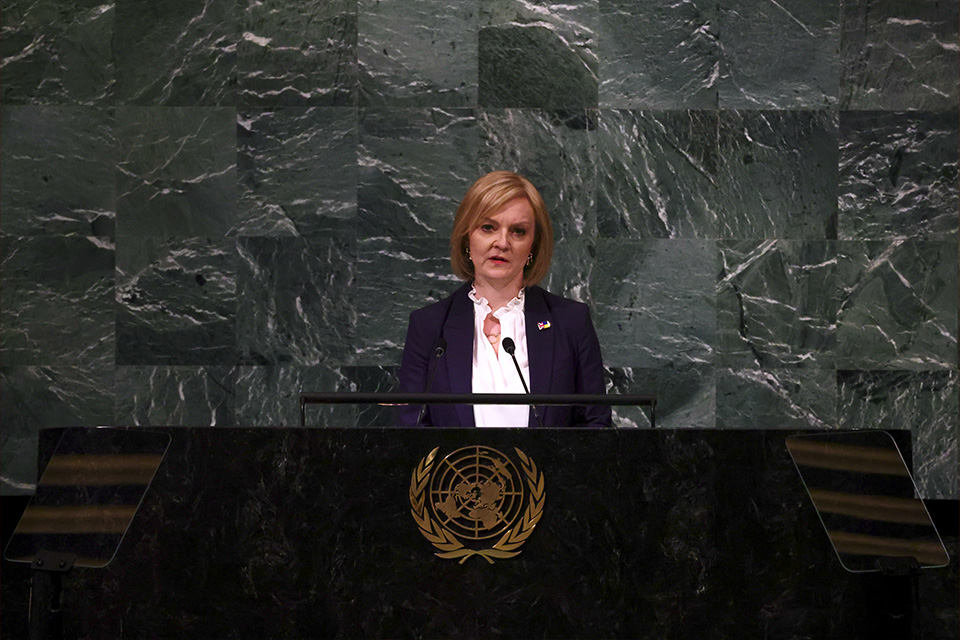
- Truss delivers a speech to the UNGA, her first speech on foreign policy since becoming prime minister. In it, she says that she will lead "a new Britain for a new era" and that the UK will be a "reliable, trustworthy and dynamic partner" around the world.
23 September 
- In the House of Commons, Kwarteng delivers "The Growth Plan", a ministerial statement that HM Treasury describes as a "fiscal event". Not a full, official budget, it is instead referred to as a "mini-budget". In the statement, Kwarteng announces measures including cutting the highest rate of income tax from 45% to 40% on earnings of more than £150,000 a year, cancelling a rise in corporation tax from 19% to 25%, and abolishing the cap on bankers' bonuses. In all, the total package accounts for £45 billion of tax cuts to be funded by extra government borrowing, making it the most significant raft of cuts in a budget since Anthony Barber's in 1972.
- In reaction to Kwarteng's statement, the value of the pound sterling falls by 2.6% to , its lowest level since March 1985.
- Later that afternoon, in an interview with the journalist Chris Mason for BBC News at Six, Kwarteng rejects the suggestion that his economic strategy is a "gamble" and says that it will instead incentivise investment and "kickstart the economy".
25 September
- Speaking on the BBC show Sunday with Laura Kuenssberg, Kwarteng says that he intends to continue cutting taxes, and promises "more to come".
26 September
- As the financial markets open in Asia, the pound falls to , its lowest level ever. The cost of UK government borrowing rises to its highest level since August 2008.
- Andrew Bailey, the chairman of the Monetary Policy Committee (MPC) of the Bank of England, releases a statement saying that the MPC "will not hesitate" to raise interest rates in order to meet its target inflation rate of 2%.
- Following a meeting between Truss and Kwarteng, HM Treasury release their own statement almost simultaneously with Bailey's, promising to release a plan on debt and economic forecasts by the Office for Budget Responsibility (OBR) on 23 November.
27 September
- A spokesperson for the IMF warns that the UK's fiscal package risks increasing inequality and says that the agency is "closely monitoring" developments.
- As a result of the pound's fall the previous day, hundreds of mortgage packages have been withdrawn by at least 28 lenders.
- Keir Starmer, the leader of the opposition and of the Labour Party, accuses the government of having lost control of the British economy.
28 September
- The Bank of England announces that it is temporarily buying up around £65 billion worth of gilt-edged securities, and says that the intervention is necessary in order to "prevent material risk" and to "restore orderly market conditions".
- That afternoon, Truss speaks over the phone with Zelensky, assuring him that the UK will never recognise Russia's attempts to annex parts of Ukraine.
- Speaking with Sam Coates, deputy political editor of Sky News, an unnamed government minister rejects the suggestion that the movement in the financial markets is because of the mini-budget, saying that it is "bullshit".
29 September
- In her first public comments since the market turmoil following the mini-budget, Truss defends her plans in a series of eight 7-minute interviews with local radio stations in England. Speaking with Rima Ahmed on BBC Radio Leeds, she says that the UK is facing "very, very difficult economic times" and that she will take "difficult decisions" to get the economy growing.
30 September
- A YouGov poll for The Times reveals that 54% of the British population intend to vote for Labour at the next general election, giving them a 33-point lead over the Tories. It is their largest lead in an opinion poll since 1998.
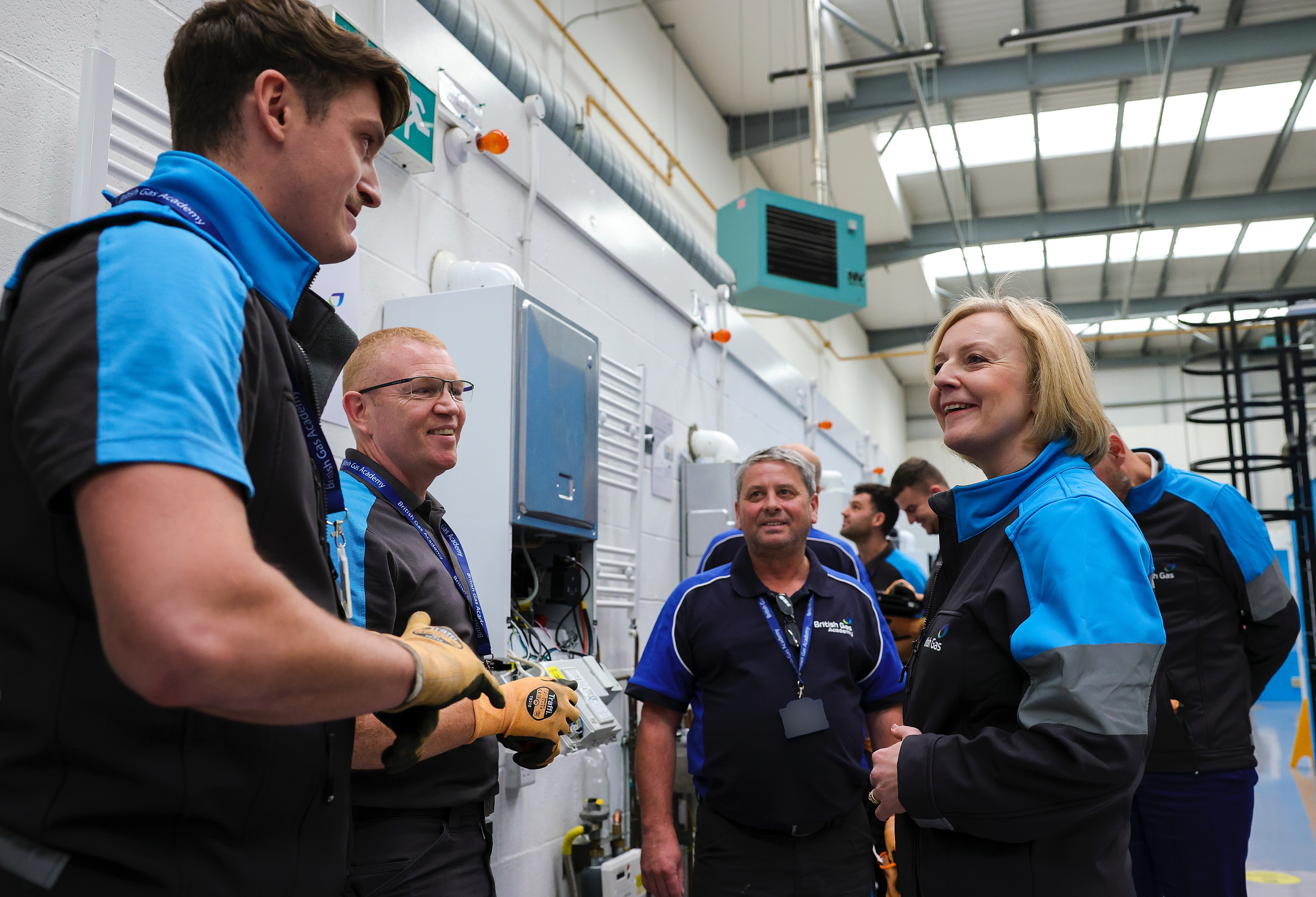
- Truss visits the British Gas Academy in Dartford for a photo op and to discuss the government's reaction to rising energy costs.
- That evening, The Sun publishes an article by the prime minister, in which she directly appeals for voters to trust her and her plan.
October
1 October
- The Energy Price Guarantee, announced by Truss on 8 September, comes into effect.
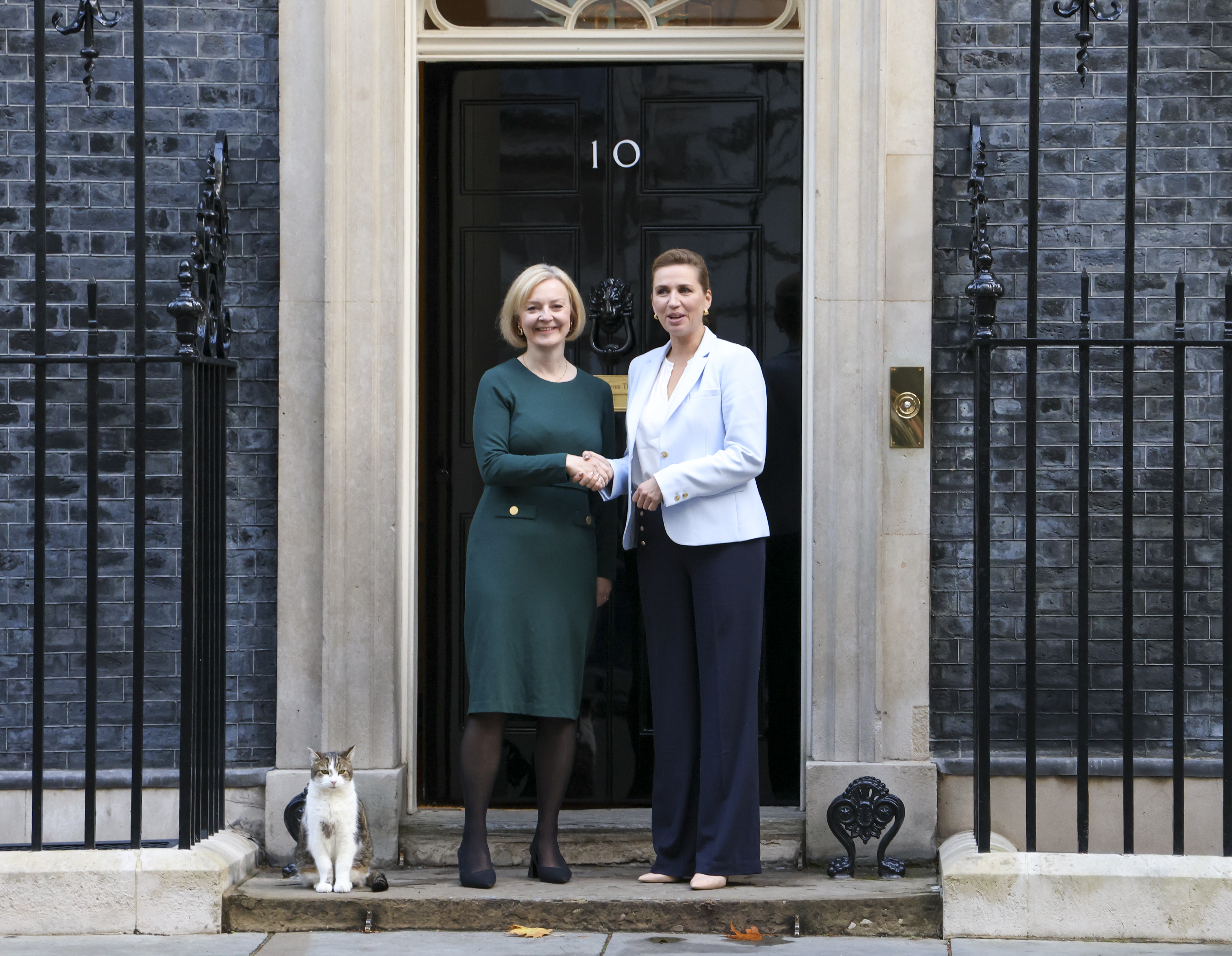
- Truss welcomes the Danish prime minister Mette Frederiksen to Downing Street, and discusses with her the Nord Stream pipelines sabotage on 26 September, as well as security cooperation and wind power.
- In the Thatcher Room of 10 Downing Street, Truss gives her first newspaper interview since becoming prime minister with Malnick. When asked if she intends to keep her entire fiscal package, she simply responds, "Yes."
- Truss arrives in Birmingham on the eve of her first Conservative Party Conference as prime minister.
2 October
- Speaking on Sunday with Laura Kuenssberg on the morning of the first day of the conference, Truss acknowledges that mistakes were made over the mini-budget, and admits that she "should have laid the ground better". She distances herself from the plan to abolish the 45% top rate of income tax, saying that it was decided by Kwarteng alone and was not discussed with her cabinet. Despite this, she says that she remains absolutely committed to it, and that it is the right decision for the country.
- Also speaking on Sunday with Laura Kuenssberg, directly after Truss's interview, the former Housing Secretary Michael Gove criticises her decision to scrap the top rate of income tax, calling it "not Conservative" and "a display of the wrong values". When asked if he would vote for the package in the House of Commons, he replies, "I don't believe it's [the package's] right."
- In an afternoon meeting, the Conservative MP Damian Green appeals to Truss to change her plan. Truss rebuffs Green's pleas.
- Brady meets with Truss in a later meeting at 7 p.m. He warns her that her plan to abolish the 45% rate of income tax does not have the support of enough MPs in the House of Commons to be voted through, and advises her to drop it.
- Truss summons Kwarteng from dinner to the 24th floor of the Hyatt Regency Birmingham, the hotel where she is staying. She tells him that scrapping the 45% rate is now "dead as a dodo".
3 October
- As rumours of Truss's intention to retain the 45% tax rate permeate through the hotel, a heated row erupts just after midnight between Adam Jones, the Downing Street Director of Communications, and Harry Cole, political editor for The Sun, over whether or not the news is true. With Jones refusing to deny the claims, Cole runs the story on The Sun{{'s}} website at 7:30 a.m.
- Ending the rumours, Kwarteng officially announces that the pledge to abolish top rate of tax is being dropped. He says that the plan had become "a massive distraction", but that he is "not at all" considering resigning. He delivers his address as chancellor to the conference later that day.
- Truss publishes an article in The Telegraph, in which she describes scrapping the 45% tax rate as a "unnecessary distraction" and explains why she and Kwarteng have decided to drop it.
4 October
- In an interview with LBC, the prime minister refuses to rule out increasing benefits in line with inflation.
- Speaking with Beth Rigby for Sky News, Truss says that she has "absolutely no shame" about the change of direction.
5 October
- A new poll by YouGov reveals that just 14% of the public have a favourable opinion of Truss, compared with 73% whose impression is unfavourable. This gives her a net favourability score of –59, making her less popular than Johnson ever was.
- At 11 a.m., the prime minister delivers her keynote speech as party leader at Conservative Party Conference. She pledges that she will "get Britain moving", and says that she has listened over the top rate tax. She criticises her opponents such as Labour, the Liberal Democrats, unions, talking heads and "Brexit deniers", and labels them the "anti-growth coalition".
- Her speech is interrupted by two protestors for Greenpeace, who hold up a sign saying: "Who voted for this?"
6 October
- As she prepares to attend the one-day inaugural meeting of the European Political Community in Prague, Truss publishes an article for The Times in which she says that it is time to "find common cause with our European friends".
- The prime minister flies to the Prague summit, where she holds bilateral talks with the Czech prime minister Petr Fiala, Macron, and the Dutch prime minister Mark Rutte.
7 October
- HM Treasury receives an e-mail from the OBR warning Kwarteng that the mini-budget has caused a £72 billion black hole in the nation's finances.
- Truss fires Conor Burns, the minister of state for trade policy, over claims that he inappropriately touched a man's thigh at the Hyatt Regency Birmingham during the party's conference.
- The Times reports that Business Secretary Jacob Rees-Mogg had approved a £15 million public information campaign to help people reduce their winter energy bills, but he was overruled by Truss.
8 October
- Four members of Truss's cabinet each write an article in a different newspaper, urging their colleagues to rally behind the prime minister.
10 October
- To help rebuild confidence from investors, Kwarteng agrees to bring forward the publication date of his fiscal plans and independent economic forecasts from 23 November to October 31, three weeks earlier than scheduled. He states that this earlier date for his medium-term fiscal plan will give the OBR enough time to assess updates to official data.
11 October
- Following the conclusion of conference season, MPs return to Westminster.
- Truss and the six other leaders of the G7 convene with Zelensky in a video call, then issue a joint statement in support of Ukraine.
- The Bank of England expands its programme of daily bond purchases to include inflation-linked debt. The bank warns that there is a "material risk" to financial stability in the UK.
- In Parliament, Kwarteng is warned by senior Conservative MPs that the economic credibility of the government will be damaged further if he tries to push through policies without the support of the parliamentary party.
12 October
- Kwarteng flies to Washington D.C. for the annual meeting of the IMF and the World Bank Group.
- Truss attends her second PMQs, where she insists that she will not reverse her tax cuts, but that she is also not planning any reductions in public spending.
13 October
- At the IMF's annual meeting, the government's plans are criticised by world financial leaders such as IMF managing director Kristalina Georgieva and President of the European Central Bank Christine Lagarde.
- In an interview with Faisal Islam for BBC News in Washington D.C., Kwarteng says that the government's position has not changed, and that his total focus remains on delivering the mini-budget. When asked if he and Truss will still be in their posts in a month's time, he replies: "Absolutely, 100%. I'm not going anywhere."
- In a post on Twitter, Conservative politician Nadine Dorries states that MPs are circulating "a smorgasbord" of names for who could replace Truss.
- Following warnings in a cabinet meeting from Case and Permanent Secretary to the Treasury James Bowler, Truss agrees to abandon her plan to cancel the rise in corporation tax.
- Brady advises the prime minister that Kwarteng will need to be sacked in order for her administration to survive.
14 October
- At an IMF talk in Washington D.C., Kwarteng seeks to reassure US politicians and bankers that the UK is "committed to fiscal responsibility". Mid-meeting, Truss summons him back to Downing Street a day early.
- Kwarteng flies back early from the IMF talks. The plane he is aboard, British Airways BA292, becomes the most tracked in the world, with over 50,000 users following it. It lands in Heathrow Airport at 11 a.m., and Kwarteng travels straight to 10 Downing Street, where Truss dismisses him as chancellor. Having served in the role for 38 days, Kwarteng is the shortest-serving chancellor since Iain Macleod in 1970.
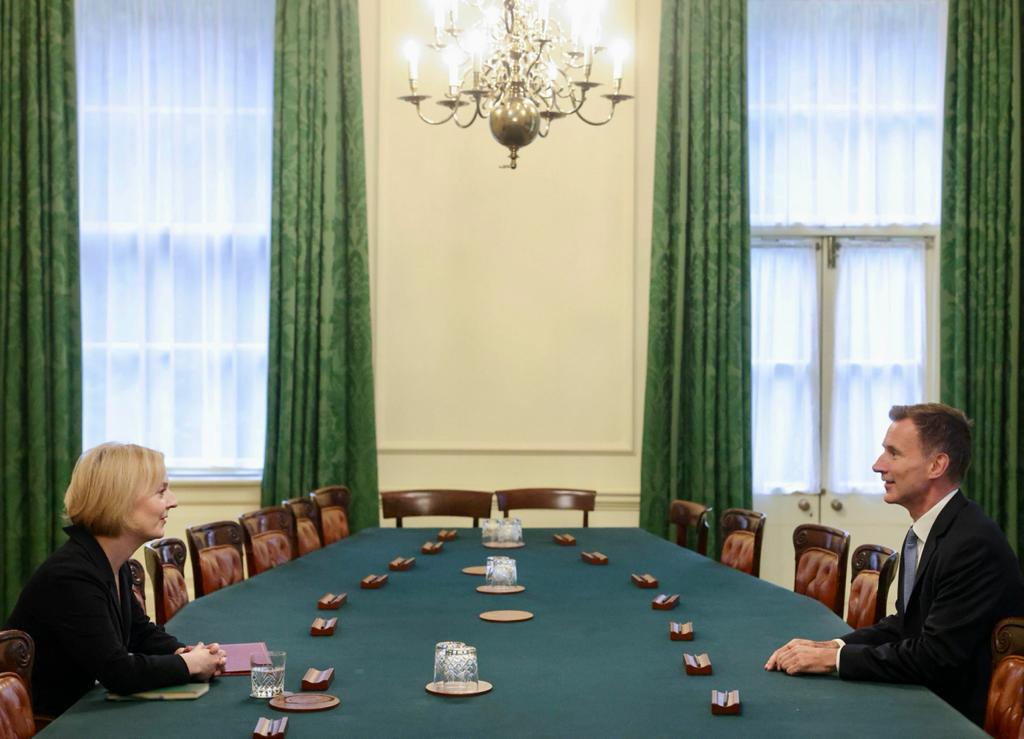
- Within an hour, Truss appoints Jeremy Hunt as the new chancellor.
- That afternoon, the prime minister hosts an eight-minute press conference in which she answers four questions. She confirms that the planned rise of corporation tax from 19% to 25% from April next year will be kept, but says: "The way we deliver our mission has to change."
- The Bank of England announces that, as planned, it is concluding its 13-day intervention in the UK's bond market. In total, the bank has purchased a £19.3 billion worth of government bonds. As a result, the value of the pounds drops by 1.2% to .
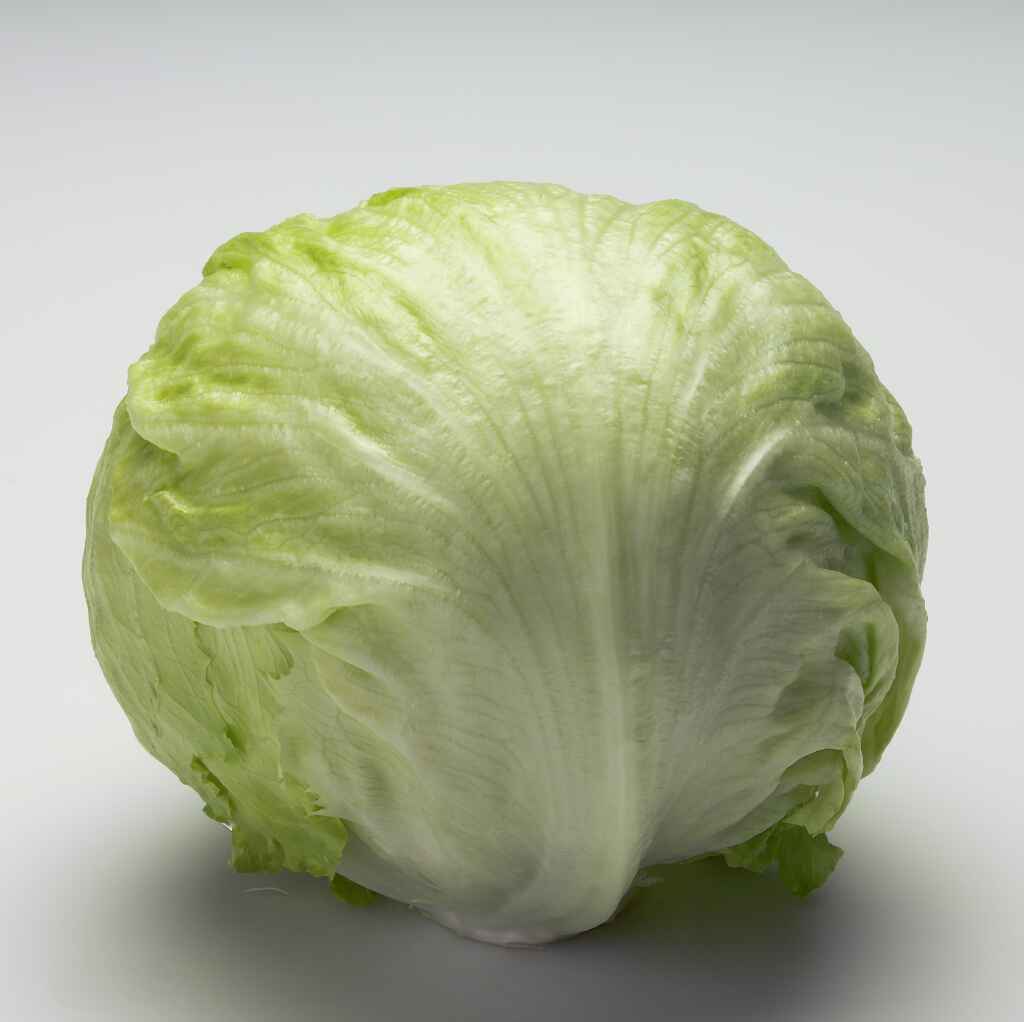
- The British newspaper the Daily Star begins a live stream of a lettuce dressed as Truss, alongside the question: "Will Liz Truss outlast this lettuce?"
16 October
- Speaking at an ice cream shop in Oregon, Biden calls Truss's tax cut plan a mistake, and says that its outcome was predictable.
- In an interview on The Andrew Neil Show on Channel 4, Crispin Blunt, the MP for Reigate, becomes the first Conservative MP to publicly call for the prime minister to resign, saying that "the game is up".
- Blunt's appeal for Truss to resign is followed by similar calls that evening from the MPs Andrew Bridgen, who speaks with The Daily Telegraph, and Jamie Wallis, who sends a letter to the prime minister.
17 October
- In an attempt to stabilise the economic markets, at 11:10 a.m. Hunt delivers a televised emergency statement from HM Treasury in which he cancels almost all of the tax cuts that were introduced in the mini-budget. He says that the cut to basic rate of income tax will no longer happen, and that the cap on energy prices will be reviewed next April, rather than lasting for two years.
- Angela Richardson and Charles Walker become the fourth and fifth Conservative MPs respectively to publicly call for Truss to resign.
- At 1 p.m., Starmer secures an urgent question in Parliament about the prime minister's decision to fire Kwarteng and appoint a new chancellor. Rather than answer the question herself, Truss sends Penny Mordaunt, the leader of the House of Commons, to respond.
- Shortly afterwards, Hunt delivers a statement in the House of Commons on his reversals of Truss's economic policy.
- To shore up unity, Truss addresses a meeting of the One Nation Conservatives within the party, and apologises for doing "too much too quickly".
- In an interview with Mason for BBC News, Truss says sorry to the public for any mistakes that have been made, but insists that she will lead the Conservatives into next election.
18 October
- Speaking at an event organised by JLA Speakers Bureau, Gove says that it is now "a matter of when, not if" Truss will be removed as prime minister.
- Following her meeting with the One Nation Conservatives the previous day, Truss meets with another caucus within the Conservative Party, the European Research Group. She tells them that she found abandoning her tax-cutting plans painful and that she did it "because she had to".
- In an attempt to maintain her support in parliament, Truss hosts a drinks reception in Downing Street for her colleagues, which is attended by her daughters.
19 October
- The Office for National Statistics reports that inflation in the year to September has climbed to 10.1%, its highest level since 1982.
- After it emerges that she broke ministerial rules by sending an official document from her personal e-mail account, Braverman resigns as home secretary, making her the shortest-serving in that role since Arthur Wellesley, 1st Duke of Wellington in 1834. In her resignation letter, she says that she has concerns over the government's direction.
- Truss replaces Braverman as home secretary with Grant Shapps, the former transport secretary.
- At her third PMQs, Starmer asks Truss why she is still in her post; she responds that she is "a fighter and not a quitter".
- The Labour Party table an opposition day motion to introduce a ban on the hydraulic extraction of shale gas. The Conservative Party's manifesto in the 2019 election had committed to a moratorium on fracking, but Truss had pledged to reverse this during her leadership campaign. Consequently, deputy chief whip Craig Whittaker e-mails Conservative MPs to inform them that they are on a three-line whip, i.e., that the motion is being treated as a matter of confidence in the government, and that anyone who votes for it will be expelled from the parliamentary party.
- When it becomes clear that up to 60 Conservative MPs might defy the whip and vote with Labour on the motion, Climate Minister Graham Stuart announces to the House of Commons, minutes before members are due to vote: "Quite clearly this is not a confidence vote."
- Confusion reigns among Conservative MPs as to whether or not they are on a three-line whip. Labour MP Chris Bryant informs the house that he has witnessed Conservative MPs being physically manhandled in the voting lobbies. Reports of "bullying, screaming and shouting" in the lobbies are revealed, and Whittaker is overheard saying: "I am fucking furious and I don't give a fuck any more."
- In the end, Labour's motion is defeated by 326 to 230, with 40 Conservative MPs having voted for it.
20 October
- At Truss's request, Brady enters Downing Street through the back door to speak with her. She asks him if she will be able to remain in office, to which he replies: "I don't think so, Prime Minister."
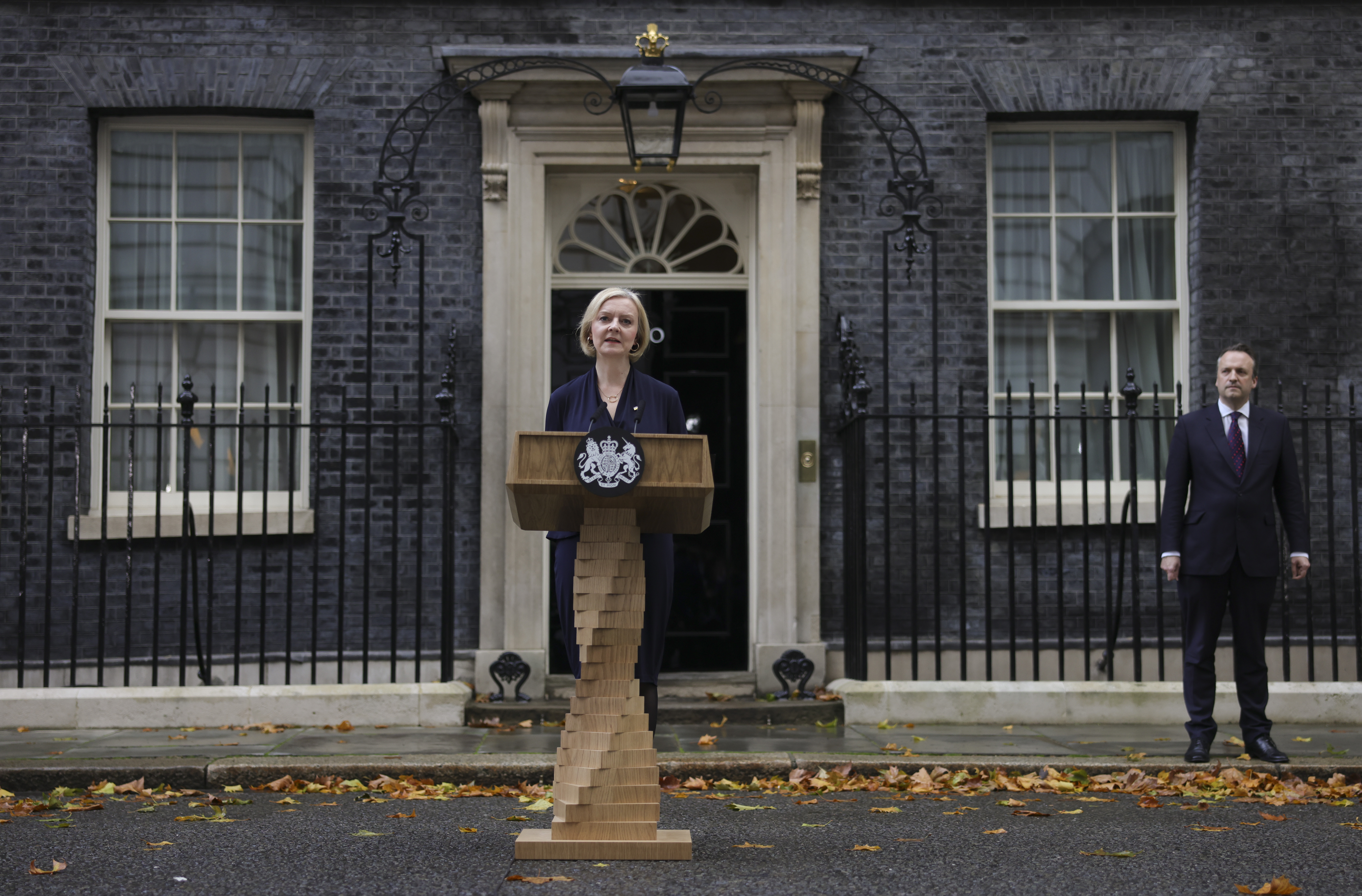
- Just before 1:35 p.m., Truss delivers a statement outside Downing Street in which she announces her intention to resign as prime minister and leader of the Conservative Party. She says she cannot deliver the "mandate" on which she was elected.
20–24 October
- A second contest to lead the Conservative Party is held, which is won by Sunak.
25 October
- Flanked by her aides and family, Truss delivers a final speech outside 10 Downing Street. She then travels to Buckingham Palace to formally tender her resignation to Charles III. Having lasted for 49 days, her premiership is the shortest in British history.
Aftermath
The premiership of Liz Truss and specifically the mini-budget had a long-lasting impact on the British economy; this was particularly felt on the UK's mortgage market. By 20 October, the day of Truss's resignation, two-year fixed mortgage rates had risen by almost two percentage points compared to the morning before the Growth Plan was announced. In the first quarter of 2024 there were 5,182 mortgage possession claims, a rise of 28 per cent in three months and the highest level since 2019. The housing charity Shelter reported that 2,682 households had been affected by no-fault bailiff evictions between January and March 2024, a six-year high. Annual food prices rose by almost 15%—the steepest increase since 1980—and, a year after hitting a forty-year high of 10.1%, inflation remained high.
Truss's premiership also had a considerable political impact. On 22 February 2023, Truss was reselected by the Conservative Party to stand as their candidate for her constituency of South West Norfolk at the next general election; twelve months later, Kwarteng confirmed over social media that he would not stand for reelection. The election was held on 4 July 2024, and resulted in considerable losses for the Conservatives. The Labour Party, led by Starmer, won a total of 411 seats, giving them a landslide majority of 174 in the House of Commons. The Conservatives, led by Sunak, won 121 seats on a vote share of 23.7%, the party's worst result at a general election in its history. South West Norfolk was won by Labour's Terry Jermy with a majority of 630 votes on a swing of 26 points – this made Truss the first former prime minister to lose their seat since Ramsay MacDonald in 1935.
See also
- Timeline of British history (1990–present)
- Timeline of Partygate – a similar political timeline of the UK involving Johnson
External links
Similar timelines
- "Timeline: UK Prime Minister Liz Truss from crisis to resignation" at Al Jazeera
- "Liz Truss timeline: UK Prime Minister's 44 days from appointment to resignation" as Chronicle Live
- "Truss resigns: A timeline of key events in three months of UK political chaos" at Euronews
- "Liz Truss: A timeline of the shortest premiership in British history" at the Evening Standard
- "From fighter to quitter: timeline of Liz Truss's U-turn littered premiership" at The Guardian
- "Timeline: Key moments in Liz Truss's 45 days as prime minister" at The Independent
- "Resignations, reversals and rebellion – the 44 days of Liz Truss's premiership" at Sky News
- "Truss timeline: The rise and fall of the shortest-serving PM" at STV