
Owenkillew River
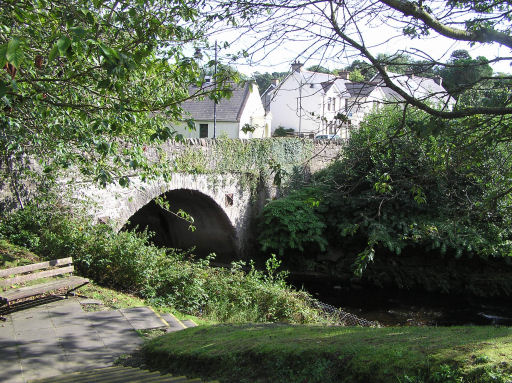
Owenkillew River is a river in County Tyrone, Northern Ireland. It rises in the eastern Sperrin Mountains and flows westwards, forming part of the Lough Foyle system. It runs through the Sperrins past Gortin village and meets with the River Strule in Newtownstewart. The Owenkillew, draining the valley south of the Munterlony Mountains, has as tributaries, the Glenelly River, which drains the long valley between the Sperrin and Munterlony Mountains, the Glenlark, the Coneyglen, the Broughderg, and the Owenreagh River.
Angling
The river has good brown trout, but is better known for its run of good grilse and salmon.
Special Area of Conservation
Owenkillew River is designated a Special Area of Conservation. It is notable for the physical diversity and naturalness of the bank and channel, and the richness and naturalness of its plant and animal communities. It is associated with several woodlands which together represent one of the best examples of old sessile oak wood in Northern Ireland. The woods contain a number of associated physical features, including waterfalls, gorges, cliffs and scattered boulder scree, which contribute to the diversity of the woodland communities. The freshwater pearl mussel population, which is estimated to have a minimum number of 10,000 individuals, is confined to 4km of undisturbed river channel in the upper reaches of the river. It is the largest known population surviving in Northern Ireland.
Area of Special Scientific Interest
The River Foyle and Tributaries Area of Special Scientific Interest (ASSI) includes the River Foyle and its tributaries ie that part of the River Finn which is within Northern Ireland, the River Mourne and its tributary the River Strule (up to its confluence with the Owenkillew River) and the River Derg, along with two of its sub-tributaries, the Mourne Beg River and the Glendergan River. The area encompasses 120km of watercourse and is notable for the physical diversity and naturalness of the banks and channels, especially in the upper reaches, and the richness and naturalness of its plant and animal communities. Of particular importance is the population of Atlantic Salmon, which is one of the largest in Europe. Research has indicated that each sub-catchment within the system supports genetically distinct populations.