
List of tourist attractions in Kolar district
Kolar district is located at a distance of AbOUT 68 kilometres from Bangalore. It lies in the eastern part of Karnataka. It is situated on the Bangalore to Chennai National highway (NH-4). Kolar is also known for its fortresses and temples.
Kolar sub division has 5 taluks:
- Kolar
- Bangarapet
- [kolar gold field]
- Malur
- Mulbagal
- Srinivaspur
Kolar Taluk
Kolaramma temple
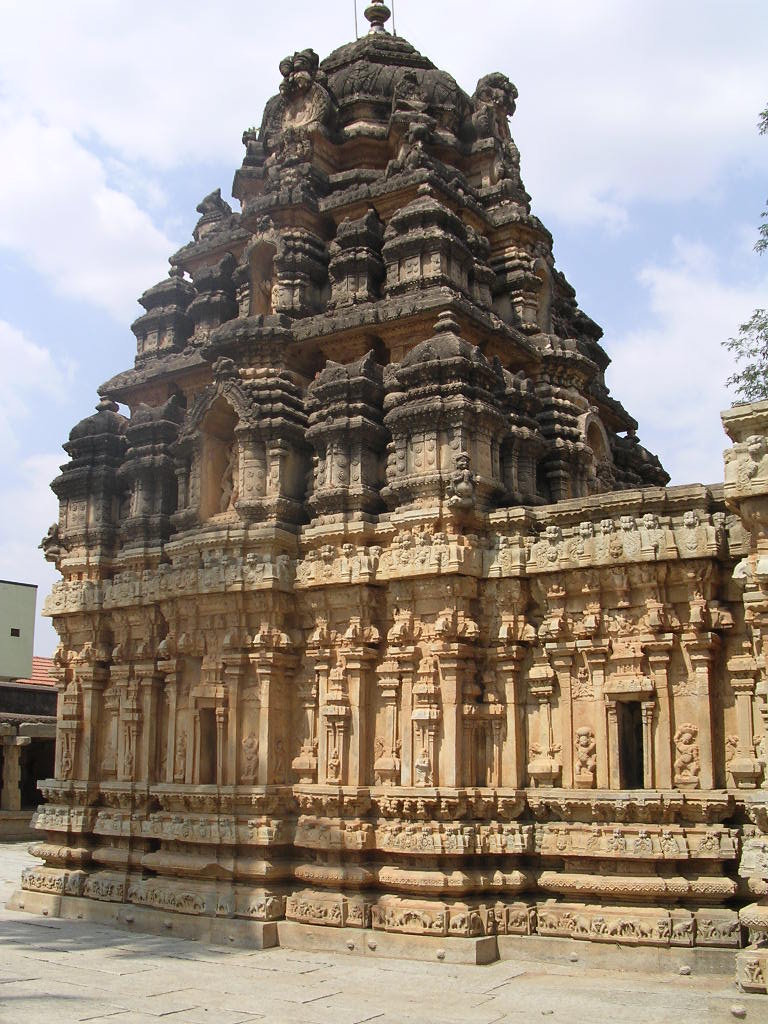 Kolar is located along the southern region and eastern most part of state of Karnataka. The Two most significant temples are Kolaramma temple and Someshwara temple. The Kolaramma temple is built and dedicated to Goddess Shakti.
Kolaramma Temple – history The temple is built in Dravida Vimana Style and dates back to the Ganga period. The temple has several Chola renovations and additions were made by them in the 11th century, followed by Vijayanagara rule in the 15th century. The Cholas made several inscriptions in the temple, the earliest inscription belongs to the period of Rajendra Chola I from 1012 to 1045 A.D.
Kolaramma Temple – architecture The temple is built in typical South Indian architectural style using granite stones and is around 800 years old. The temple is L-shaped housing two shrines, one for Durga who is known as Kolaramma and another for Saptamatrikas. The main temple faces the east while the larger shrine faces the north. But both of them share a common vestibule. Though the temple resembles a mantapa, there are nearly 30 inscriptions in both Tamil and Kannada found in the temple complex.
Someshwara temple
Kolar is located 68 km from the city of Bangalore, on the Chennai-Bangalore National Highway. Kolar boasts of a rich history with the fortresses and temples built under the reign of several dynasties. Someshwara Temple is located in the heart of the Kolar region and is one of the famous temples in this town.
Someshwara Temple – history The temple was built by the Cholas who ruled this region in the 11th century who were then dethroned by the Chalukyas. The temple was later expanded by the Vijayanagara Empire and is a fine example of the Vijayanagara style of architecture. The carvings on the inner pillars of the temple have an international connection which depicts the importance and value of trade to the King.
Someshwara Temple- architecture The temple is every architect's delight considering the beauty of Dravidian architecture. The huge gopura on the entrance stands testimony to the hand of the Cholas in the construction of this temple. The temple has heavy Prakara walls, a Kalyana Mantapa (Wedding hall), a Mukha Mandapa with massive pillars, a Vasantha Mantapa (Marriage Podium) and a shrine forgoddess Parvati Devi. The Kalyana Mandapa has 64 - 16 sided pillars, a few depicting men, riding horses and others represent mythological stories. The carvings on the pillars bear influence of the European, Chinese and Thai style..
Antharagange
Located 3 km from Kolar, Antharagange, a sacred stream, that pours sweet water from the mouth of a bull. This scenic spot, known as Shatha Shringa Parvatha, abounds in rocks of many shapes and rare flora and fauna. The hill top resembling a snakehood- (Havina Hede), gives a bird’s eye view of seven towns. It is a trekker's delight, accessible from two routes, steep steps on one side and a motorabel route on the other. The granite temple of Neelakanteshwara, at the foothills, is an attraction.
This place is also a great picnic spot. On top of the hill there is a huge plateau. Antargange, a perennial spring on the east of the hills has become a popular tourist destination.
Bangarapet
Kotilingeshwara Temple
Kotilingeshwara is the principal deity of the Kotilingeshwara temple. This temple lies in the Kammasandra village in the district of Kolar. The Kotilingeshwara temple houses the biggest Shivalinga in the entire world. It is said that during Mahashivratri, there are close to two lakh devotees who visit this place every year. Kotilingeshwara is about 6 kilometers from the famous Kolar gold fields.
Kotilingeshwara Temple - facts
- Daily puja is performed at six in the morning and six in the evening by priests.
- There are drums and music at the time of the pooja.
- Mantras are recited and holy water is poured on the lingas.
- Devotees can offer prayers to Kotilingeshwara by installing shivalingas.
- The Kotilingeshwara temple also has rest house facilities.
- Devotees who want to reside in the guest houses may have to do prior bookings.
- Annadhanam (free food) is provided to all the devotees every afternoon.
Bangaru/Chikka Tirupati
Is located 29 km from Kolar in place called Guttahalli. This is a very famous temple which resembles the famous Sri Venkateshwara Temple of Tirupathi in Andhra Pradesh.The temple is built on rocks which dates back to Brigu Maharushi's days.At Guttahalli, you'll find the temple on a hillock that is about 40 metres high. Just below the hillock is Garuda, Vishnu's vehicle.
The temple itself has a very impressive gopuram. There is the kalyani or water tank near which a flight of steps leads us to the idol of Venkataramana, also called Srinivasa. This small attractive sculpture has to be viewed from a six-holed window. The temple attracts lots of devotes particularly during the month of Shravana (July/August) At a different level is the shrine for the consort Padmavathi, dating back to mid-19th century. This temple is thronged by pilgrims, particularly during the month of Shravana(July–August).Darshan of the deity is through a small window in the sanctum.
Budikote
This is a village, about 15 km. southwest of Bangarpet town, whose history dates to the 8th century A.D. Budikote, meaning “fort of ashes”. Is said to derive its name from an immense holocaust, believed to have been performed there, in its hoary past. Budikote is the birthplace of Hyder Ali and a spot among the boulders in the fort, is known to tourists as the place where his cradle was rocked. The important temples here are those of Venkataramana and Domeshwara. Hyder Ali or Haidar 'Ali (c. 1722-1782), was the de facto ruler of the Kingdom of Mysore in southern India. Hyder Ali was a Muslim soldier-adventurer, who, followed by his son Tipu Sultan, became one of the most formidable Asiatic rivals the British had ever encountered in India. He was the great-grandson of an Islamic fakir from Gulbarga, Deccan. His father was a naik or chief constable at Budikote, near Kolar in present-day Karnataka. there is also a fort at Budikote present today at the place where he was born. He was born in 1722, or according to other authorities 1717, however the memorial in Budikote states he was born in 1720. As a youth, Hyder assisted his brother, a commander of a brigade in the Mysore army, and acquired a useful familiarity with the tactics of the French when at the height of their reputation under Joseph François Dupleix. He is said to have induced his brother to employ a Parsi to purchase artillery and small arms from government of Bombay Presidency, and to enroll some thirty sailors of different European nations as gunners, and is thus credited with having been "the first Indian who formed a corps of sepoys armed with firelocks and bayonets, and who had a train of artillery served by Europeans." He induced Shamaiya Iyengar into his ministry as minister of post and police and later Shamaiya served under Tipu.
[K.G.F] Kolar Gold Fields tourist attractions
Kolar Gold Mines
KOLAR GOLD FIELDS. (KARNATAKA) This little mining town, about 82 km, east of Bangalore, was once the pride of the erstwhile Mysore state, and also that of India. This gold mine produced a sizeable amount of gold during the days of the British Raj. It employed nationals from Britain, Italy, Germany and also a good number of Angto -Indians.
Malur
The main attraction of Malur is a temple dedicated to Lord Prasanna Venkateshwara at Chikka Tirupati. The other temples of Malur are Shankaranarayana and the Markandeswhwara. There is a village called Shivarapattana, where one can find national award winning rock sculpture makers
Mulbagal tourist attractions
Mulbagal overview
Mulbagal is a town and Taluk headquarters of Mulbagal Taluk in the Kolar district in the state of Karnataka, India.
- Just 29 km from Kolar and 90KM from Bangalore,4-Lane road from Bangalore i.e. National HighwayNH-4
- Its is a popular tourist stopover an en route to Tirupati.
- Soon Railway station will be opened i.e. Whitefield-Kolar-Mulbagal and Bangarpet-Mulbagal-Kadappa route
- You can choose many hills for trekking.
kurudumale Temple
This place is located 12KM from Mulbagal, was the capital of the Hoysala Dynasty. The giant, thirteen and a half foot sculpture of kurudumale Ganesha and the Someshwara temple, attract thousands of visitors from the surrounding states.
kurudumale Temple – Overview
The temple of kurudumale is situated in the district of Kolar in the State of Karnataka. There is a popular Ganesha temple here which was built by the Vijayanagar kings. It is believed that the Devas had come down from their abode or heaven for some fun. The Ganesha temple of Kurudumale is supposed to be very powerful and many people come here to take Lord Ganesha’s blessings before commencing any new work or activity. Ganesha is believed to be ‘Vighnaharta’ – the one who clears all our hurdles. Just close to the Kurudumale Ganapathi temple is the Someshwara temple where the principal deity is Lord Shiva. It is interesting to note that this temple has been built out of a single rock. kurudumale is about 10 kilometers from Mulbagal and has emerged as a popular tourist destination.
Kurudumale Temple - Architecture
The Kurudumale temple was erected during the rule of the Cholas. It is interesting to note that there are different types of architecture within the temple premises. It is supposed to have been completed by artists Jakanachari and Dankanachari. The work of the latter is supposed to be more elegant and intricate. The Ganesha temple of Kurudumale has a very big idol of Ganesha and is worshipped by devotees since ages. King Krishnadevaraya built this beautiful temple of Ganesha.
this temple is considered to be older than the Ganesha temple and was built during the Cholas period. Half of the temple has different style of carving, believed to have been done by artist Jakanachari and the other half is believed to have been carved by his son Dankanachari. The part of the temple supposedly built by Dankana's has statues and carvings which are more intricate and sophisticated. Ganesha temple in Kurudumale, situated on the same road as that of Someshwara temple, but here a huge Ganesha idol is being worshipped from ages unknown. It is said that the Ganesha statue was being worshipped in an open field, until Krishnadevaraya built a temple around it. Its too huge to imagine (14 ft in all), bigger than the Dodda Ganesha of Basavanagudi.
Kurudumale - Mythology
As per mythological stories, Lord Ganesha’s idol was installed by the maker, destroyer and sustainer of the universe that is Brahma, Vishnu and Mahesh. It is supposed to be a sacred place as the Gods descended from heaven for recreation. Tourists from across the world come to this thirteen and half feet idol for Darshan.
Kurudumale – religious significance
The old name of Kurudmale was ‘Koodu-Malai’, which in Tamil means ‘meeting hill’. It is believed that this was the place where the Gods relaxed. The temple is indeed a place of purity, bliss and lends a divine feel. There is lot of calmness and positive sacred vibrations on entering the temple. The Kurudumale Ganapati temple provides solace and calmness to the mind. You’ll feel blessed standing and praying to the Lord. It is said that whoever prays with a pure heart will surely achieve success in all their endeavors. They will be blessed with good health and prosperity. It is also said that the gods Brahma, Vishnu and Maheshwara have blessed this wonderful place with prosperity and happiness. Priests in this region say that a pooja was performed for Ganesha by the trimurthis.
How to get to Kurudumale
Kurudumale is about 110 kilometers from Bangalore. Kurudumale is well connected by roads and you can easily take a bus or drive down. There are Karnataka State Road Transport Corporation buses that ply between Bangalore and Mulbagal. Passenger trains operate between Bangalore, Hubli, Hassan and Mulbagal. The closest airport is either Hubli or Bangalore. Avoid the summer months when visiting this temple. A good time to visit would be anytime between July and October. Kurudumale – Facts
Kurudumale is situated about 12 kilometers from Mulbagal and it was a popular centre during the rule of the Hoysala kings.
Avani, Kolar attractions
Known as the Gaya of the south, Avani has a cluster of Ramalingeshwara temple all within one courtyard dedicated to Lakshmana, Bharata and Shatrugna as well as a Shankar Math built by the Nolamba Dynasty. Legend has it, that the hill above was home to Valmiki’s ashram, where Lava & Kusha were born and raised.
Avani, Kolar temple overview
Avani is famous for the Sita temple situated on a hill. This temple is one of the few temples dedicated to Sitadevi in India. It is also known as the Gaya of the south and has ancient temples known as the Ramalingeshwara, Lakshmaneshwara, Bharateshwara and Shatrugneshwara, dating back to the period of the Nolamba Dynasty. It has been told that Sitadevi gave birth to her twin children Lava-Kusha here. Even today the room where Sita gave birth to her children exists.The war between Sri Rama and his sons Lava & Kusha was happened in this village. The place is very near (About 9 km)to Mulabaagilu or Mulbagal (Taluk head quarters) in Kolar District.
History
When Sri Narasimha Bharati IV of the Sringeri Sharada Peetham was on his sancharas', he camped here for a few days. During his stay here, in Avani, he found an idol of Goddess Shrada, in standing posture flanked by Srimajjagadguru Shankaracharya and the Sri Chakra. He consecrated this idol here and established a new Matha and installed one of his shisyas as the head of the new Matha. This matha is now known as Avani Sringeri Jagadguru Shankaracharya Sharada Peetham. There is a branch of this matha in Basaweshwaranagar in Bangalore. There is also a belief that the sage Valmiki, Was residing here during the period of Ramayana in AVani. He was author of the epic Ramayana, based on the attribution in the text of the epic itself.[2] He is revered as the Adi Kavi, which means First Poet, for he discovered the first śloka i.e. first verse, which set the base and defined the form to Sanskrit poetry. The Yoga Vasistha is attributed to him. The religious movement Valmikism is based on Valmiki's teachings as presented in the Ramayana and the Yoga Vasistha. And also believed the Nayak or Nayaka caste [in Karnataka and Andhra Pradesh] was originated from Valmiki. These Nayaka community people is planning to start education center, Ashrama at Avani, planned was done.
“Avani” meaning
The boy name Avani is of Sanskrit origin and its meaning is "earth". It is a not a Hindi name. It is perfectly a Sanskrit word and Sita was also called Avanisuta meaning 'Daughter of Earth' as the legend goes that she was found while ploughing the earth.
Lavaa Kusha Betta/Hill, Trekking
This hill said to be one of the place where Rama, Sita and Lakshmana stayed during their 14 years exile from Ayoudha. Legend says that on this hill Sitha gave birth to Lavaa and Kusha. Hence the name Lavaa Kusha Betta/Hill. From the ground the boulder fill hill gives a feel that stones are balanced in the air, the alignment is amazing and looks like somebody went there and decorated the stones like that. You have to trek to the top there Sitha devi temple is located, from there you can see a bird eye view of the surrounding area.
After you start trekking, you will find a little pleat kind of place which will give a feel that you have reached the destination but this not the case, you have still climbing up to reach destiny. However, here you can indulge in photography and take a bit rest. Also, here you will find Valmiki Ashrama, where he was meditated and wrote Ramayanaepic. Now again you will have trek along stone fested route to reach the top. This place seems to be a relatively unknown but we can say without any doubt it is one of the best romantic place.
It is advisable to trek in early morning or late afternoon so that it is less strain and you can also enjoy sunrise or the sunset amazing views scenery. Also, the wind intensity makes one feel like, you are about to fly. Be cautious and do not venture at the edges. Also try going there in groups.
Mulbagal Town tourist attractions
Overview
The Anjaneya temple and the Someshwara temple, with its exquisite bronze icon of the Dancing Nataraja, of the Vijayanagar period are a great draw. The tomb of Haider Oulia, a great Muslim saint and 13 km away, the tomb of the 15th Century Madhwa saint, Shripadaraya are also popular spots.
Kshetra Palaka Sri Anjaneya Temple
Located at Mulbagilu/Mulbagal Bus stand, being tired after war Arjuna went on pilgrimage and bought his flag used during war consisting of Vayu Putra image and established in Mulbagal then called shathaka vatipuri. after the Mahabharata war. Sage Vasishta is believed to have installed the idols of the main deity Srinivasa, Padmavati and Rama-Sita-Lakshmana.<Anjaneya Temple
For any Seva and other details contact temple Manager, Phone Number: 08159 - 246059, 243237. Temple has been renovated recently.,
Someshwara Temple:
Apart from the famous Hanuman temple, this town has Someswara' temple dedicated to Lord Shiva. The Shivalinga here is similar to that at sacred Kashi or Varanasi.
Sripadaraja Math and Narasimha Teertha
In the Mulbagal town (about 1 km from town towards east on NH4.) was the residing place of Sreepadaraja Swamiji or simply Sripadaraya, a disciple of Saint Madhwacharya (who is known as third Avatar of Vayu). The earlier two being Anjaneya or Hanuman, second being Bheema; the second Pandava. Madhwacharya established the Dwaita school of philosophy.
- Sri Sreepadaraaja Swamiji is the disciple of Shri swarnavarna teertharu. He is the cousin of SrI Brahmanyateertharu. Sri Sreepadaraaja Swamiji is the vidya-guru (spiritual teacher) of Sri Vyasarajaru, whose name is took with extreme devotion amongst the scholars. Sreepadaraaja Swamiji who was the raajaguru (most important advisor) of the Vijayanagara kings, was known to have used Kannada keerthanas (hymns) during pooja which was considered holy during those times. Sreepaadaraja Swaamiji was also known to was offering sixty four types of dishesnaivedya (offering) to God everyday without fail. He has penned many keerthanas praising God and are still popular even after 600 years. Sreepadaraaja Swamiji has also composed a grantha (book that discusses spiritual matters) called "vagvajra".
- The Narasimha teertha is the sacred place where Swamiji lived and had his brindavan (sacred resting place for Hindu sages) made, is now the headquarters of the Sreepaadaraaja Mutt founded by him. There is also a Swayamvyakta Yoga Narasimha temple near the brindavan.
Baba Hyder Vali of Mulbagal
Mulbagal is also sacred for Muslims as the dargah of Sufi Saint Baba HyderHalli of Mulbagal was situated here. Both Muslims and Hindus worship at the Baba Hyder Vali of Mulbagal and Urus festival is very popular here even nowadays.
Virupaksha Temple
Five km from Mulbagal, Virupakshi has virupaksha temple built during the reign of the Vijayanagar king Deva Raya II. The Parvati shrine here has the figure of a lion on front of it just like Nandi in front of Siva temples. This is rather unusual.
External links
- Kolar District administration website
- Kolar tour
- Kolar Temple
- Anjaneya Temple
- Mulbagal
- Mulbagal History
- Town
- Chikka Thirupathi
- Avani valimiki
- Mulbagal Trip