
Li Jian (art curator)
Li Jian (art curator) is the E. Rhodes and Leona B. Carpenter Curator of East Asian Art at the Virginia Museum of Fine Arts. She began her work as chief curator of Asian art at the Virginia Museum of Fine Arts in 2007.
Education and experience
Li Jian studied English language and management, earning a BA at the Beijing Foreign Languages Institute. She earned an MA in the history of art from the University of Minnesota.
In 2003 in Ohio, Li Jian was Curator of the Dayton Art Institute's exhibit Glory of the Silk Road: Art from Ancient China. The Dayton Art Institute was also the former home of VMFA Director Alex Nyerges. In addition to leading a major renovation of the Dayton museum's Asian wing, she organized the exhibition "Glory of the Silk Road: Art from Ancient China" featuring works from 14 museums and archaeological institutes in China.
In Richmond, Virginia she is also a member of the affiliate faculty of the Virginia Commonwealth University School of the Arts drawn from the staff of the Virginia Museum of Fine Arts. Affiliate faculty are selected museum professionals who contribute to VCU's graduate program by supervising internships, offering guest lectures, serving on dissertation committees, and teaching museum studies courses. Li Jian has published two exhibition catalogues, Eternal China: Art from the First Dynasties (1998) and The Glory of the Silk Road: Art from Ancient China (2003).
The monju scroll
Li Jian described the monju scroll, a 14th century Japanese scroll of the Kamakura period in an interview at the VMFA.
Glory of the Silk Road
Laura Bergman, a curator of the Dayton Art Institute discussed with amazement the Glory of the Silk Road: Art from Ancient China, curated by Li Jian, the museum’s Asian art curator. Bergman and Li Jian highlighted treasures of the exhibition, such as a ceramic groomsman from ancient Turfan and a gilt bronze Buddha from Xi’an. Unearthed from three excavation areas in China, Xinjiang, Ganxu Corridor and Xi’an, the 176 items in the exhibit included sixth to ninth century jade, silk tapestries and bronze statues commonly associated with ancient China, along with treasured artifacts of gold, glass and precious stones from Greece, the Roman Empire, and India. The days of the Tang Dynasty were among the most open times of Chinese history in their appreciation of other cultures.
The Terracotta Army
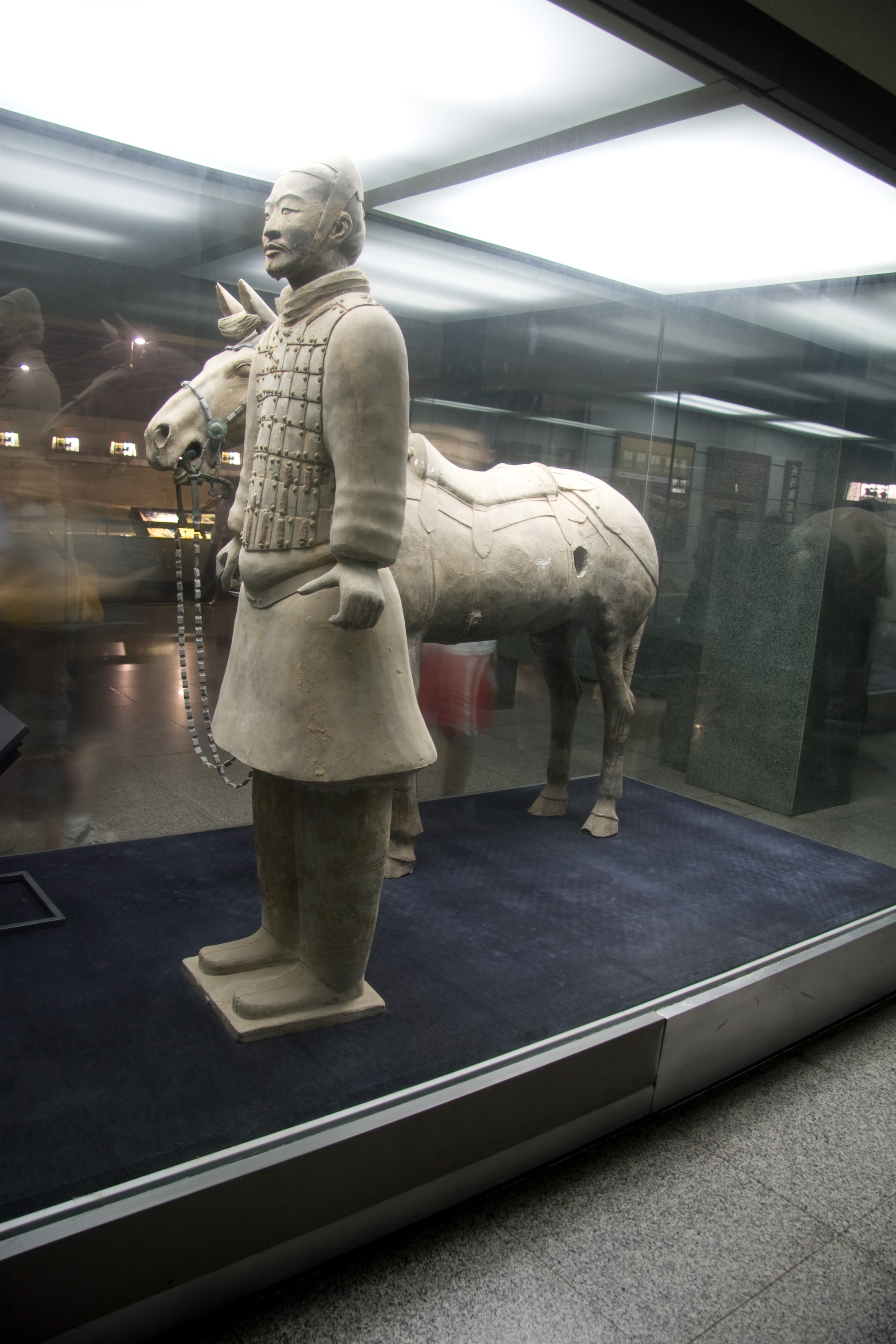 In 2017 Li Jian was curator of the Terracotta Army: Legacy of the First Emperor of China, the Qin Dynasty terracotta soldiers exhibition at the Virginia Museum of Fine Arts. The VMFA's director, Alex Neryges, stated that the Terracotta Army was the biggest archaeological discovery of all time calling the Qin Shi Huang dynasty “one of the most amazing civilizations in the history of our planet.” Discovered in 1974, the realistic terracotta portraits of the soldiers were uncovered by a farmer digging a well near the early capital city of China, Xianyang. Neryges reported record-breaking attendance at the VMFA for this exhibition.
External links