
Kazakh–Dzungar War (1635–1658)
The Kazakh–Dzungar War of 1635–1658 — was a significant phase of the protracted geopolitical struggle between the Kazakh Khanate and the Dzungar Khanate for dominance over the trade routes and pastures of Central Asia. This period was characterized by the centralizing efforts of the Dzungar leader Erdeni Batur, who sought to consolidate the Oirat tribes into a unified state, and the defensive-strategic response of the Kazakh ruler Salqam Jangir Khan. Supported by regional allies, most notably the Khanate of Bukhara under Yalangtoʻsh Bakhodir, the Kazakhs engaged in a series of large-scale military campaigns that shaped the borders and political landscape of the region for the next century.
Rich in water recourses and fertile pastures,on the territory of Zhetysu and southern Kazakhstan became the arena of military operations between the Kazakhs and the Dzungars. These lands were also of great interest to both sides due to the transit routes from East Turkestan to the urban centers of southern Kazakhstan and Central Asia.
Background
In the 1520s-1530s, the first conflicts began between the Oirats and the Kazakhs...After the Oirat banditry in the Jetisu region increase, Tahir Khan himself gave order to built the Zhatan fortress in one of the mountainous regions of Jetisu. Under Tahir Khan, a Kazakh-Kyrgyz alliance was formed, which lasted, intermittently, for centuries. T.T. Mashrapov believes that a military alliance was created between the Kazakhs and Kyrgyz to resist the invasions of the Kalmaks and other neighbors. The Kazakh-Kyrgyz Union played an important role in their joint defense of ethnic territories from external aggressors. For a long time, it successfully deterrence the Kalmaks from invasion territory in Zhetysu and modern Kyrgyzstan.
Between 1551 and 1556, when Tauekel was the sultan, he carried out a series of raids and plunders against these Oirats,However, the Oirats counterattacked and forced Tauekel to flee towards Tashkent. Tauekel asked the emir of Tashkent, Borak Khan, for help, but Borak refused.This conflict is believed to have taken place in 1552.
Such Oirat invasions intensified in the 1552s, as the Oirats, defeated by Altan Khan's invasion from the west, they moved to eastward. According to the French orientalist J. Matuz, this campaign of the Kalmaks on the Kazakh lands took place between 1551/1552 and 1556
The 1560s-1580s, the Kalmaks, under pressure from their eastern neighbors (Altan Khanate), intensified their migrations to the lands of the Kazakh Khanate. Their migration was directed in two positions,. The Derbets and some Torghuts moved west and occupied the valleys from the Irtysh to the Ishim. The second group of OiratsKalmaks]], the Khoshutand Choros uluses, moved southwest from the Irtysh and occupied the lands of northeastern Zhetysu. By 1587, the Khoshouts were already migrating west of Tarbagatai along the banks of the Emel and Ili Rivers. The Khoid were located furthest east.
Kazakh khans and sultans, including Tauekel, actively intervened in the interfeudal struggles in the Mugholistan, supporting the separatist aspirations of the rulers of Cholish and Turpan, where they also clashed with the emerging Oirat troops
In the 1550s-1580s, the Kazakhs continued their wars to subjugate the Oirats. It takes place during the first years of Tauekel Khan's rule , in the 1585, he start a huge campaign against the Kalmyks.During this campaign, Tauekel Khan's elder brother, Uzun-Odan Sultan died According to Kadyrgali-bek Kosumuly, he was a brave warrior and a skilled archer. Ondan-sultan was the chief military commander of the Kazakh army under his father, Khan Shigai. In one archival document, he is called the Nogai king. Ondan, according to Kadyrgali-bek Kosumuly, died at the age of 30. After his death, he was buried in Turkestan, in the mausoleum of Khoja Akhmed Yasawi.Velyaminov-Zernov dated this Kazakh-Oirat War to 1585,.
Individual Kalmak tribes, nomadic in the lands bordering the Kazakh Khanate, fell under the rule of the Kazakh Khan. T.I. Sultanov suggests that the Kalmaks, who, according to the Remezov Chronicle, lived in the Ishim River basin in the 1590s, submitted to Tauekel Khan, while the main nomadic camps of the Oirats during this period were on the Irtysh and Lake Zaysan.With the accession to power of Tauekel Khan, Shigai's son, the Kazakh Khanate's position was once again significantly strengthened. The Kazakhs achieved significant success in foreign policy, including in relations with the Kalmaks. According to the Kazakh ambassador to Moscow, Kul-Muhammad, at the end of the 16th century, Tauekel Khan appointed his brother, Shahmakhmet Sultan, as ruler of the Kalmaks.
The fact of the Kalmaks' subjugation is reflected in archival documents in the title of Tauekel Khan, he appears as the Khan of the " Kassack and Kalmak Hordes' ". Russian Tsar Feodor I of Russia, in a letter addressed to Tauekel-khan wrote
Kalmak groups under Tauekel Khan's control took part in his military campaigns. For example, according to the "Tarikh-i Sayyid Raqim" by Amir Sayyid Sharif Raqim Samarkandi, Kalmaks and Kyrgyz participated in his 1598 campaign against Maverannahr.
However, the Kalmaks' allegiance to the Kazakh Khanate did not last long. After the death of Tauekel Khan in 1598, these OiratsKalmak groups refused to recognize the authority of his successors.{{sfn|Moiseev|1991|p=17} Indirect confirmation of this may be found in Abulgazi's account of the Oirat army's campaign in Khorezm in 1603. Being a contemporary of the events described, he makes no mention of any political dependence of the Oirats on the Kazakh khans .
The movement to the northwest was dictated to the Oirat ruling princes by the situation itself. The road to the north was closed to them by the lands of Altan Khan, to the east – by the eastern Mongol feudal lords, the way to the west was blocked by the Kazakh feudal lords, who sought to completely displace the Oirats and Jetisu and the adjacent regions. Only one direction – the northwest – was more or less open for the Oirat nomads. However, this route was not easy for the Oirats. First of all, in the valleys of the Irtysh, Ishim, and Tobol, the Kalmaks encountered fierce resistance from the Kazakh and Nogai tribes.. They could not stand the three-way battle.However, even here the Oirats faced an equally formidable enemy - the garrisons of Russian fortresses: Tara, Tyumen, Tobolsk, etc. They did not have the strength to fight several opponents at once. For this reason, the Oirats,unable to withstand such multifaceted pressure, accepted subordination to the Tsardom of Russia. Moreover, at this time, relations between the Oirats and the Nogai, who lived in the basin of the Emba, Yaik, and Volga rivers, had worsened. "Further struggle on three fronts with the Kazakhs, Nogai, and Russians was untenable, and therefore the Kalmyks hastened to make peace with the Russians and secure the rear in the struggle against the Kazakhs and Nogai."
K.A. Pishchulina pointed out that the main motive for the Kalmaks' activity in the west was not land hunger or overcrowding,This was militarism, which aimed to enrich itself through constant raids. Perhaps in this case, the Kazakh rulers were not so much concerned about “land hunger,” but rather fears that the Kalmaks would remain in these territories and change the migration routes that had been established over centuries, and therefore their entire way of life and way of life.and in retaliation, the Kazakhs launched violent attacks on Oirat nomadic camps.
Oirats declared independence from the Kazakhs and Khalkhas in 1623.
This later led to the formation of the Dzungar Khanate by Erdeni Batur—son of Kharkhul—on the upper Emil river and the Tarbaghatai mountains in 1634. He started a wave of major invasions in 1635, aiming to secure the Kazakh pastures.
According to I. Ya. Zlatkin, Batur Khuntaiji's 20-year reign was characterized neither by wars nor by foreign policy activity. This opinion may be correct regarding the Dzungar Khanate's other neighbors, but this cannot be said regarding the Dzungar Khuntaiji's foreign policy toward the Kazakh Khanate. Fulfilling the demands of the tribal nobility, he prioritized wars of conquest in his foreign policy toward the Kazakh Khanate.
During BaturKhuntaiji's reign, the Dzungar Khanate launched at least four campaigns against the Kazakh Khanate.
First stage of the war
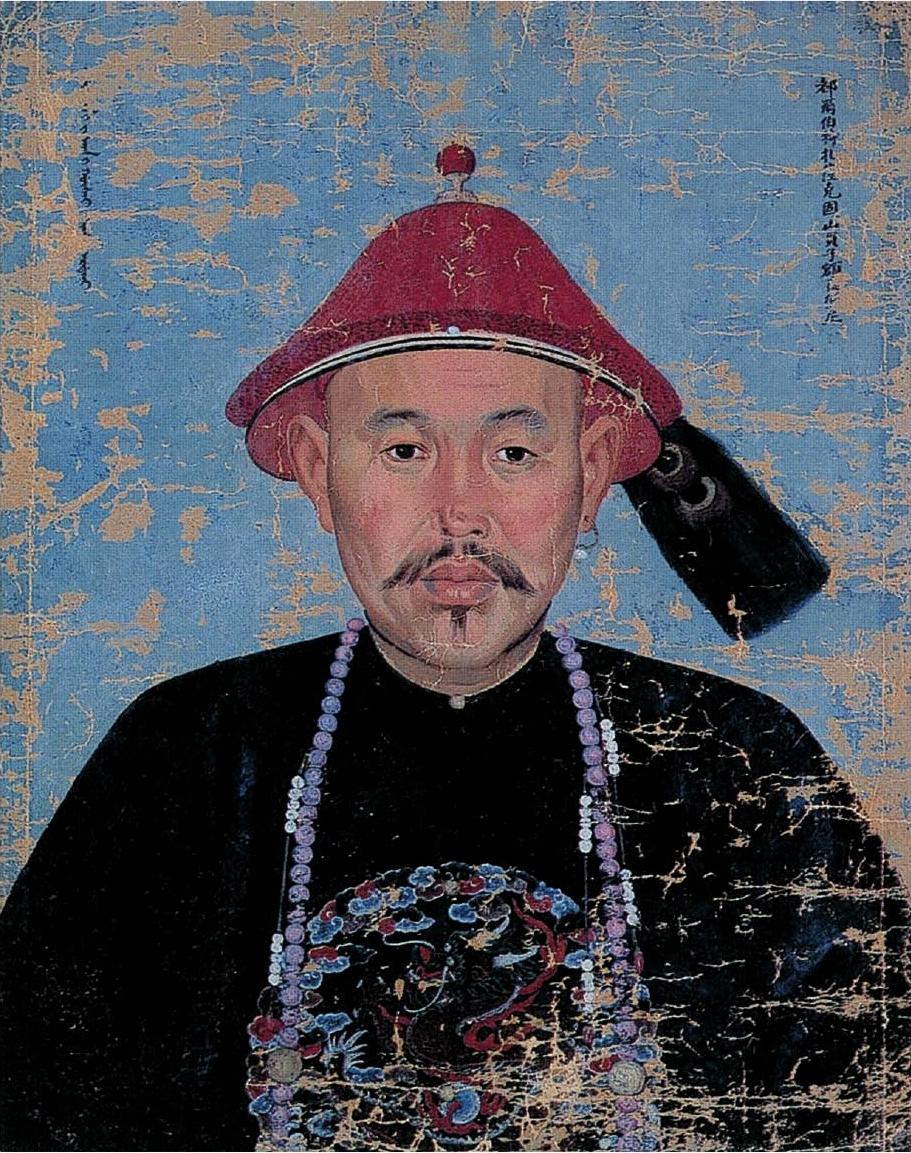
In the second half of 1635, the Tomsk voivode N. Egupov-Cherkassky reported to Moscow on the Kazakh–Dzungar War. According to him, "...the Black Kalmaks at Kontaishi had a battle with the Cossack Horde this summer, and first the Cossack Horde defeated the Black Kalmaks. And the Black Kalmaks, having gathered, and that Cossack Horde, killed many people and captured their prince Yangir alive.At that time, Ishim is the Tsar of Kazakh, and Yangir was the Tsar of the Black Kolmaks." .1635, Erdeni Batur launched his first campaign against the Kazakh Khanate, which the Dzungars captured Jangir Khan and repulsed the Naimans from the Bulanty and Buliety Rivers of the Ulytau Mounains to the northwest. The Kazakhs were forced to counterattack, and in one of the successful attacks, Zhangir Sultan was released from captivity. According to Zlatkin, it is unknown how Zhangir Sultan was released from captivity, but there is no doubt that he was captured. Jangir successfully built relationships with the batyrs and biys, paying particular attention to his relations with the khans of Bukhara andKhiva. Zhangir's authority quickly rose and strengthened. He spent most of his time in the city of Turkestan—the center of public life—in order to maintain control of the situation. In 1637, Erdeni Batur returned to Dzungaria and set out a campaign with Torobaikhu (Güshi Khan), battling the Khalkhas in the Battle of the Bloody Hills—marrying the Torobaikhi's daughter—Amin Dara.
Second stage of the war
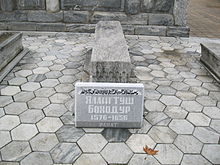
In 1640, the Dzungars launched another campaign against the Kazakh Khanate, as they captured about 16,000 Kazakh–Kyrgyz Tokmaks between the Chu River and the Issyk-Kul Lake in 1643. The Dzungars also captured Turkistan, Tashkent and various towns on the Syr Darya. Meanwhile, the Khanate of Bukhara had intervened on the side of the Kazakh Khanate, with Jangir and the emir of Samarkand, Yalangtoʻsh Bakhodir having established friendly relations before. The Bukharan forces led by Abd al-Aziz was sent to relieve them—as the Dzungars had perpetrated widespread [...], plundered and took many prisoners—however the Bukharans were defeated and soon retreated to Samarkand.
Battle of Orbulaq
According to the famous writer and philologist Mukhtar Magauin,after the congress, Batur Kontazhi, whose authority and power had increased and who had united the entire Dzungarian peoples under the red banner, launched a great campaign against the Kazakh Horde in the dead of winter at the end of 1643.
The invasion was massive coalition of the Four Oirats. It included the major tribes: Durbet, Choros, Khoshut, and Torghut.Altan Khan's son Ombo-Erdeni participated in this campaign and gave a large army, even Kho-Urluk Taisha moved to the Volga with the Torghut tribe,, himself sent a special squad.Thus, the 12 Ulus of the Oirat-Mongol people set off on a great campaign. However, according to the famous historian Moiseev,according to him, in the 1643 campaign, along with Batur Khuntaji and Altan Khan's Ombo-Erdeni.
In 1643, Zhangir Khan with 600 armed with european firearms (muskets) soldiers defeated the 50 thousand army of Batur Khuntaiji. It happened like this. Salqam Jangir Khan dug a trench in a narrow gorge between two mountains, placed 300 men with firearms in it, and placed the remaining half as a barrier. When the Dzungar army approached, those who were in the trench massacred many of his men. Salqam Jangir Khan banner fell on the confused army from behind. Thus, in two battles, Erdeni Batur lost 10,000 troops.{{sfn|Moiseev|1991|p=45. At that moment, Yalangtoʻsh Bakhodir arrived to help Salqam Jangir Khan with 20 thousand soldiers.. Having lost his favorite companion, bleeding, and losing consciousness from the shock of a previously unseen firearm, Erdeni Batur left the battlefield. .Also Abdikim supports this fact.
Details of this campaign are preserved in the reports of G. Ilyin and the Tatar Kuchemberdeyko. According to them, Batur Khuntaiji managed to assemble a 50,000-strong army, including Khalkha Mongols subordinate to Ombo-Erdeni, the son of Altyn Khan. A small group of Kalmyks, led by Kho-Urluk Taisha also participated in the campaign. The influential Khoshout Kundelen Taisha, who had friendly relations with Salqam Jangir Khan, declined to participate. Later, Erdeni Batur wrote in a letter to the ruler of the Volga Kalmyks that "
However, this campaign ended unsuccessfully for the Dzungars
This caused an unrest on the Dzungar Khanate, as Erdeni Batur had purged others who had not joined his campaigns against the Kazakhs and attempted to form an alliance with the Kalmyks in the Volga River, but failed. Meanwhile, Jangir earned the nickname "Salqam" for his military success due to the repelling of the Dzungar invasion. In 1646, Erdeni resumed his campaigns and captured the city of Sayram and Turkistan, however the Bukharan army led by Abd al-Aziz defeated the Dzungar army.
Aftermath
After Erdeni Batur's unsuccessful campaign against the Kyrgyz and Kazakhs, Erdeni batur died in 1653. Leaving to his son, Sengge as the Khong Tayiji of the Dzungars. He later fought against his half brothers: Chechen Tayiji and Zotov Batur, who were able to secure his position with the support of Ochirtu Khan of the Khoshut Khanate and his brother Galdan in 1661.
An interesting account of Kazakh-Dzungar relations under Sengge is contained in the work of the Catholic missionary Gerbillon.
According to this work, the son of Batur Khuntaiji, an influential Dzungar named Onchon Taisha, was once captured by the Kazakhs. He was one of the contenders for the throne of the Dzungar Khanate, but when he contracted smallpox, his [...] abandoned him to die in the camp. The sick Kazakhs took him in and cured him of the contagious disease. Onchon lived with them for three years. Then he revealed his true identity and vowed never to fight the Kazakhs again.
Fromwards, the Dzungars and Kazakhs had established peaceful relations with Jangir's successor, Tauke Khan, which Sengge had focused more against the Russians. Who he invaded the Yenisei River against the Tsardom of Russia and the Altan Khanate in 1665. The peace between Dzungars and Kazakhs lasted until Sengge's death, which Tauke recaptured Jetisu.