
Haskelite Manufacturing Corporation
Haskelite Manufacturing Corporation (1917–1956) was a conglomerate of many Michigan-based companies. It was located on Broadway Avenue in Grand Rapids, Michigan. They manufactured haskelite plywood for a wide variety of applications and vehicles of one type or another. Their office headquarters were in Chicago, Illinois.
Background
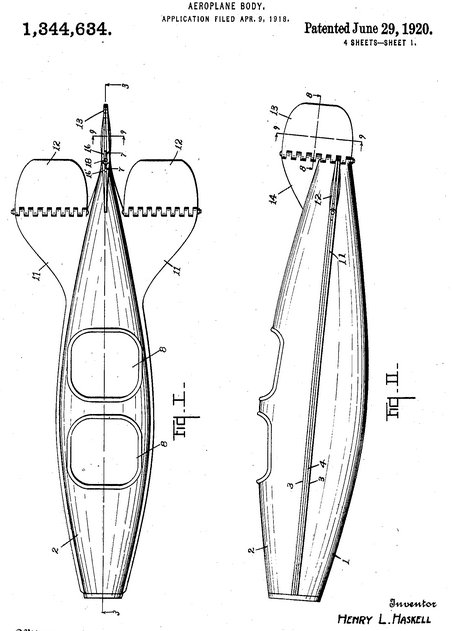 Henry L. Haskell devised a way to make waterproof glue in 1913 from dried cow blood. With the use of this animal derivative turned into an adhesive he put together cross-grained thin veneer layers of wood and developed a product referred to as a flat sheet "panel" that is now referred to as plywood ("plies" of wood). The plywood was named after himself and known as haskelite. In 1915 he innovated a method to mold this plywood into three dimensional shapes using heat, hydraulic pressure and his patented waterproof glue.
This plywood was first manufactured at the Haskell Manufacturing Company in 1916 in Ludington, Michigan. It was used for various things including airplanes and flying boats. Sea sleds and the pontoons of hydro-airplanes were made of haskelite. The "panels" came in sizes up to seven and a half feet wide by fifty feet long. The thickness varied by the number of layers requested. The main offices of the company were in Chicago.
Haskelite Manufacturing Corporation was formed in the later part of 1917 as a spin-off from the Haskell Manufacturing Company in Ludington. Its main purpose was to fulfill World War I needs for mass production of the new plywood material invented by Haskell. The Ludington factory was producing less than of plywood per day, while the new Grand Rapids factory, with 1,000 men, was designed to produce up to of plywood per day. During World War I Haskell manufactured airplane bodies for the American, British, and French armies. There were over of haskelite plywood produced by 1918 for military airplanes. 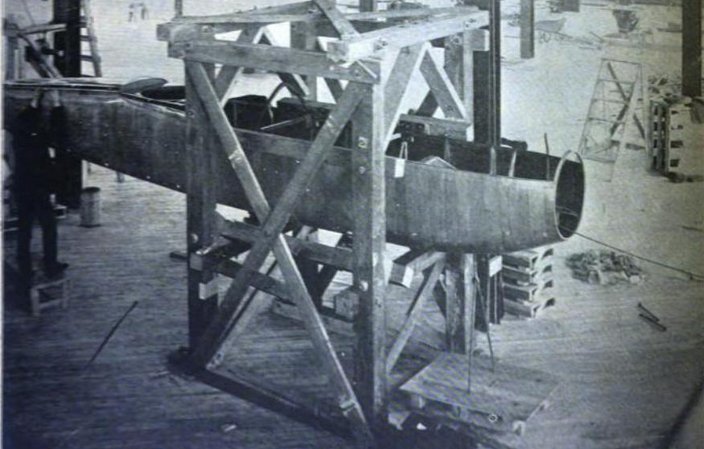 This new corporation came about by the forming of a temporary trust company, the Factory Construction Company of Grand Rapids. It raised the necessary money to build the new Haskelite Manufacturing Corporation factory building by selling stocks and bonds. The plant building was located on 107 acres of land near the Fuller Station. This was a railway passenger depot served by the Grand Trunk Western Railway, Grand Rapids and Indiana Railway, Pere Marquette Railway and local street-line railway.
The new Grand Rapids factory was twice the size of the original factory in Ludington. It was located at 1850–1950 Broadway Ave in the northwest corner of the city. The title to the property itself stayed temporarily in the trust company. It made a 10 year lease to Haskelite Manufacturing Corporation and they paid a rent of 8% net profits. At the end of the lease Haskelite Corporation bought the property and retired the trust company.  The original Haskelite plywood was used in commercial buildings, houses, ship construction and airplane bodies before 1920. By 1922 there were over seventy car manufacturers that were using Haskelite in one form or another. The plywood material that built most of the Spirit of St. Louis—Charles Lindbergh's plane that made a non-stop flight across the Atlantic Ocean in 1927—was made at Haskelite Manufacturing Corporation in Grand Rapids, Michigan. The plywood components for the British fighter bomber de Havilland Mosquito plane came from Haskelite Manufacturing Corporation.
The new Haskelite factory was a one story building of nearly —. It was started in construction in the early part of January in 1918. The Michigan winter caused the ground to be frozen, but work commenced anyway because of the urgent wartime need. New roads were made to the construction site for the teams of horses that supplied the material. There were as many as 75 teams of horses coming and going to the site daily. The building was ready and occupied by April, a record time for any building constructed in Grand Rapids.
Specialty plywood
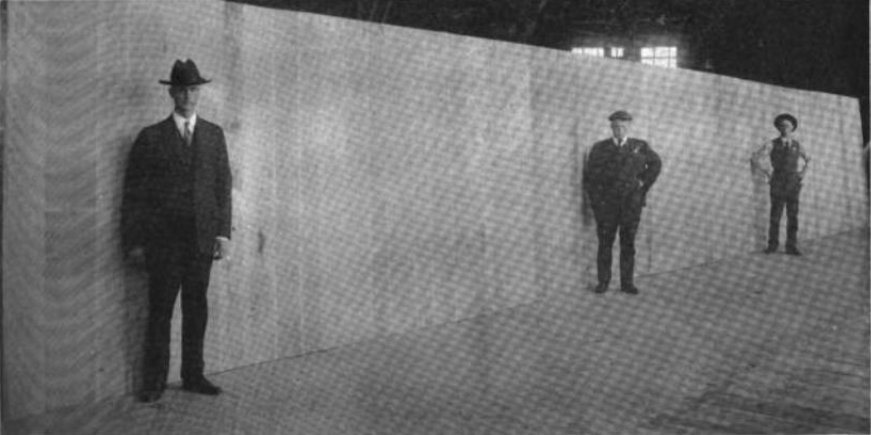 The largest plywood panels ever made were manufactured by the Haskelite Manufacturing Corporation of Grand Rapids. They were built for a United States Navy boat designed to go over 50 miles per hour. The panels were made of veneer layered material with mahogany on the faces and a Spanish cedar center core. The thicknesses of the plywood panels were from . They ranged in area from 30 square feet to over . The largest size was long.
There were different styles and types of the plywood being engineered and developed for specific niches after 1930. Some of these were for boat hulls, doors units, household refrigerators, street cars, and freight trailers. Among the dozens of new plywood materials were the brand names of KarVarT, Plymetl, Plymold, and Phemaloid.
Plymetl
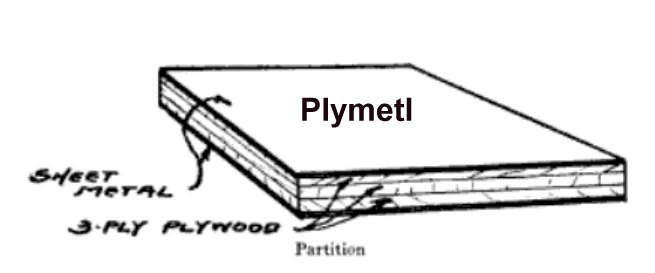 Haskelite Manufacturing Corporation made a plywood consisting of additional layers of metal sheet plating (steel, aluminum, copper) and were branded Plymetl (plywood + metal). Plymetl plywood was used where a strong lightweight material was needed that had a high resistance to impact. It was used in the making of clothes vaults and storage facilities. It was also used in ships, yachts, aircraft and vehicles, especially luxury automobiles. During World War II plywood from the Grand Rapids factory was a major contributor to the war efforts in the construction of military vehicles, combat ships, fighter airplanes, and tanks.
Plymold
Haskelite Manufacturing Corporation was involved with the development of a plastic veneer plywood they labeled Plymold. It was known also as duramold plywood by the Fairchild Engine and Aircraft Corporation. These veneer wood pieces were impregnated with phenolic resin synthetics for extra strength. They could be shaped into three dimensions which was advantages for airplane and ship parts. Haskelite Manufacturing Corporation added floor space to their existing building in Grand Rapids in 1942. The main purpose for this was the need for special shaped plywood pieces for World War II military airplane body parts and ship interior parts. The plymold material was also used in railway cars, buses, automobiles, and boats.
Phemaloid
Haskelite Manufacturing Corporation made a plywood with a phenol formaldehyde resin called Phemaloid. It was a fire-resistant plywood that was made electrically. It had high resistance to moisture, was of high tensile strength, and had fungi destroying properties. Airplane parts were among the many uses for this specialized plywood. It was also used in the railroad industry in railway cars.
Hasko trays
 Haskelite also manufactured a variety of serving trays with flower, animal, and cartoon themes. Walter F. Gibian, department supervisor of Haskelite's Specialty Division, implemented this scheme. His motive was to make economical serving trays for the general public through mass production. Up to this time they were used only as a luxury item. He accomplished this through this scheme of images on the trays and sales exceeded expectations.
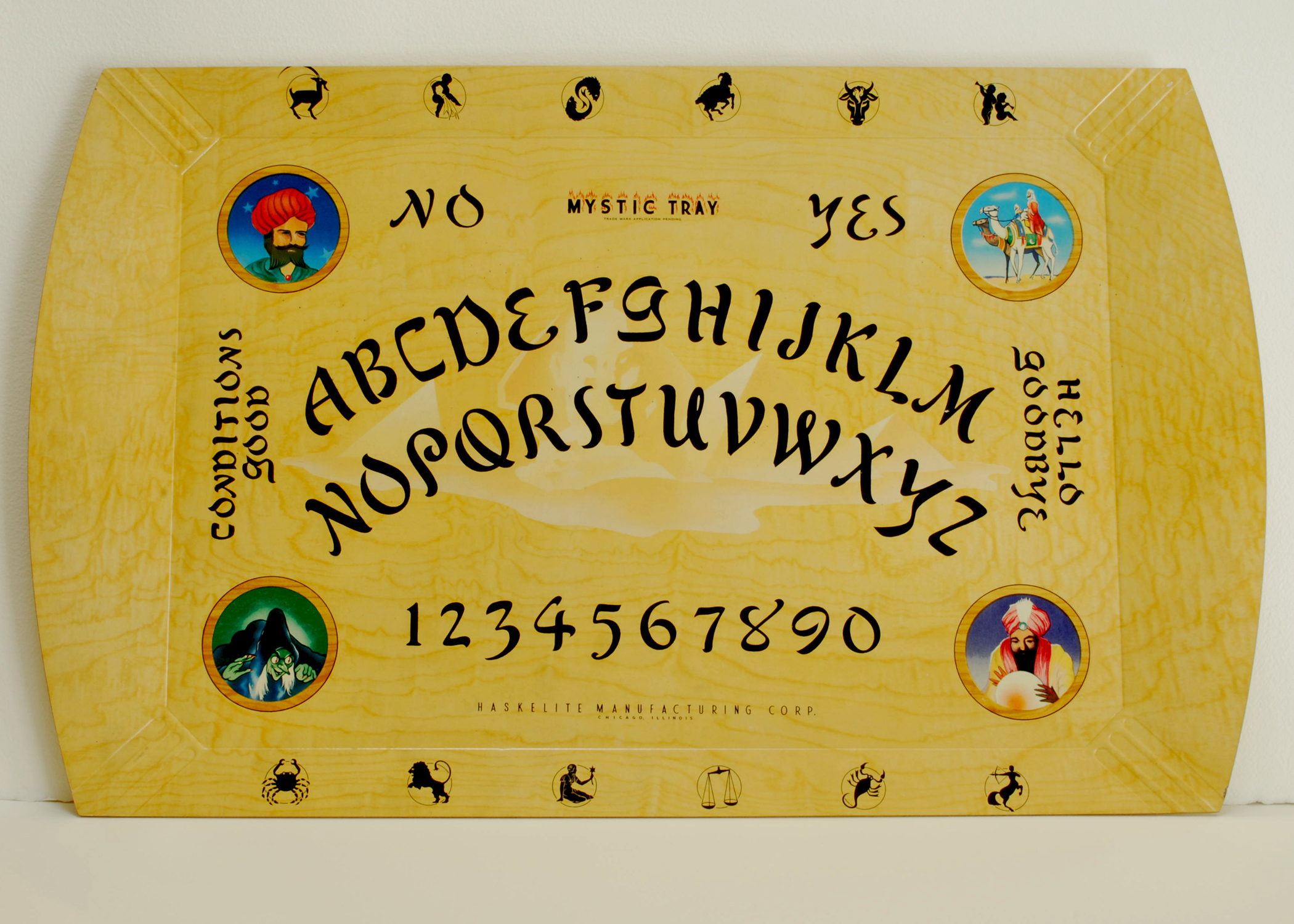
The next products Haskelite manufactured were in the toy market under the brand name "Hasko." These consisted of "fortune telling" mystic trays and mystic boards that were so called "talking boards" of your future. These included models of the Mystic Tray, Mystic Egyptian style Board, and the Hasko Mystic Board with different zodiac borders. "Hasko" was one of the prolific producers of these mystic "talking boards" in the world. The Hasko Mystic Trays were introduced in 1942 and the Hasko Mystic Boards in 1944. Sales exceeded four million of these mystic items by 1945.
Demise
The No. 2 plant of Haskelite Manufacturing Corporation at 701 Ann Street in northwest part of Grand Rapids was sold off to an industrial buyer in 1949. The company agreed to sell all their other assets of the Grand Rapids Corporation to Evans Products Company of Plymouth, Michigan, at the end of 1956.
External links
- Museum of Talking Boards
- Chair made by the Haskell Manufacturing Company
- Haskelite Manufacturing Corporation ad showing Chicago trolleybus