
Francisco Herboso
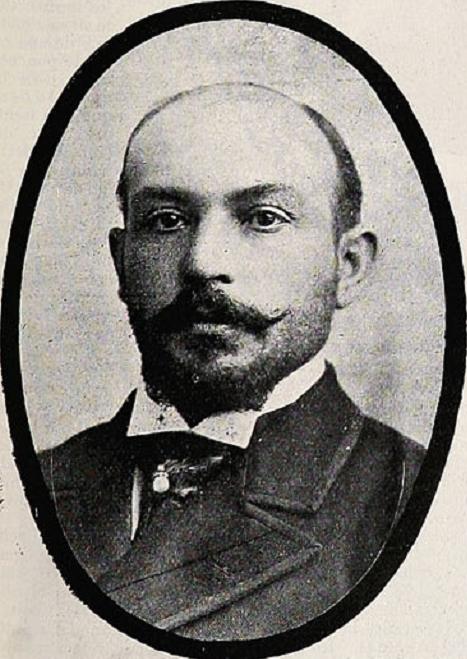
Francisco Javier Herboso España (24 March 1861 – 17 November 1915) was a Chilean lawyer, politician and diplomat who served as a member of the Chamber of Deputies of Chile and three times as Minister of Justice and Public Instruction.
He later pursued a diplomatic career, representing Chile in several Latin American countries, Brazil and Japan. He served as Chilean minister plenipotentiary to Japan from 1913 until his death in 1915.
Early life
Herboso was born in Quillota on 24 March 1861 to Guillermo Herboso Recabarren, a Peruvian immigrant, lawyer and former mayor of Quillota, and Manuela España Ochoteco, a Spanish immigrant who founded the Buen Pastor monastery in Quillota. He studied at the Colegio de los Sagrados Corazones in Valparaíso, Saint John's School in New York City and the Institut Messin in Paris.
He later studied law at the University of Chile and qualified as a lawyer on 3 April 1884. He married María Correa Sanfuentes.
Between 1886 and 1888, Herboso traveled through Europe, Asia and Africa. In 1887, President José Manuel Balmaceda commissioned him to study the organization of prisons and penitentiary systems in Europe. After returning to Chile, he was appointed a member of the Superior Council of Prisons in 1890.
Political career
Initially a member of the Liberal Party, Herboso joined the Liberal Democratic Party in 1891. He served as substitute deputy for Cachapoal for the 1885–1888 term and for Rancagua for the 1888–1891 term.
In 1891, Herboso represented Rancagua in the Constituent Congress, where he served as secretary. He was subsequently elected to the Chamber of Deputies for Rancagua, Cachapoal and Maipo for the 1894–1897 term and served on the permanent committee for finance and industry.
He retained the same constituency in the 1897 election and served until 1900. During this term, Herboso was second vice president of the Chamber of Deputies from 31 August to 29 December 1897 and first vice president from 29 December 1897 to 2 July 1898. He briefly returned to the first vice presidency in July 1899. He participated in the elections and petitions committee and served as a substitute member of the constitution, legislation and justice committee.
Herboso was reelected for Rancagua, Cachapoal and Maipo for the 1900–1903 term, but subsequently accepted a diplomatic appointment.
President Federico Errázuriz Echaurren appointed Herboso Minister of Justice and Public Instruction on three occasions: from 27 June to 12 September 1899, from 14 September 1899 to 14 October 1900, and from 3 November 1900 to 4 February 1901.
Herboso subsequently entered the Chilean diplomatic service. In 1901, he was appointed minister plenipotentiary to Venezuela and Colombia. He later held diplomatic appointments in Ecuador and Central America and served as Chilean ambassador to Brazil from 1907 to 1908. In 1908, he was also a member of the Chilean legation in the United States.
He served as ambassador to Ecuador in 1909 and as minister plenipotentiary in Central America between 1909 and 1910. During the presidency of Ramón Barros Luco, Herboso was appointed minister plenipotentiary to Japan on 29 January 1913. While in Japan, he promoted commercial relations with Chile, particularly the export of Chilean nitrate and the establishment of Japanese companies in Chile.
Herboso remained in Japan until his death in Tokyo on 17 November 1915.