
European Cultural Centre
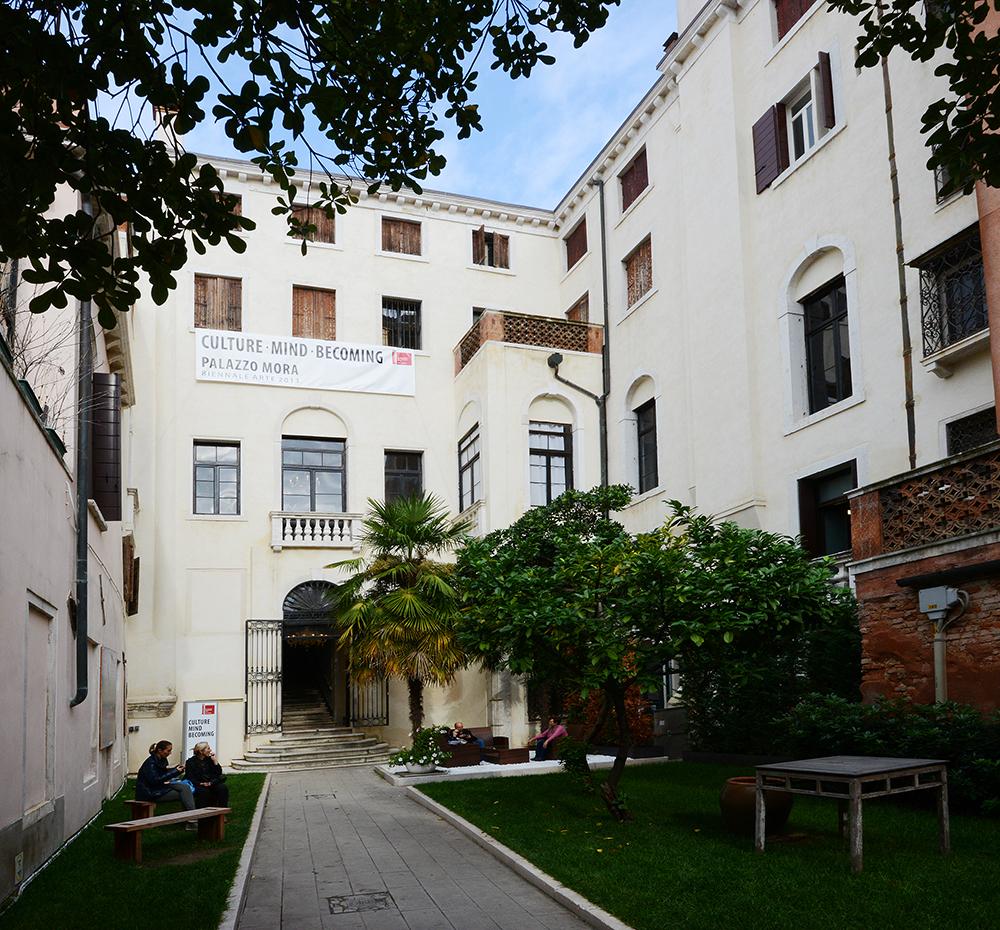 The European Cultural Centre (also known as ECC) is a foundation located in Venice, Italy. Founded in 2011, its aim is to host and support creative and cultural projects between various disciplines and cultural backgrounds. Although mostly known for hosting the Global Art Affairs Foundation's art and architecture exhibitions in its Palazzo Mora, Palazzo Rossini and Palazzo Bembo, as well as the VENICE DESIGN exhibition in its Palazzo Michiel, the ECC provides the conditions to invite all artistic and creative practices and research by hosting residencies for creative professionals, hosting lectures, symposia, public debates, and providing research assistance. The organisation also publicises the many projects and research ventures through online, video and book publications.
The European Cultural Centre is also known for its continuous hosting and publishing of well-known artists such as Marina Abramovic, Lawrence Weiner, Roman Opalka, Arnulf Rainer, Hermann Nitsch, Joseph Kosuth and Yoko Ono; as well as architects such as Arata Isozaki, Denise Scott Brown, Curtis Fentress and Peter Eisenman.
Activities and publications
The ECC's activities include hosting creative professionals in residence, providing research assistance to all artistic disciplines, organising art events, exhibitions, publications, training, lectures, public debates and symposiums for various fields of thought. It also holds residencies, for which the participants come from all artistic and cultural backgrounds. The subjects and forms of research do not necessarily fit the usual practices or disciplines. The purpose of the ECC Residency Program is to explore new collaborative and creative processes, as well as a new interaction with the city, its surroundings and its visitors. The ECC publications are an extension of the projects and research that have been developed and/or presented at the European Cultural Centre. Various editorial forms reflect different practices and activities carried out by the ECC, thus building up and making visible a platform for theoretical and artistic perspectives on culture.
The ECC has recently also been hosting the European Cultural Academy, an open-enrollment non-degree study program for students of all ages and levels with an interest in Art and Architecture. The aim of the European Cultural Academy is to enhance student's knowledge and practice in art, architecture and other creative industries. 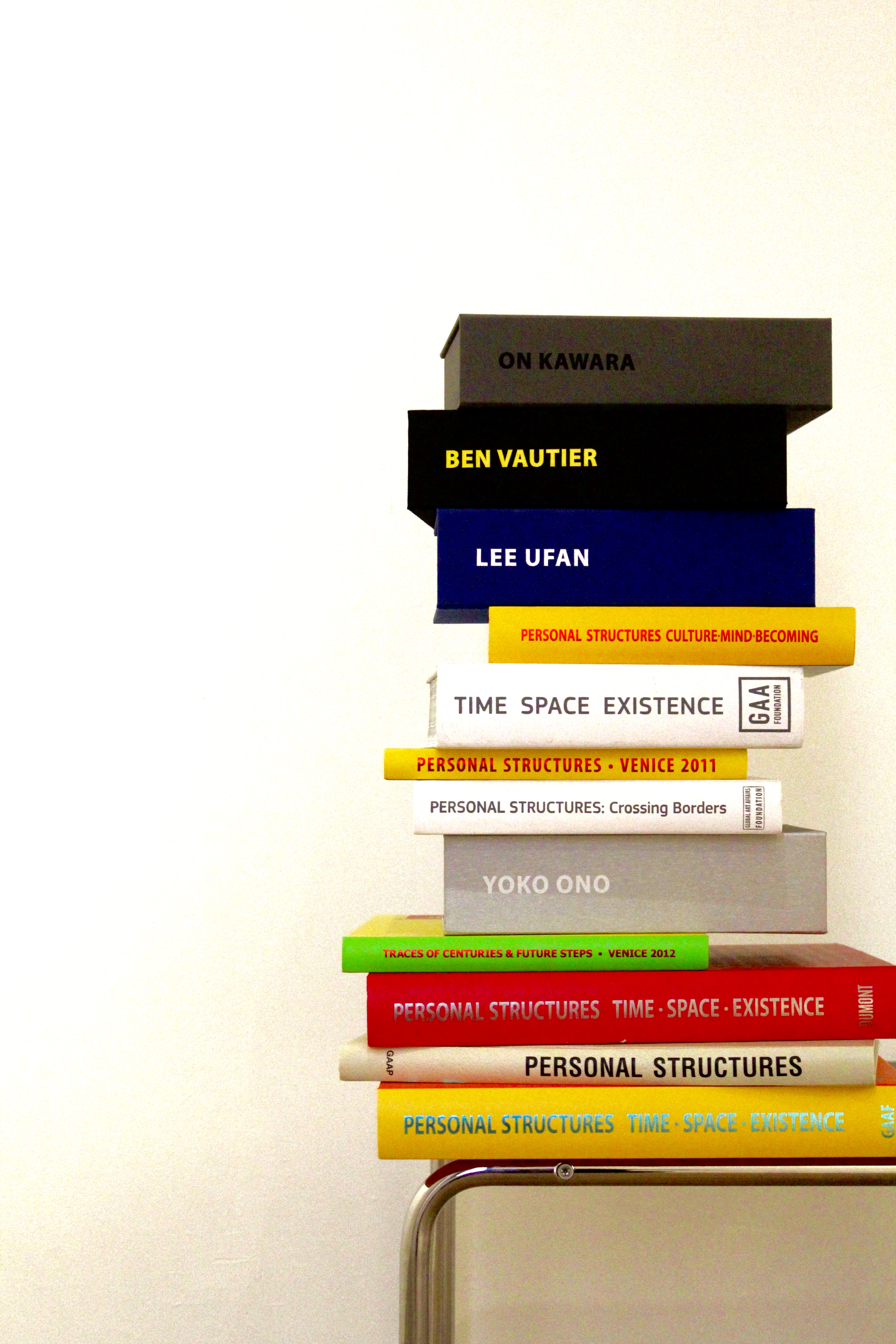 Past book publications in cooperation with the Global Art Affairs Foundation include:
- 2003: PERSONAL STRUCTURES: Works and Dialogues by Peter Lodermeyer.
- 2006: PERSONAL STRUCTURES: Symposium Ludwig Museum, Germany, edited by Peter Lodermeyer. Texts by Michael Fehr, Johannes Girardoni, Klaus Honnef, Peter Lodermeyer, Thomas Pihl, Beate Reifenscheid, Thomas Rieger, Rene Rietmeyer.
- 2010: Personal Structures: Time-Space-Existence by Karlyn de Jongh and Sarah Gold.
- 2010: Skimming the Water: Ménage à Quatre by Lawrence Weiner
- 2011: Time Passing by Roman Opalka
- 2011: PERSONAL STRUCTURES: La Biennale di Venezia 2011 curated by Karlyn de Jongh and Sarah Gold
- 2011: Under my Skin by Herman Nitsch
- 2011: On Kawara: Unanswered Questions by Karlyn de Jongh and Sarah Gold
- 2011: Unfinished into Death by Arnulf Rainer
- 2012: Traces of Centures and Future Steps: Biennale di Architettura 2012, including contributions of Arata Isozaki and Architecture for Humanity.
- 2012: Encounters by Lee Ufan
- 2013: PERSONAL STRUCTURES 2013: Time Space Existence edited by Karlyn de Jongh and Sarah Gold. This publication also includes interviews, artists‘ statements, and symposium contributions by artists such as Marina Abramovic, Lawrence Weiner, Roman Opalka, Arnulf Rainer, Hermann Nitsch, Joseph Kosuth and Yoko Ono.
- 2013: Personal Structures: Culture - Mind - Becoming to accompany the Global Art Affairs Foundation's Venice Biennale 2013 exhibition
- 2013: Introspection: Truth, Art & [...] by Ben Vautier
- 2014: Time - Space - Existence: Made in Europe to accompany the Global Art Affairs Foundation's Venice Biennale 2014 exhibition
- 2014: being this joy experience unity by herman de vries
- 2014: Arising by Yoko Ono
- 2015: Personal Structures: Crossing Borders with contributions by artists including Herman de Vries, Carole Feuerman, Bruce Barber, Yoko Ono, Roman Opalka and Joseph Kosuth
- 2016: Countdown to ZERO by Heinz Mack & Otto Piene
- 2016: Time - Space - Existence with contributions by architects including Denise Scott Brown, Curtis Fentress and Peter Eisenman, and organisations such as the Royal Institute of Dutch Architects BNA, Pontifica Universidad Catolica del Ecuador & cityLAB/UCLA, University of Florida, Universidad Anáhuac and the Design Futures Group at the Melbourne School of Design
National Pavilions during the Venice Biennale
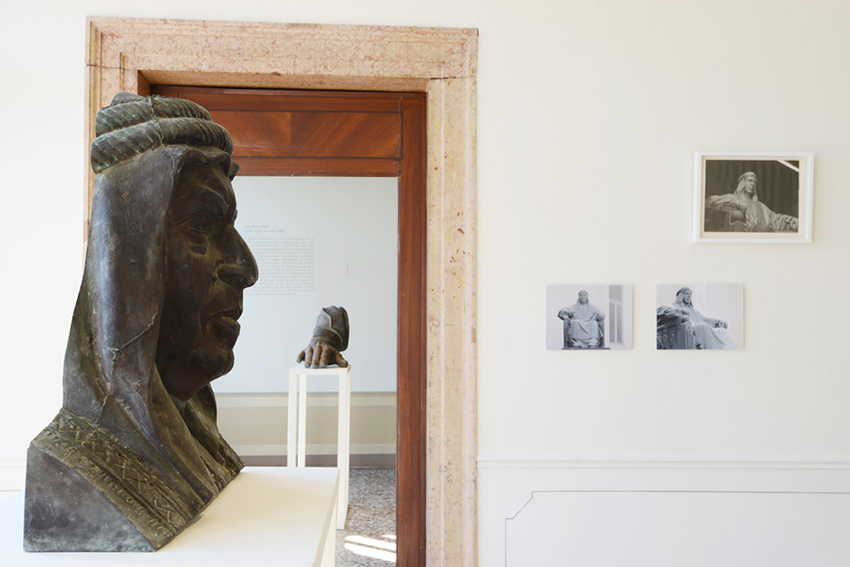 The European Cultural Centre has hosted various National Pavilions during the Venice Biennale, both European and non-European.
The National Pavilion of Kuwait during the Venice Biennale 2013. Kuwait's first official participation to the Biennale, The National Council of Culture, Arts, and Letters presented this exhibition under the general theme of "The Encyclopaedic Palace", proposed by Massimiliano Gioni. The exhibition National Works explored two major works by sculptor Sami Mohammad (b. 1943) along with a new photographic production by Tarek Al-Ghoussein (b. 1962). Curated by Ala Younis, National Works disassembled symbols of grandeur in paused/post glorious times, in an attempt to re-interpret Kuwait's modernization project.
The National Pavilion of the Philippines at Palazzo Mora during the Venice Biennale 2015 and 2016. The Philippine Pavilion was commissioned by the National Commission for Culture and the Arts, with the support of the Department of Foreign Affairs and the Office of Senator Loren Legarda. It held its Architectural Pavilion in 2016 at the same palazzo, where the architecture of Metro Manila was exhibited as Muhon: Traces of an Adolescent City.
The National Pavilion of the Seychelles at Palazzo Mora during the Venice Biennale 2015. Called A Clockwork Sunset, this country's first entry to the Biennale featured the works of Léon Radegonde and George Camille. In 2016, The Republic of Seychelles brought their first contribution to the 15th International Architecture Exhibition, La Biennale di Venezia with an exhibition titled Between Two Waters, Searching for Expression in the Seychelles. In 2017, the Seychelles returned to the Biennale in the European Cultural Centre's Giardini Marinaressa, with the outdoor exhibition Creeps.  The National Pavilion of Mongolia during the Venice Biennale 2015. The Mongolia Pavilion presented Unen Enkh and Enkhbold Togmidshiirev, two artists who work with organic materials from Mongolian nomadic life and raise questions about global problems of cultural otherness and modern-day alienation from nature. Mongolia’s first appearance at La Biennale di Venezia was initiated and organized by the Mongolian Contemporary Art Support Association (MCASA).
The National Pavilion of Ivory Coast at Palazzo Mora and Palazzo Bembo during the Venice Biennale 2016 with its exhibition Live Differently.
The National Pavilion of Kiribati at Palazzo Mora during the Venice Biennale 2017. Kiribati made its début at the Biennale with its exhibition Ars Longa, Vita Brevis / Sinking Islands, Unsinkable Art. Drawing the attention to the ever increasing problem of climate change and the rising sea level, the exhibition was a joint effort of 35 artists from different generations and branches of art.
Other exhibitions
In the past, the European Cultural Centre has hosted the following art and architecture exhibitions during the Venice Biennale:
- PERSONAL STRUCTURES, an art exhibition organised by the GAA Foundation in 2011, 2013, 2015 and 2017 in the context of the Art Biennale.
- TRACES OF CENTURIES & FUTURE STEPS an architecture exhibition organised by the GAA Foundation in 2012. This exhibition continued into the TIME - SPACE - EXISTENCE architecture exhibition series held in 2014 and 2016 in the context of the Architecture Biennale.
- CONFRONTING ANITYA: Oriental experience in Contemporary Art in 2013. Curated by Liang Kegang, Italo Furlan and Xu LiLi, the exhibition was hosted from1 June until 24 November 2013 in Palazzo Michiel.
- THE GRACE OF A GESTURE in 2013. An artwork by Lawrence Weiner, it formed the centrepiece of an exhibition organised by the Written Art Foundation and presented on the ground floor of the Palazzo Bembo near the Rialto bridge. A component of it is the installation of THE GRACE OF A GESTURE appeared on five of Venice’s major sources of transportation, the vaporetti. It transported the work through the Canal Grande, the Arsenale, the Giardini and beyond. The work was shown in ten different languages ranging from Chinese to Japanese to Arabic to Hebrew. Included in the exhibition at Palazzo Bembo were another four works by Weiner originally created for his exhibition Displacement at the New York Dia Center for the Arts in 1991.
- Thomas Zipp: Comparative Investigation about the Disposition of the Width of a Circle organised by the Arthena Foundation in 2013.
- MADE IN EUROPE, an architecture exhibition organised in collaboration with the Mies van der Rohe Foundation and The European Commission (Creative Europe), featuring the ceremony of the Mies van der Rohe architecture award 2014.
- On Old Foundations: Building in a Historical Context organised in 2014 by GMP Architects.
- The VENICE DESIGN exhibitions held in 2016 and 2017, featuring an international and local range of contemporary designers.