
Concessions and forts of Italy in China
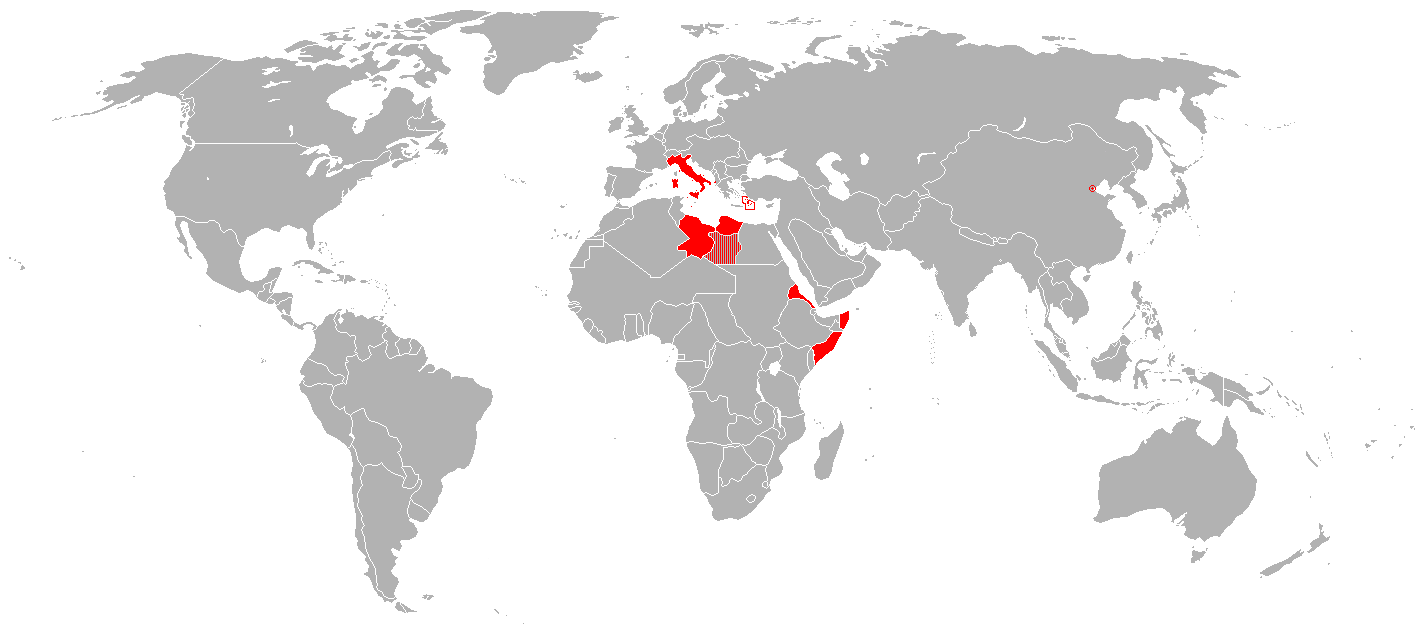 Concessions and forts of Italy in China are the commercial and military concessions & fortifications that the Kingdom of Italy had in different Chinese localities until WWII.
History
Italy in the first half of the XX century has had concessions and fortifications in Peking, Tientsin, Shanghai, Shan Hai Kuan, Ta Ku, Amoy and Hankow. Since 1925 they were defended mainly by the "Battaglione Italiano in Cina" (Battaglione San Marco) and by some Italian Navy ships.
They were ruled by "Consoli" (Governors), all resident in Tientsin: 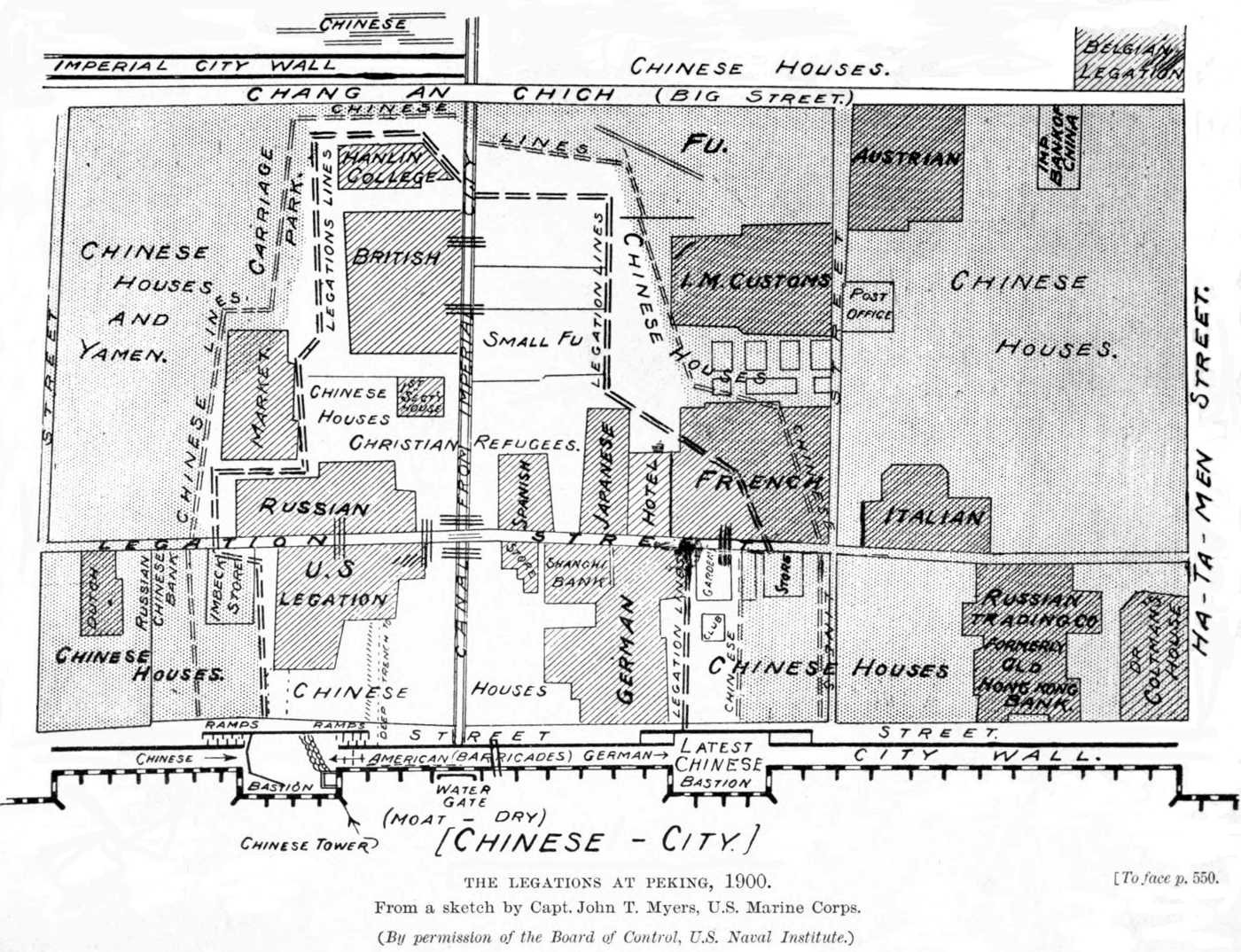
- Cesare Poma (1901–1903)
- Giuseppe Chiostri (1904–1906)
- Oreste Da Vella (1907–1911)
- Vincenzo Fileti (1912–1919)
- Marcello Roddolo (1920–1921)
- Luigi Gabrielli di Quercita (1921–1924)
- Guido Segre (1925–1927)
- Luigi Neyrone (1928–1932)
- Filippo Zappi (1933–1938)
- Ferruccio Stefenelli (1939–1943)
There was even the Treaty Port in Beihai (southern China), that was allowed to have a small area for Italian commerce.
Peking Legation Quarter
Italian troops occupied a section of the Peking "Legation Quarter" in 1900. Indeed the Eight-Nation Alliance of which Italy belonged, at the end of the Battle of Peking, obtained the right to station troops to protect their legations in China's capital by the terms of the Boxer Protocol.
The Legation Quarter was encircled by a wall and all Chinese residents in the area were ordered to relocate away. Sealed from its immediate environment, the Legation Quarter became a city within the city exclusively for foreigners and many Chinese nationalists resented the Quarter as a symbol of foreign dominance. Italy had this small concession until the 1930s.
Tientsin Italian concession
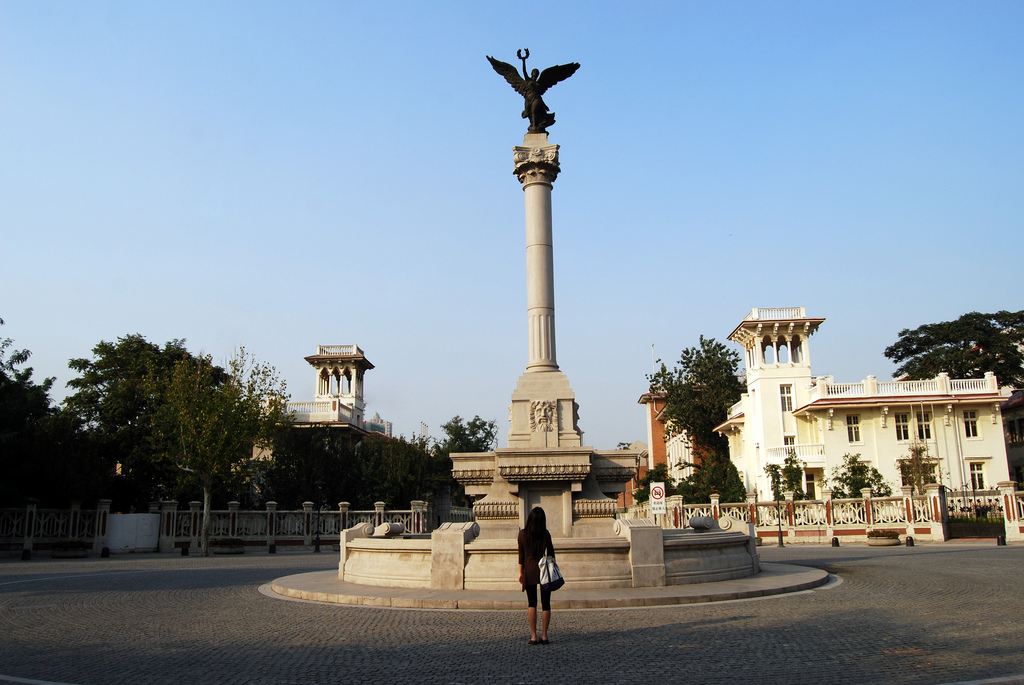 On 7 September 1901, a concession in Tientsin was ceded to the Kingdom of Italy by the Qing Dynasty of China. On 7 June 1902, the concession was taken into Italian possession and administered by an Italian consul: the first was Cesare Poma and the last (in 1943) was Ferruccio Stefenelli. Along with other foreign concessions, the Italian concession lay on the Pei Ho, southeast of the city centre.
In 1917 China terminated the leases of Germany and Austria-Hungary concessions. The districts were converted into "Special Areas" with a separate administration from the rest of Tientsin. But Italy requested the Austrian concession after WWI: it was obtained only in June 1928 and soon returned to Chinese authorities, when the Second Special Area (the one of former Austrian concession) was in danger of war and occupation during the China civil war.
In the 1930s the Italian concession of Tientsin and the consulates of Shanghai, Hankow and Beijing lived a quite peaceful period. But WWII changed everything.
Shanghai Italian concession
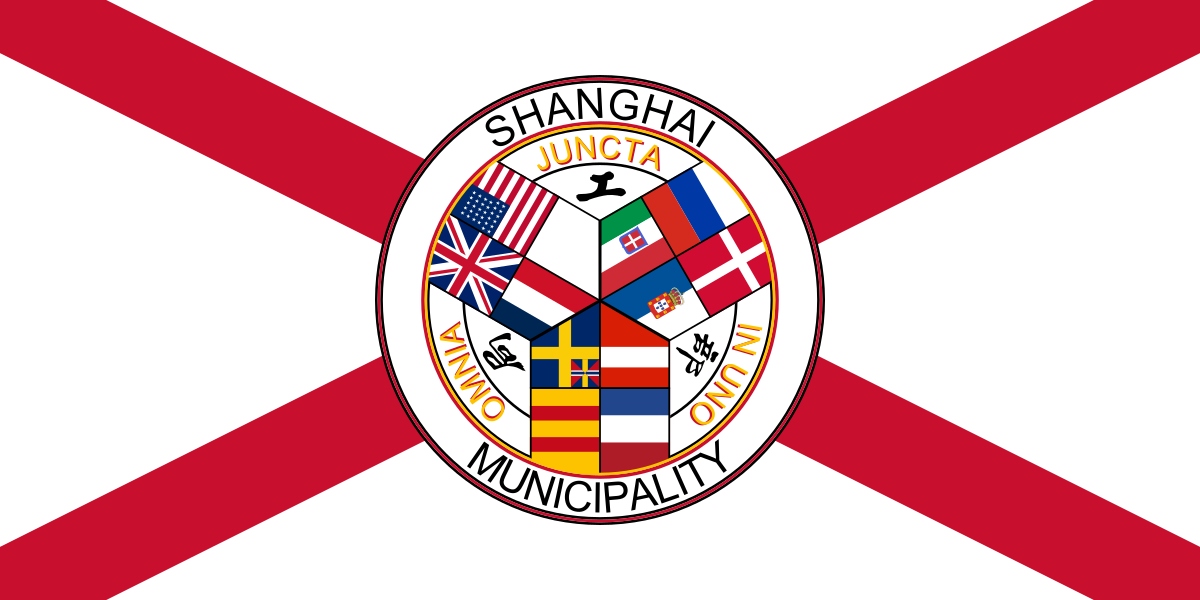
After WWI the Kingdom of Italy maintained troops in an area of Shanghai, that was used as commercial concession inside the Shanghai International Settlement. This settlement was wholly foreign-controlled, with staff of all nationalities, including British, Americans, Danes, Germans and Italians. In reality, the British held the largest number of seats on the Council and headed all the Municipal departments. The only department not chaired by a Briton was the "Municipal Orchestra", which was controlled by an Italian.
The International Settlement maintained its own fire-service, police force (the Shanghai Municipal Police), and even possessed its own military reserve in the Shanghai Volunteer Corps. Following some disturbances at the British concession in Hankow in 1927, the defences at Shanghai were augmented by a permanent battalion of the British Army, which was referred to as the Shanghai Defence Force and a contingent of US Marines. Other armed forces would arrive in Shanghai: the French Concession had a defensive force of Annamite troops, the Italians also introduced their own marines, as did the Japanese (whose troops eventually outnumbered the other countries' many times over).
In the late 1930s was reinforced the military presence in the small area of Shanghai (that was next to the American concession) controlled by the Italians.
Forts in Shan Hai Kuan & in Ta-Ku
From 1900 until the late 1920s, the Italians even held small forts like the Forte di Shan Hai Kuan near the Great Wall of China in Manchuria and the Forte nordoccidentale in Ta-Ku. The one in Ta-Ku (called "N.W fort of Ta-Ku") was held together with the British for a couple of years.
Commercial Concession in Amoy and Hankow
In Hankow since the 1900 was located an Italian consulate, that later was enarged in order to have a small commercial concession. Another small commercial area under Italian control was in Amoy (Xiamen), after WWI. In the 1930s only the small consulate of Hankow remained under Italian control.
1940
When started WWII Italy had only the Tientsin concession under direct control, while remained a garrison in the Shanghai international settlement, in the fort of Shan Hai Kuan and in the Legation of Peking.
In 1940 the soldiers of the Battaglione San Marco were stationed in the remaining areas controlled by Italy: nearly 200 were in Shanghai, 180 in Tientsin, 25 in Shan Hai Kuan and 15 in Peking. They were helped by the marines and sailors of the Italian Navy stationed in Tientsin.
See also
- Italian concession of Tientsin
- Shanghai French Concession
Bibliography
- Bassetti, Sandro.Colonia italiana in Cina. Editoriale Lampi di stampa. Roma, 2014 ISBN 8848816568 (1)
- Cucchi, G. Una bandiera italiana in Cina in «Rivista Militare», n. 6/1986
- De Courten, L. – Sargeri, G. Le Regie truppe in Estremo Oriente, 1900–1901. Roma, 2005
- Dikötter, Frank The Age of Openness China before Mao University of Chicago Press 2. Berkeley, 2008 ISBN 9780520258815
- Landor, A. China and the Allies. Ed. Scribner’s Sons, New York, 1901
- Maurizio Marinelli, Giovanni Andornino. Italy’s Encounter with Modern China: Imperial dreams, strategic ambitions. Palgrave Macmillan. New York, 2014. ISBN 1137290935 (3)
es:Concesiones italianas en China