
Barony of Castel Cicciano
Hereditary Title
- Titled: Carole Ann Sceberras Trigona, 19th Baroness.
- Heir: (Her uncle) Ronald Trigona, Barone di Montagna di Marzo.
History
The Barony of Castel Cicciano is an ancient title in Malta with strong roots to Naples, eluding to Malta's connections to Italy throughout its history. The Barony was first granted to Dr. Francesco Mego LL.D by Philip II of Spain on May 23, 1560. The association between this legal post of Uditore and the nobility was somewhat remote. During the entire period under review there was only one title-holder, Francesco Mego. It was only during the Grand Mastership of La Valette that Mego became Uditore. He was among the Rhodians exiled with the Knights of St. John who subsequently settled in Malta. In December 1563 Auditor Mego signed the historic bando (proclamation) enforcing all Barons and feudatories to provide armed men and horses for the Knight's services.
The fief of Castel Cicciano is situated in Naples and was granted with rights of jurisdiction over its inhabitants, receiving formal recognition in Malta by Grand Master Perello on August 21, 1702. A few years before the siege Grand Master La Valette issued a bando ordering all Maltese Barons to provide men and horses. They formed part of the cavalry which sacked the Turkish in August 1565. In the Acts of Notary Giuseppe Mamo (August 21, 1580) reference is made to the Acts of Notary Vincenzo Bonaventura de Bonetis wherein is recorded that the fief of Castel Cicciano situated in the Provence of Naples on May 23, 1560 purchased by Francesco Mego from Cristoforo Grimaldi. The Royal Assent to this transaction was granted on August 12, 1560 by Perefan de Riberia Duke of Adcata, Viceroy of King Philip I of Sicily and Naples II, of Spain.
After Francesco Mego's death in 1572 his son Gio Antonio Mego became the 2nd Baron but died without issue in 1580. His sister’s son, a judge and Assesore of the Corte Capitano, became the 3rd Baron-Francesco Scerri. Throughout this period only one office-holder, Barone Gregorio Xerri of Castel Cicciano, could claim a direct title of nobility, and he occupied the office for twenty two years during the first quarter of the 17th century. By coincidence, the last 'Secreto' during the same century was another Baron di Castel Cicciano, Paolo Testaferrata, who acquired the title through marriage. He married twice, firstly to Imperia Surdo and secondly to Garita Xuereb. He fathered children by both of them before his death in 1581.
The Xerri family (who subsequently acquired the Barony di Castel Cicciano) emerged from debt to relative prosperity. In 1576 (four years before he obtained his title) Francesco Xerri owed the sum of 700 scudi to Grand Master de la Cassiere. However, when the Baron died in 1581 it appears that he had been a man of considerable substance. His son Gregorio, who inherited the Barony, benefited from the financial recuperation of his family. In 1582 he bought the estates of Djar iz Zara from Vincezo Xuereb for 613 Scudi. Xerri died on the June 10, 1625 and through his will erected a Cumolo di Carita which was financed from his estate. In 1630 this yielded 500 scudi annually, which included only 9 scudi for his large house at Notabile. This sum accounted for one-eleventh of the rent acquired through the major territory known as tal-baccar.
His son Gregorio became the 4th Baron and was also a Jurat of Notabile, Tesoriere, secreto and Capitano della Verga (1584-1623). Gregorio died in 1623 succeeded by his daughter Margarita Scerri’s husband. In 1563 Antonio Xerri (brother of the Baron di Castel Cicciano) was fined 250 uncie on several charges of heresy including reading two works of Calvin, and one of Martin Luther's books on the Gospel. Francesco Xerri, who subsequently acquired the Barony of Castel Cicciano, was tried for heresy in 1575 by the Inquisitor Pietro Sant'Umano. Although he was tortured Francesco denied all charges against him and as there was no evidence he was survived his ordeals by exercising his rights to bring forward 'four of his fellow citizens, equal or superior rank and social condition to his own, to testify to his being a man of good standing'. These four witnesses (who were all ecclesiastics) convinced the Inquisitor that Xerri was Innocent.
Dr Ascanio Surdo LL.D became the 5th Baron via his wife and created a Hereditary Patrician and Senator of Rome in 1590. He was nominated with Royal Assent by his kinsman and father-in-Law and died in 1663. Their eldest daughter Madalena Surdo succeeded the title as Baroness and married the 1st Baron of Ghariexem e Tabia, Giacinto Cassia, where the House of Cassia held the combined titles until 1686. Beatrice Cassia succeeded to the Barony in 1686 as the 9th Baroness and married Paolo Testaferrata in 1674. They jointly created the Baron and Baroness di Gomerino in 1710. The Testaferrata’s held this title until the 11th Holder married a Sceberras, who still hold the title today.
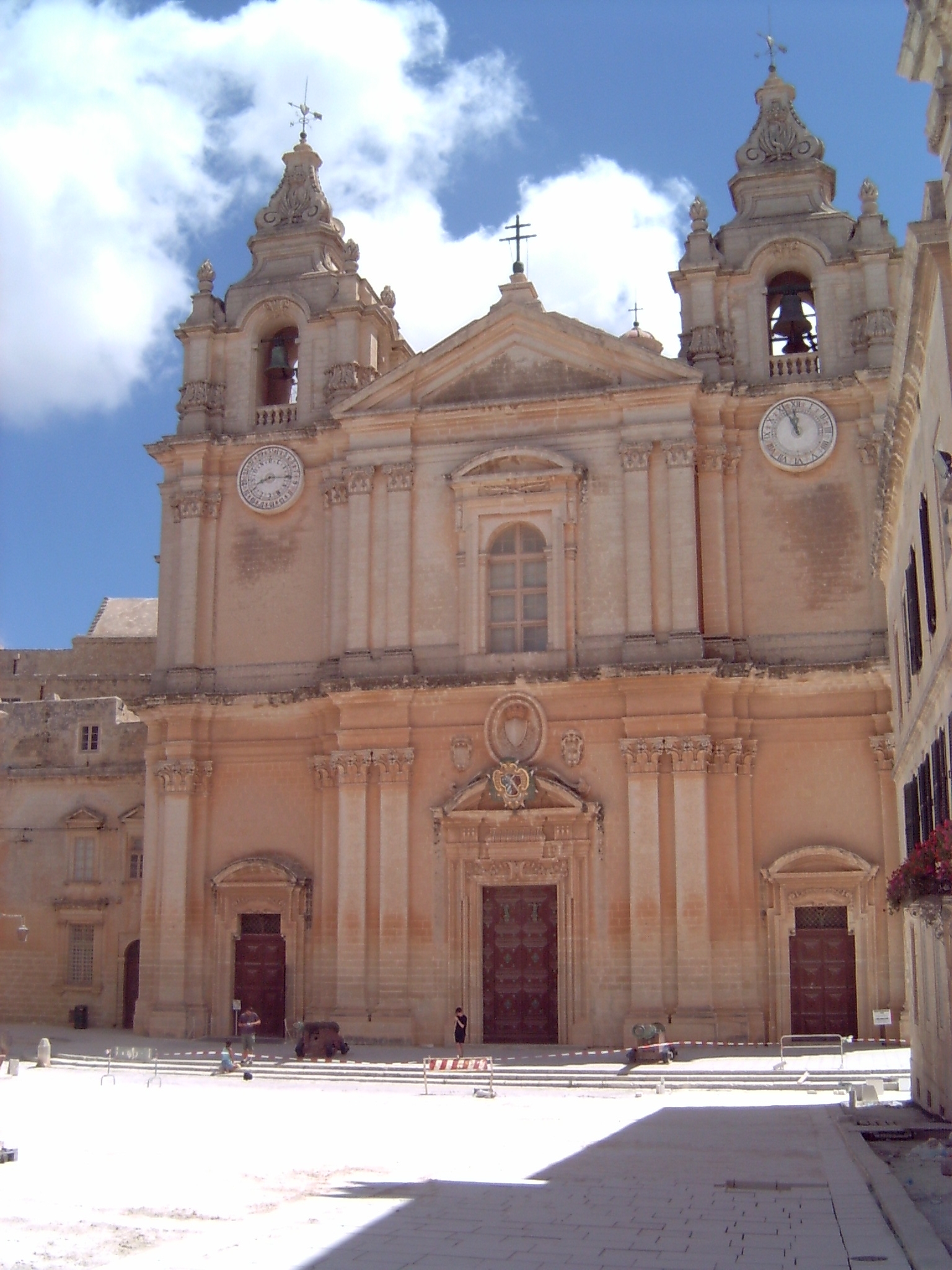 After the destruction of the Cathedral at Mdina the chapter approved plans to have it rebuilt and it was also decided to buy and demolish all the houses adjacent to the site to provide an extension of the piazza in front of the new Cathedral. One of the houses needed belonged to Baron Paolo Testaferrata who refused to sell despite an offer of 650 scudi. Baron Paolo did not want to neotiate and after an interval of several months an angry mob pulled down part of his house. In 1694 it was recorded that the Baron was willing to give his house to extend the piazza. In the event Paolo never sold the house to the Cathedral it was eventually purchased by a third party who subsequently sold it to the Chapter in the first decade of the 18th century.
1714 - 1981
Fabritio, the second Baron di Castel Cicciano was in 1714 appointed Desositario in addition to being the administrator of the Grand Master's property. Baron Fabritio remained in office for the next twenty-nine years. With the appointment of Paolo Passionei as the new Inquisitor in 1743 Fabritio asked to be relieved of the duties of his post while retaining the rights and prerogatives to which he was entitled. These included keeping the reversions of the office in his own family, even in default of male heirs. Unfamiliar with these traditional prerogatives Passionei proposed Canon Grech to succeed Fabritio who had no male heirs.
In August 1744 Fabritio died. His daughter Clara married Michele Sceberras and became the Baroness di Castel Cicciano, whilst the Gomerino was bequested to Fabrito's brother Ercole. The appointment of Signor Ercole Testaferrata as Depositario in succession to Fabritio was made directly by the Holy Office on 10 October 1744 and showed the importance that Rome attached to this post being held by a Testaferrata. His nomination created no problems because 'he has his brother's surname'. Passionei resented Ercole's appointment not only because he never recommended him but also because Ercole's brother refused to renounce the patient in his favour on the grounds of Ercole's old age. The Holy Office was also asked to reconsider its decision in view of Ercole's precarious financial position. According to the Inquisitor the real wealth of the Testaferratas was in the entail which had all been inherited by the Sceberras family, and Ercole was dependent on his wife's dowry as his own income was earmarked for the payment of outstanding debts. Despite these protests Ercole was confirmed in his appointment until he died on October 11, 1748. Sir Pasquale Sceberras-Testaferrata succeeded as the 14th Baron, marrying an Heiress to the Barony of Djar-il-Bniet e Buqana, which carried both titles until the death of Frances Chesney in 1981.
Recent history
The title of Castel Cicciano lay in abeyance until a descendant of Sir Pasquale Sceberras-Testaferrata, 14th Baron di Castel Cicciano, Baron di Montagna di Marza succeeded to it in the same year. Carole Ann Sceberras-Trigona is the present holder and 19th Baroness. Her heir is her uncle Ronald Frederick Sceberras-Trigona, who is the present Baron di Montaga di Marza. Carole’s father and brother died before 1981 and were Carole's next of kin. It is interesting to note that the title of Djar-il-Bniet e Buqana, went to the 15th Baron’s sister descendants; the Apap-Bologna family. One may argue the titles were permanently split forever (Castel Cicciano and Djar-il-Bniet e Buqana). Ronald will be the last from the House of Sceberras to succeed to the Barony of Castel Cicciano as his further heir will from his eldest daughter. Benjamin Trigona-Harany, who will one day succeed as the Baron di Castel Cicciano, and yet again another title leaves the Maltese surname.
References
- Said Vassallo, C.M.,Charles Said-Vassallo's Research site and Maltese Nobility web site.
- Montalto, J., "The Nobles of Malta-1530-1800", Midsea Books Ltd, Malta, 1980.
- Burkes Peerage, Baronetage and Knightage of the UK.- 1914 ed.
- Cassar Desain, Marchese L.A., " Genealogia della famiglia Testaferrata di Malta." Malta, 1880.
- Gauci, C.A.," The Genealogy and Heraldry of the Noble Families of Malta", Gulf Publishing Ltd, Malta, 1981.
- Gauci, C.A.," The Genealogy and Heraldry of the Noble Families of Malta, Volume Two", Publishers Enterprises Group (PEG) Ltd, 1992.
- Gauci, C.A and Mallet, P.,"The Palaeologos Family- A Genealogical Review" ,Publishers Enterprises Group (PEG) Ltd, 1985
- Gauci, C.A.," A Guide to the Maltese Nobility", Publishers Enterprise Group (PEG) Ltd, Malta, 1986.
- Giles Ash, S., "The Nobility of Malta", Publishers Enterprises Group (PEG) Ltd, 1988.