
Andre Bársony
Andre Bársony (born of Hungarian parents on August 31, 1940, as Bársony Andrei in Arad, Romania) is a Canadian economist who has assumed senior-level responsibilities in an international economic organization widely respected for the high-quality of its work (OECD), a prominent national administration that played an influential role in shaping Canadian economic policy (Economic Council of Canada) and a university (Université du Québec à Montréal). His professional career was rooted in strong credentials in economic analysis, strategic planning, policy advocacy, partnership-building and the management of multicultural teams.
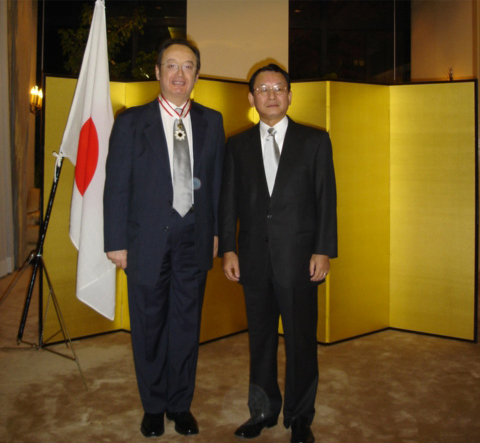
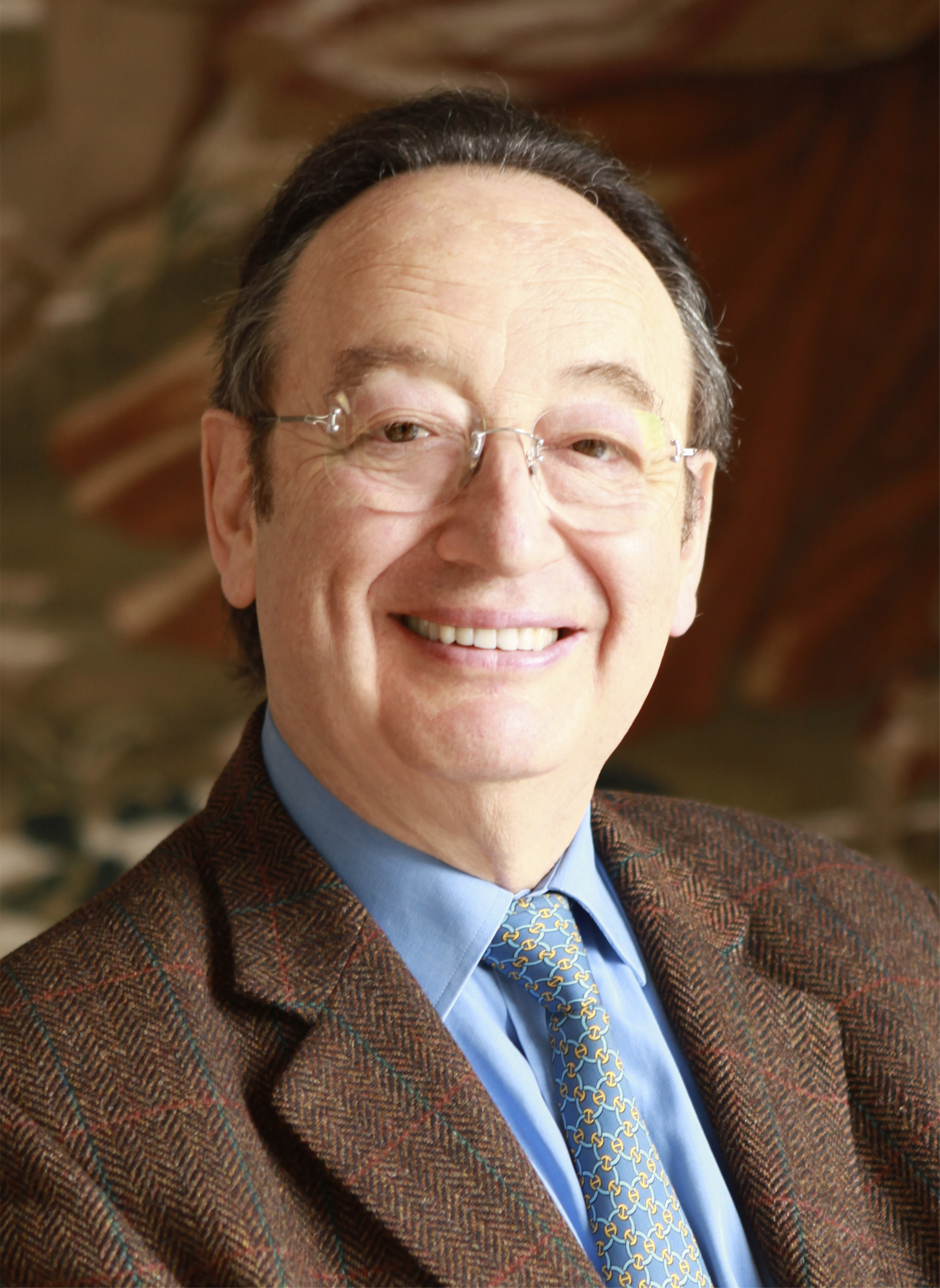 In 2004, Andre Barsony received the “Gold Rays with Neck Ribbon” of the Order of the Rising Sun from His Majesty the Emperor Akihito of Japan for his outstanding contributions to international cooperation and development.
Andre Barsony has made his professional mark as a successful policy adviser and practitioner in several fields such as capacity building in emerging and transition economies; international economics, strategic planning and evaluation of aid policies; and the corporate reform of international organizations. In particular, he has a thorough understanding of economic and policy developments in Brazil, Canada, China, France and South Korea.
 During his OECD years, Barsony participated in high-level meetings between OECD Secretaries-General and Heads of State and Government from emerging and transition countries, including Carlos Menem, President of Argentina, Li Peng, Prime Minister of China, Peter Medgyessi, Prime Minister of Hungary, Ariel Sharon, Prime Minister of Israel, Kim Young-sam, President of South-Korea, Ion Iliescu, President of Romania, Adrian Nastase, Prime Minister of Romania. Barsony also met Ministers of Foreign Affairs, Finance, Economy and Trade from Argentina, Brazil, Bulgaria, Chile, China, Estonia, Israel, Lithuania, Malaysia, Mexico, Romania, Singapore, South Korea, and Thailand.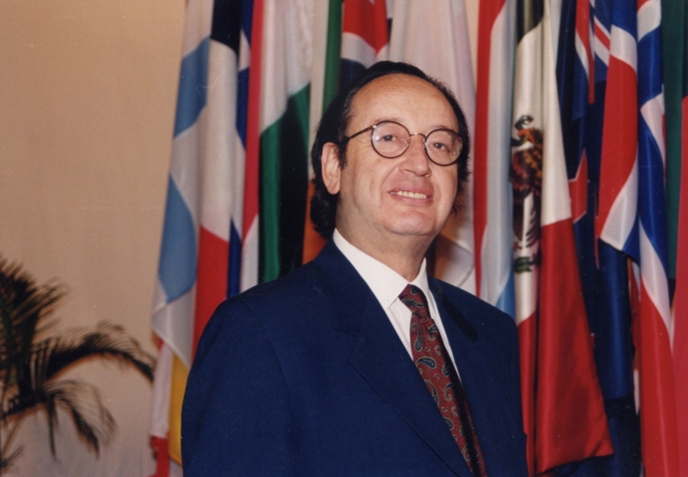
Emigration, education and family Barsony was born in Arad, Romania on August 31, 1940. He spent his childhood there and graduated from Moise Nicoara High School.
Barsony escaped from communist Romania to France in 1961 where he was refused refugee status but was able to stay on as a stateless foreign student. He originally intended to study mathematics but soon switched to economics and political science and enrolled in 1962 to the Institut d'études politiques de Paris commonly called “Science Po”. At Science Po, he was deeply influenced by his economics professor, Raymond Barre, a future Prime Minister. He also attended in parallel courses at the Institut de statistques de Paris. While a student in Paris, Barsony had a number of odd jobs on the informal labor market but the long hours of poorly-paid work became increasingly detrimental to his studies. He decided to move on to Montreal following a generous offer from his Canadian aunt to provide food and shelter.
At age of 23, he has been admitted in third year of undergraduate studies at Université de Montréal. At that time, Barsony has fully and definitely switched to economics and studied under the guidance of Andre Raynauld, a brilliant economist and future Chairman of the Economic Council of Canada, with whom he maintained a close relationship throughout his life. His academic performance accommodated the financing of his studies, benefiting from public and private fellowships and eventually securing a part-time teaching job at the Jesuit College Sainte-Marie. He has been granted a Bachelor of Science cum laude in Economics and a Master of Arts magna cum laude in Economics. He also completed all the requirements of a Ph.D. except dissertation. He speaks English, French, Hungarian and Romanian.
In March 1965, Barsony married his high-school sweetheart, Liane Czucker. His wife has now retired from UNESCO where she was Chief Librarian. They have two children (Alain, a designer and Andrea, an official at the International Committee of the Red Cross) and four grandchildren. Andre Barsony and his wife currently live in Paris.
In 1969, Barsony has been mandated by the President of the Université du Québec à Montréal (UQAM) -- a public university created that year -- to set up UQAM’s Department of Economics and acted as its first chairman. At the same time, he taught economic development, while working at enhancing the new department’s profile in the media and the public at large.
At age 31, Barsony became one of the youngest deans in Canada’s academic history. He has been appointed Dean of Faculty at UQAM following a consultation process with a faculty of 400 professors. As academic Dean, he developed and implemented structures and processes for the management of academic staff and budget, participated in various governing bodies of the university, negotiated a collective agreement with the professors’ union and taught economic development.
In 1972, Andre Barsony became Special Adviser of Andre Raynauld, Chairman of the Economic Council of Canada. In addition of advising the Chairman on a daily basis on a great variety of policy issues, he expanded and deepened the Council’s relations with various Ministries and represented the Council on inter-ministerial bodies.
In 1976, , Andre Barsony undertook for the Economic Council, the planning and coordination of a major study that involved contributions from a large team of academic consultants and culminated with the publication of an influential report “For a Common Future: A Study of Canada’s Relations with Developing Countries”, which shaped Canada’s development co-operation for years to come. 2.3 OECD Official
In 1978, Andre Barsony returned to Paris where he joined the Organization for Economic Co-operation and Development (OECD), an international organization grouping 30 countries who share a commitment to democratic governance and economic development.
Barsony was appointed Head of the International Trade and Balance of Payments Group at OECD’s Development Centre. He collaborated with Professor B. Balassa of The Johns Hopkins University in a major study on policy responses to external shocks in developing countries. Barsony co-authored the synthesis report with B. Balassa and Anne Richards “The Balance of Payments Effects of External Shocks and of Policy Responses to these Shocks”, OECD, 1981.
Upon an invitation to assist a Deputy Secretary General responsible for OECD’s preparation of North-South “Global Negotiations” to be held within the framework of the United Nations, Barsony joined OECD’s Development Co-operation Directorate in 1982 as Head of its Policy Analysis Division. During his tenure that lasted until 1987, he coordinated analytical work on new trends and problems in the developing world and contributed to the elaboration of the Development Assistance Committee’s recommendations and guidelines on good practice in development cooperation.
He also served on a number of Secretariat task forces and contributed to enhance the development dimension in the work of a number of OECD Committees. In the summer of 1982, it became clear that Mexico was unable to meet its financial commitments to its creditors. Barsony was asked to join a team who has prepared an assessment report for the OECD Economic Policy Committee and ultimately triggered the intervention of governments, ensuring orderly resolution of the Mexican debt crisis. In 1988, Barsony joined the Office of the Secretary General as Deputy Head and, thereafter in 1991, as Head of its Liaison and Coordination Unit.
As Secretary of the OECD’s Group on North-South Issues, much of his work at that time has focused on the coordination of the Secretariat’s assistance to member governments in their preparations for international consultations and negotiations with developing countries.
As Head of the OECD Secretariat’s delegation to the United Nations General Assembly, the United Nations Economic and Social Council and the United Nations Conference on Trade and Development, he has been deeply involved in the 1990s in UN work and liaised closely with the Secretariat of these UN committees. He has also advised the OECD Secretary-General on North-South relations and contributed to the drafting of his statements on this issue. During his tenure, Barsony has also played a key role in accession discussions, leading to Mexico’s (1994) and Korea’s (1996) membership in the OECD.
In 1998, when the Liaison and Coordination Unit was merged into the newly created OECD Centre for Co-operation with Non-Members, Barsony was appointed Deputy Director of the Centre. The Centre plays a key institutional role because it devises the strategic orientations of the Organization’s relations with emerging, transition and developing economies, providing oversight and policy guidance. It is also these countries’ principal contact point in their relations with the OECD.
Over the 1998-2004 period, Barsony contributed to the implementation of the Centre’s mandate, with particular responsibility for the OECD’s program of work and budget with non-members and the development of OECD’s partnerships with other international organizations (e.g. World Bank, regional development banks, United Nations Conference on Trade and Development and the United Nations Development Program). He also advised the Secretary-General and his Deputies on relations with non-member countries. As Secretary of the Ambassador level Working Group mandated to develop a strategy for the Organization’s enlargement and relations with non-members, Barsony has successfully assisted member countries to establish the architecture of OECD’s global relations.
2.4 Post OECD Barsony has left OECD in 2004. Based on his deep understanding of the global economy and issues faced by emerging, transition and developing economies, he provides advice and commentary in areas such as strategic programming and evaluation of development assistance; policy reform in emerging, transition and developing countries; and corporate reform of international organizations.
3. Major publications – authored or co-authored --Rapporteur, A Strategy for Enlargement and Outreach, OECD, General Distribution Document, Paris, 2004 --“The OECD and the Economic Transition in Central and Eastern Europe”, The 10-Year Review of Transitional Economies and Challenges for the Next Decade, Final Report, UNIDO, Vienna, 2001 --with Richard Carey, The Major Developing Economies and the OECD, OECD, Paris, 1988 --with Richard Carey, World Economic Interdependence and the Evolving North-South Relationship, OECD, Paris, 1983 --with B. Balassa and Anne Richards The Balance of Payments Effects of External Shocks and of Policy Responses to these Shocks, OECD, Paris, 1981 --Rapporteur of For a Common Future: a Study of Canada’s Relations with Developing Countries, Economic Council of Canada, Ottawa, 1978