
2007 Western North American heat wave
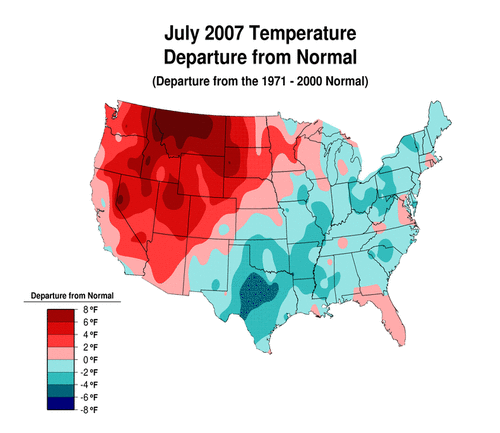 The 2007 western North American heat wave was a record-breaking event that began in late June 2007. The heat stretched from Mexico to Alberta, Saskatchewan, Manitoba and into northwestern Ontario. The record heat has exacerbated already present record-breaking drought conditions in much of the Western U. S., allowing fires to grow to record-breaking sizes.
The combination of conditions have forced major freeway closures, animal and human deaths, evacuations, and destruction of property.
Much of eastern North America has experienced more average conditions through July, with little in the way of prolonged heat waves although the heat is expected to shift eastward going into the month of August. However, drought remains a problem in some areas of the east, particularly parts of the south.
Record highs
Reno, Nevada, reached 108 °F (42 °C) on July 5 easily breaking the previous record of 100 °F (38 °C).
At 116 °F (47 °C), Las Vegas, Nevada, was one degree shy of its all-time record set in 2005 and 1942.
St. George, Utah, reached 118 °F (48 °C) on July 5, according to the local weather station as mentioned in the front page of the July 6 edition of The Salt Lake Tribune, which would be the highest temperature ever-recorded in Utah.
Eastern Oregon set 15 different record highs on July 5.
There were 11 days of triple digit temperatures in Missoula, Montana., almost double the previous record of 6 days for the month of July.
Temperatures
Many major cities have experienced prolonged intense and unusual heat in Canada, the United States, and Mexico. It was the hottest July on record for the entire states of Idaho, Montana, and Wyoming, and second hottest for Nevada.
City |
Highest temperature |
Date achieved |
Normal temperature |
Deviation |
|---|---|---|---|---|
Edmonton, Alberta |
90 °F (32 °C) |
July 5 |
73 °F (23 °C) |
+17 °F (+9 °C) |
Lethbridge, Alberta |
97 °F (36.3 °C)2 |
July 5 |
77 °F (25 °C) |
+20 °F (+ 11 °C) |
Medicine Hat, Alberta |
100 °F (37.9 °C) 3 |
July 6 |
81 °F (27 °C) |
+ 19 °F (+ 11 °C) |
Regina, Saskatchewan |
99 °F (37.2 °C) 4 |
July 6 |
77 °F (25 °C) |
+ 22 °F (+12 °C) |
Val Marie, Saskatchewan |
105 °F (41 °C) |
July 23 |
82 °F (28 °C) |
+23 °F (+12 °C) |
Abbotsford, British Columbia |
95 °F (35 °C) |
July 10 |
76 °F (24 °C) |
+ 19 °F (+11 °C) |
Seattle, Washington |
94 °F (34 °C) |
July 11 |
76 °F (24 °C) |
+18 °F (+10 °C) |
Portland, Oregon |
102 °F (39 °C) |
July 10 |
79 °F (26 °C) |
+23 °F (+13 °C) |
Sacramento, California |
107 °F (42 °C) |
July 5 |
94 °F (34 °C) |
+13 °F (+8 °C) |
Boise, Idaho |
106 °F (41 °C) |
July 6 |
90 °F (32 °C) |
+16 °F (+9 °C) |
Missoula, Montana |
107 °F (42 °C) |
July 6 |
83 °F (28 °C) |
+24 °F (+13 °C) |
Jackson, Wyoming |
91 °F (33 °C) |
July 6 |
79 °F (26 °C) |
+12 °F (+7 °C) |
Salt Lake City, Utah |
102 °F (39 °C) |
July 6 |
89 °F (32 °C) |
+13 °F (+7 °C) |
Denver, Colorado |
97 °F (36 °C) |
June 25 |
87 °F (31 °C) |
+10 °F (+8 °C) |
Las Vegas, Nevada |
116 °F (47 °C) |
July 5 |
105 °F (41 °C) |
+11 °F (+6 °C) |
Phoenix, Arizona |
115 °F (46 °C) |
July 4 |
104 °F (40 °C) |
+11 °F (+6 °C) |
Santa Fe, New Mexico |
96 °F (36 °C) |
July 1 |
83 °F (28 °C) |
+13 °F (+8 °C) |
Death Valley, California |
127 °F (53 °C) |
July 6 |
115 °F (46 °C) |
+12 °F (+7 °C) |
Heat related deaths
Six suspected illegal immigrants have died in the deserts of Arizona as a result of the heat.
In Orofino, Idaho, a one year old boy was found dead locked in a car.
Cities in California have opened cooling centers as power companies declare a stage 1 emergency.
Wildfires, deaths, and freeway closures
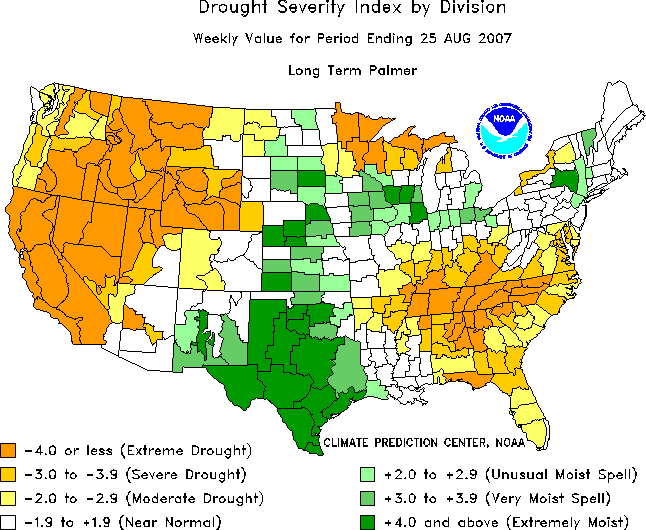 Firefighters have blamed the heat and existing record-breaking drought for dozens of wildfires in the West.
The area is in the midst of an unusual drought; in Los Angeles, California, with only 3.21 in (82 mm) of precipitation in the entire 2006-2007 rain season, it is the driest year on record, receiving less rain than Death Valley in a normal year.
Wildfires, such as the destructive Angora Fire, have killed dozens, forced the closure of major freeways, and destroyed homes.
In central Utah, the largest wildfire in state history has consumed or 468 square miles (114,526 hectares) and forced the closure of I-15 and I-70.
In northeastern Utah a wildfire moving at the speed of 30 mph (50 km/h) killed three men on a farm.
Portions of suburban Salt Lake City in Herriman were forced to evacuate has fires threatened their homes.
I-80 has been closed in northern Nevada as fires burn a combined total of 55 square miles (144 square kilometres) and force evacuations near Winnemucca.
Damage to wildlife and lifestock
The extreme heat has warmed rivers in Yellowstone resulting in the deaths of hundreds of trout.
The high temperatures and drought have destroyed crops and stressed cattle in Montana.
See also
- 2007 European heat wave
- 2007 North America: South and Eastern Heatwave
- 2007 South Asian heat wave