
World War II/temp
World War II or the Second World War, often abbreviated as WWII or WW2, was a worldwide military conflict; the amalgamation of two separate conflicts, one beginning in Asia, 1937, as the Second Sino-Japanese War and the other beginning in Europe, 1939, with the invasion of Poland. It is regarded as the historical successor to World War I.
This global conflict split a majority of the world's nations into two opposing military alliances: the Allies and the Axis. Spanning much of the globe, World War II resulted in the deaths of over 70 million people, making it the deadliest conflict in human history.
World War II was the most widespread war in history, and countries involved mobilized more than 100 million military personnel. Total war erased the distinction between civil and military resources and saw the complete activation of a nation's economic, industrial, and scientific capabilities for the purposes of the war effort; nearly two-thirds of those killed in the war were civilians. For example, nearly 11 million of the civilian casualties were victims of the Holocaust, which was largely conducted in Eastern Europe, and the Soviet Union.
The conflict ended in an Allied victory. As a result, the United States and Soviet Union emerged as the world's two leading superpowers, setting the stage for the Cold War for the next 45 years. Self determination gave rise to decolonization/independence movements in Asia and Africa, while Europe itself began traveling the road leading to integration.
Background
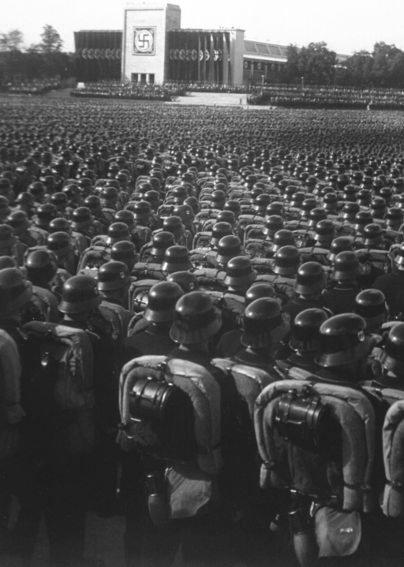 In the aftermath of World War I, the defeated German Empire was made to sign the Treaty of Versailles. This restricted German military and territorial growth and required the payment of massive war reparations. Civil war in Russia led to the creation of the communist Soviet Union which soon fell under the control of Joseph Stalin. In Italy, Benito Mussolini seized power as a fascist dictator promising to create a "New Roman Empire". The ruling Kuomintang party in China launched a unification campaign against rebelling warlords in the mid-1920s, but was soon embroiled in a civil war against its former Chinese communist allies. In 1931, an increasingly militaristic Japan, which had long sought influence in China, used the Mukden Incident as justification to invade Manchuria; the two nations then fought several small conflicts until the Tanggu Truce in 1933.
In 1934, National Socialist Adolf [...] took power in Germany and began a massive rearming campaign. This worried France and the United Kingdom, who had lost much in the previous war, as well as Italy, which saw its territorial ambitions threatened by those of Germany. To secure its alliance, the French allowed Italy a free hand in Ethiopia, which Italy desired to conquer. The situation was aggravated in early 1935 when the Saarland was legally reunited with Germany and [...] repudiated the Treaty of Versailles, speeding up remilitarization and introducing conscription. Hoping to contain Germany, the United Kingdom, France and Italy formed the Stresa Front. The Soviet Union, also concerned due to Germany's goals of capturing vast areas of eastern Europe, concluded a treaty of mutual assistance with France.
These alliances did not amount to much. The Franco-Soviet pact, required to go through the League of Nations bureaucracy before taking effect, was essentially toothless and in June of 1935, the United Kingdom made an independent naval agreement with Germany easing prior restrictions. The isolationist United States, concerned with events in Europe and Asia, passed the Neutrality Act in August. In October Italy invaded Ethiopia, but was soon politically isolated, with Germany the only major European nation supporting its aggression. Alliances shifted, with Italy revoking its objections to Germany's goal of making Austria a satellite state.
In March of 1936, [...] remilitarized the Rhineland in direct violation of the Versailles and Locarno treaties, receiving little response from other European powers. When the Spanish Civil War broke out in July, [...] and Mussolini supported fascist Generalísimo Francisco Franco in his coup against the Soviet-supported communist Spanish Republic. Both sides used the conflict to test new weapons and methods of warfare.
With tensions mounting, efforts to strengthen or consolidate power were made. In October, Germany and Italy formed the Rome-Berlin Axis and a month later Germany and Japan, each believing communism–and the Soviet Union in particular–to be a threat, signed the Anti-Comintern Pact, which Italy would join in the following year. In China, the Kuomintang and communist forces agreed on a ceasefire to present a united front to oppose Japan.
Course of the war
War breaks out
In mid-1937, following the Marco Polo Bridge Incident, Japan began a full invasion of China. The Soviets quickly lent support to China, effectively ending China's prior cooperation with Germany. Starting at Shanghai, the Japanese pushed Chinese forces back, capturing the capital Nanjing in December. In June of 1938 Chinese forces stalled the Japanese advance by flooding the Yellow River. Though this bought time to prepare their defenses at Wuhan, the city was still taken by October.
In Europe, Germany and Italy were becoming bolder. In March 1938, Germany annexed Austria, again provoking little response from other European powers. Encouraged, [...] began making claims on the Sudetenland; France and Britain conceded these for a promise of no further territorial demands. Germany soon reneged, and in March 1939 fully occupied Czechoslovakia. Alarmed, and with [...] making further demands on Danzig, France and Britain guaranteed their support for Polish independence. When Italy conquered Albania in April, the same guarantee was extended to Romania and Greece. The Soviet Union attempted to ally with France and Britain, but was rebuffed due to Polish concerns over Soviet intentions.
In May of 1939, Japan and the Soviet Union became involved in a border war. Germany and Italy formalized their alliance with the Pact of Steel. Shocking both its allies and enemies, Germany concluded a non-aggression pact with the Soviets in August, including a secret agreement to split Poland and eastern Europe between them. Britain attempted to counter this pact by strengthening their commitment to Poland.
By the start of September the Soviets had routed Japanese forces and the Germans invaded Poland. France, Britain and the Commonwealth declared war on Germany but lent little support other than a small French attack into the Saarland. In mid-September, following an official armistice with Japan, the Soviets launched their own invasion of Poland. By early October, Poland had been divided between Germany and the Soviet Union, with the latter's troops now stationed in the Baltic states. During the battle in Poland, Japan launched its first attack against Changsha, a strategically important Chinese city, but was repulsed by early October.
Axis advances
 Following the invasion of Poland, the Soviets began moving troops into the Baltics. Finnish resistance in late November led to a four-month war, ending with Finnish land concessions. By mid-1940, the Soviet Union's occupation of the Baltics was completed with the installation of pro-Soviet governments.
In western Europe, British troops deployed to the Continent but neither Germany nor the Allies launched direct attacks on the other. In April, Germany invaded Denmark and Norway. Denmark immediately capitulated, and despite Allied support Norway was conquered within two months. British discontent over the Norwegian campaign led to the replacement of Prime Minister Neville Chamberlain by Winston Churchill on May 10th.
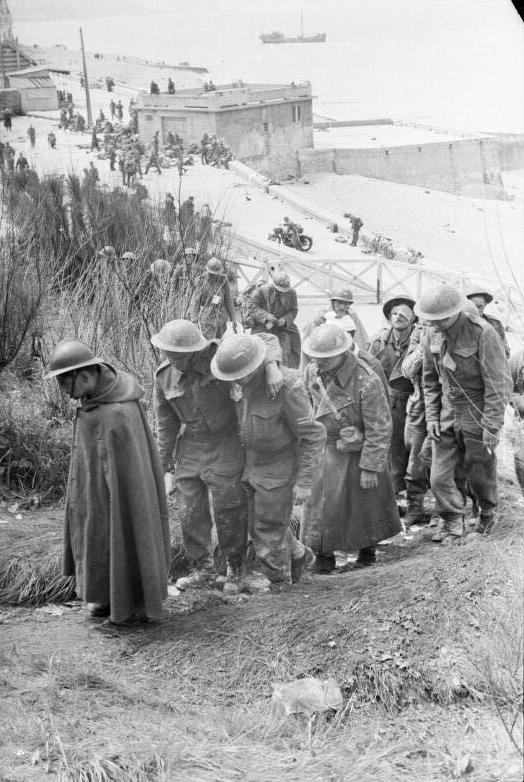
On that same day, Germany invaded France and the Low Countries, making rapid progress using blitzkrieg tactics. By the end of the month the Netherlands and Belgium had been overrun and British troops were forced to evacuate the continent, abandoning their heavy equipment. In early June Italy invaded, declaring war on both France and the United Kingdom. Paris fell to the Germans on June 14; on June 22 France surrendered and was divided into German and Italian occupation zones, and an unoccupied rump state under the Vichy Regime. In early July, the British attacked the French fleet in Algeria to prevent their seizure by Germany.
With France neutralized, the Axis was emboldened. Germany began an air superiority campaign over Britain to prepare for an invasion and enjoyed success against an over-extended Royal Navy, using U-boats against British shipping in the Atlantic. Italy began operations in the Mediterranean, fighting an inconclusive naval battle with the Royal Navy near Calabria in early July, conquering British Somaliland in August, and making an incursion into British-held Egypt in early September. Japan increased its blockade of China in September by seizing several bases in the northern part of the now-isolated French Indochina.
Throughout this period, the neutral United States took measures to assist the Allies. In November 1939, the American Neutrality Act was amended to allow Cash and carry purchases by the Allies. In September 1940, the United States agreed to a trade of American destroyers for British bases, and placed steel and oil embargoes on Japan. Further American assistance to China and Britain came with the Lend-Lease policy in March 1941.
At the end of September 1940, the Tripartite Pact between Japan, Italy and Germany formalized the Axis Powers. As a warning to the United States, the pact stipulated that, with the exception of the Soviet Union, any country not currently in the war which attacked any Axis Power would be forced to go to war against all three.
Soon after the pact, Italy's fortunes changed. In October, Italy invaded Greece but was halted by the end of November. The British put three Italian battleships out of commission via carrier attack at Taranto, and then launched offensives against Libya and Italian East Africa. By early February 1941 Italian forces had been pushed back into Libya, by the British, and into Albania, by the Greeks. In March, Churchill ordered a number of British troops from Africa to bolster the Greeks and the Royal Navy dealt the Regia Marina a crippling blow at the Battle of Cape Matapan.
The Germans soon intervened to assist Italy. [...] sent German forces to Libya in February; by the end of March they had launched an offensive against the diminished British forces. In early April the Germans invaded Greece and Yugoslavia. By the end of April, the Germans had pushed the British back into Egypt, with the exception of besieged port of Tobruk, and had conquered Yugoslavia and mainland Greece. The Germans also supported a rebellion in Iraq from bases within Vichy-controlled Syria and Lebanon.
By the end of May, the British had quelled the Iraqi rebellion and scored a propaganda victory by sinking the German flagship Bismark; the Germans had repelled a British attempt to relieve Tobruk and conquered the Greek island of Crete. In June, the British successfully invaded French Syria and Lebanon, but failed in a second operation against Axis forces in Libya.
In Asia, in spite of several offensives by both sides, the Sino-Japanese War was stalemated by 1940. In August of that year, Chinese communists launched an offensive in Central China; in retaliation, Japan instituted harsh measures in occupied areas to reduce human and material resources for the communists. Mounting tensions between Chinese communist and nationalist forces culminated in January 1941 with the New Fourth Army Incident, effectively ending their co-operation.
With the situation in Europe and Asia relatively stable, Germany and Japan began to individually plan their next moves. In April, 1941, the Japanese, preparing for war against Britain and the United States, signed a neutrality agreement with the Soviet Union. By contrast, in May the Germans called off their campaign over Britain in order to concentrate forces for an attack on the Soviet Union.
The war becomes global
On June 22nd, Germany, along with other European Axis members and Finland, invaded the Soviet Union. Axis forces made significant gains into Soviet territory and inflicted large numbers of casualties until the offensive began to stall as winter approached. In September, the siege of Leningrad began, and in October Sevastopol was sieged and a renewed offensive was made against Moscow, the Soviet capital. After the halt of the German offensive, the Soviet's launched a winter counter-offensive using reserve troops brought up from the border near Japanese Manchuria.
Following the German attack on the Soviets, the United Kingdom began to regroup. In August, they jointly issued the Atlantic Charter with the United States and then, along with the Soviet Union, invaded Iran to secure the Persian Corridor and Iran's oilfields. In December, they launched a counter-offensive in the desert, reclaiming all gains the Germans and Italians had made.
In Asia, Japan was preparing for war. The Japanese plan was to create a large perimeter stretching into the western-central Pacific in order to facilitate a defensive war while exploiting the resources of Southeast Asia; as a further precaution, the Japanese also planned to neutralize the United States Pacific Fleet. In preparation, Japan seized military control of southern Indochina in July, 1941; an action the United States, United Kingdom and other western governments responded to by freezing all Japanese assets. On December 7th, the Japanese struck, launching near simultaneous offensives against Southeast Asia and the Central Pacific, including an attack on the American naval base of Pearl Harbor.
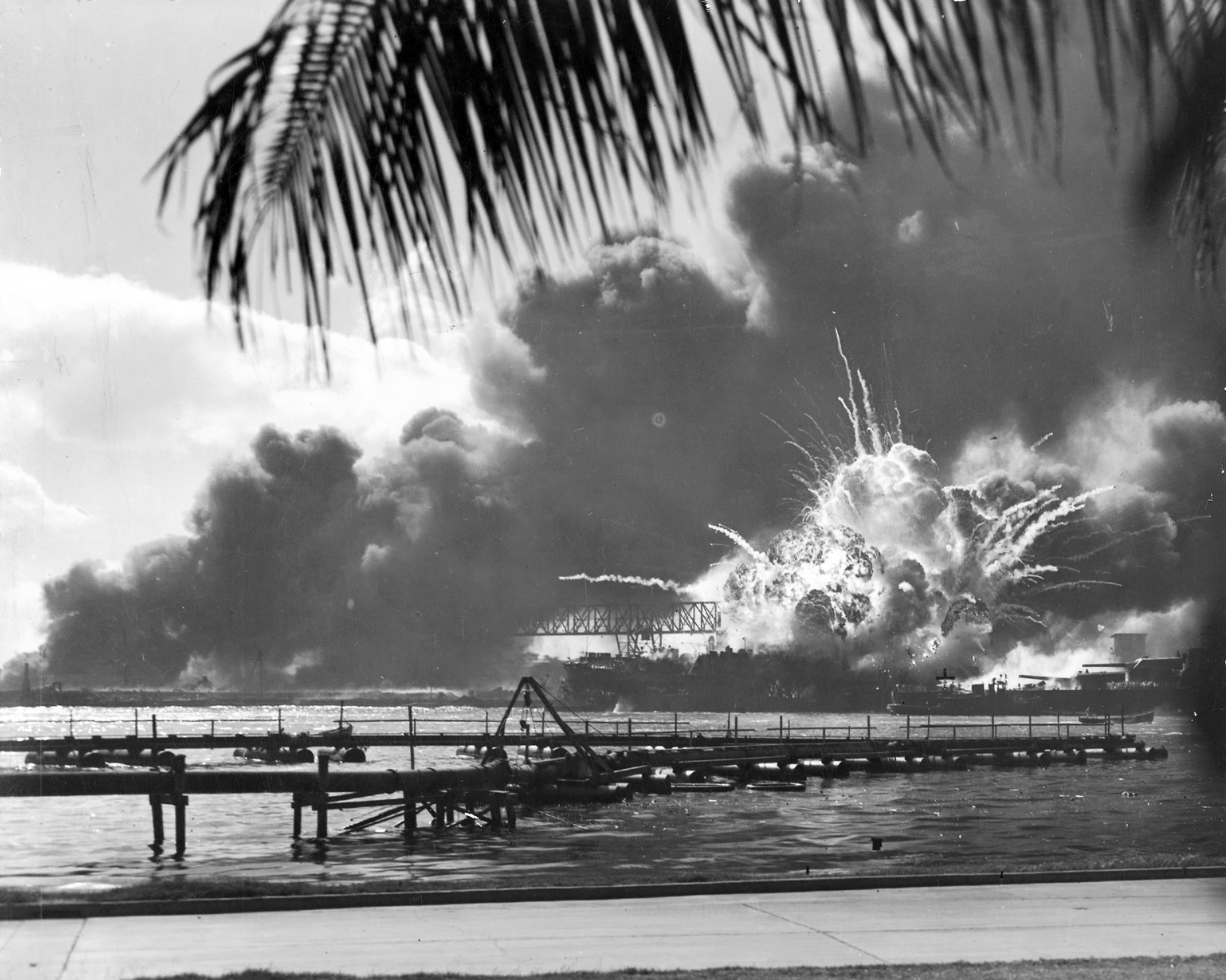 These actions prompted the United States, United Kingdom, China, and other Western Allies to declare war on Japan. Italy, Germany, and the other members of the Tripartite Pact responded by declaring war on the United States. In January, the United States, United Kingdom, Soviet Union and China issued the Declaration by United Nations, formalizing their alliance against the Axis Powers with the exception that the Soviet Union maintained its neutrality agreement with Japan.
The Axis Powers, however, were able to continue their offensives. Japan had almost fully conquered Southeast Asia with minimal losses by the end of April, 1942, chasing the Allies out of Burma and taking large numbers of prisoners in the Philippines, Malaya, Dutch East Indies and Singapore. They further bombed Australia's main naval base at Darwin and sunk significant Allied warships not only at Pearl Harbor, but also in the Java Sea, South China Sea and Indian Ocean. The only real successes against Japan were a repulsion of their renewed attack on Changsha in late December and a psychological strike from a bombing raid on Japan's capital Tokyo in April.
Germany was able to regain the initiative as well. Exploiting American inexperience with submarine warfare, the German Navy sunk significant resources near the American Atlantic coast. In the desert, they launched an offensive in January, pushing the British back to positions at the Gazala Line by early February. In the Soviet Union, the Soviet's winter counter-offensive had tapered off by March. In both the desert and the Soviet Union, there followed a temporary lull in combat which Germany used to prepare for their spring offensives.
The tide turns
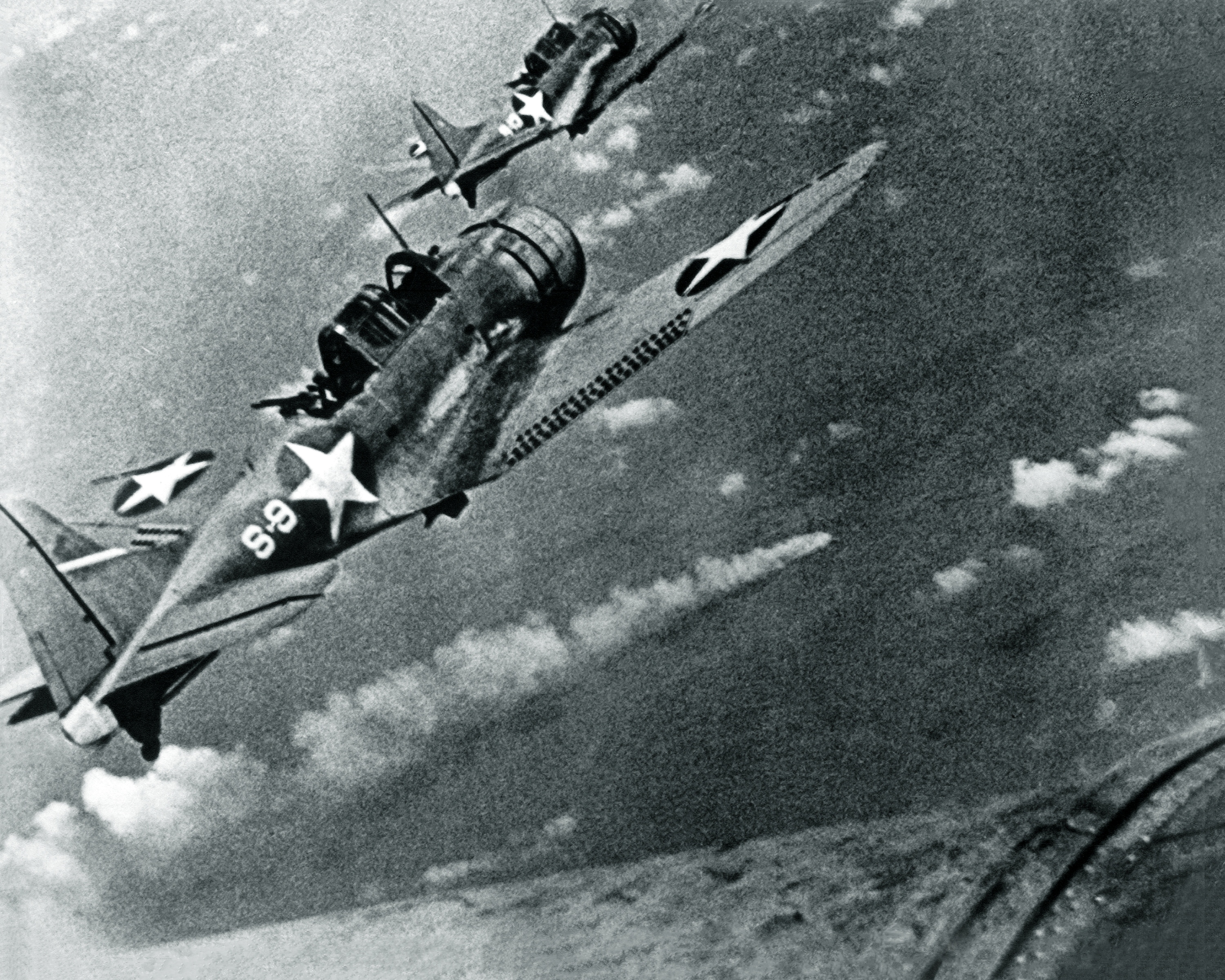 In early May, Japan initiated operations to capture Port Moresby, the last major Allied stronghold in south-east Asia, via amphibious assault; the Allies, however, intercepted and turned back Japanese naval forces, preventing the invasion. Japan's next plan, motivated by the earlier bombing on Tokyo, was to seize the Midway Atoll as this would seal a gap in their perimeter defenses, provide a forward base for further operations, and lure American carriers into battle to be eliminated; as a diversion, Japan would also send forces to occupy the Aleutian Islands. In early June, Japan put their operations into action but the American's, having broken Japanese naval codes in late May, were fully aware of the Japanese plans and force dispositions and used this knowledge to achieve a decisive victory over the Imperial Japanese Navy. With their capacity for amphibious assault greatly diminished as a result of the Midway battle, Japan chose to focus on an overland campaign on the Territory of Papua in another attempt to capture Port Moresby. For the Americans, they planned their next move against Japanese positions in the southern Solomon Islands, primarily against the island of Guadalcanal, as a first step towards capturing Rabaul, the primary Japanese base in southeast Asia. Both plans started in mid-summer, but by mid-September the battle for Guadalcanal took priority for the Japanese, and troops in New Guinea were ordered to withdraw until its conclusion. Guadalcanal soon became the focal point for both sides with heavy commitments of troops and ships in a battle of attrition. By the start of 1943, the Japanese were defeated on the island and withdrew their troops.
In Burma, Commonwealth forces mounted two operations. The first, an offensive into the Arakan region in late 1942 went disastrously, forcing a retreat back to India by the spring of 1943. The second was the insertion of irregular forces behind Japanese front-lines in February which, by the end of April, had achieved dubious results.
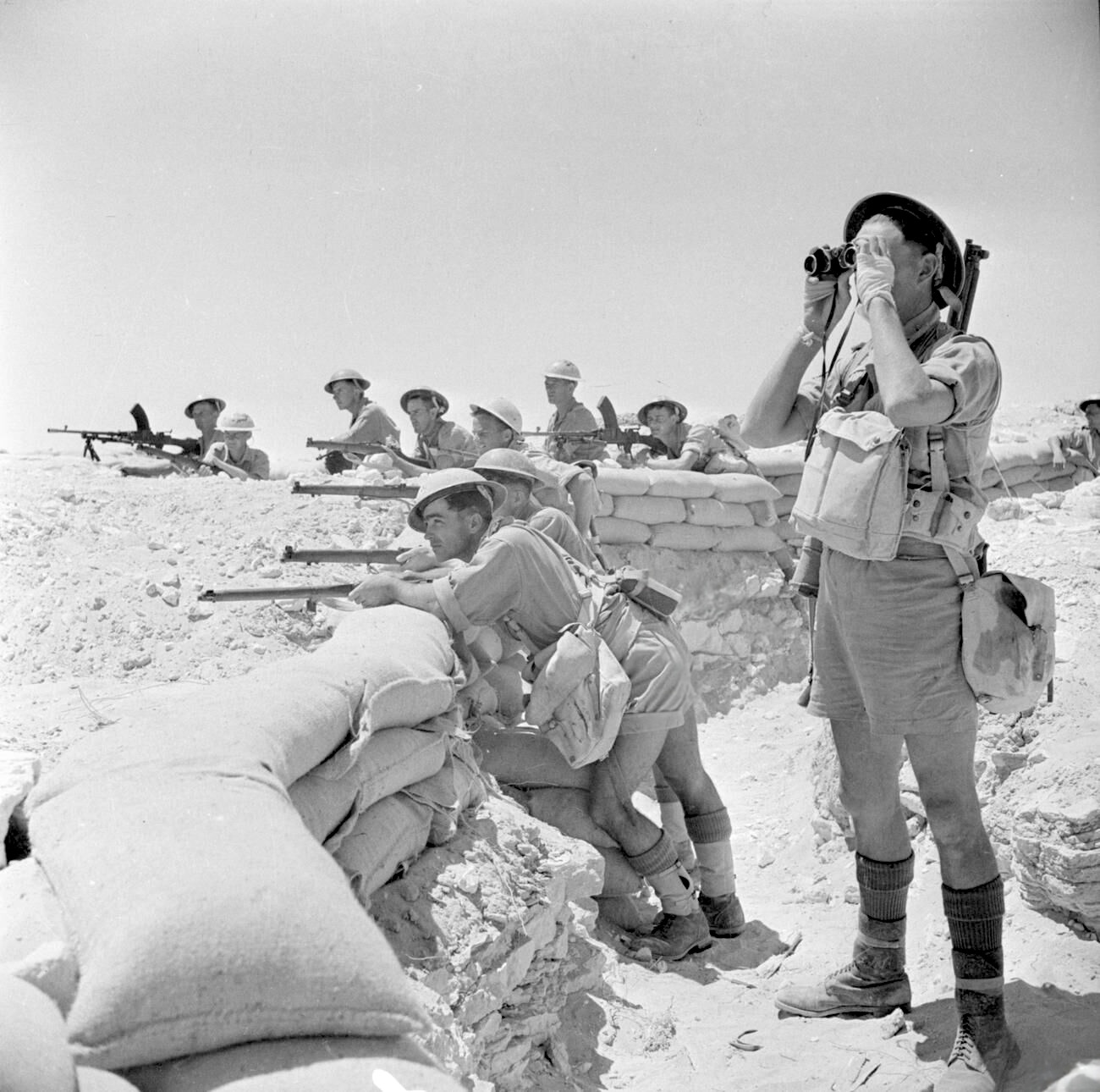 In the west, concerns that the Japanese might occupy bases in Vichy-held Madagascar caused the British to invade the island in early May, 1942. At the end of May, the Axis defeated Allied positions in Libya and pushed the Allies back into Egypt until they were stopped at El Alamein. In mid-August, with public discontent over defeats in the desert and the need to satiate Stalin's demands for a second front in Europe, British and Canadian forces staged an unsuccessful amphibious assault on the German held port of Dieppe. In August, Axis forces attempted a second attack against Allied forces at El Alamein, but again were turned back. In late October, the Allies commenced an attack of their own, dislodging the Axis forces and beginning a drive west across Libya. In November, Anglo-American forces invaded French North Africa, which quickly aligned itself to the Allies; [...] responded to this by ordering the occupation of Vichy France, though the Vichy Admiralty managed to scuttle their fleet to prevent its capture by German forces. Axis forces in Africa withdrew into Tunisia, where they were pincered by offensives from both the east and west. By May, the Western Allies had conquered Tunisia, taking a large number of Axis prisoners.
On the German's eastern front, they launched their main summer offensive against southern Russia in June, 1942, after defeating Soviet offensives in the Kerch Peninsula and at Kharkov in the previous month. By mid-November the Germans had nearly taken Stalingrad in bitter street fighting when the Soviet's launched their counter-attack, encircling a large number of German troops. The Germans attempted to relieve these forces in December, but the Soviet's repelled the operation and in January, 1943, launched their general counter-offensive in the south and in the north. By early February, the German Army had taken tremendous losses; their troops at Stalingrad had been forced to surrender and the front-line had been pushed back roughly to its position prior to their offensives. In mid-February, after the Soviet push had tapered off, the German's launched another attack on Kharkov, creating a salient in their front-line around the Russian city of Kursk.
Allies gain momentum
Following the Guadalcanal Campaign, the Allies initiated several operations against Japan. In May, 1943, American forces were sent to eliminate Japanese forces from the Aleutians, and in June the Allies began a major operation to isolate Rabaul by capturing points in the Solomon Islands, New Guinea, and other surrounding islands. By mid-August, the Japanese had withdrawn from the Aleutians and in November Allied forces began to attack the Japanese perimeter in the Gilbert and Marshall islands. By the end of March, 1944, the Allies had isolated Rabaul, neutralized another major Japanese base in the Caroline Islands, and completed their invasions of the Gilbert and Marshall islands. In April, the Allies then launched an operation to retake Western New Guinea.
In mainland Asia, the Japanese launched two major offensives in the spring of 1944: the first was against British positions in Assam, India, while the second was in China with the goal of linking Japanese-held territory in Indochina, Hong Kong and Manchuria. The Chinese had also gone on the offensive in the spring, invading northern Burma from Yunnan. By the start of June, Japanese forces were besieging Commonwealth positions at Imphal and Kohima, and were themselves being besieged by the Chinese in Myitkyina; in China, the Japanese had conquered the province of Henan and begun a renewed attack against Changsha.
In the Mediterranean, Allied forces launched an invasion of Sicily in early July, 1943. The attack on Italian soil, compounded with previous failures, resulted in the ousting and arrest of Mussolini on July 23rd. The Allies soon followed up with an invasion of the Italian mainland in early September, prompting the Italians to agree to an armistice with the Allies. When this armistice was made public on September 8th, Germany responded by disarming Italian forces, seizing military control of Italian areas, and setting up a series of defensive lines. On September 12th, German special forces further rescued Mussolini who then soon established a new client state in German occupied Italy. The Allies fought through several lines until reaching the main German defensive line in mid-November. In January, the Allies launched a series of attacks against the line at Monte Cassino and attempted to outflank it with landings at Anzio. By late May both of these offensives had succeeded and, at the expense of allowing several German divisions to retreat, on June 4th Rome was captured.
In the Soviet Union, the Germans spent the spring and early summer of 1943 making preparations for a large offensive in the region of Kursk; the Soviet's anticipated such an action though and spent their time fortifying the area. On July 4th, the Germans launched their attack, though by July 17th, [...] cancelled the operation. The Soviet's were then able to mount a massive counter-offensive which, by June 1944, had largely expelled Axis forces from the Soviet Union.
In November, 1943, Franklin Roosevelt and Winston Churchill met with Chiang Kai-shek in Cairo and then with Joseph Stalin in Tehran. At the former conference, the post-war return of Japanese territory was determined and in the latter, it was agreed that the Western Allies would invade Europe in 1944 and that the Soviet Union would declare war on Japan within three months of Germany's defeat.