
World of Final Fantasy VI
Tzen redirects here. For the Greek sports car, see Tzen (Cars).
Similar to most games in the Final Fantasy series, the history and politics of the world of Final Fantasy VI contain many distinct elements as well as references to real-life cultures of past and present. The Industrial Revolution setting of the game allows it to borrow elements from ancient cultures such as Ancient Rome and Ancient China as well as modern cultures such as [...] Germany, and turn the game's backdrop into something akin to the steampunk genre of fantasy. There are many mythological references to cultures such as those of India, Greece, Arabia, the Norse, and the Judeo-Christian Bible. Final Fantasy VI also features more references to the Star Wars saga than almost any other installment in the series.
Gestahlian Empire
The Gestahlian Empire is an autocratic government ruled by Emperor Gestahl. The Empire has its headquarters in the capital city of Vector. At the dawn of the adventure, Gestahl had three generals under his command: Leo Cristophe, Celes Chere, and Kefka Palazzo. Each general in turn commanded rank-and-file soldiers. A soldier's rank is readily identifiable by the color of his uniform. Soldiers of the lowest rank are outfitted in green, brown uniforms signify middle rank, and black uniforms signify highest rank. There are also some soldiers of red and yellow armor, but they are typically bodyguards, seen only in Gesthal's throne room, and rarely battle. Green soldiers are noted for their belligerent behavior towards civilians in Imperial-occupied cities, and, as is common with infantry, fight exclusively on foot. The brown soldiers could attack on foot or pilot , while the commanders in black are often assigned to direct the troops in battle. Gestahl is also protected by the Imperial Guard, an elite squad of personal sentries outfitted in special uniforms. The Empire also maintains an air force (the Imperial Air Force, or IAF), which consists of lightweight aircraft buoyed by propellers.
Geography
Due to the military might of the Empire and its technology, its influence is far reaching, and has invoked a world war. Thus, the affiliation of the nations of the world should be noted. Indicated below are the affiliations at the time the adventure begins, with related events noted.
- Imperial satellite nations
- Albrook ("The Occupied City.")
- Maranda (Burned by Celes Chere.)
- Tzen (The Empire dethroned their king.)
- Imperial allies
- Figaro (Formally. However, King Edgar secretly supported the Returners.)
- Returner collaborationist nations
- Doma (Conquered during the adventure.)
- Kohlingen (The Empire attacked Kohlingen but failed to conquer it.)
- Neutral nations
- Narshe (Officially stated as such.)(However, joins the Returners during an Imperial attack on Narshe led by Kefka.)
- Nikeah (Implied because it is an unoccupied port town.)
- Outside imperial influence
- Jidoor (Presumably because of the city's wealth and affluence it was able to remain independent.)
- Thamasa (The secret home of the Mage Knights; avoided contact with the outside world.)
- Zozo (Entirely populated by thieves and monsters, presumably considered outside civilized society.)
- Mobliz (Isolated from the outside world, thus having little importance for purposes of conquest.)
Demography
A rigid social class system has been established in the world of Final Fantasy VI.
The wealthier population of the world of Final Fantasy VI enjoys many of the luxuries accorded to the wealthy class during the latter half of 19th century Europe. One of the major themes in Final Fantasy VI is the arts and music. The town of Jidoor exemplifies this, as it is populated with wealthier individuals and is home to a renowned art collector named Owzer. The town also hosts an auction, where it is assumed that art is sold, even though the player cannot purchase any. An opera house lies to the south of Jidoor on a peninsula, and the opera is incredibly popular in the world of Final Fantasy VI.
Similar to the wealthy, the working class in Final Fantasy VI tends to mimic the working class in the late 19th century. Many workers hold jobs such as coal mining, especially in the town of Narshe, and assembly line working for the Empire. However, workers often have to struggle to survive, and many have become thieves and moved to the town of Zozo. Others make a living hunting for rare treasures.
History
War of the Magi
Not much is known AbOUT the distant past of the world of Final Fantasy VI. However, approximately 1000 years before the adventure, three magical Gods collectively dubbed The Warring Triad began to quarrel. Their bickering caused waves of magical energy to escape to the world. Humans who were caught in this energy were corrupted and transformed into . The Espers could not control themselves, and they fought a prolonged war with the humans, known as the . One unfortunate battle took place inside an Ancient Castle, in which a powerful Esper, Odin, was attacked by soldiers and petrified.
At the end of the conflict, in an effort to establish stability, the Espers decided to seal the Triad in stone Statues in a hidden part of the world that would become known as the Land of Espers. The Statues thus formed a delicate balance which, if disrupted, would result in catastrophe. The Statues, in turn, gave the Espers their free will back, on the condition that the Statues would be sealed in their balance forever. Those magically powered humans who survived the war, the Magi, or Mage Warriors in the original U.S. version, were deemed outcasts and were forced to live in isolation in their own remote town of Thamasa, where even there they practiced their magic in secret.
Rise of the Empire
Not much is known about how the Empire formed, but it is known that they gained their power through the use of Magitek, which is discussed below. Gestahl led a band of troops into the Espers' world and brought back numerous Espers to Vector, where Cid developed a technique for extracting the magic out of them. Using this newfound power, the Empire then proceeded to conquer all of the continent on which Vector was situated. Most of the towns were taken very easily, but one notably horrible incident included the burning of the nation of Maranda, which was conducted by none other than Celes Chere herself. The men who lived in the occupied towns were taken away and drafted into the Imperial army.
Meanwhile, Gestahl was personally taking care of his secret weapon of mass destruction, a girl named Terra Branford whom he abducted from the Esper world. Terra's half-Esper heritage allowed her to use magic naturally. Kefka decided to take advantage of her and put a Slave Crown on her head so he could directly control her actions. One of the first things Kefka made Terra do was to burn fifty of the Empire's most ProFicient soldiers to death. Later, he had Terra, accompanied by two soldiers named Biggs and Wedge (incorrectly romanized as Vicks and Wedge in the original English translation), travel to the coal mining town of Narshe in the northern part of the world where a frozen Esper was recently discovered. During the investigation, Biggs and Wedge vanished, and Terra was freed from Imperial control when the Slave Crown was removed by Arvis, a member of the Returners. As a result, Kefka began to hunt for Terra all over the world, but he never managed to recapture her.
Resistance
In response to the rise of the Empire, a resistance force called the Returners arises, led by a man named Banon. They established their hideout in the Saber Mountain Range (translated "Sabil" in the original SNES release) to avoid Imperial detection. Over the course of time, various people flocked to join the Returners. Notable members include Arvis, a resident of Narshe who was worried that the Empire might storm Narshe (especially because a frozen Esper was uncovered in the mines); Locke Cole, who failed to protect his girlfriend Rachel in an Imperial attack on her hometown; and Edgar Roni Figaro, king of the nation of Figaro and the financial supporter of the Returners (he built up a nonaggression pact with the Empire to disguise his intentions, and used Locke as a go-between). The nation of Doma also supported the Returners, which made it a prime Imperial target.
Fall of the Empire
The Empire's attack on Doma, while successful, resulted in several casualties for the Empire. The Empire occupied South Figaro as a staging ground for an attack on Narshe; this also further weakened the Kingdom of Figaro, which had been collaborating with the Returners. The Empire then proceeded with an assault on Narshe, led by Kefka, to take the Esper located there. This attack was repelled, however, and while the Empire maintained its occupation of South Figaro, no serious measures were taken for a second attack. The Returners then decided to halt the operations of the Magitek Research Facility, located in the Imperial capital of Vector. The Empire's source of Magitek power is cut off after the Magitek Research Facility loses its Espers and Magicite to the Returners. However, the assault actually helped Kefka and Emperor Gestahl learn of Magicite, which has much more power than Magitek. The Returners narrowly escaped the Imperial capital, regrouping in Narshe. They devise A Plan using Narshe's wealth as a coal mining town and Figaro's expert machinery to assault the Empire from the north. However, due to limited manpower, the Returners resorted to having Terra convince the Espers to help their cause and assault the Empire from the east. After the Sealed Gate is opened, the Espers ravage the town of Vector and decimate it, causing heavy Imperial losses and leaving few survivors.
As a result of limited manpower and peace negotiations with the Returners, the Empire pulled out of South Figaro and Doma. Albrook, Tzen, and Maranda continued to be occupied, although Imperial rule over these cities was loosened and their economies began to recover. Gestahl, now seeking peace, ordered General Leo and General Celes to accompany the Returners for peace negotiations with the Espers. Kefka secretly followed them under the Emperor's orders and brought a small force with him to Thamasa. There they ambushed the Espers and General Leo; Kefka killed both the combined Esper negotiation team and General Leo, along with his battalion. Vector and the Imperial Castle are abandoned, the remaining citizens vanishing. At this point, the Empire consists of little more than the Imperial Air Force (which is destroyed), Gestahl and Kefka. All remaining Imperial Might is retreated to the Floating Continent. However, here the Imperial Air Force, Gestahl, and the Ultima Weapon (which was probably unleashed by Gestahl) are all defeated and killed. Come the RUiN of the world, the Empire is gone. An Imperial soldier is seen wandering the grounds of the Coliseum, claiming to be the last of the Empire's men. Most of the surviving soldiers likely abandoned their military careers in favor of adapting to life in the new world, but it's possible that some Imperial soldiers may have joined Kefka, considering that units of Magitek Armor can be fought in Kefka's Tower.
Metaphysics
Espers
The Espers, guided by village Elders, lived in their hidden realm for one thousand years, protected by a nearly impassable cave. Many Espers continued to visit the human world. There, however, they disguised themselves as humans, for it was thought that Espers and humans could never coexist. One day, about eighteen years before the adventure begins, a human girl named Madeline stumbled upon the Land of Espers, and she fell in love with an Esper named Maduin. Together, they gave birth to a baby girl: Terra. The Espers did not approve of this, and Madeline had to live under the Elder's watch. Two years after this event, Gestahl brought an army to the Land of Espers and began to capture the Espers, including Maduin and Terra, taking them to his home country of Vector. To force the humans out, the Elder cast a magical seal on the gate of the Esper world, preventing anyone from entering or exiting the gate.
is what remains of Espers after they die. These precious gems contain the magical energy and the soul of the Esper. In order for the magical power of an Esper to be fully drained, an Esper must be transformed into Magicite. Any bearer of Magicite, regardless of magical ability, can call upon the power of the Esper who once lived. After this person gains enough experience with the Magicite shard, he or she can wield the Esper's powers without its aid.
Magitek
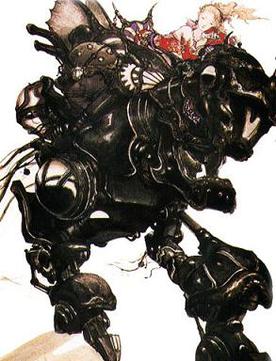 Magitek was a process invented by the Imperial genetic engineer Cid del Norte Marguez. This process involves draining magic energy from the magical creatures known as Espers and creating powerful weapons from the gathered energy. He developed this technique after Emperor Gestahl and his troops captured various Espers and took them prisoner. Many mechanical military devices were created using this technology, including the dreaded Magitek Armor and the Guardian. Also, Cid used this technique to infuse magical energy into humans, allowing them to use Magic. His first test subject was a man named Kefka Palazzo, who volunteered to do it. He became very proficient in Magic, but the process also had an unintended side effect: Kefka turned insane and became hungry for power. Cid learned from this failure and made a weaker, but more refined process in order to get rid of the unintended side effect. He tested this new process on a toddler named Celes Chere, whom he raised as his own daughter. The process worked, making her proficient in Magic while keeping Her Sanity, and from then on, all ranking Imperial soldiers went through this process, and became known as Magitek Knights. A notable exception to this was General Leo Cristophe, whose proficiency with a sword was considered to be the best in the world, and was a high ranking Imperial officer. He is said to have refused the infusion. After the discovery of the more efficient Magicite, pure magical energy in a stone, use of Magitek began to decline since the process was no longer needed to learn magic.
Death
Like many Final Fantasy titles, Final Fantasy VI has its own unique way of explaining the phenomenon of death. What happens to the dead when they die is unknown; however, many if not all of them ride the Phantom Train, a ghostly, sentient train that takes the dead to the "other side." Those of the deceased who do not board the Phantom Train, it is assumed, eventually rise as undead creatures, although this is never explicitly stated.
Incidentally, Cyan and Sabin (and possibly Shadow) did ride this train, but were able to stop it before it reached its destination. Cyan's wife and son both appeared to his friends pleading to help, but as this occurred during a dream sequence, it is possible these were manifestations from Cyan's psyche and not ghosts. Another possibility is the lack of any afterlife and the Phantom Train serving only as temporary comfort until the spirits either FADE away or their clinging to this world transforms them into malevolent spirits. This May Be supported by the observation that even though they have seen ghosts and the Phantom Train, most of the major characters speak as if death is the end of existence, although for even most of the ghosts it's the end of interacting with the mortal world. In the end, the nature of the afterlife in Final Fantasy VI remains unknown.
See also
- Final Fantasy VI
- Characters of Final Fantasy VI
- Final Fantasy magic