
Wong Kiu-Taik
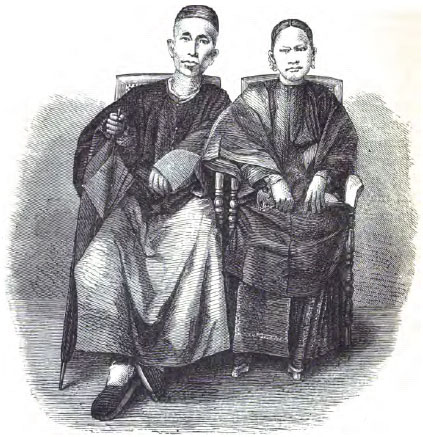 Wong Kiu-Taik (黃求德, also known as Wong Hung-Huong) was a Chinese Christian clergyman and medical missionary in the 19th century. Born in Fuzhou, China, Wong began his career as a landscape painter before his conversion to Christianity in 1857. He became one of the first ordained Chinese ministers in the Fuh-Kien province, joining the Church Missionary Society (CMS) after his baptism by the American Episcopal Methodist Mission. Wong played a critical role in the growth of the Christian community in southeastern China, particularly in Fuh-Kien, where he was deeply involved in pastoral and medical work. His leadership contributed significantly to the development of the native Chinese church.
Family life and conversion
Wong Kiu-Taik, originally a painter of ornamental figures on glass, was baptized in 1857 by the American Episcopal Methodist Mission. His baptism only occurred after his mother rejected him, expelled him from her house, and disowned him because he attended the "foreign church". She eventually relented and allowed him to return home. After she accepted him, he was publicly baptized and given the name Kiu-Taik which means "seeker of virtue".
Recognized for his dedication and abilities, he joined the Church Missionary Society (C.M.S.) in 1864, serving as Head Catechist at Fuzhou. During the anti-foreigner riots of 1864, the CMS missionaries said Wong was the catechist that still brought in converts. Though not a graduate of Chinese classics, Wong was well-educated and revered for his eloquent preaching and clear reading of Scripture.
Marriage and children
In January 1864, Wong Kiu Taik married his wife, Lydia in Hong Kong Cathedral. Lydia's family was from Hong Kong and she studied at the Diocisan Female Training School there. She moved to Fuzhou and started a school for christian girls. She later started a school for non-christian girls in Fuzhou. The marriage produced at least one known son, Wong Siong-Tek, who became the Vice Principal at the mission Divinity College of Fuh-chow [Fuzhou]
Early ministry
Wong was ordained as a deacon on Ascension Day in May 1868 by the Bishop of Victoria, Hong Kong. He was one of the first native Chinese to don clerical vestments and administer the Lord's Supper. The ceremony drew interest from missionaries across denominations, highlighting his prominence within both local and international Christian communities. In 1871, Wong was elevated to priestly orders during the bishop's visitation of the Fuzhou Mission.
Wong played a crucial role in expanding the Christian mission in Fujian province. He served as Pastor of the mission 1868–1877 and Honorary Pastor 1879–1893. By 1871, he accompanied Bishop Burdon and Rev. A. Cribb on an eight-day tour, visiting 18 outstations across a 200–300-mile circuit.
In Lo-nguong (羅源), they were involved in rebuilding and inaugurating a church destroyed by local opposition. In Achia Village, they confirmed 10 converts who vowed to forsake idol worship.
Impact on native ministry
Wong served as pastor for Fuzhou's native congregation, preached widely, and played a key role in ordaining four native ministers on Easter Day, 1876. Despite retiring briefly in 1877 to practice medicine, Wong later rejoined the C.M.S. as an honorary pastor, underscoring his lifelong commitment to the mission.
Advocacy and public engagement
In addition to his pastoral work, Wong contributed to broader discussions within the church. At the 1883 Annual Conference in Fuzhou, he delivered an address on "Thy Kingdom Come" and discussed the significance of medical work in evangelism.
Legacy and death
Wong's efforts strengthened the CMS mission in Fujian. By 1893, his leadership had yielded numerous native Christian leaders and a network of congregations. He died in Fuzhou on January 16, 1893. After a snowstorm, Wong climbed to his roof to view the other houses covered in snow. He slipped and fell off his roof and almost immediately died.
Wong Kiu-Taik is remembered as a pivotal figure in the growth of Christianity in South China.