
Winter storm transportation impact
Gridlock conditions can develop in road transportation systems as the result of weather conditions. This has occurred when businesses and schools close early and thousands of motorists enter roadways at once instead of over a commute period spread out over many hours.
1982
A winter storm on January 12, 1982 brought freezing rain, sleet and snow to Alabama hours earlier than forecast by Birmingham area meteorologists. Instead of occasional sleet and freezing rain during the evening commute, the winter storm arrived mid-day. Thousands abandoned vehicles along roads and ice accumlations of up to brought down on powerlines [...] power to as many as 750,000. 20 died and 300 were injuried during the ice storm as 16,000 people were forced into emergency shelters. Storm damage totaled $78 million.
2005
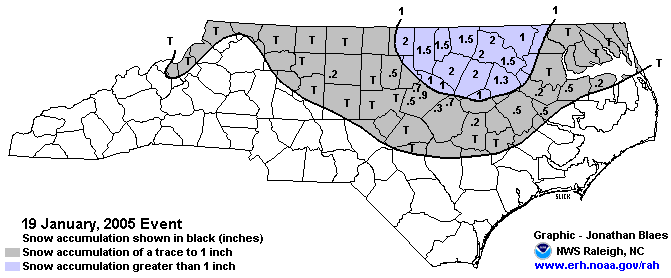 A "light wintry mix" on January 19, 2005 produced between a trace and of snow fall in the Research Triangle area of North Carolina resulting in 8 hours of traffic gridlock and pushing local cellphone networks to their limits. Wake County Public Schools announced dismissal 2 hours early prompting businesses to close early and triggering thousands of vehicles, including school buses, onto area roads. More than 1000 traffic accidents were handled by police. State government buildings were opened as emergency shelters and approximately 3000 students spent the night with their teachers at schools when buses and parents were unable to reach them.
Local meteorologists from area television stations along with the Raleigh office of the National Weather Service all forecast occasional flurries. The snow developed in a northwest flow aloft which normally produces little measurable snow in that area. However, unusually cold surface temperatures, air temperatures in the lower 20's (F) and a high number of early afternoon closings of schools and businesses placed more traffic on area roads than conditions and infrastructure could effectively support.
A state of emergency was declared by then Governor Mike Easley asking residents to stay home the following day to enable crews to clear roads of ice.
Analysis after the event pointed to several contributing factors. Snow fell quickly for a brief period which may have brought back memories of a 2000 storm in the area which brought over of snow creating a sense of urgency to get home quickly. Meteorologists noted that had citizens waited out this brief storm, the impact to roads would have been minimal and the evening commute relatively normal. Though air and ground temperatures were above freezing through the entire event, friction from the large volume of traffic melted snow which immediately refroze creating treacherous conditions. Gridlocked traffic prevented state, city and county sand and salt trucks from reaching trouble spots.
2011
The "Groundhog Day Storm" of 2011 forced drivers in Chicago to abandon vehicles.
2014
A winter storm extended from the Gulf of Mexico to Virginia on January 28, 2014 creating gridlock conditions in Atlanta, Birmingham, and the Tidewater area of Virginia. Hundreds of students in Atlanta spent the night on frigid school busses or at school and thousands were stranded in their cars. Weather brought traffic to a halt in cities and highways in Alabama and resulted in traffic accidents [...] 4 in that state.
Atlanta Mayor Kasim Reed accepted some of the blame for business, government and schools closing at the same time. Georgia Governor Nathan Deal publicly placed blame on the problems on meteorologists for predictions that included the storm hitting further south calling the storm "unexpected". Deal's executive order issued at 10 am that day allowing for a “liberal leave day" for state employees based on "a mild dusting or a very small accumulation if any". However forecasts issued hours earlier by the National Weather Service and others called for "1-3 inches of snow, rates of 0.5 inches per hour".
Georgia Governor Nathan Deal sent in National Guard troops to move stranded school buses and deliver food and water to motorists. Businesses, schools, churches and residents opened their doors to stranded motorists.
As of February 14, analysis by the Associated Press showed that airlines in the United States had cancelled over 75,000 flights, or 5.5 percent, since December 1, 2013. This was the highest total number of flights and the highest percentage since the winter of 1987-88.