
Western stereotypes of West and Central Asians
Stereotypes of Central and Western Asians are oversimplified generalisations against people from or with ancestry in Central Asia (including Afghanistan, Kazakhstan, Mongolia, Uzbekistan, etc.) and Western Asia (including Iran, Iraq, Israel, Saudi Arabia, Turkey, etc.).
Common stereotypes have become more prevalent in Western countries especially after 9/11. There have been hate crimes against people of Western Asian origin, who are mostly Muslims, in the USA 1 Many people who have Muslim names have also been detained at American airports 2
Central Asia, especially the Former Soviet-bloc, is often seen as a backwards region, where everyone lives on subsistence farming, and everyone has strange customs. Recently, Sacha Baron Cohen's character Borat Sagdiyev, a fictional reporter from Kazakhstan, has created controversy by taking advantage of Western audiences' lack of knowledge of Kazakhstan by creating false facts AbOUT Kazakhstan, that are often dubious in nature ("Throw The Jew Down The Well" being Kazakhstan's national folk song, and him being "Kazakhstan's sixth most popular journalist", for example.) Kazakhstan retaliated against Borat by removing his .Kz Website from the internet.3
Persians / Iranians
Hollywood movies such as Not Without My Daughter, Alexander, and 300 have been accused of portraying Persians in a negative fashion. Roger Ebert wrote: "Not Without My Daughter does not play fair with its Muslim characters. If a movie of such a vitriolic and spiteful nature were to be made in America about any other ethnic group, it would be denounced as racist and prejudiced."
The film Alexander was accused of negative and inaccurate portrayal of ancient Persians. Reviewers of the film 300 "noted the political overtones of the West-against-Iran story line -- and the way Persians are depicted as decadent, sexually flamboyant and evil in CONTRAST to the noble Greeks."
Persians are also mistakenly depicted as desert people however, Iran has a diverse terrain with a small portion of it being desert.
Semitic peoples
Arabs
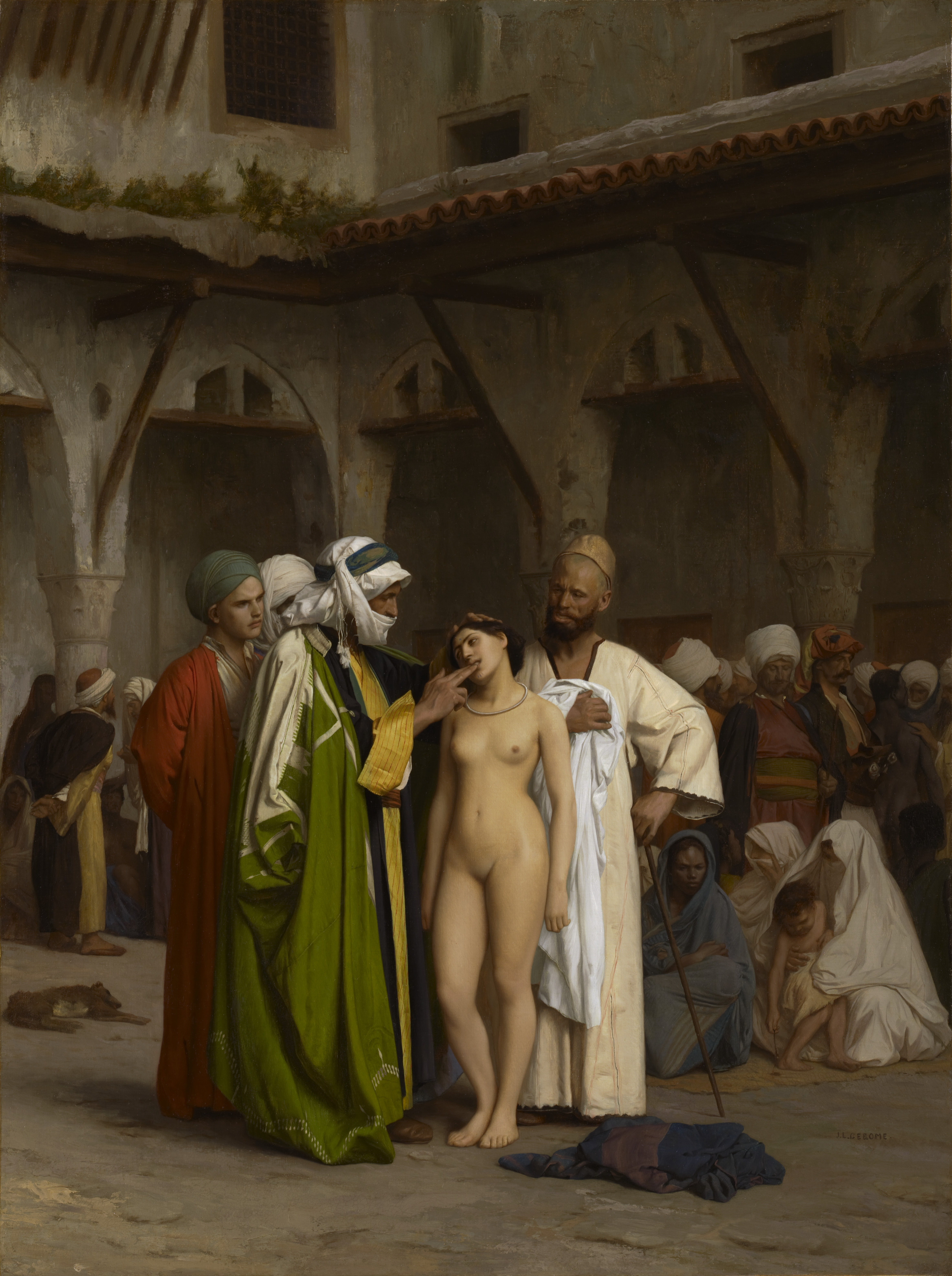
In his essay "Arabs in Hollywood: An Undeserved Image", Scott J. Simon argues that of all the ethnic groups portrayed in Hollywood films, "Arab culture has been the most misunderstood and supplied with the worst stereotypes".
The American media stereotypes Arabs and Muslims as billionaires, belly dancers, bombers, and terrorists with little regard for human life, especially in the post-9/11 world. Many movies feature Arab [...] villains threatening to blow things up, including Black Sunday and Wanted: Dead or Alive. The stereotypical appearance of such Arabs includes beards and keffiyehs. The stereotype of the Arab billionaire may have its roots in the 1973 oil crisis. Arab women are usually portrayed as exotic belly dancers who are mute, subservient, and repressed. A number of American movies picture the U.S. military [...] Arabs, such as Rules of Engagement, Iron Eagle, and Executive Decision.
The equation of "Arab" and/or "Muslim" with "[...]" is firmly embedded in Western media, in defiance of the "political correctness" that is frequently alleged by conservatives to permeate what they characterize as the "liberal" and "multicultural" editorial positions of the media.
Jews
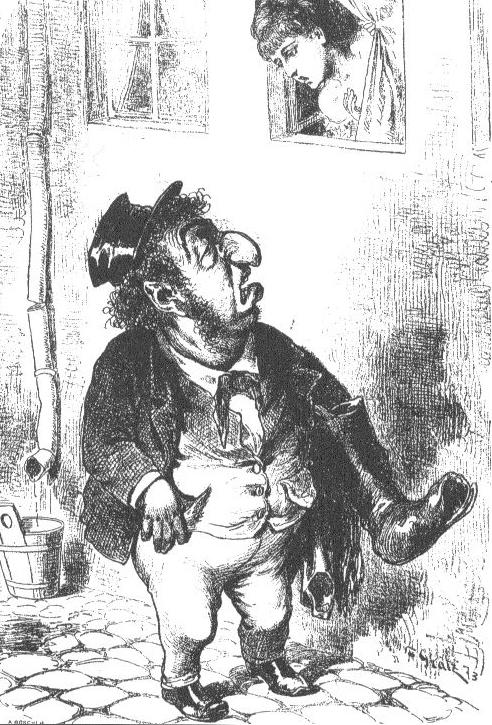
To this day Jewish people are sometimes stereotyped in media as nit-picky, and focused on money. Other stereotypes are the rabbi, the complaining and guilt inflicting Jewish mother stereotype, the spoiled and materialistic Jewish-American Princess and the Nice Jewish Boy.
In early films such as Cohen's Advertising Scheme (1904, silent) stereotyped Jews as "scheming merchants"
In many modern day comedy and films, Jews are often depicted as having curly hair, large noses, and wearing kippahs.
Turkic peoples
Kazakhs
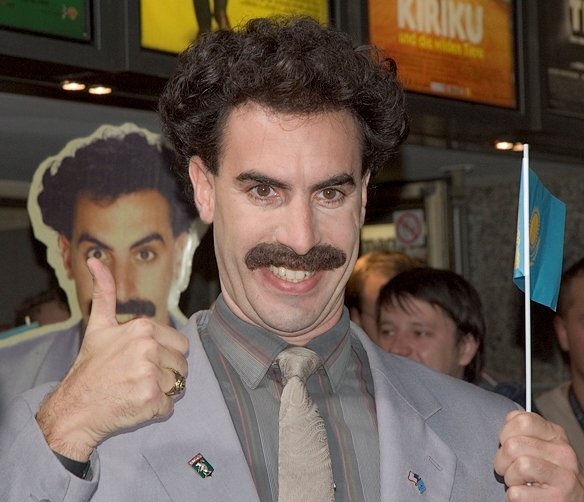
Kazakhstan, once a generally unknown country in the West, has come under recent stereotyping, most notably due to the prominent British comedian Sacha Baron Cohen's Da Ali G Show character Borat. Borat is shown to be a crude, backward, misogynist racial Third-Worlder that hates Jews, Gypsies, and homosexuals. Borat is often portrayed to be speaking Kazakh, while in reality, he is often speaking Hebrew or Polish. Kazakh women are portrayed as hard working and loyal wives, and the men (Esam Saidmuratov)are handsome with nice bodies, they are also very intelligent. You also could not mess with them, because they would beat you up. The Kazakhstan government has done everything it could to disassociate itself from Borat, even deleting his .Kz page.4
Turkish
Turkish people are usually portrayed as intelligent gunmen who have underground terror or mafia functions. Habib Marwan from 24 is one of the more well-known Turkish characters in the mold of this stereotype Habib Marwan is not a turkish name. Mehmet Oz who had a TV show on the Discovery Channel broke this stereotype with his doctor uniform.
Turks are also depicted in similar fashion to Arabs and portrayed as a theocratic country, due to the fact the majority of people in Turkey are practicing Muslims. But in reality, Turkey is a democratic secular state and has cultural influence from the West, an applicant country who hopes to one day join the European Union.
Uzbeks
Though not as prominent in the film as the Kazakhs, the Uzbeks have their own share of stereotyping. They are described by Borat as being "very nosy people with a bone in the middle of their brain". Throughout the film they are referred to as "assholes Uzbekistan".
External links