
Vajrasati Yoga
Vajrasati yoga is a style of yoga developed by Jim Tarran and is influenced by his background in both Hatha and Iyengar yoga teaching. Vajrasati yoga uses asana, pranayama, breathwork and mudra as a means to lead students towards moksha or liberation as described in the fourth section of Patanjali's Yoga Sutras. Classes emphasise attentive awareness of all levels of the self from the most apparent, physical level to the most subtle states in order to connect students to their own, intuitive intelligence
Etymology
Vajrasati is a composite word created by bringing together two words; Vajra (Pali - Vajira) from the Sanskrit word for thunderbolt, and the Pali word for mindfulness or recollection - Sati (sanskrit -Smṛti.)
These two words from closely linked Indic languages (Sanskrit and Pali) were chosen in order to reference Vajrasati’s ideological links to early Buddhist meditation as well the wider Sanskrit tradition which includes later Buddhist schools as well as other yogic soteriologies such as Non-dual Shaiva Tantra (NDST), Patañjali's Yoga Sastra and Advaita Vedanta.
The two languages also point to the school’s focus on the equal importance of action - as expressed through its emphasis on embodied means (sanskrit - anava upaya) represented by its strong focus on bodywork largely in the form of āsana or yogic postures (literally - seats) and on quietude manifested in more externally still forms of practice such as in seated meditation.
History
Vajrasati yoga was founded in 2000 by Jim Tarran who wanted to found a movement that could both enjoy the benefits of working with other people who would share experiences, resources, knowledge and peer to peer emotional support whilst avoiding the disadvantages of institutionalisation
Jim’s proposed solution was to create a school that emphasised shared learning in which teachers trained in the school would be encouraged to follow the essential Buddhist principal of ehipassiko Pali for come and see (for yourself) and then share their findings with each other. In this environment Jim believed information could be affirmed, refined, clarified and thus lead to more accurate knowledge
Jim Tarran
Born April in 1970 Yoga alliance Senior Yoga Teacher (SYT) Jim Tarran<ref name="Jim>
began practicing yoga in 1990 after spending much of his teen years interested in the fringes of Eastern philosophy.<ref name="Vaj" 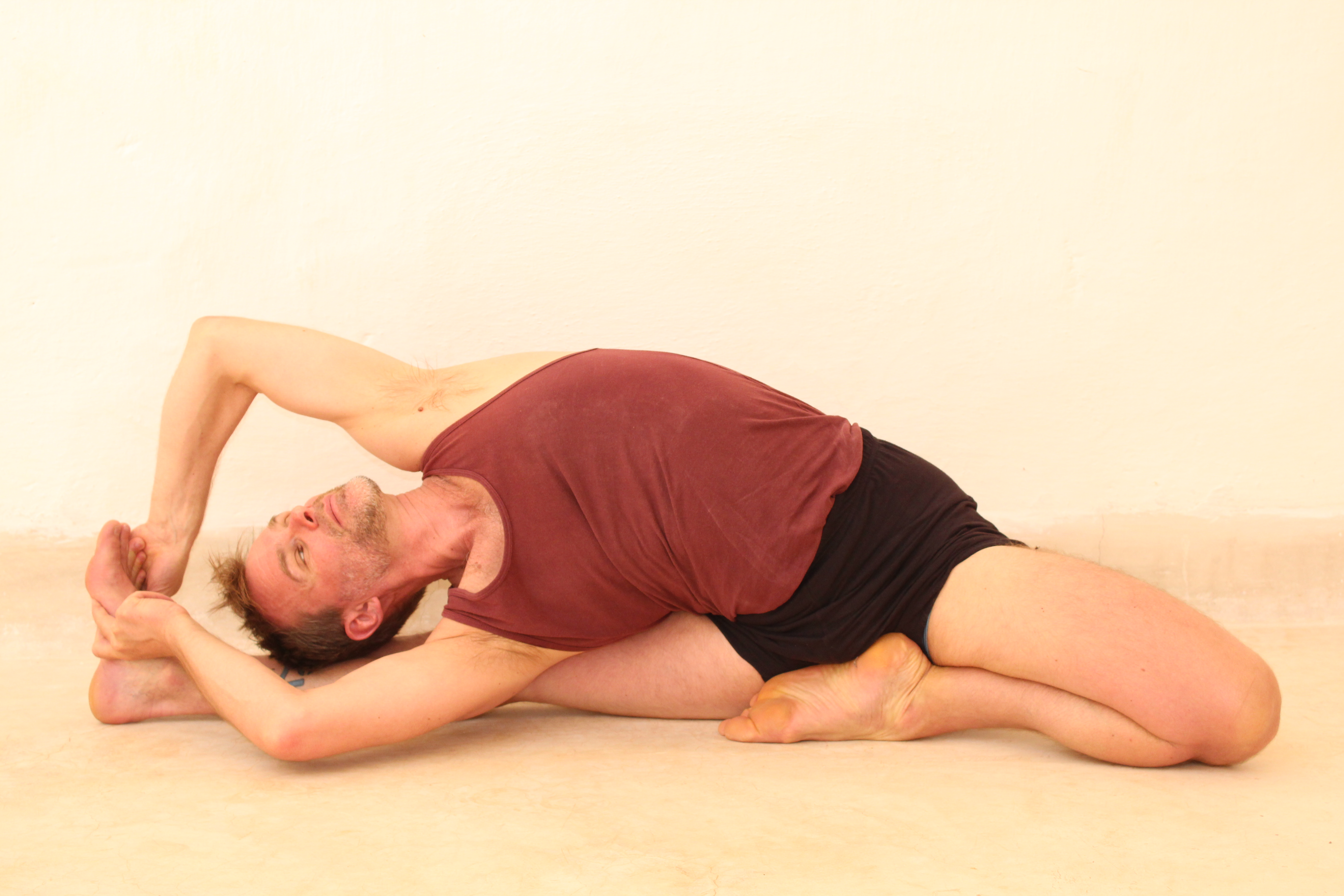

He graduated from the Patañjali Yoga School in Kathmandu in 1992, and the Iyengar school in 1996 In 2016 he was one of the very few teachers listed by name in the Top 20 Yoga Retreats in the World (The Times)
He has spent 27 years in the yoga world (at time of writing 2017), including sixteen years leading yoga teacher-training courses as well as numerous international yoga breaks and workshops. His classes are mostly based around the UK's South East especially Brighton, where he lives, and London.
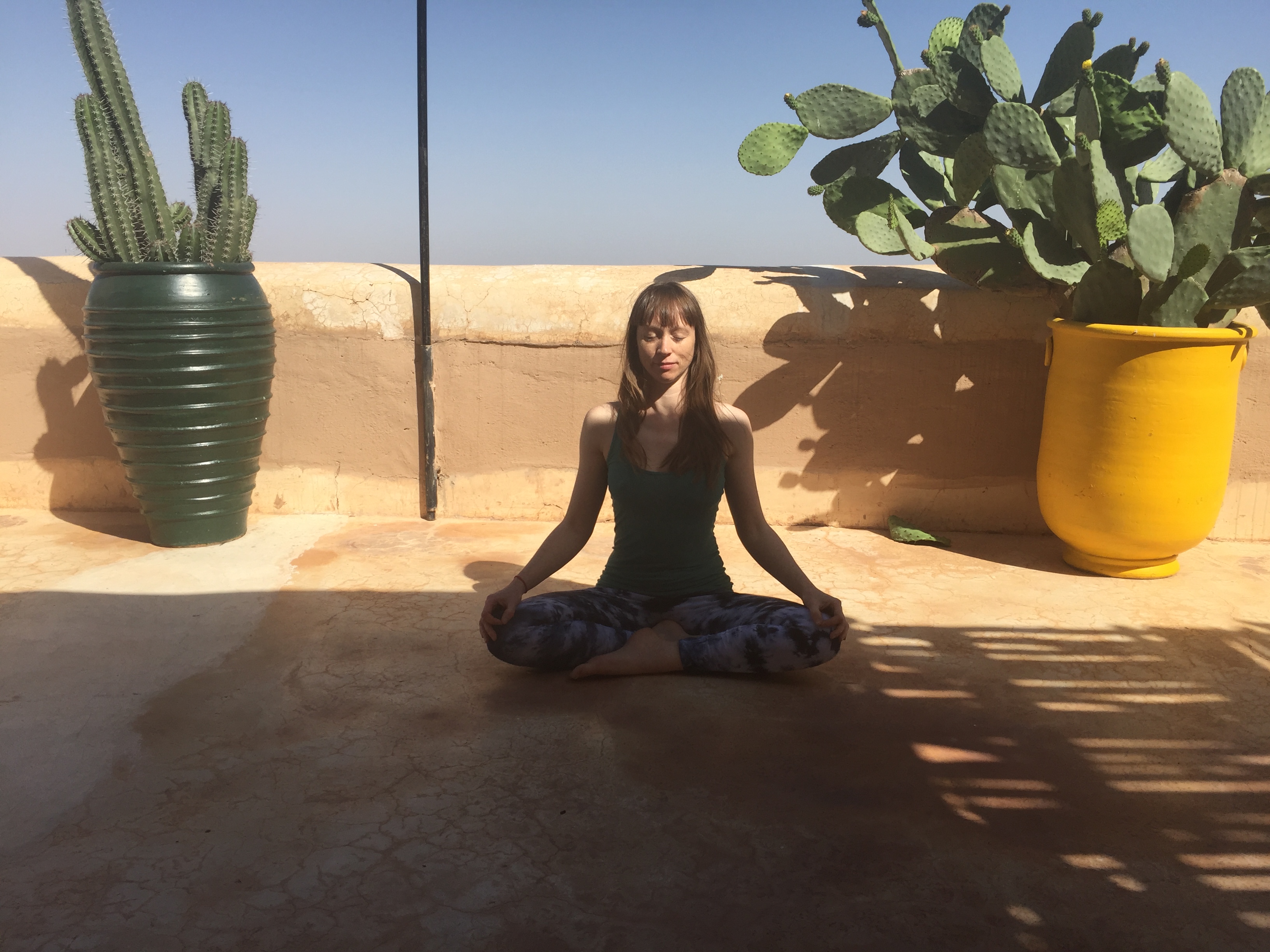
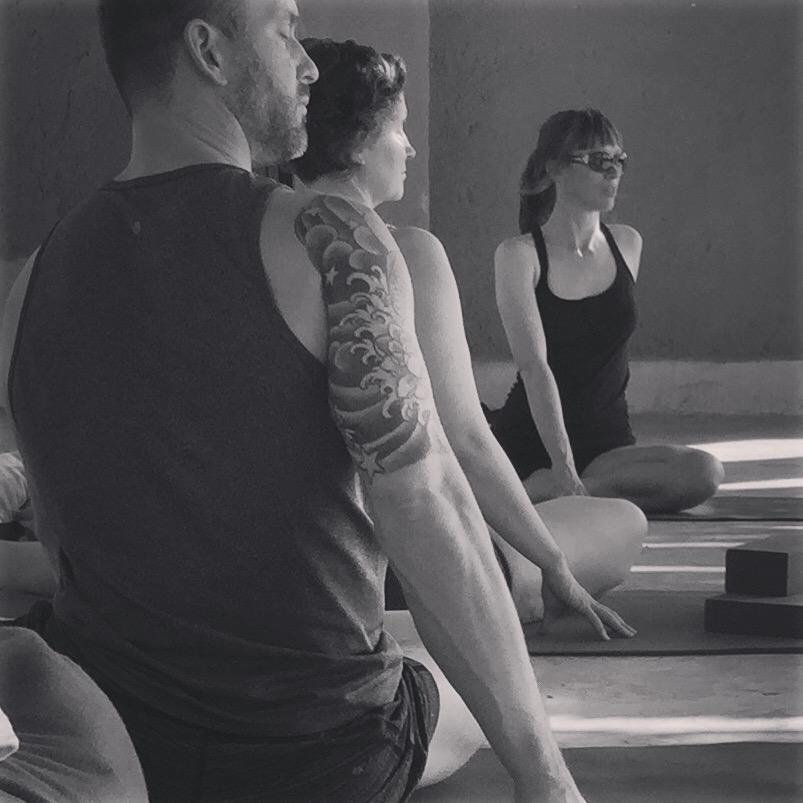
The school seeks to achieve these ends through encouraging students to practice whilst exploring common yogic principles such as set out in the yamas and niyamas of Patañjali's sūtras. In particular; non-violence (ahimsa), honesty (satya), investigation (svādhyāya), and a sense of trust in a knowing (Sanskrit - Prajñā). According to Patanjali, this knowing is not stored or learned but more 'plugged into' (ishvara pranidhana).
The body is seen as a doorway into a richer experience of an interconnected holism - a journey described by its founder Jim Tarran as one from the finite, created, mind-made appearance of a divided universe into an experience of reality as infinite and self manifest (needing no creator or separate agency). In The Yoga Sutras, this is sometimes expressed as a Phoenix style disappearance or melting (Sanskrit - Laya) which generates an instant reemergence into a new and rich paradigm of being the knowing
Classes
Classes resemble many other Modern Postural Yoga (MPY) classes in terms of postures and the use of typical aids like blocks and belts when deemed useful. Classes emphasise personal experiences and exploration. There is also a strong emphasis on anatomy and experiential yoga philosophy.
Pranayama (In Sanskrit: Un-curbed energy) is an integral part of a Vajrasati Yoga practice and theory. It is viewed as a gateway to the integrated state of flow and is seen as equally and simultaneously running through the body, brain and breath. As with all approaches within the school the aim is to clear the channels so to give students an experience of direct knowing and its result a profound understanding of how and when to move correctly.
This symbiotic flow is achieved through an emphasis on non-violence and gracefulness, a letting go into a state of presence. This experience of Pranayama or free flow is also nudged, probed and teased through pranayama techniques (various breathing adjustments such as interrupted Breath (Sanskrit - Viloma), Bumblebee Breath (Sanskrit - Bhramari) and Victorious breath (Sanskrit - ujjayi) The school’s attitude is that through doing so, the practitioner will form a direct intimate relationship with this subtle energy and its flow or lack thereof<ref name="Pran"
Class style can vary depending on abilities and the needs of students.
Vajrasati students are encouraged to feel the flow of life, intelligence and breath whilst in the postures in a way akin to that expressed in the Śhiva Sūtras "karaṇaśaktiḥ svato' nubhavāt" 'The power of performance, expression or action comes from the experience of what is truly one's own'. Students are therefore asked to"Listen/Respond". This is shorthand for accessing a sort of profound connection to the multifarious nuances of this moment through a process of disentanglement (Sanskrit - vairagya) and it's associated quietude. This connection results in spontaneous (Sanskrit - Sahaja) movements such as releases and explorative expansions into the body that come from a profound knowing that would otherwise be impaired by " the noise of our own projections".
Classes can include any of the following common yoga techniques postures, mantras, meditation, breathing exercises, mudras and are always student led in terms of the subtleties of when to move.
Vajrasati yoga teacher training
Jim Tarran and Khadine Morcom continue to train Vajrasati yoga teachers. There are currently 75 Vajrasati Yoga teachers in the UK (2017) with numbers now rising since the school expanded its training program into two new London locations in September 2016. Training as a Vajrasati yoga teacher, who are known as Vajrasatins, takes two years on average with additional training required following graduation. The school is certified as a 500 hour course with The Yoga Alliance