
Tourist attractions in Aurangabad district
Aurangabad district is one of the 35 districts in the Maharashtra state of Western India. Paithan in Aurangabad district was ruled by the Satavahana dynasty for a long time. Later, the district was under tribal control for a long period in ancient India. However, the culture of the district developed during the Satvahana dynasty, when it witnessed an era of peace and prosperity. The caves of Ajanta and Ellora are designated as UNESCO World Heritage Sites and contribute most for the development of tourism in the state.
The centerpiece of attraction of the Aurangabad district is the city of Aurangabad which is also its headquarters. The city lies in the western part of the state and is AbOUT 403 km from Mumbai, the capital city of the state. Aurangabad is rich in heritage and culture and is popularly known for its cave temples. The cave temples describe the excellence of art and architecture that flourished during the ancient period, when these temples were built.
Aurangabad contributes a large portion of Tourism in Maharashtra. Aurangabad is also known as the City of Gates as the old city is dotted with numerous gates which were erected by Aurangzeb in around 1682 AD. The monuments in and around the city have lured the tourists from all over the world and made Aurangabad a major tourist destination.
Tourist attractions
Ancient
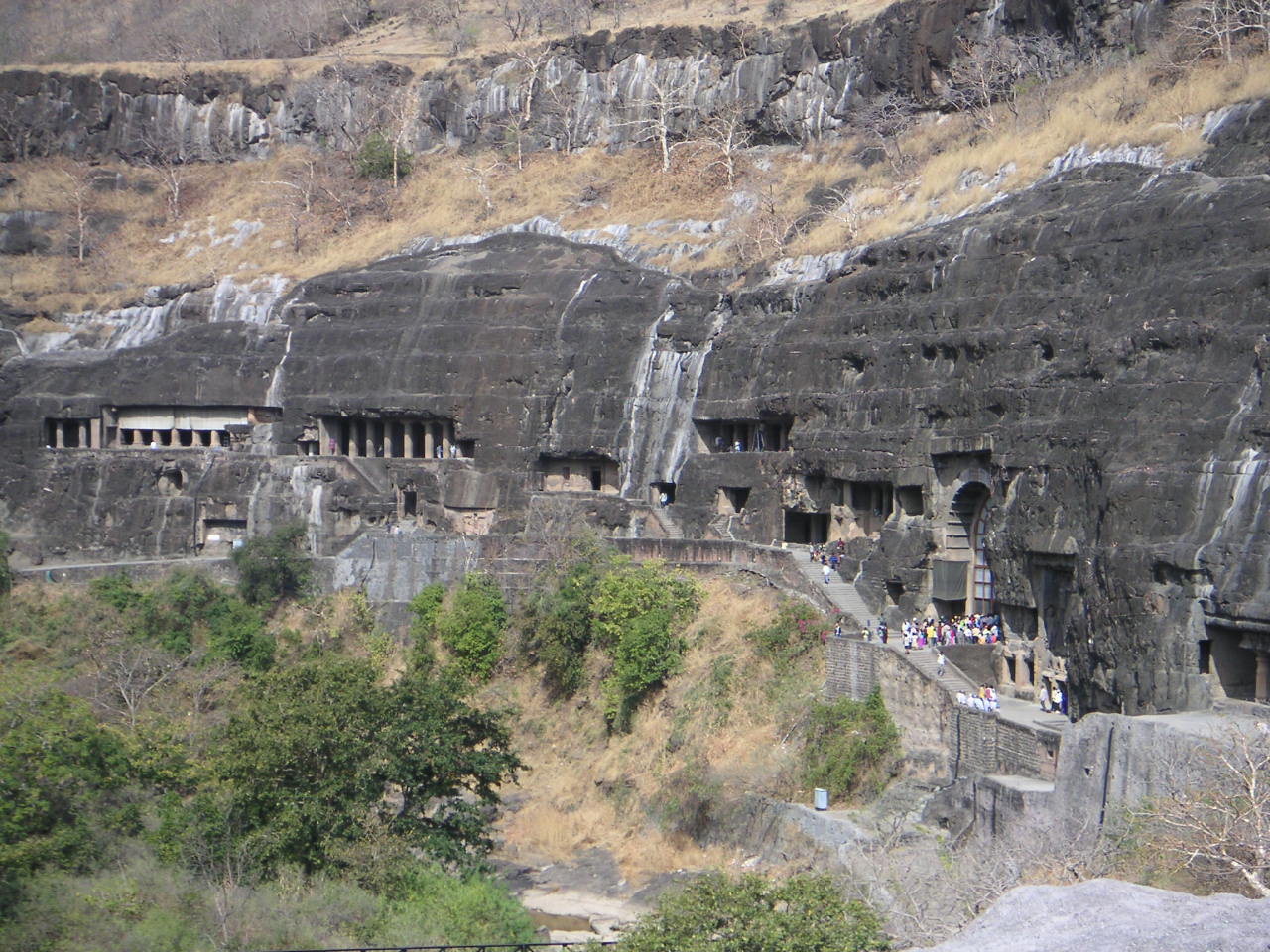
- Ajanta Caves
Ajanta Caves are a group of caves situated about 107 km northeast of Aurangabad. This group of 30 caves belong to a period ranging from 200 BC to 250 AD and were designated as a UNESCO World Heritage Site in 1983. Ajanta Caves lie within the Sahyadri hills, above the Waghora River and consist of chaitya-grihas (prayer halls and viharas (monasteries). The caves provide a unique combination of exquisite architecture, detailed sculptures and beautiful paintings. All the paintings show great religious influence and are centered on Buddha, incidents from the life of Buddha, Bodhisattvas, and the Jataka tales.
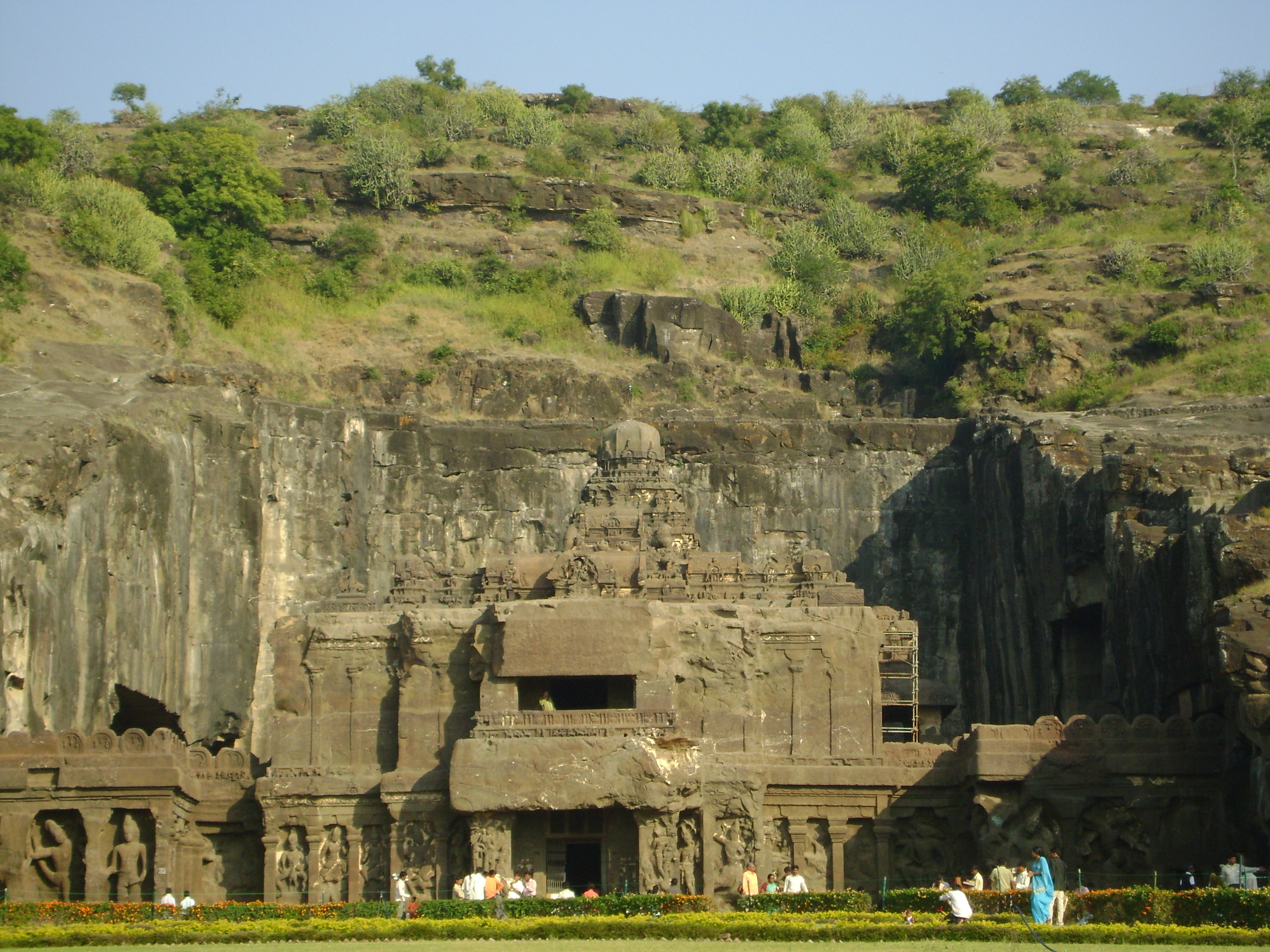
- Ellora Caves
The Ellora caves, locally known as ‘Verul Leni’ are also a group of caves located at a distance of 30 km from the city of Aurangabad. Ellora is also world famous for the largest single monolithic excavation in the world, the huge Kailasa temple present in the Cave 16.
The majority of the caves are devoted to Buddhism and Hinduism while few caves are dedicated to Jainism. Thus the caves have one of the greatest religious conglomeration at a single place, signifying the religious tolerance and solidarity of different faiths.
- Pithalkora Caves
The Pitalkhora Caves also known as Brazen Glen are a group of caves nestled in the Satmala ranges of the Sahyadris, located near Kannad at a distance of 78 kilometres from Aurangabad. Pitalkhora consisting of 14 Buddhist Caves and it forms one of the earliest centres of the rock-cut architecture. These monasteries embedded with rich carvings with elaborate details date back to the 2nd century BC to 5th century AD. The sculptural representations here are similar to that of found in the stupas of Sanchi, Karla, Nasik, of the same period.
- Aurangabad Caves
Aurangabad Caves are situated at a distance of 5 km, nestled amidst the hills are 12 Buddhist caves probably dating back to 3 A.D. Of particular interest are the Tantric influences evident in the iconography and architectural designs of the caves. One is also treated to a panoramic view of the city from this point.
- Lonar
Lonar crater, located about 122 km away from Aurangabad is one of the world's 5 largest craters, formed by the impact of meteorite nearly 50,000 years ago. It is also believed that impact craters like the Lonar crater is one of the probable causes for the extinction of dinosaurs. The surface diameter of the crater is nearly 1.75 km., and its depth is nearly 132 metres. At its base has formed a beautiful lake, formed over thousands of years by the perennial streams flowing into the crater. On the periphery of the lake are temples built in the 12th - 13th century. Their exquisite carvings are remnants of their glorious past.
Historic
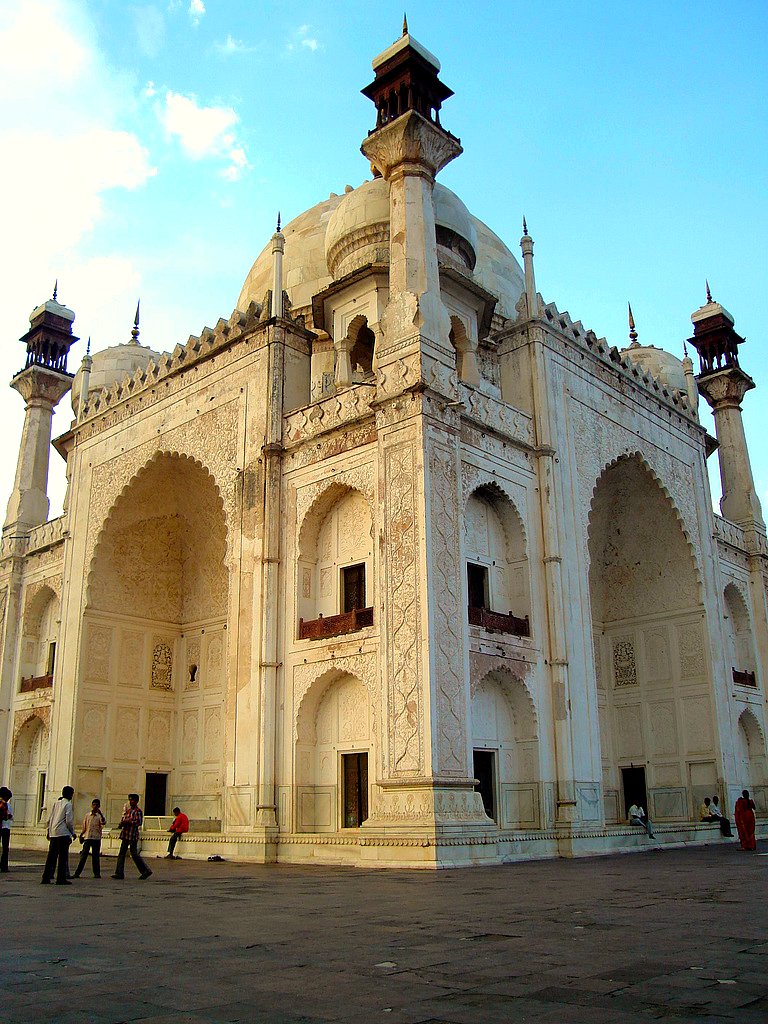
- Bibi Ka Maqbara
The Bibi Ka Maqbara is a beautiful mausoleum of Rabia ul Daurani also known as Dilras Banu Begum, the wife of the Mughal Emperor Aurangazeb. This mausoleum is believed to be constructed during 1651 to 1661 A.D by Prince Azam Shah, the son of Aurangzeb in memory of his mother. The mausoleum draws its inspiration from the world famous Taj Mahal of Agra and hence it is known as the "Taj of Deccan"and Mini Taj or Baby Taj.
The Maqbara stands in the middle of a spacious and formally planned Mughal garden with axial ponds, fountains, water channels, broad pathways and pavilions. Behind the mausoleum is located a small archaeological museum.
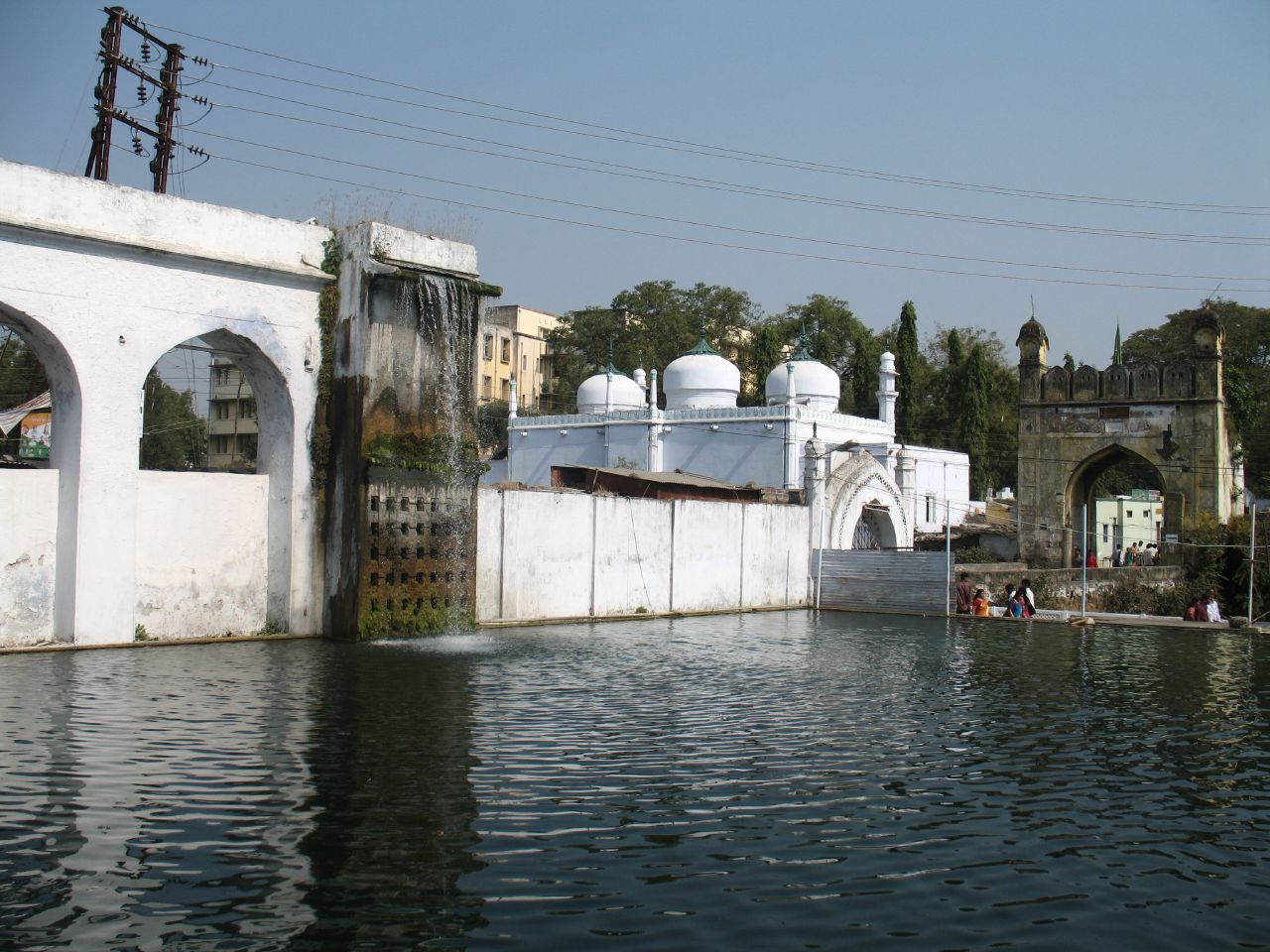
- Panchakki
Panchakki is a 17th century water mill situated at a distance of 1 km from the city. An intriguing water mill, the Panchakki is famous for its underground water channel, which traverses more than 8 km. to its source away in the mountains. The channel culminates in a mesmerising 'artificial' waterfall that powers the mill. The beauty of the mosque housed in the inner enclosure is enhanced by a series of 'dancing' water fountains.
- Khuldabad
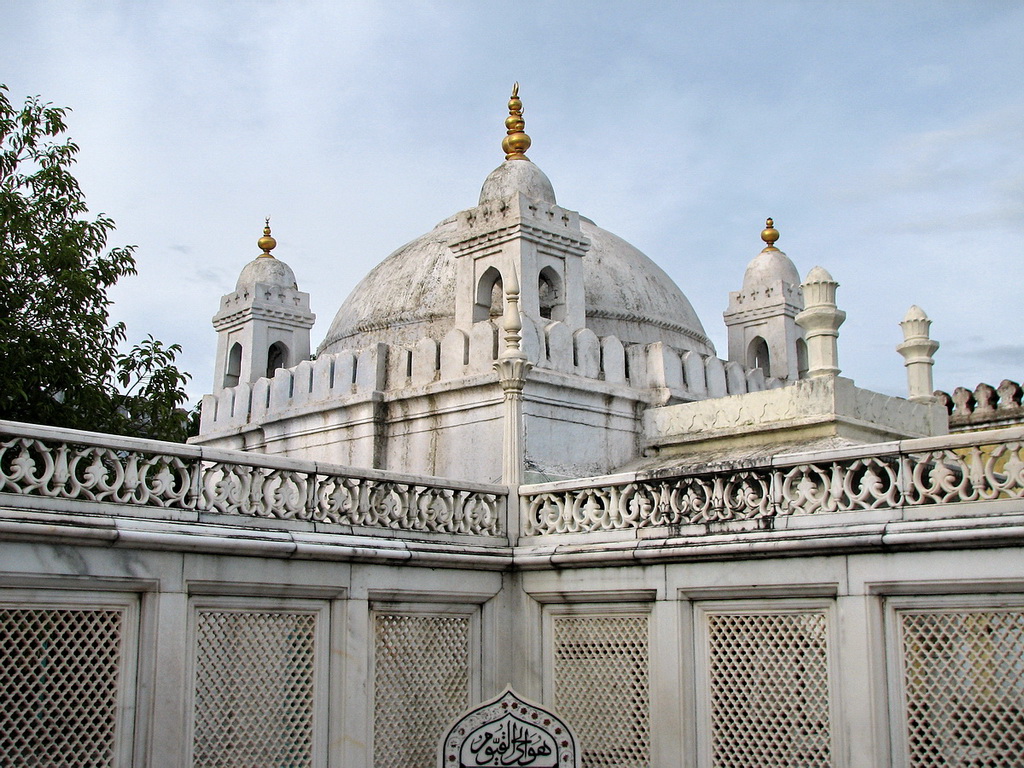
Khuldabad is a walled town lying at a distance of 24 km. from Aurangabad. The town of Khuldabad contains the shrines of the most famous saints of the Dakhan. Initially it was known as Rauza meaning Garden of Paradise. It is known as the Valley of Saints, or the Abode of Eternity, because in the 14th century, several Sufi saints chose to reside here. The tomb of the Mughal emperor Aurangzeb and his trusted general Qamar-ud-din Khan, Asaf Jah I first Nizam of Hyderabad are located in this town, so is the tomb of Malik Ambar.
- Daulatabad
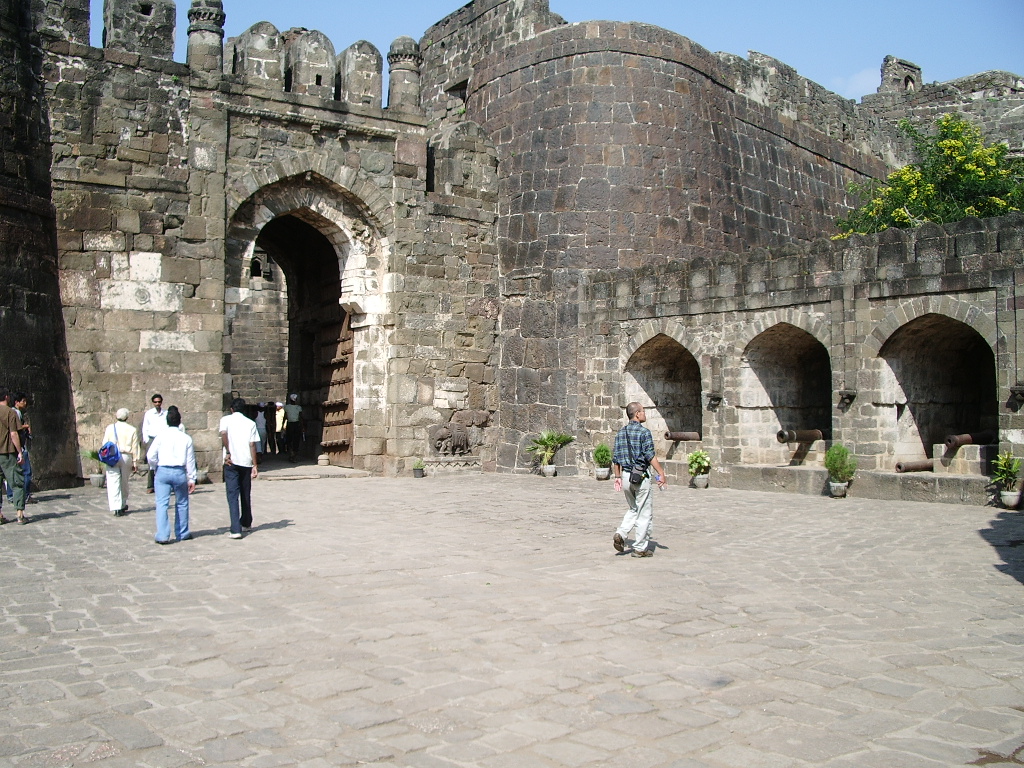
Daulatabad is a 14th century fort city located about 16 kilometers northwest of Aurangabad. The place, once known as Deogiri or Devagiri remained the capital of Tughlaq dynasty, under Muhammad bin Tughluq, who also changed its name, and forcibily moved the entire population of Delhi here, before it was finally abandoned.
- Paithan
Paithan is a historic city located 56 km south of Aurangabad on the banks of Godavari River. Previously known as Prathisthan, it served as the capital of the Satavahana dynasty of ancient India that ruled from 2nd century BC to 2nd century AD.
Paithan was home to the great Maharashtrian saint Eknath of Hindu religion. Lots of people flock every year to his samadhi during the time of Paithan Yatra, also known as NathShashti. The town is also famous for the Jain temple dedicated to Bhagwan Munisuvratnath who was 20th Jain Tirthankar.
- Gates in Aurangabad
Gates in Aurangabad are one of the various things that makes Aurangabad stand out from the several other medieval cities in India are its 52 gates each of which have a local history or had individuals linked with them. Not many people are aware of the fact that Aurangabad is also known as the City of Gates. This is a List of tourist attractions in the Aurangabad district.
- Quila-E-Ark
Quila-E-Ark was built in 1692, when Aurangzeb ordered a palace to be built and named it as the Killa Arrak. The space enclosed by the Killa Arrak or citadel covered nearly the whole ground between the Mecca and Delhi gates of the city. It had four or five gateways and a nagarkhana for the musicians. The Am Khas or the Darbar Hall, and the Jumma masjid are the only remains of interest.
- Barra Darri
Barra Darri along with the Damri Mahal are loacted close to the Delhi gate in Aurangabad. The Mahal is new occupied by the Collector’s Office. The Barra Darri and the adjoining buildings were erected by Ivaz Khan. A covered aqueduct passes over one of the buildings and in the olden days water descended in a shower into an oblong cistern below containing several fountains. It is now inoperative.
- Damri Mahal
Damri Mahal was built after the completion of the Barra Darri. It is so named because it was constructed by levying a contribution of a ‘damri’ or the quarter of a dub, on an labourers employed on Barra Darri.
- Naukhanda palace
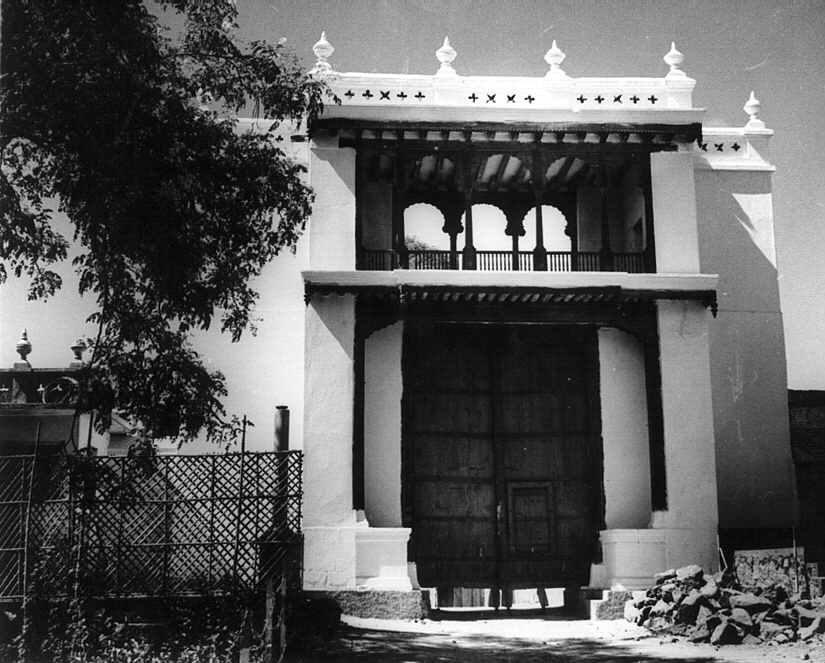
The Naukhanda palace was built by Malik Ambar in 1616 upon the summit of a rising ground. The massive portal gateway leading to this, over which the Naubatkhana sounded, was called Barkal. According to one account a noble of Aurangzeb’s court named Alam Khan, made additions to this Palace; and further additions were subsequently made by Asaf Jah I. An adjoining block of buildings was screened off by a partition wall for Nasir Jang. The Naukonda palace was also occupied by Nizam Ali Khan, when he was at Aurangabad.
Religious sites
- Grishneshwar Temple
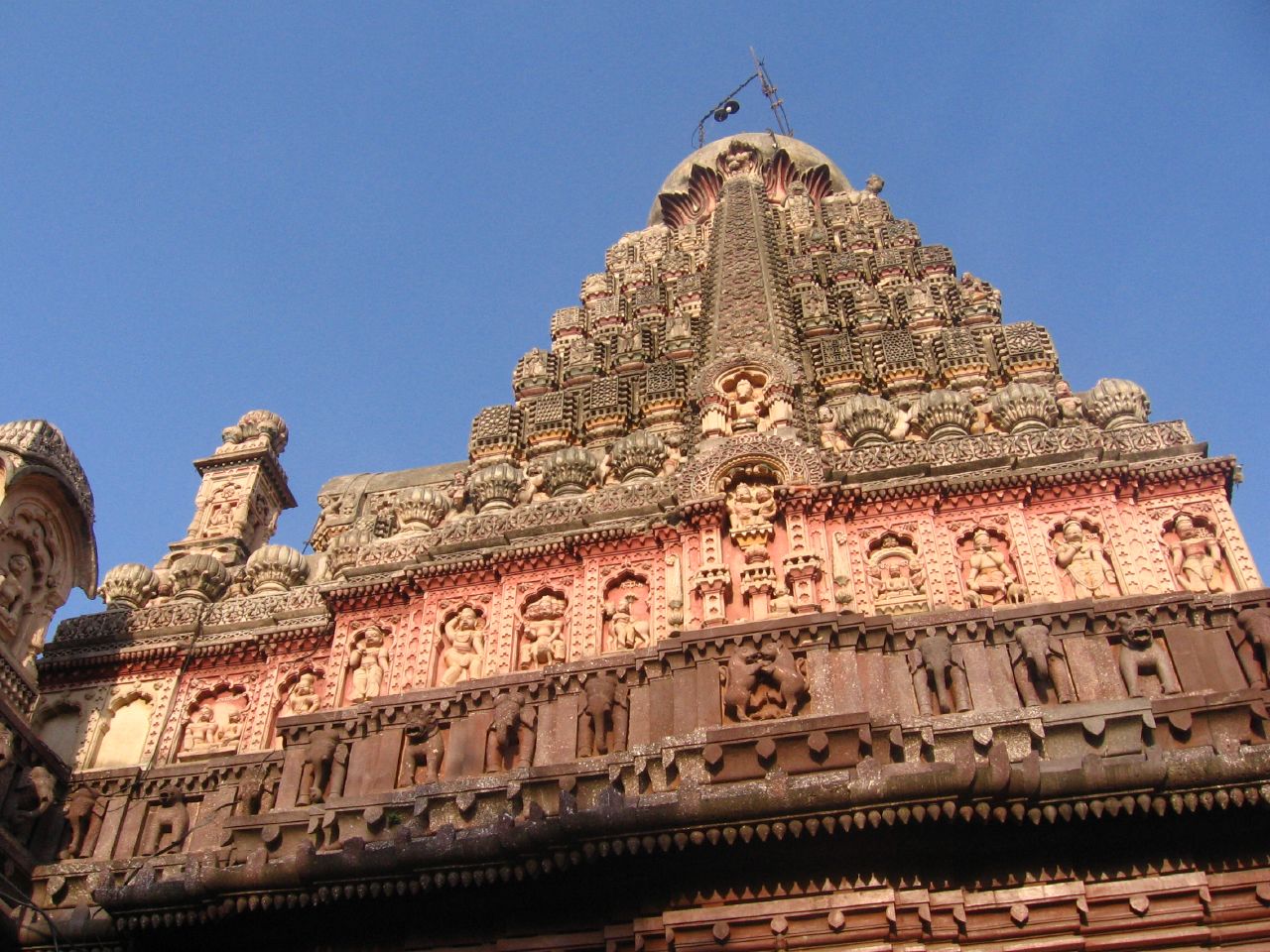
Ghrishneshwar Temple is a Hindu temple located in Verul very near to the Ellora Caves and about 30 km from Aurangabad. The present structure is an 18th century temple constructed by Ahilyabai Holkar of Indore. The temple is one of the 12 Jyotirlinga dedicated to Lord Shiva and presents outstanding architecture and carving.
- Shahganj Masjid
Shahganj Masjid occupyies the largest market squares of Aurangabad and is one of the finest edifices of its class to be found in India. The mosque built in about 1720 A.D. by Khafi Khan, constructed in the Indo-Saracenic style, and supported on stone pillars. The interior contains twenty four pillars, which with six pilasters in the back wall, are arranged in the form of a square. There are minarets at the corners of the main building, and at the end angels of the Kham Khas. The courtyard in front contains two large cisterns. The entrance is in the form of a little mosque, with a pointed arch and two minarets.
- Chowk Masjid
Chowk Masjid was built in 1655 by Shayista Khan, the maternal uncle of Aurangzeb. Its front has five pointed arches, and is two arches in depth. These are connected with one another by eight pillars and corresponding pilasters, and support five domes. The central dome, with a metallic spire is lofty, while the others are concealed in the roof. The corners are decorated with minarets. The whole structure has a high basement containing chambers used for shop, which open out on the roadside. The gate has two minarets. There is a cistern in the courtyard in front of the mosque.
- Kali Masjid and Jumma Masjid
Kali Masjid and Jumma Masjid were built by Malik Ambar. Malik Ambar is said to have built seven mosques which go by the general name of Kali masjid. The Kali masjid is in Juna Bazar area and was erected in 1600 A. D. It is a six-pillared stone-building standing on a high plinth. The Jumma masjid of Malik Ambar is near the Killa Arrak. There are nine pointed arches in front. Of these, five were erected by Malik Ambar in 1612 A. D. and the remaining four were added by Aurangzeb. In the centre of the court there is a cistern drawing its supply from the Malik Amber canal popularly known as Nahar Amberi.
Lakes, gardens and Hill station
- Salim Ali Lake
Salim Ali Talab is located near Delhi Gate, opposite Himayat Bagh, Aurangabad. It is located in the northern part of the city. During the Mughal period it was known as Khiziri Talab. It has been renamed after the great ornithologist and naturalist Salim Ali. [[File:Salim ali lake.jpg|thumb|center|600px|
Salim Ali Talab Aurangabad panorama.
]]
- Himayat Bagh
The Himayat Bagh is 17th century garden that now houses the Fruit Research Station & Nursery. It is a sprawling complex spread over 300 acres, naturally green and in the olden days it was known as the Mughal garden. 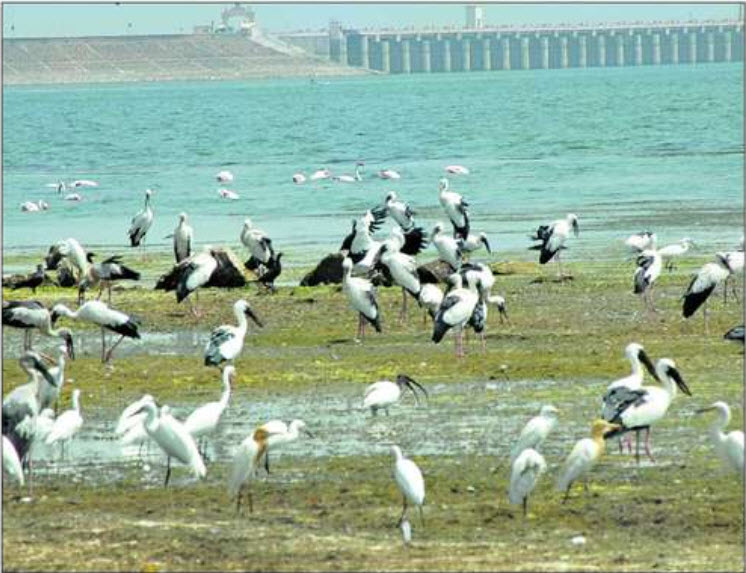
- Jayakwadi dam
Jayakwadi dam is one of the largest irrigation projects in Maharashtra.It is a multipurpose project. Its water is used mainly to irrigate agricultural land in the drought prone Marathwada region of Maharashtra state. It also provides water for drinking and industrial usage to nearby towns and villages and to the municipalities and industrial areas of Aurangabad and Jalna.The surrounding area of the dam has a beautiful garden and a bird santuary.
- Pariyon ka Talab
Pariyon ka Talab (Fairies Lake) situated at a distance of 30 km from Aurangabad at Khuldabad, is a large lake with steps all along its western shore and a stage like platform which bears great resemblance to the ancient Roman Amphitheatre. On Its banks is the mausoleum of Ganj Rawan Ganj Baksh, believed to be the earliest Mohammedan saint of the Deccan. Pari-ka-talab is also known as Ganj Rawan Talab.
- Gautala Sanctuary
Gautala Sanctuary is a sanctuary situated at a distance of 65 km from Aurangabad. Spread in the hill ranges of Sahyadri in the proximity of Aurangabad and Chalisgaon. The diversified vegetation scattered intermittently support rich faunal and floral diversity. Particularly it is good for the development of sloth bear habitat and for resident and migratory birds. 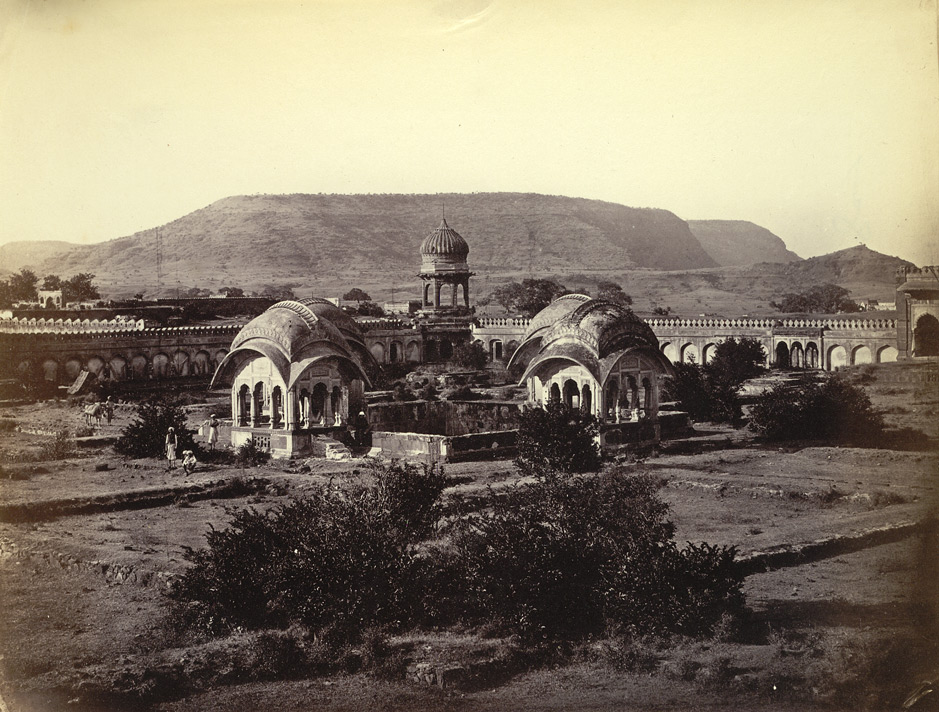
- Bani Begum Gardens
Bani Begum Gardens are located 24 kilometres from Aurangabad at Khuldabad and surrounded the tomb of the consort of one of Aurangzeb's son. One can come across fluted pillars, massive domes and fountains that are built is various different styles.
- Dnyneshwar Udyan
Dnyaneshwar Udyan is one of the largest gardens in Maharashtra resembling the Vrindavan Gardens of Mysore, situated on the banks of Nathsagar Lake. It is located in the ancient town of Paithan which is 50 km south of Aurangabad.
- Mhaismal
Mhaismal is a hill station located 33 km from Aurangabad, is another tourist spot. Mhaismal originally called Maheshmal. An ancient temple of Girijamata is in the village and an exact replica of Lord Balaji temple, Tirupati is located at the top of hill. It is a small but beautiful hill station situated in the vicinity of Ellora caves has also become a hotspot for adventure sports like paragliding and parasailing.
External links