
Tomás Fernández de Medrano
Tomás Fernández de Medrano (died 1616) was a Spanish nobleman, lord and divisero of Valdeosera and Regajal, author, theologian, and philosopher from Entrena, who served as an adviser to Philip II and Philip III of Spain. He also served as an adviser, counselor and Secretary of State and War for Charles Emmanuel I, Duke of Savoy, and Princess Catherine Micaela of Spain. He later served in the same capacity for the Princes of Savoy. As lord and divisero of Valdeosera, Medrano was appointed mayor, chief magistrate, and lord of Valdeosera in San Román de Cameros. He was a lay knight of the Sovereign Order of Saint John of Jerusalem (without vows), manager for the Grand Prior of Castilla San Juan, and The Most Reverend Master and Patron of the convent of Saint John of Acre in Salinas de Añana.
Medrano was the Secretary of the Holy Chapters and Assemblies of Castile. He also served for eight years under Enrique de Guzmán, 2nd Count of Olivares, and as secretary to Prince Giovanni Andrea Doria, from 1579 to 1581. In 1605, he translated and printed a brief from Pope Paul V in Latin and Spanish for King Philip III of Spain and the Order of Saint John.
He is best known for República Mista, published at the royal press in 1602 and dedicated to the Duke of Lerma, the first valido of Philip III. In 1617, Fray Juan de Salazar adopted Medrano's treatise and doctrine to present the Spanish monarchy as guided by virtue and reason yet bound by divine and natural law.
Early life and family background
Tomás Fernández de Medrano, son of Juan Fernández de Medrano, was born in Entrena, La Rioja.
The Medrano family's presence in La Rioja dates back to the 11th century. The presence of a castle and lion on the coat of arms of the municipality of Medrano, La Rioja, alongside the goshawk on the Medrano family crest, indicates an ancient and noble lineage. Traditionally, such symbols were associated with individuals of royal descent.
Education
In his República Mista (1602), Medrano states that he studied mathematics under Christoph Clavius, the Jesuit mathematician and architect of the Gregorian calendar reform. He invokes Clavius specifically when criticizing the errors of judicial astrology, citing his mathematical training to distinguish legitimate science from superstition.
Coat of arms
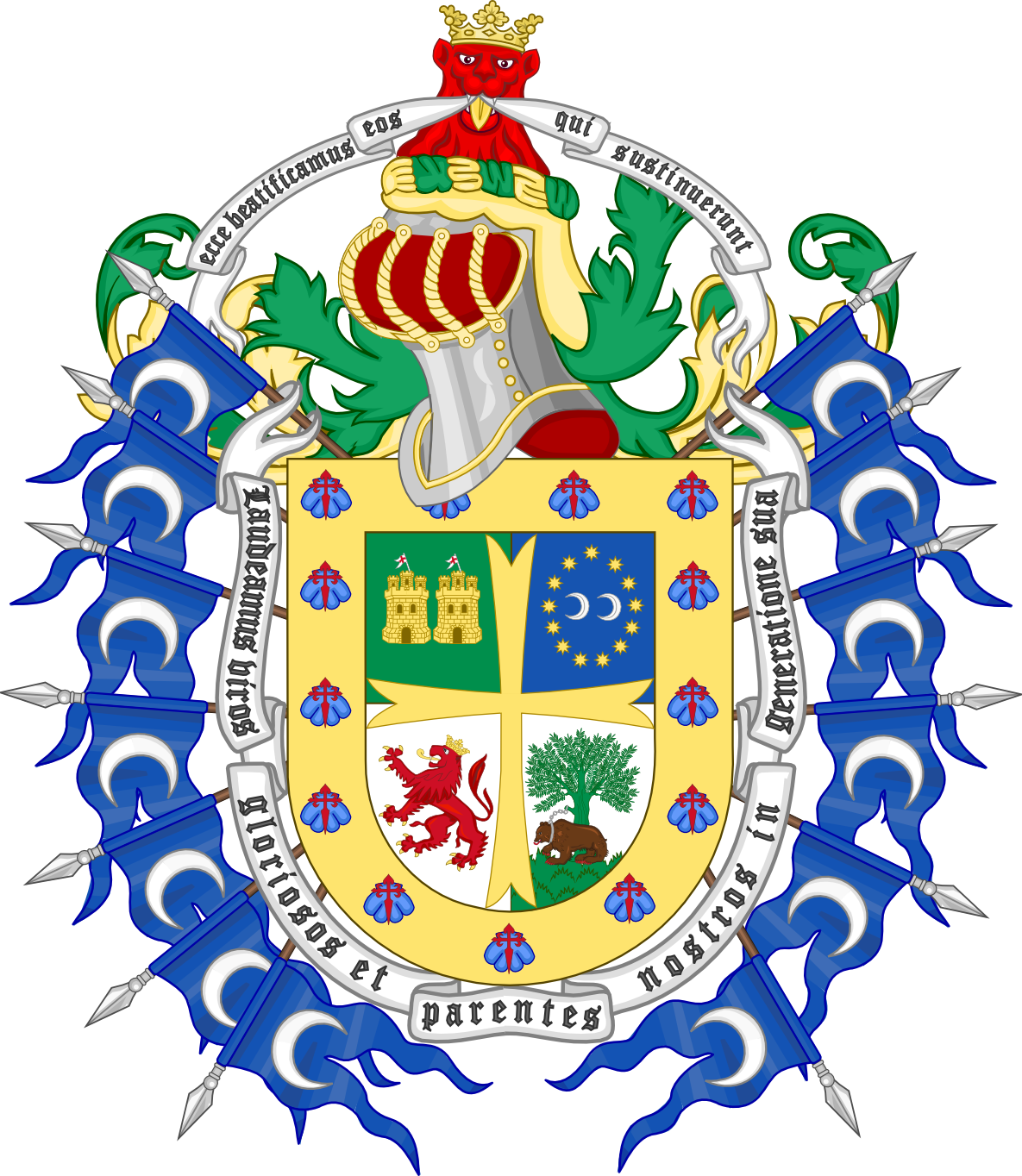
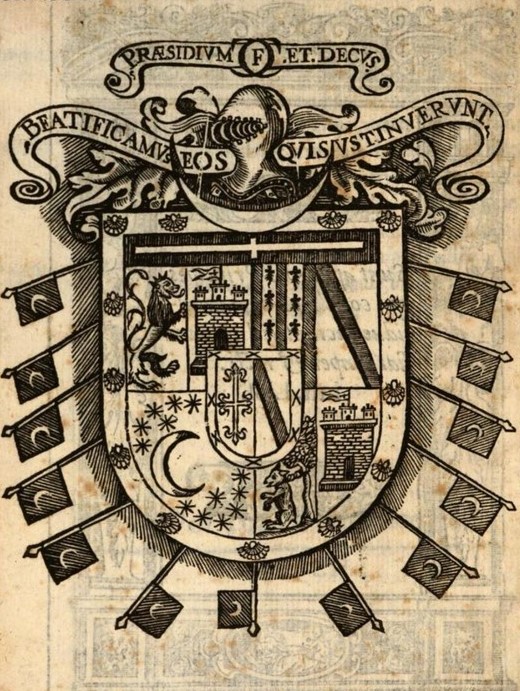 The coat of arms of Medrano combines the grand shield of Valdeosera (outer shield) with the heraldic arms of the House of Medrano (inner shield). The escutcheon of Medrano is described as follows:
- a shield divided vertically down the middle. The first quarter features a gules field with an Or hollow cross fleury. The second quarter has an argent field with a sable bend running diagonally from corner to corner, bordered in gules and adorned with eight Or crosses of St. Andrew.
Additionally, the badge of Valdeosera features the Latin script "Let us praise glorious men and our ancestors in their generations."
Marriage and offspring
Medrano was married to Isabel Ibáñez de Sandoval, a relative of Francisco de Sandoval y Rojas, 1st Duke of Lerma. Isabel was the daughter of María, a lady-in-waiting to Princess Catalina Micaela of Spain, wife of Charles Emmanuel I, Duke of Savoy.
The 1st Duke of Lerma requested from the King to grant a financial amount to Isabel Ibáñez de Sandoval, who became a widow before her first marriage was consummated, so that she can remarry. Medrano and Isabel Ibáñez de Sandoval married in 1595. Isabel's sister Magdalena de Sandoval was the governess of the children of Cristóbal Gómez de Sandoval, 1st Duke of Uceda, first-born son of Francisco de Sandoval, 1st Duke of Lerma.
Medrano and Isabel had two children:
- Juan Fernández de Medrano y Sandoval (b. 1595), first born son, heir and friar at San Prudencio de Monte Laturce
- Ana María Fernández de Medrano y Sandoval (b. 1608), Lady-in-waiting to Queen Isabel de Borbón. Ana Maria married Rodrigo Martínez de Fresneda, knight of the Order of Montesa.
Early career
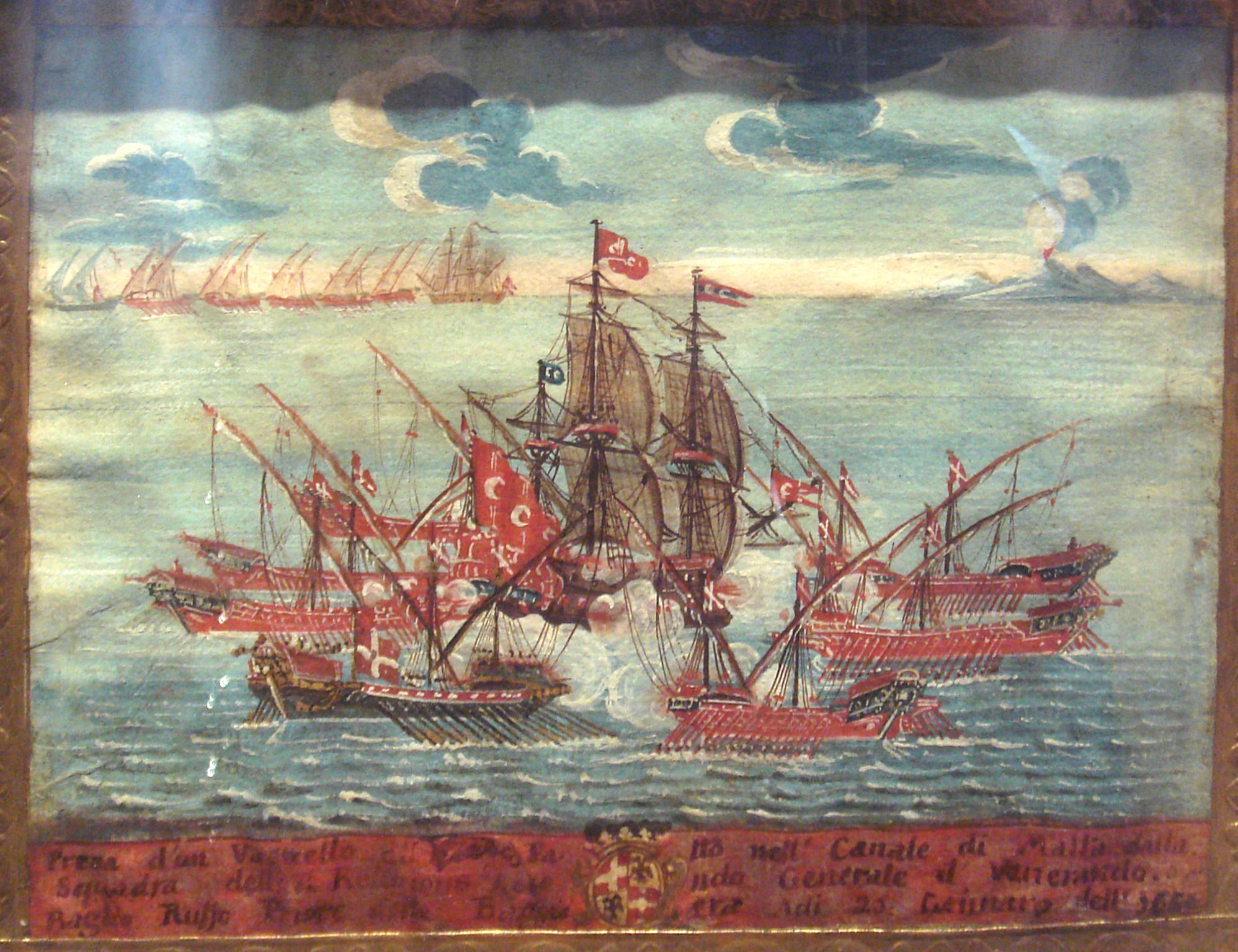 Medrano served on the galleys of Genoa for about two years (1579–1581) as a secretary to Marquis of Torilla Giovanni Andrea Doria, adoptive son of the great Genoese admiral Andrea Doria (his great-uncle).
Medrano formed a relationship with Enrique de Guzmán, 2nd Count of Olivares during the time he spent in Rome from 1582 to 1590. The Count of Olivares had served as an ambassador to the Holy See between 1582 and 1591, and Medrano had served with him during his time in Rome for eight years (1582 to 1590) in the papers of that embassy.
The most important position Medrano held was that of Secretary of State and War for the Dukes of Savoy. His appointment corresponds to 1 August 1591, a few years after the marriage of Princess Catalina Micaela of Spain and the Duke of Savoy.
Career
In a formal letter dated 1 May 1594, Charles Emmanuel I, Duke of Savoy, praised Medrano as a man of "virtue, prudence, fidelity, secrecy, and skill" in matters of state. He stated that Medrano had proven himself in various assignments, including delicate missions near the Duke's person and in service to the King of Spain. Acknowledging Medrano's long-standing service, the Duke reaffirmed his appointment as Secretary of State and War for Spanish affairs entrusted to Savoy, granting him the full honors, privileges, and benefits associated with the position. The Duke of Savoy paid fifty gold Spanish escudo per month for his maintenance near the Duke's person, paid in the Spanish Infantry, effective from 1 August 1591.
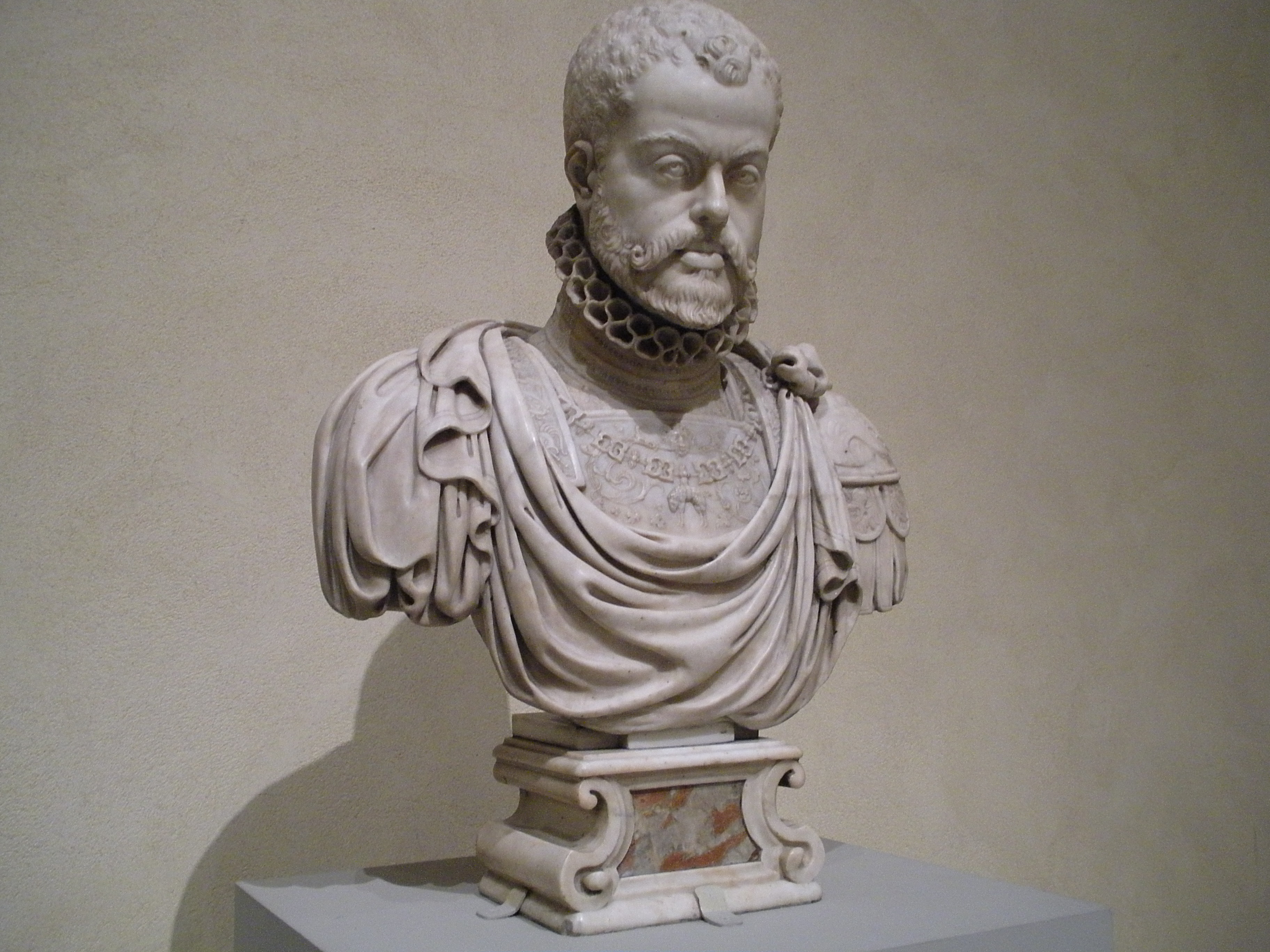 On 1 August 1591 Medrano assumed the significant role of serving as an intermediary between King Philip II of Spain and Charles Emmanuel I, Duke of Savoy, stationed in Turin. This role was not merely symbolic; Medrano's presence in Turin held vital importance for the relationship between the Monarch of Spain and Savoy, with Spain's protection crucial for the survival of the Duchy. Given the complexities of the situation, Medrano successfully gained the trust of the Dukes, making Charles Emmanuel a key player in Spain's international strategy.
Medrano was entrusted with a dangerous mission to deal with the Duke of Savoy's political-military affairs in Madrid shortly after his appointment on 1 August 1591, with King Philip II of Spain himself. In a letter to King Philip II, the Duke of Savoy emphasized the urgency of the situation in Provence, stating that the "great and extreme necessity" had compelled him to send Medrano, his secretary of state and war, to court.
In 1591, while en route to discuss matters of state and war on behalf of the Duke of Savoy with Philip II of Spain, Medrano was captured by French forces near Marseille. His capture occurred in 1592, as Medrano was returning to Spain "with an embassy concerning such grave matters as Your Majesty knows," and was seized "in great danger" by the enemy. He eventually returned to the royal court in Madrid by early 1592.
Medrano was secretary to the Duke and his wife, the Infanta Catherine Micaela, Duchess of Savoy, daughter of Philip II. Medrano is quoted on 31 January 1592 by King Philip II. Satisfied with Medrano's service, Philip II of Spain ordered a payment of 1,000 ducats to cover his travel expenses upon his return.
Medrano took part in the Duke of Savoy’s war against France in the final decade of the sixteenth century, known as the French Wars of Religion, serving in the noble squadron near the Duke, both on foot and horseback.
In early 1592, Monseñor Ladighiera (Lesdiguières in French), a French general, initiated the invasion of Savoy. Medrano and the Duke of Savoy, Charles Emmanuel I, played pivotal roles in this conflict, with Ladighiera emerging as a crucial figure on the French side. Medrano recalls the efforts of the Duke of Savoy and Infanta Catalina of Savoy in preventing the spread of protestantism and similar sects from entering Italy and their success in recovering the Marquisate of Saluzzo and re-establishing the Catholic faith in Tonon and its surrounding regions.
Knight of the Holy Order of Saint John of Jerusalem
 Medrano was affiliated with the Order of St. John of Jerusalem as a dedicated lay knight. In 1593, with the approval and pleasure of Pope Clement VIII, the habit of Saint John was granted to him manu propria "from his own hand" without vows, in recognition of longstanding claims associated with the House of Medrano. This distinction was formally documented in papal bulls, issued in Rome with hanging lead seals, which King Philip II of Spain had ordered to be dispatched.
In a letter dated 12 October 1593, the Duke of Savoy recounted that Medrano had been sent from Provence to the Spanish court to negotiate urgent matters. During the journey from Barcelona to Madrid, Medrano was ambushed by thieves who stole, among other valuables, the sealed papal bulls, documents conferring the habit of St. John without the obligation of vows, issued by the pope for certain claims connected with his house.
Testimony of Iñigo de Mendoza, Ambassador to Venice
On August 23, 1597, Íñigo de Mendoza, Ambassador to Venice, wrote to Philip II of Spain, commending Medrano:
I will do very little in serving the Lady Infanta doña Catalina by testifying before Your Majesty about the truth of what I know. Tomás Fernández de Medrano, secretary of the Duke of Savoy, passed through Italy on his way back from Spain, where he was dealing with the Duke's affairs, when Your Majesty ordered the Marquess of Cerralvo to embark. And since that departure was delayed for more than three months (at first waiting for good weather and later due to the death of the Marquess), I had the opportunity to talk to Tomás Fernández and to communicate to him during all that time that I waited for passage to France for the mission that Your Majesty sent me on. And truly, sir, I recognized in him the soul of a servant who was most passionate and devoted to Your Majesty's service, and on the other hand, a great kindness, and great compassion for customs. And as for having seen and read, he possessed an enviable wealth of knowledge. And in matters of the present, he had a very pleasant understanding, in addition to his skill with the pen, which Your Majesty knows. Since then, during the time I have been in Italy (which is approaching two years), I have been even more confirmed in my initial opinion because I have been in contact and communicated with him, and I see with my own eyes what a great servant he is of Your Majesty and what he deserves for it, and the abilities he has to serve in anything that is entrusted to him. And because it seems to me that by serving the Lady Infanta, I am also serving Your Majesty in bearing witness to this, I dare to do so for any future occasions that may arise. – Íñigo de Mendoza, 23 of August, 1597.
Dismissal and appointment as Secretary of the Princes of Savoy
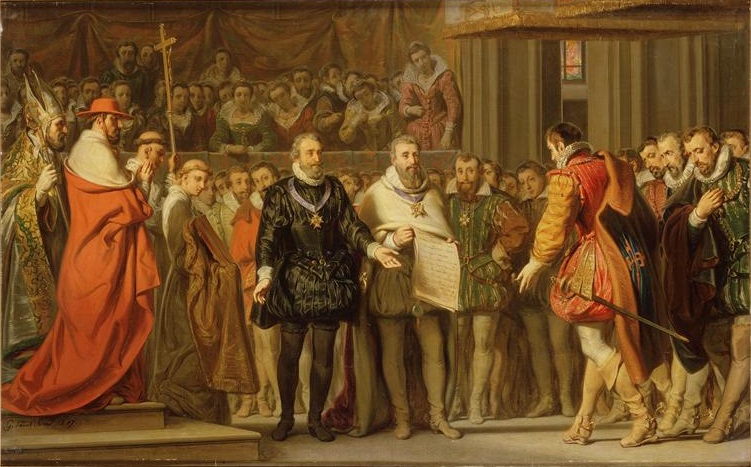 Infanta Catalina Micaela died giving on 6 November 1597 and the Peace of Vervins was signed with France on 2 May 1598, marking the conclusion of years of hostilities. After King Philip II of Spain, died, Charles Emmanuel I, Duke of Savoy, gradually asserted independence from Spanish influence. Despite receiving kind words and being appointed as secretary to the infant sons of the Duke of Savoy, Tomás Fernández de Medrano faced dismissal.
Medrano assumed his role as Secretary of State and War of the Princes of Savoy as early as 1601, re-affirmed in 1603 by Prince Manuel Filiberto.
During Medrano's tenure as Secretary of State and War for the Duke of Savoy, he gained favor for his political acumen, together with his wife. Together, they diligently sought new favors, and on 4 November 1595, the Duke petitioned for a pension from Pope Clement VIII for Medrano, recognizing his exemplary qualities and services to the King and Infanta. The Duke of Savoy hoped that the Pope would grant this favor to allow Tomás to enjoy it alongside the habit he had received from the Order of Saint John. However, the Duke's request for a pension was not granted. On 9 October 1598 Medrano formalized the request to return to Spain. The Duke of Savoy gave him the desired permission to make this journey, and the money to do so. With his wife and children, he departed for Spain.
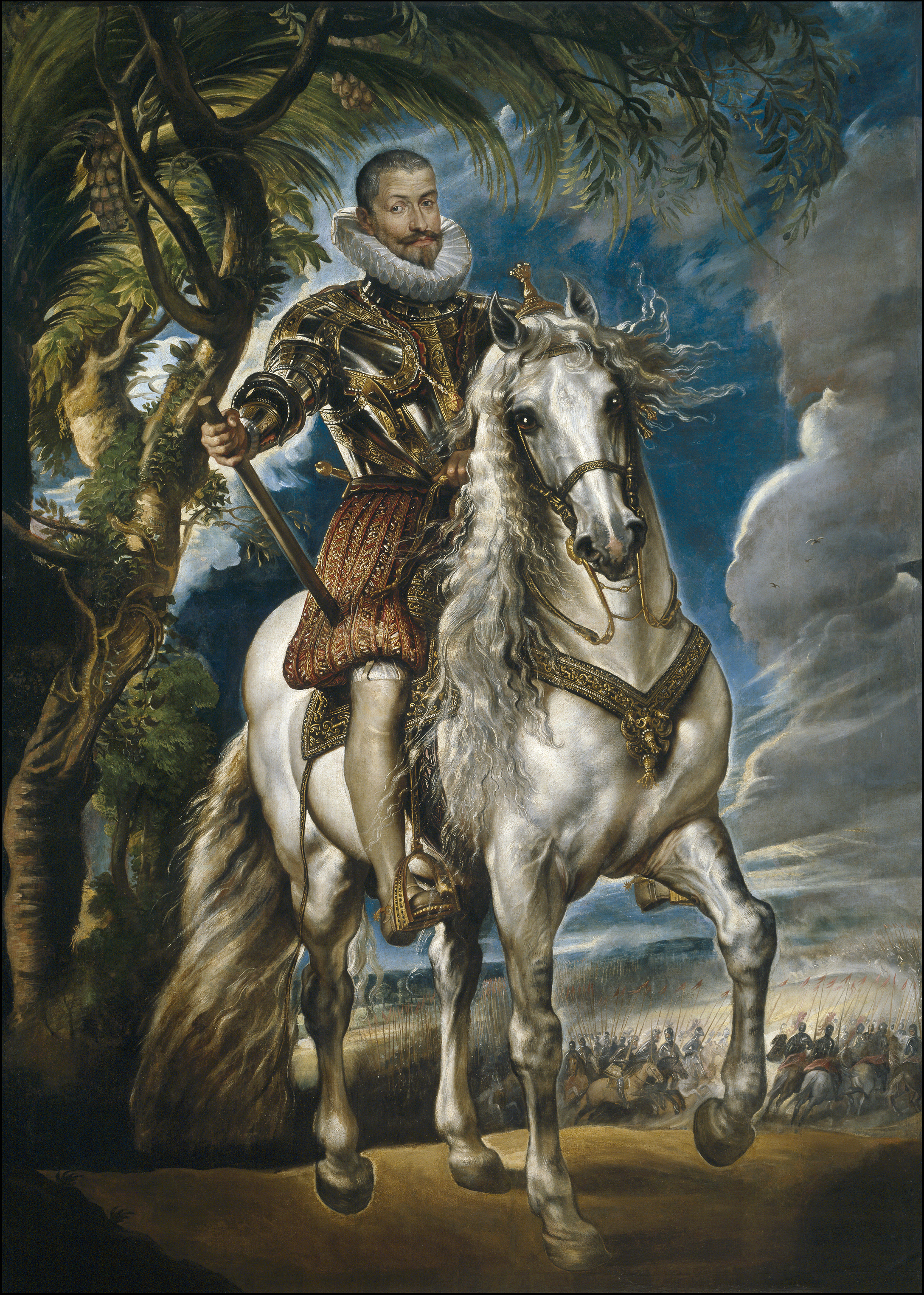 In Spain, Medrano came under the protection of Francisco de Sandoval y Rojas, 1st Duke of Lerma and obtained his pension through the Duke’s intervention. The Duke of Savoy, in a letter dated 24 August 1599, informed the Duke and Marquess of Denia of his efforts for the well-being of Isabel de Sandoval, asking them to show great favor to her and her husband, Medrano. In response to this request and considering past services, the Marquess of Denia made efforts with Philip III to grant Medrano an income of four hundred ducats in Milan on 10 August 1607.
The couple's revenue saw a further increase through the supplementary pension granted to Isabel in recognition of her services to Infanta Catalina and a revision of the one conferred upon Medrano. According to a decree dated 11 December 1601, a sum of 274,200 maravedis annually was allocated to Medrano and his wife.
Service to the Princes of Savoy
 Medrano began to serve the Princes of Savoy in 1598. In the royal decree of 1601 by Philip III isssued for the República Mista, Medrano was recorded in the service of the Princes of Savoy. Philip Emmanuel, Victor Amadeus, and Emmanuel Philibert had been sent on a formative trip to the Spanish court in 1603.
Appointment as Manager of the Grand Priory of Castilla San Juan
Emmanuel Philibert, held the title of Grand Prior and Grand Admiral of Castile in the Order of St. John, to which Medrano belonged. For this reason, in view of the prospect of returning to Turin, the prince made the decision to appoint Medrano, his secretary and knight of his habit (in his departure for Italy) as Manager of the Grand Prior of Castilla San Juan, occupied in this court in all matters of the Religion that are the princes responsibility and Medrano's duty.
In 1605, a brief from Pope Paul V on the privileges of the Order of St. John entitled Brief of Our Most Holy Father Pope Paul V stated this work was authored by Medrano. It is dedicated to the Duke of Lerma, as protector of Catholicism and in particular, the Order of Saint John.
Ecclesiastical patronage
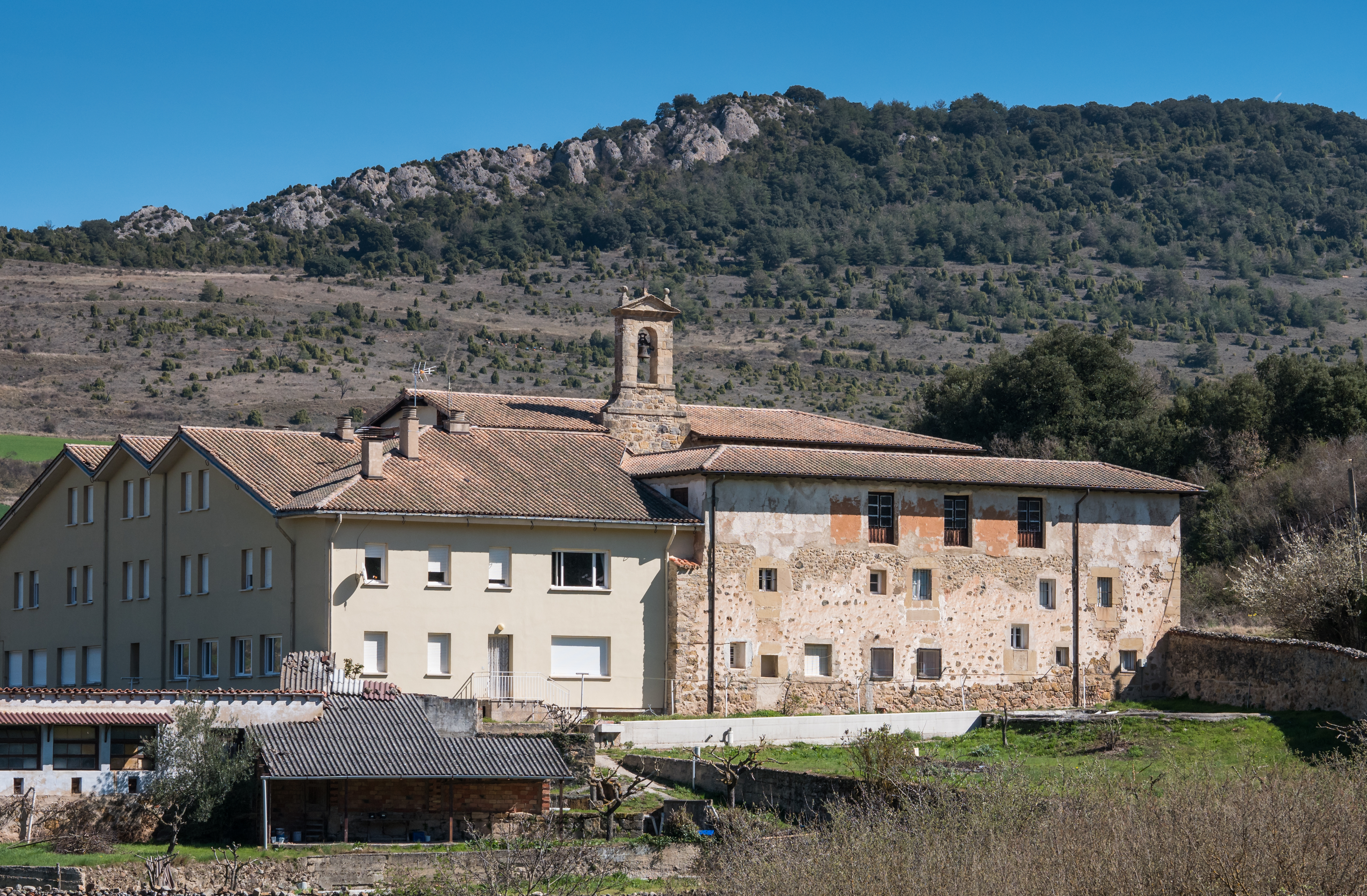 Medrano was the patron of the Monastery of San Juan de Acre (Saint John of Acre) in the village of Salinas de Añana. María Ramírez de Medrano, Lady of Fuenmayor founded the hospital, commandery, and convent of San Juan de Acre in Navarrete in 1185.
On 22 June 1608, the four nuns who lived in the oratory, Inés Hurtado de Corcuera y Mendoza, prioress, Manuela Hurtado de Corcuera y Mendoza, María de Xérica and María de Corcuera, met to make a decision for their future: 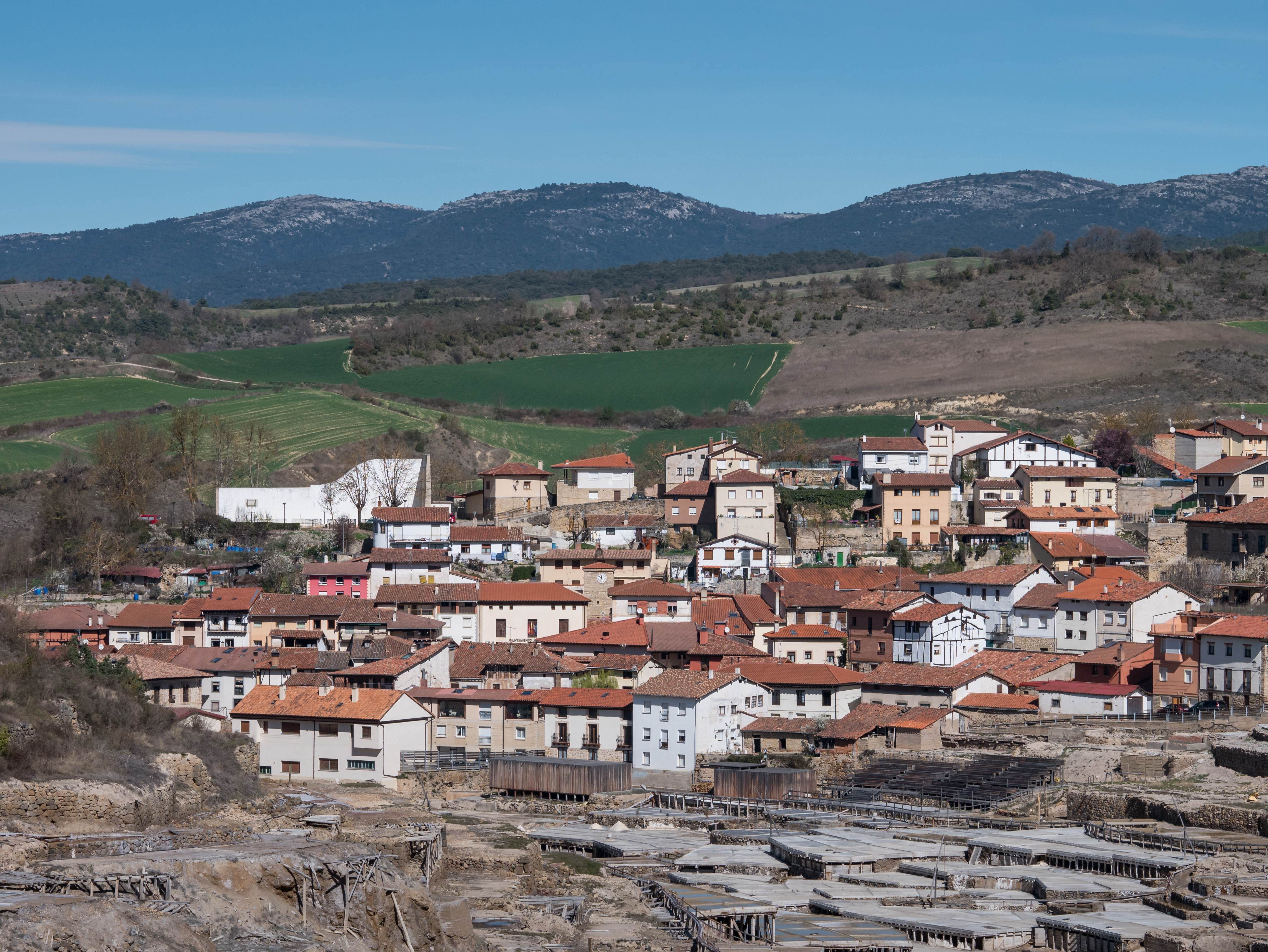
Because their ancestors and relatives, and those of Don Tomás Fernández de Medrano, a knight of the Order of Saint John, lord of the town and estate of Valdeosera, and secretary of the Serene Prince Grand Prior, by His Majesty's command, made and founded this said convent, where the said secretary and his ancestors are buried in the side chapel of the main chapel and where they have their coat of arms... considering the great good that the said secretary has done to the said convent, all four said prioress and nuns, together and unanimously in one voice, being as they are in their chapter and meeting, which they have held for the said purpose, named and appointed as patron of this said convent and church and house of the lord Saint John of Acre, with everything annexed and belonging to it in the temporal sense, to the said lords Don Tomás Fernández de Medrano and Doña Isabel de Sandoval, his wife, and to their heirs and successors, succeeding each other...
The convent of San Juan de Acre was made and founded by Medrano's ancestors and therefore received patronage from Medrano and his wife, who had already established their family pantheon in the side chapel of the main chapel, where they have their coat of arms. In immediate recompense for their commitment, the couple, in appreciation, pledged and bestowed upon the prioresses, nuns, and the convent, an annual income of fifty ducats for two lifetimes and a one-time contribution of a thousand ducats from their personal estate.
Translating statutes for the Order of Saint John
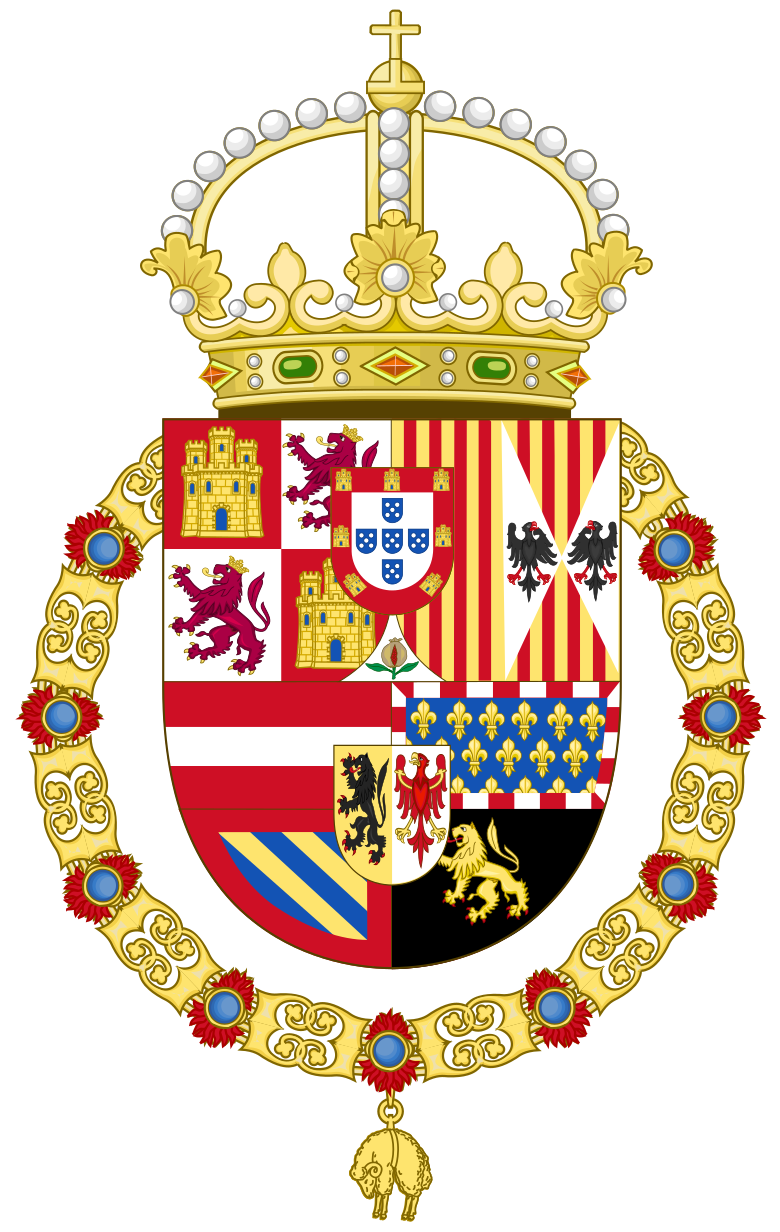 King Philip III personally wrote to Grand Master Fray Aloisio de Vignancourt, commending Medrano's service. In his letter, Philip III extols Medrano as a man of "great prudence and goodness," noting his loyal service "in papers and other things, with all satisfaction and with much integrity."
Declaring Medrano "our very dear and beloved friend," Philip III urges the Grand Master to support Medrano and his family’s claims with "all the grace and favor that may be possible," assuring him that to do so would bring the king "particular pleasure and satisfaction." Following this letter, The Provincial Chapter of the Order of St. John in Castile, under the leadership of Fray Aloisio de Vignancourt, submitted a request for Juan Fernández de Medrano, his son, to be awarded a half-cross (media-cruz), which would grant him a pension and additional distinctions.
Divisa
In 1589, Medrano was officially recognized as a divisero (hereditary noble member of the Solar), along with his brothers, after proving their lineage as descendants of the original lords of Valdeosera. During his tenure, he ensured the Fernández de Medrano family maintained a significant presence in the governance of the Solar. His influence extended to reinforcing the hereditary governance structure, protecting the Solar's traditions, and preserving its historical identity. The lordship of Valdeosera remains a symbol of his family’s noble heritage, linking them to Spain's medieval history and the religious traditions of the Reconquista.
On October 20, 1589, Medrano formally took possession of the Divisa Regajal within the Solar de Valdeosera. Several years later, on June 13, 1596, his brother Francisco Fernández de Medrano, who was then serving as Chief Magistrate (Alcalde Mayor) of the Solar, officially transferred and re-registered this title.
Appointment as Lord and Chief Magistrate
 During a general assembly on May 1, 1600, Medrano was formally appointed Chief Magistrate (Alcalde Mayor) and Lord of the Solar de Valdeosera. According to the divisas of Valdeosera, he was "one of the most qualified and ancient lords and gentlemen of this lordship and currencies that resides in the court of His Majesty and in his Royal service," appointed so that he "defends, guards and protects the said lordship and currencies."
On May 20, 1600, Medrano formally accepted the position of Chief Magistrate in Madrid. The document was notarized by Gaspar de Aranda, a Royal Public Notary, residing in the Court of His Majesty and originally from the town of Lerma.
According to his son Fray Juan Fernández de Medrano y Sandoval, whom belonged to the Monastery of San Prudencio de Monte Laturce in Clavijo, his full title corresponding to the lordship was "Tomás Fernández de Medrano, of the habit of San Juan, lord, divisero and mayor of the knights hijosdalgo of the lordship, villa, solar and currencies of Valdeosera, counselor and secretary of State and War, of the Most Serene Highnesses of Savoy."
Origin of the Lordship of Valdeosera
A work written in 1601 by the Licentiate Salinas entitled Summary of the Memorable and holy battle of Clavijo, true origin and antiquity of the Lordship and lords of the town, land and currencies of Valdeosera, is dedicated to King Philip III of Spain by Medrano's son Friar Juan Fernández de Medrano y Sandoval.
According to the Licentiate Salinas, Medrano was a true and legitimate descendant of Sancho Fernández de Tejada, famous knight and general of King Ramiro I at the legendary battle of Clavijo.
Republica Mista (1602)
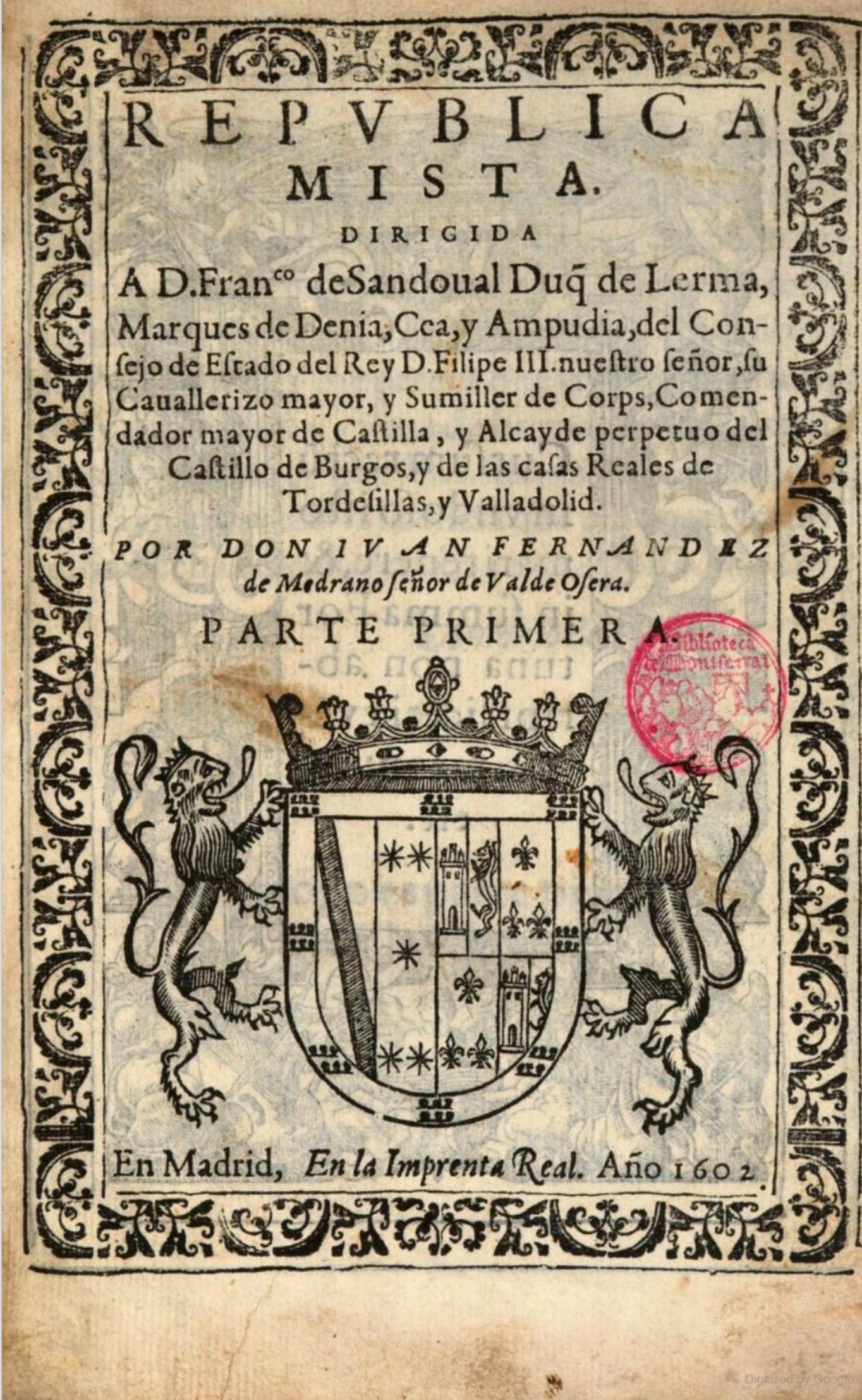 República Mista (The Mixed Republic) is a legal-political and doctrinal treatise written by Medrano and published in Madrid by Juan Flamenco in 1602. Fray Juan de Salazar states that Juan Fernández de Medrano y Sandoval, from the house of the Lords of Valdeosera, is the one who assumes the paternity of this book, which appeared in Madrid in 1602 under the label of República Mista. However, he concludes by saying that from what the cover says, the work was written by his father, Tomás Fernández de Medrano.
A letter in the name of Medrano from 1607 indicates the book he wrote on the Republic (addressed to the Duke of Lerma), where he treated, among other things, how important it is for Kings and Princes to be religious in order to be more obedient to their subjects, was pleasing to his Majesty. Nicolás Antonio unequivocally attributes the authorship of the República Mista to Tomás Fernández de Medrano. According to the author himself, The Mixed Republic represents "the first treatise of seven" that he wrote.
In the 1601 Royal Decree of King Philip III of Spain, Medrano writes first about the importance of kings and princes being religious in order to be more obedient to their subjects; the second, regarding the obedience owed to them by their subjects and the reverence with which they should speak of them and their ministers, councils, and magistrates; and the third, on the Ambassador's role among the Romans, where he discusses why it is important to reward the good and punish the bad.
The Mixed Republic is dedicated to Francisco de Sandoval, 1st Duke of Lerma by his son Juan Fernández de Medrano y Sandoval. The first volume codifies the constitutive role of the political order played by religion, obedience and justice and is integrated into the context of the anti-Machiavellian current to the extent that it tries to refute the Florentine's thesis that they attribute to religion a merely strategic role, in no case constitutive of the political order.
Other works
- Consoling prayer to Sermo Carlo Emanuel, Duke of Savoy, made by Tomás Fernández de Medrano, of the Messrs. of Valdeosera and Almarza de Cameros, Secretary of State and war of their highnesses and their council, Turin, Antonio de Bianqui, 1598
- Funeral prayer to the gifts of the most powerful Filipo Segundo: Invictissimo King of Spain and of the New World made by Tomás Fernández de Medrano, Secretary of State and War of the Sereneness and catholic Duke of Savoy, and of the serene princes, his sons, and of his council, Milano, Gratiadio Ferioli.
Death and burial
Medrano died around 1616 and was buried in the family chapel at the Monastery of San Juan de Acre in Salinas de Añana. The Fernández de Medrano family funded the restoration of the collateral chapel at the Monastery of San Juan de Acre in Salinas de Añana, which housed their family burial site and displayed the family coat of arms.