
The Sweethearts; or, The Top and the Ball
"The Sweethearts; or, The Top and the Ball" (Danish: Kjærestefolkene [Toppen og bolden]) is a literary fairy tale by Danish author and poet Hans Christian Andersen (1805–1875). The story is about a mahogany top and his unrequited love for a leather ball. Its probable inspiration lies in Andersen’s youthful relationship with Riborg Voight, a woman who declined his marriage proposal in 1830. The tale was published with several others by Andersen in Copenhagen, Denmark in November 1843. The collection of tales was received by Danish critics with great acclaim.
Plot summary
In a drawer filled with playthings, a mahogany top woos a leather ball. The ball spurns the top, thinking she deserves a finer suitor. One day, the ball is taken outdoors, thrown high into the air, and disappears. The ball has landed in the roof gutter but the top believes she has become the wife of a swallow living in a tree nearby. Not being able to possess her, the top's infatuation deepens. Years pass, and, one day, the top is refurbished with gilding. He is spun and jumps into the dust bin. Among the trash lying about, he sees the ball who has suffered much from exposure to the elements. She doesn't recognize him as her former suitor and tells him she spent five years in the roof gutter soaked with rain before falling into the dustbin. The maid suddenly arrives, finds the top, and carries him into the house. The top puts aside the passion he felt for the ball, "for love vanishes when one's sweetheart has been soaking in a gutter for five years. You don't even recognize her when you meet her in a dustbin."
Source
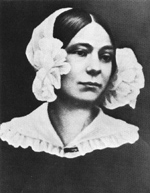
“The Sweethearts” is original with Andersen and owes no debt to traditional folk or fairy material. The tale's inspiration is likely found in Andersen’s relationship with Riborg Voight, a woman who declined his marriage proposal in 1830. He met her again in 1843 while on holiday on Funen and discovered she had become a frumpy, middle-aged matron.
Publication history
 The tale was first published in Copenhagen, Denmark on 11 November 1843 by Reitzel as a part of New Fairy Tales. First Volume. First Collection. 1844.. For the first time the phrase "told for children" was not part of the title—an omission Andersen scholar Jackie Wullschlager believes exhibited a new confidence on Andersen's part: "These [tales] were the most mature and perfectly constructed tales he had written, and though some of them at once became, and have remained favorites of children, Andersen here melds together the childlike and the profound with exceptional artistry." The first edition of 850 was sold out by December 18, and Reitzel planned the publication of another 850.
"The Sweethearts" was third in a volume comprised of four tales that included "The Angel" and "The Nightingale" as the first two offerings, and "The Ugly Duckling" as the final tale. "The Sweethearts" was republished 18 December 1849 in Fairy Tales. 1850. and again on 15 December 1862 in Fairy Tales and Stories. 1862.. The tale has since been translated into various languages and published throughout the world.
Critical reception
New Fairy Tales. 1844. was a break-through for Andersen who, until its publication, had generally received vigorous condemnation from the Danish critics for his venture into the fairy tale genre. Reviews for the collection however were ecstatic. Ny Portefeuille wrote, "There is in these tales so much beauty and goodness, so much humour and seriousness, so much poetry and depth, that even the most disparate readers will by necessity find something of interest to them." Andersen wrote his confidante Henriette Wulff, "These tales have been received with unanimous applause. None of my other books have had such a success here at home, every paper commends them, everyone reads them...I am appreciated as the best fairy-tale teller."<ref name="JensAndersen>
Commentaries
Andersen scholar Jackie Wullschlager views “The Sweethearts” as a “vengeful, spare, sarcastic little tale”, that, in spite of its triumphant conclusion, exhibits a tone of pathos. Unlike the traditional happily-ever-after marriage finales of fairy tales, “The Sweethearts” ends with the Top (like his creator) going through life alone. Published with “The Nightingale”—a tale whose inspiration lay in Andersen’s budding infatuation for the Swedish singer Jenny Lind—Wullschlager suggests the two tales may be viewed as complements: one, the “valediction of an old love affair and the other, the celebration of a new one.”
See also
- List of works by Hans Christian Andersen
External links
- "The Sweethearts" English translation by Jean Hersholt
- Kjærestefolkene Original Danish text