
Sounding rocket X-ray astronomy
A sounding rocket, sometimes called a research rocket, is an instrument-carrying rocket designed to take measurements and perform scientific experiments during its sub-orbital flight. The origin of the term comes from nautical vocabulary, it refers to sounding, which means throwing a weighted line off of a ship to gauge the water's depth, or measuring a vertical distribution of a physical property such as in atmospheric sounding. Here it is intended as taking a measurement.
Sounding rocket X-ray astronomy is using a sounding rocket to carry an X-ray detector to high altitudes. The first evidence of X-rays from the Sun and of an X-radiation source from the Milky Way, other than the Sun, was detected by a sounding rocket. These rockets have contributed significantly to our understanding of the Sun, the solar system, and the universe as a whole.
Sounding rockets have certain advantages even over satellites for X-ray astronomy. They are usually much simpler, far fewer interfaces to match up, and the launch facilities are less elaborate. Some basic space research efforts need to successfully explore the region of the atmosphere above balloon altitudes (AbOUT 40 km) and below satellite orbits (about 160 km). Convenient to the effort is the informality. For most payloads, only one experimenter is involved so there is no need for formal, time-consuming reviews to ensure compatibility with other experimenters. In addition, there is low cost, some sounding rockets cost as little as $10,000; then, there is recoverability, geographic flexibility, and temporal flexibility. Hundreds of sounding rockets are launched worldwide each year for research purposes and weather studies. Some of these are for X-ray astronomy.
An X-ray detector is placed in the nose cone section of a sounding rocket and launched above the atmosphere. The largest drawback to rocket flights is their very short duration (just a few minutes above the atmosphere before the rocket falls back to Earth) and their limited field of view. A rocket launched from the United States will not be able to see sources in the southern sky; a rocket launched from Australia will not be able to see sources in the northern sky.
Sounding rockets are in use both for detecting and studying X-ray sources, including newly discovered ones, and to develop and perfect novel X-ray astronomy techniques and instruments.
Featurette
 In astronomy, the interstellar medium (or ISM) is the gas and dust that pervade interstellar space: the matter that exists between the star systems within a galaxy. It fills interstellar space and blends smoothly into the surrounding intergalactic space. The interstellar medium consists of an extremely dilute (by terrestrial standards) mixture of ions, atoms, molecules, larger dust grains, cosmic rays, and (galactic) magnetic fields. The energy that occupies the same volume, in the form of electromagnetic radiation, is the interstellar radiation field.
Of interest is the hot ionized medium (HIM) consisting of coronal gas at 106-107 K which emits X-rays. The ISM is turbulent and therefore full of structure on all spatial scales. Stars are born deep inside large complexes of molecular clouds, typically a few parsecs in size. During their lives and deaths, stars interact physically with the ISM. Stellar winds from young clusters of stars (often with giant or supergiant HII regions surrounding them) and shock waves created by supernovae inject enormous amounts of energy into their surroundings, which leads to hypersonic turbulence. The resultant structures – of varying sizes – can be observed, such as stellar wind bubbles and superbubbles of hot gas, seen by X-ray satellite telescopes. The Sun is currently traveling through the Local Interstellar Cloud, a denser region in the low-density Local Bubble.
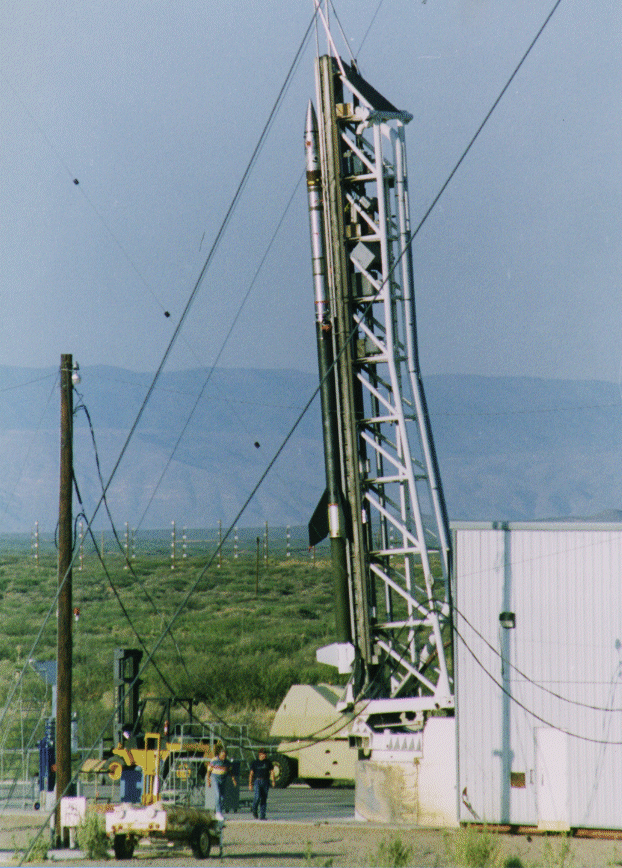
To measure the spectrum of the diffuse X-ray emission from the interstellar medium over the energy range 0.07 to 1 keV, NASA launched a Black Brant 9 from White SandS Missile Range, New Mexico on May 1, 2008. The Principal Investigator for the mission is Dr. Dan McCammon of the University of Wisconsin.
Normal Incidence X-ray Telescope (NIXT)
Using sounding rockets, the NIXT from the Harvard-Smithsonian Center for Astrophysics (CfA) has taken a unique set of high resolution full disk solar images. The telescope primary is 25 cm in diameter.
The solar corona consists of a low-density magnetized plasma at temperatures exceeding 106 K. The primary coronal emission is in the UV and soft X-ray range. The close connection between solar magnetic fields and the physical parameters of the corona implies a fundamental role for the magnetic field in coronal structuring and dynamics. Variability of the corona occurs on all temporal and spatial scales - at one extreme, as the result of plasma instabilities, and at the other extreme driven by the global magnetic flux emergence patterns of the solar cycle.
The telescope has flown on a Terrier/Black Brant vehicle. The primary reason for using multilayer coatings at XUV and soft X-ray wavelengths is because no single surface layer coating can provide acceptable X-ray reflectivity at wavelengths shorter than approx. 300 Å (30.0 nm) when used at normal incidence. For instance, at 173 Å (17.3 nm) the best materials have R ~0.001. By precise deposition of 50 alternating layers of Mo and Si, mirrors with R ~50 have been produced. When normal incidence mirror designs are employed, the immediate advantage is greatly improved image quality. The NIXT telescope recorded the highest resolution solar corona photographs in x-ray ever taken on its last three flights (1989–1991).
Ranges for X-ray astronomy sounding rocket launches
The United States and the Soviet Union had ranges for X-ray astronomy sounding rocket launches.
United States sounding rocket ranges:
Barking Sands Missile Range
Eglin Air Force Base
Fort Churchill, Canada, jointly with Canada,
Vandenberg Air Force Base
Wallops Island, Virginia
White Sands, New Mexico.
Throughout the 1960s new sounding rocket ranges appeared around the world at:
Andöya, Norway,
El Arenosillo, Huelva, Spain,
Hammaguir, Algeria,
Kiruna, Sweden,
Kourou, French Guiana,
Natal, Brazil,
Salto di Quirra, Sardinia,
Woomera, Australia,
- Jokkmokk, Sweden,
- Kronogfird, Sweden,
- Chamical, Argentina,
- Thumba, India, Thumba Equatorial Rocket Launching Station,
- Sonmiani Beach, Pakistan, and
- Spain.
Solar eclipses
Special expeditions occurred occasionally such as the one to Cassino, Brazil, in November 1966 to launch 17 sounding rockets to investigate solar X-rays and the solar eclipse of November 12, 1966. A solar eclipse expedition in May 1966 was to a spot near Koroni, Greece.
Black Brant
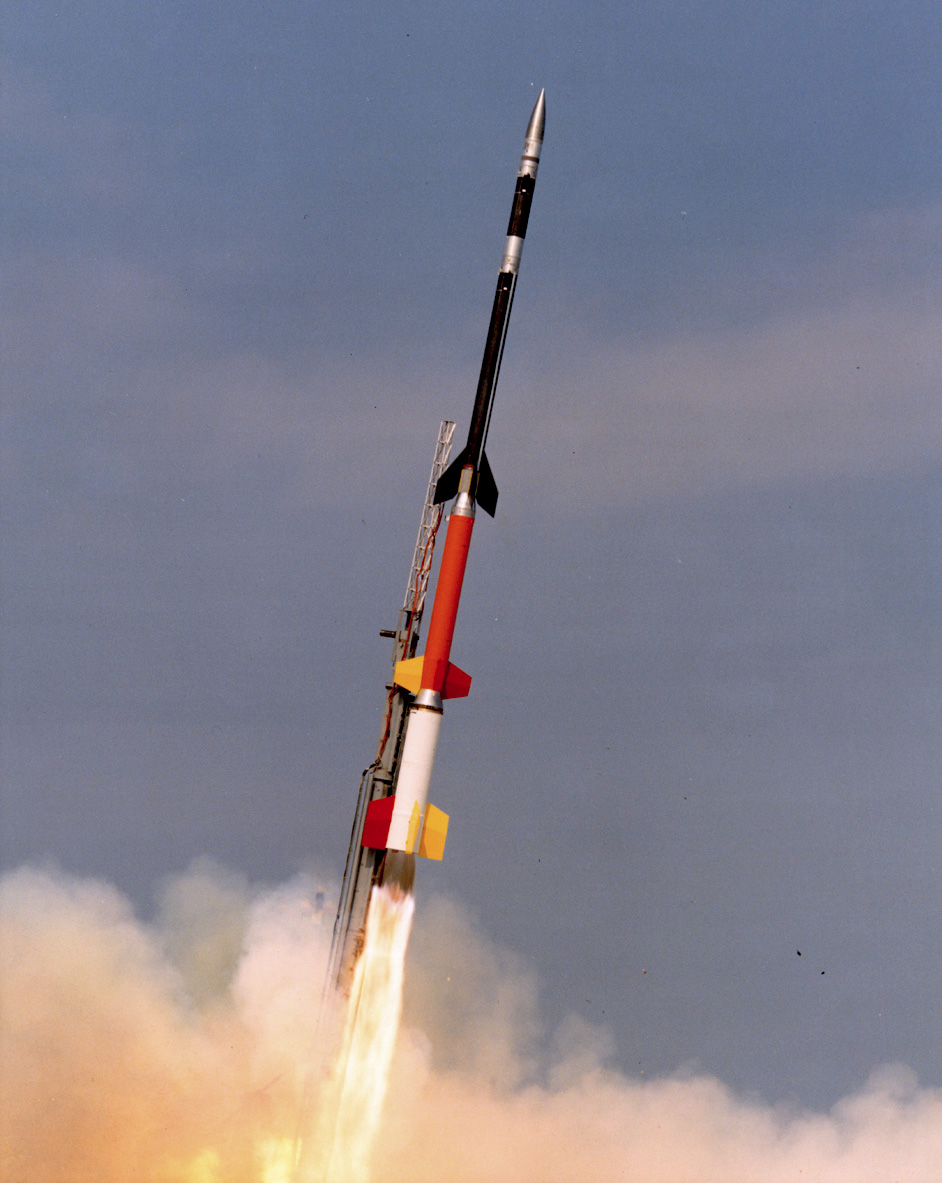
The Black Brant is a Canadian-designed sounding rocket built by Bristol Aerospace in Winnipeg, Manitoba. Over 800 Black Brants of various versions have been launched since they were first produced in 1961. They have been repeatedly used by the Canadian Space Agency and NASA.
The NASA GSFC launched a Terrier Black Brant 9 on November 21, 2006 - 04:00 UTC from White Sands Missile Range, New Mexico to obtain the first soft X-ray spectrum of the entire Cygnus Loop SNR. The soft X-ray emission from the Cygnus Loop is dominated by interactions between the initial blast wave and the walls of a precursor cavity surrounding the Cygnus Loop.
Aerobee
Woomera, Australia
An Aerobee 170 sounding rocket was launched from Woomera at 1800 UTC on November 9, 1973, to observe X-ray emission and variability from Cir X-1 (3U 1516-56) and Vela X-1 (3U 0900-40), both of which are eclipsing binaries with periods 12.3 d and 8.95 d, respectively.
White Sands Missile Range (WS)
November 16, 1974 10:35 UTC Aerobee 170 White Sands Missile Range carried an X-ray detection system designed to have significant effective area at very low X-ray energies (90-280 eV), with little sensitivity to higher energy X-rays, charged particles, or geocoronal ultraviolet.
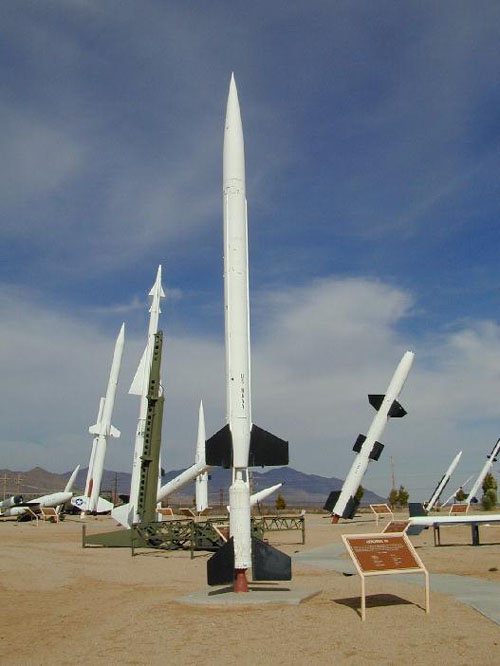
 The Aerobee 170 was launched from White Sands Missile Range, on January 12, 1973 at 11:46 UTC from LC35, for KPNO. The rocket reached an apogee 229 km.
A large-area X-ray sky-survey payload was launched in an Aerobee 170 to a peak altitude of 205 km on November 1, 1972 from White Sands Missile Range at 05:30 UTC.
In a more recent flight of an Aerobee-170 rocket on March 22, 1972, the Columbia Astrophysics Laboratory flew a lithium-fluoride spectrometer to search for the Fe XXV lines in Sco X-1.
To observe soft X-ray emission in the 0.4-2.0 keV range from a region near the X-ray source Per X-1, an Aerobee 170 rocket was launched from White Sands Missile Range on October 23, 1971 at 03:45 UTC.
An Aerobee 170 was launched to an altitude of 146 km above the White Sands Missile Range on September 21, 1970, to perform a high-sensitivity scan of the galactic plane to search for 2-20 keV X-rays from Supernova remnants.
On April 24, 1970, the Columbia Astrophysics Laboratory flew a graphite crystal spectrometer in an Aerobee-170 rocket to search for the S XVI line in Sco X-1.
The X-1 X-ray source Perseus X-1 was discovered by an Aerobee rocket flight on March 1, 1970, launched from White Sands Missile Range at 04:00 UTC. "The rocket was allowed to roll and precess freely, producing nearly complete coverage of one hemisphere of the sky."
AS&E/Roman launched an Aerobee 150/150A on November 20, 1967, to detect stellar X-ray sources from WS.
The Netherlands and NASA cooperated on a launch from White Sands Missile Range by the Laboratory for Space Research to investigate the spatial distribution of solar X-ray sources using an Aerobee 150.
An Aerobee 150 rocket, launched at 2021 MST on September 7, 1967, (03:21 UTC, September 8, 1967) from WS carried three X-ray proportional counters that provided spectra from Sco XR-1, Cyg XR-1, and Cyg XR-2. Errors of the attitude control system resulted in the observation of Vul XR-1. Vul XR-1 had been found to be a strong source of soft X-rays but did not emit detectable X-rays in the 1.5-13 keV range.
August 26, 1967, saw a launch of an Aerobee 150/150A to study stellar X-ray sources for Lockheed/Roman from WS.
X-ray spectra were collected using an Aerobee 150/150A launched on July 8, 1967, for MIT/Roman.
An X-ray astronomy experiment for AS&E/Roman was launched from White Sands Missile Range (WS) on October 12, 1966, using an Aerobee 150/150A.
On March 8, 1966, for AS&E investigator Roman, an Aerobee 150/150A was launched to detect stellar X-ray sources.
The second Lockheed launch of an Aerobee 150/150A occurred on October 1, 1965, to detect stellar X-ray sources.
A second Aerobee was launched by the Fisher group on September 30, 1965. X-ray source locations were reported in 1966.
To study celestial X-ray sources, an Aerobee 150/150A was launched on September 22, 1965, for AS&E investigator Roman.
A second Aerobee flight to continue the search for discrete X-ray sources occurred on November 25, 1964 extended the survey "through Taurus to the southern portion of Puppis." The flight reached an altitude of 200 km. The only source observed was the Crab Nebula.
The Clark group launched on October 26, 1964.
On October 2, 1964, an Aerobee 150/150A was launched as part of the Lockheed series to study stellar X-ray sources from WS, principal investigator was Dr. Ruth Roman.
Specifically to discover, locate, and measure the spectra of X-ray-emitting sources at low galactic latitude an Aerobee was launched on October 1, 1964 with an attitude control system (ACS). The majority of results were reported in 1966.
To observe the occultation of X-ray emission from the Crab Nebula an Aerobee rocket was launched from White Sands Missile Range on July 7, 1964, at 22:42:30 UTC. The rocket was equipped with a stabilization system to orient two X-ray telescopes and to maintain steady pointing during the occultation. The flight peaked at 221.4 km.
Continuing the search for discrete X-ray sources, an Aerobee was launched from the White Sands Missile Range in New Mexico on June 16, 1964. "The galactic plane was mapped from the southern region of Scorpius, through Cygnus, to the northern part of Perseus." The rocket reached a peak altitude of 127 km and rolled with a period of ~8.5 s. Scan 1 did not detect Cas A but did detect source A; scan 3 detected source B, scan 4 detected source B; scan 5 detected source B, source C, source D, source F, and source H; scan 6 detected source D, source E, source F, source G, and source H; scan 7 detected source D, source E, source F, source G, and source H; scan 8 detected source G; scan 9 detected source I; scan 10 detected source I. Source A is Cyg X-2, B is Cyg X-1, C is Ser X-1, D is Sgr X-2, E is Oph X-1, F is Sgr X-1, G is Sco X-2, H is Sco X-3, and I is Sco X-1. So, the order of detection is Cyg X-2, Cyg X-1, Ser X-1, Sgr X-2, Sgr X-1, Sco X-3, Oph X-1, Sco X-2, and Sco X-1.
To study X-rays from the Sun and for galactic astronomy, an X-ray telescope (XRT) was launched (LC35) in an Aerobee 150 on October 15, 1963 from the White Sands Missile Range for GSFC and the experimenter Muney to an apogee of 197 km.
On April 29, 1963 an Aerobee was launched from the White Sands Missile Range with a counter on board that was about 10 times as sensitive as earlier launches, and covered a 0.1 to 0.8 nm wavelength range. Two X-ray sources were detected: an outstanding source in Scorpius and another, about one-eighth as intense, in the direction of the Crab Nebula (M1).
On April 19, 1960 an Office of Naval Research Aerobee Hi made a series of X-ray photographs of the Sun from an altitude of 208 km. The mainstay of the US IGY rocket stable was the Aerobee Hi, which was modified and improved to create the Aerobee 150.
Natal, Brazil
On June 14, 1969, an Aerobee 150 was launched at 21:52 UTC from Natal, Brazil, to make X-ray observations of Virgo XR-1. One scan detected fluxes from NGC 5128, 3C 273, and Virgo XR-1. Virgo XR-1 was observed by the US Naval Research Laboratory group in 1965 and again in 1967.
From the NASA GSFC launch facility at Natal, Brazil, on December 13, 1966, an Aerobee 150/150A was launched to detect X-ray sources in the southern hemisphere by the Catholic University/Roman.
An Aerobee 150 was launched on April 25, 1965, that discovered seven new X-ray sources and M87, the first extragalactic X-ray source: Ara XR-1, Cas XR-1, Cep XR-1, Lac XR-1, Lup XR-1, Nor XR-1, and Vir XR-1.
White Sands Proving Grounds
The first successful launch of an Aerobee occurred on May 5, 1952 13:44 GMT from White Sands Proving Grounds launch complex LC35. It was an Aerobee RTV-N-10 configuration reaching an apogee of 127 km with NRL experiments for solar X-ray and ultraviolet detection.
X-rays from the Moon
An Aerobee-Hi sounding rocket instrumented with Geiger counters sensitive to wavelengths centered at about 0.3 nm was launched from the White Sands Missile Range on June 12, 1962. This flight detected X-ray emission from the Milky Way. The extrasolar X-ray source was designated Scorpius X-1.
Although the above source indicates the rocket launch was on June 12, 1962, other sources indicate the actual launch was at 06:59:00 UTC on June 19, 1962.
"The instrumentation had been designed for an attempt to observe X-rays from the moon and was not equipped with collimation to restrict the field of view narrowly. As a result, the signal was very broad, and accurate definition of the size and position of the source was not possible. A similar experiment was repeated in October 1962 when the galactic center was below the horizon and the strong source was not present. A third attempt, in June 1963, verified the results of the June 1962 flight." The Galactic Center is < 20° RA and < 20° Dec from Sco X-1, the two X-ray sources are separated by ~20° of arc and may not have been resolvable in the June 1962 flight.
On May 27, 1964 at 04:30 GMT an Aerobee 150 was launched from LC35 of the White Sands Missile Range to an apogee of 245 km to test for lunar X-rays.
Sandhawk
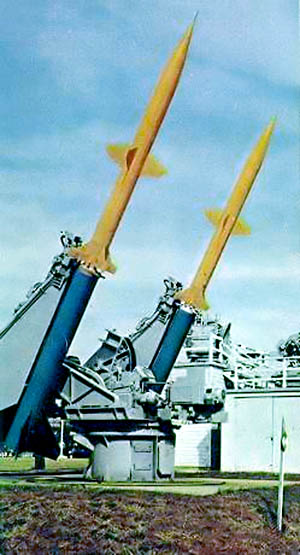 From Barking Sands LC12 Sandia National Laboratories launched a Terrier Sandhawk on June 23, 1973, with a Lawrence Radiation Laboratory (LRL) ACS-4E (ACS-9) detector on board for an X-ray astronomy mission wherein an apogee of 297 km was reached. An X-ray astronomy payload was flown on this rocket launched from Kauai, Hawaii, at 10:45:30 UTC to survey the region of the sky around Ser X-1.
On October 20, 1972, a Terrier-Sandhawk rocket was launched at 12:17:30 UTC from Kauai, Hawaii, to an altitude of 170 km for surveying the region of the sky from Cassiopeia to Puppis, where the X-ray sources detected were Cas A, the Crab nebula, Vel X, and Pup A.
On November 6, 1968, at 06:45 UTC, a two-stage Terrier-Sandhawk rocket was launched from the Atomic Energy Commission range at Johnston Atoll in the mid-Pacific. The flight was intended to determine spectra for known X-ray sources in the Cygnus region. A low energy source was detected that from its unique spectra was probably the same source discovered by the US Naval Research Laboratory group and designated Vul XR-1, although flight data indicated the source was in Cygnus and Coincident with the Cygnus Loop.
Aries
From 1973 to 1977 a number of Aries sounding rockets were launched to detect and study X-ray sources.
Nike Tomahawk
On September 20, 1966, at 15:34:00 UTC, a Nike Tomahawk was launched to an altitude of 168 km from Johnston Atoll. In addition to looking for X-rays from the Magellanic Clouds, the flight X-ray detectors discovered Vela X-1.
From Kauai, Hawaii, on July 28, 1966, at 2:36:00 UTC, a Nike Tomahawk was launched to observe Scorpius X-1, Taurus X-1, and Cygnus X-1. The rocket reached an altitude of 172.5 km.
Soviet sounding rockets
On October 3, 1970, a geophysical rocket was launched to about 500 km to perform solar ultraviolet and X-ray studies.
Spectrographs of the Sun in the ultraviolet and X-ray wavelengths were launched up to about 480 to 500 km on September 20 and October 1, 1965 probably using the A-3 geophysical rocket.
Centaure
One French sounding rocket experiment for Centre d’Étude Nucleaires, Saclay, was launched by ESRO using the French built Centaure 2 from Kiruna, Sweden, to detect X-rays (1.5 - 3 keV) and perform X-ray spectroscopy.
Véronique
The French Véronique was successfully launched on April 14, 1964 from Hammaguira, LC Blandine carrying experiments to measure UV and X-ray intensities and the FU110 to measure UV intensity from the atomic H (Lyman-α) line, and again on November 4, 1964.
Honest John-Nike
Using launch complex A, the United States AEC/LRL launched HAD-3 on an Honest John Nike for a mission to study solar X-rays on March 14, 1964, from Vandenberg Air Force Base.
Nike Apache
Thumba
The establishment of the Thumba Equatorial Rocket Launching Station (TERLS) was the first of its kind in India. It was started in 1962, at Pallithura in the district of Trivandrum on the southern tip of India very close to earth's magnetic equator to launch sounding rockets. Dr. A. P. J. Abdul Kalam (who went on to become President of Indian Republic) was amongst the initial team of rocket engineers. The first sounding rocket, a Nike Apache, was launched on November 21, 1963.
From Thumba, India, on November 7, 1968, the New Delhi National Physical Laboratory measured electron/ion densities, Lyman-alpha radiation, and X-rays (galactic X-ray astronomy) with a Nike-Apache payload. Two earlier flights of Nike Apaches on April 22 and 24, 1968 from Thumba were also galactic X-ray astronomy experiments in collaboration with Japanese scientists.
Fort Churchill
During the solar eclipse of July 20, 1963, three Nike Apaches were launched by NASA from Fort Churchill at 21:13, 21:40, and 22:10 GMT, reaching successive apogees of 199, 200 and 192 km, on a mission to measure solar X-rays.
Prior to the launches for the solar eclipse of July 20, 1963, a Nike Apache was launched on July 14, 1963, as a complete dry run for Operation PROBE HIGH, the scheduled launches for the solar eclipse. The rocket carried instrumentation in the nose-cone to measure radiation (baseline data) in the ultraviolet and X-ray regions of the spectrum. With respect to X-ray detection, the primary objective was to study the effects of an eclipse of the Sun on electron density, electron temperature and ionospheric absorption characteristics in the ultraviolet and X-ray regions of the spectrum. The first rocket was fired at 1500 hrs to measure solar radiation in the ultraviolet and X-ray regions of the spectrum but the test was a failure because of a malfunction of the first stage and subsequent non-ignition of the 2nd. The second launch at 1530 hrs had a similar result. The third rocket launched at 1603 was successful. The final three Nike Apache launches took place at 1613, 1640, and 1710 hrs.
R-11A
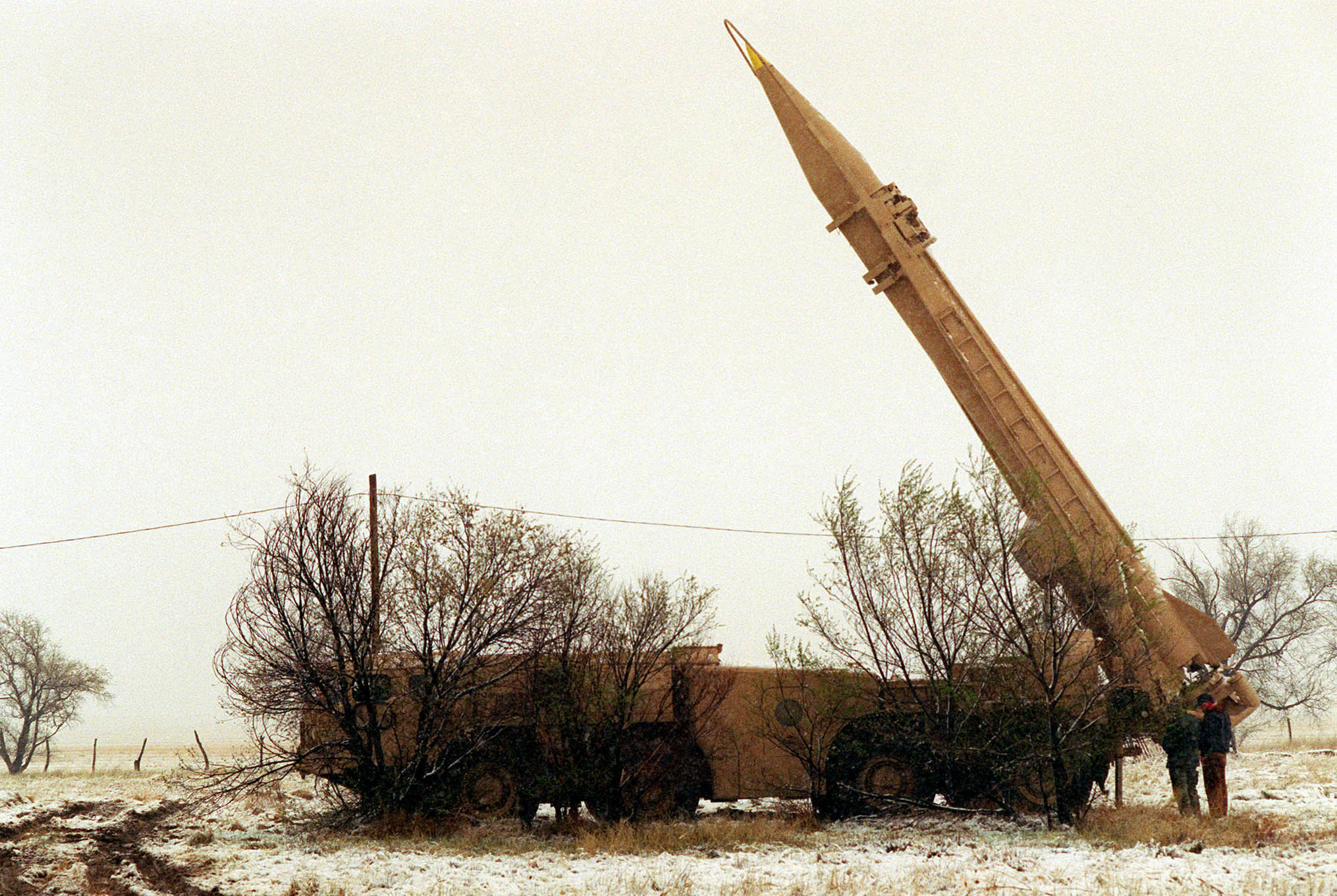 The USSR launched on July 21, 1959 two R-11A at 02:00 GMT and 14:00 GMT to detect solar X-rays.
R-2A
The USSR launched an R-2A on July 21, 1959, to detect solar X-rays.
R-5V
On June 21, 1959, from Kapustin Yar, with a modified V-2 designated the R-5V, the USSR launched to detect solar X-rays.
R-1
The USSR captured a number of V-2s and staff, letting them set up in Germany for a time. The first work contracts were signed in the middle of 1945. In 1946 (as part of Operation Osoaviakhim) they were obliged to move to Kapustin Yar in the USSR, where Groettrup headed up a group of just under 250 engineers. The first Soviet missile was the R-1, an exact copy of the V-2. Most of the German team was sent home after that project, but some remained to do research until as late as 1951. Unbeknownst to the Germans, work immediately began on larger missiles, the R-2 and R-5, based on extension of the V-2 technology.
Nike-Asp
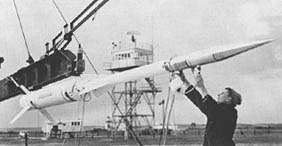 Nike-Asp is the designation of an American sounding rocket. It is an Asp rocket with a Nike booster system. It was at times ship-launched.
Eglin Air Force Base
In an unsuccessful effort to measure lunar X-ray emission, the USAF launched the last Nike-Asp on September 27, 1960 at 22:10 GMT to an apogee of 233 km.
Vandenberg Air Force Base
Between July 14 and August 31, 1959, five Nike-Asps were launched as part of the solar X-ray mission by the US Navy. The last launch on Aug 31 1959 at 22:53 GMT carried the Sunflare II solar X-ray detection system to an apogee of 200 km.
USS Point Defiance
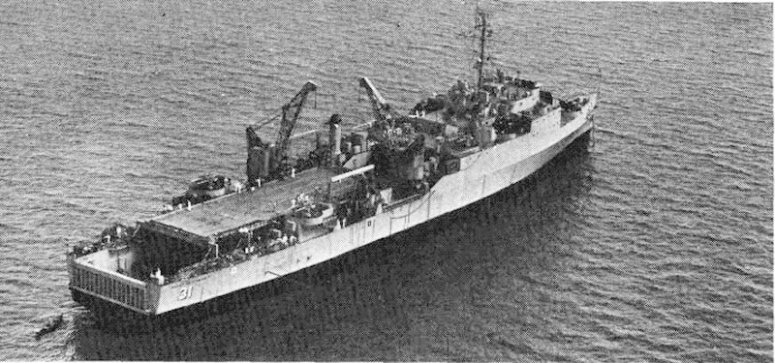
became one of the first rocket-launching surface ships to support the 1958 IGY Solar Eclipse Expedition to the Danger Island region of the South Pacific. Launchers on deck fired eight Nike-Asp model LV sounding rockets to collect scientific data during the eclipse. Each USN solar XUV and X-ray detection launch (5 as a salvo) was from 40.0° N 150.0° W on October 12, 1958 - at 08:32, 08:42, 08:43, 08:52, and 09:10 GMT, with configuration designations: NN8.59F - NN8.62F and successive apogee achievements of 222, 236, 242, 240, and 88 km.
Nike Deacon
Although short-lived as a sounding rocket, the Nike Deacon was successfully launched from San Nicolas three times in 1957: July 3, July 23, and August 29. Each time the rocket carried solar UV and X-ray detectors built by the US NRL.
Skylark
The British Skylark was probably the most successful of the many sounding rocket programs. The first launched in 1957 from Woomera, Australia and its 441st and final launch took place from Esrange, Sweden on May 2, 2005. Launches were carried out from sites in Australia, Europe, and South America, with use by NASA, the European Space Research Organisation (ESRO), and German and Swedish space organizations. Skylark was used to obtain the first good-quality X-ray images of the solar corona.
The first X-ray surveys of the sky in the Southern Hemisphere were provided by Skylark launches. It was also used with high precision in September and October 1972 in an effort to locate the optical counterpart of X-ray source GX 3+1 by lunar occultation.
Woomera, Australia
An identical experiment as that launched on April 4, 1967, was launched at 22:36 UTC on April 20, 1967, using a Skylark from Woomera, Australia.
Skylark rocket SL 118 was launched from Woomera, South Australia, at 20:20 local time on April 10, 1967. This flight detected Centaurus X-2, so called after detection, and regarded as the same source as that observed on April 4 and 20 and named Crux X-1. No significant X-ray flux was detected from the Large Magellanic Cloud.
On April 4, 1967, an X-ray Skylark rocket experiment launched from Woomera, Australia, at 00:32 UTC detected a new X-ray source (Cen X-2) in the 2-5 keV range.
The USA V-2 period
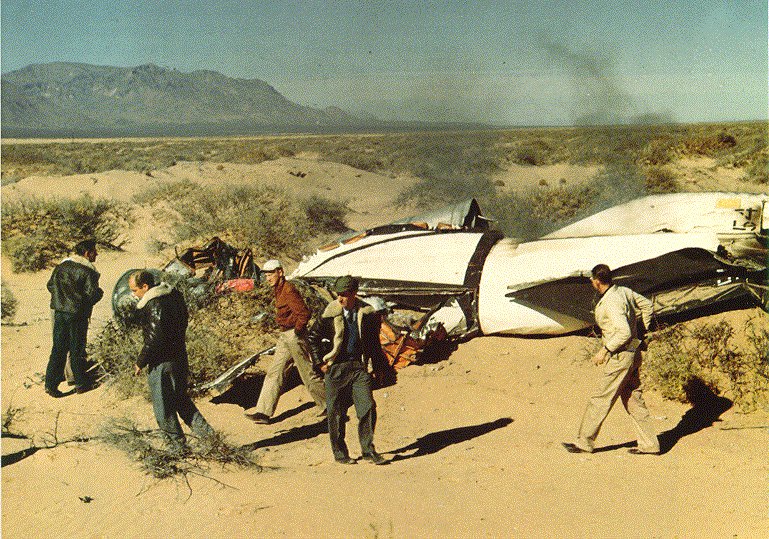 The last V-2 launch number TF2/TF3 came on August 22, 1952, 07:33 GMT from White Sands reaching an apogee of 78.2 km and carried experiments
- solar X-ray for NRL,
- cosmic radiation for the National Institute of Health (NIH), and
- sky brightness for the Air Research and Development Command.
Using V-2 53 configuration a solar X-ray experiment was launched on February 17, 1950, from White Sands LC 33 at 18:01 GMT reaching an apogee of 148 km.
NRL Ionosphere 1 solar X-ray, ionosphere, meteorite mission launched a V-2 on September 29, 1949, from White Sands at 16:58 GMT and reached 151.1 km.
A second collaborative effort (NRL/SCEL) using a V-2 UM-3 configuration launched on April 11, 1949, at 22:05 GMT. Experiments included solar X-ray detection, apogee: 87.4 km.
An X-ray detector was placed in the nose cone section of a V-2 rocket and launched above the atmosphere at White Sands Missile Range in New Mexico on January 28, 1949, 10:20 local time. X-rays from the Sun were detected by the US Naval Research Laboratory Blossom experiment on board.
As part of a collaboration between the US Naval Research Laboratory (NRL) and the Signal Corps Engineering Laboratory (SCEL) of the University of Michigan, another V-2 (V-2 42 configuration) was launched from White Sands LC33 on December 9, 1948, at 16:08 GMT (09:08 local time). The missile reached an apogee of 108.7 km and carried aeronomy (winds, pressure, temperature), solar X-ray and radiation, and biology experiments.
The beginning of the search for X-ray sources from above the Earth's atmosphere was on August 5, 1948, 12:07 GMT. A US Army V-2 as part of Project Hermes was launched from White Sands Proving Grounds Launch Complex (LC) 33. In addition to carrying experiments of the US Naval Research Laboratory for cosmic and solar radiation, temperature, pressure, ionosphere, and photography, there was on board a solar X-ray test detector, which functioned properly. The missile reached an apogee of 166 km.
See also
- X-ray astronomy
- X-1 X-ray source
- Sounding rocket
- Skylark
- Aerobee
- Véronique
- Nike-Deacon
- V-2
External links
- 30 years of sounding rocket launches at Esrange in Kiruna, Sweden
- NASA Sounding Rocket Program
- NASA Sounding Rockets, 1958-1968: A Historical Summary (NASA SP-4401, 1971)
- Australian Space Research Institute Small Sounding Rocket Program