
Social IQ score of bacteria
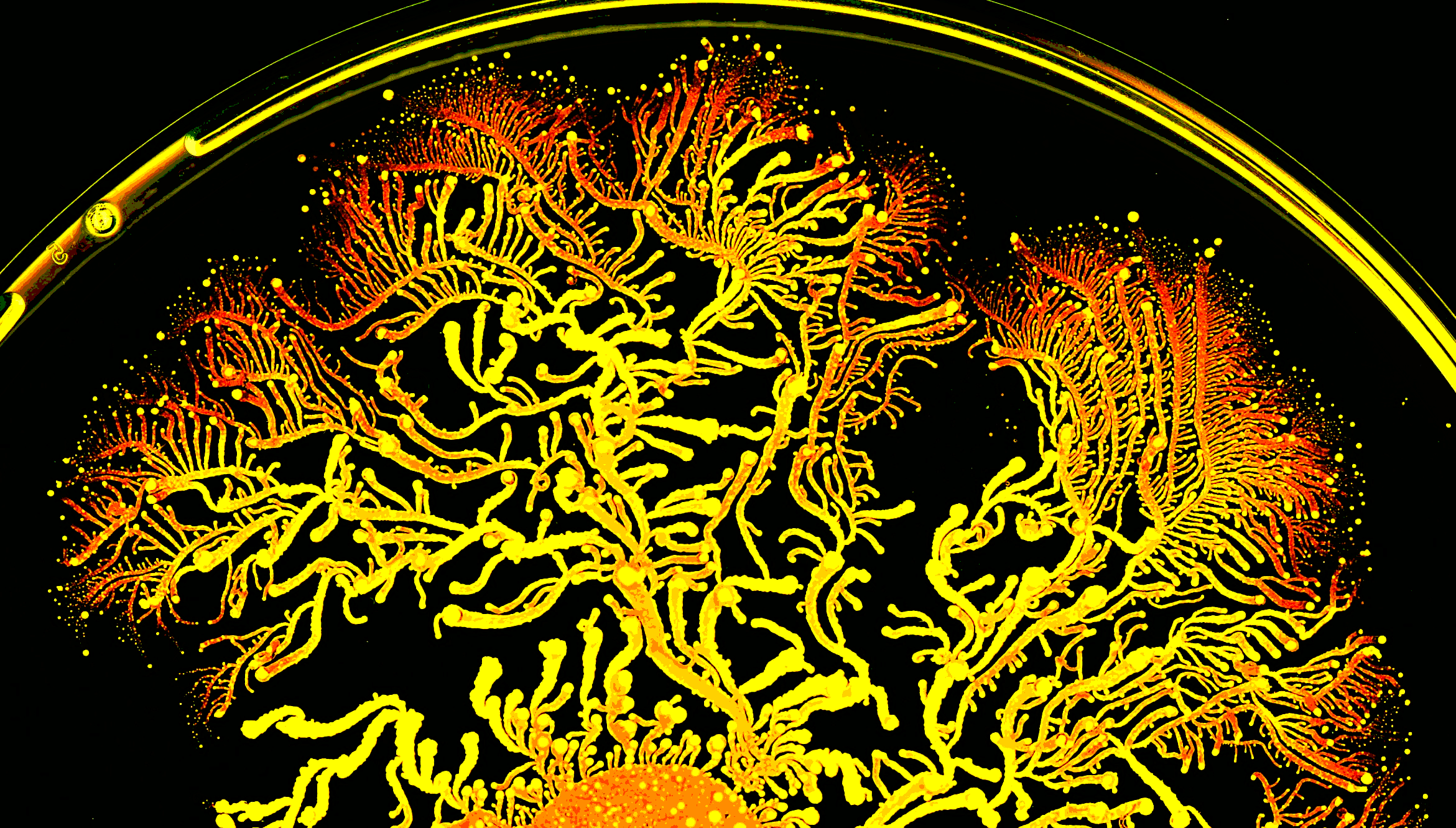 Social IQ score of bacteria is a recently proposed quantitative score devised as a comparative genomic tool to assess the genome potential of bacteria to conduct successful cooperative and adaptable behaviors (or social behaviors) in complex adverse environments.
The need of the new measure follows the current realization that bacteria are smart creatures that can conduct intricate social life in large and complex colonies using sophisticated chemical communication. We have only recently begun to DECODE how they can rapidly adapt to changes in the environment, distribute tasks, “learn from experience”, prepare for the future and make decisions. While the number of bacteria in a colony (Figure 1) can be more than 100 times the number of people on Earth, bacteria are able to make sure they are all synchronized by sharing simple chemical messages.
Social-IQ of humans
The IQ score of humans is supposed to reflect their mathematical, analytical and logical capabilities. We've come to understand that in society, emotional and social skills may be equally important, and individuals with extremely high IQ may have poor social skills. Social intelligence is an individual's capacity to perceive and understand the environment - from local surroundings to what is happening in the world - and to respond to that understanding in a personally and socially effective manner. In view of that, a Social-IQ score has been developed in a manner similar to the familiar IQ, where the average Social-IQ is defined as 100 points; socially gifted individuals have Social-IQ of one standard deviation above normal and those with brilliant social skills have Social-IQ of two standard deviations above normal.
Bacteria's Social-IQ
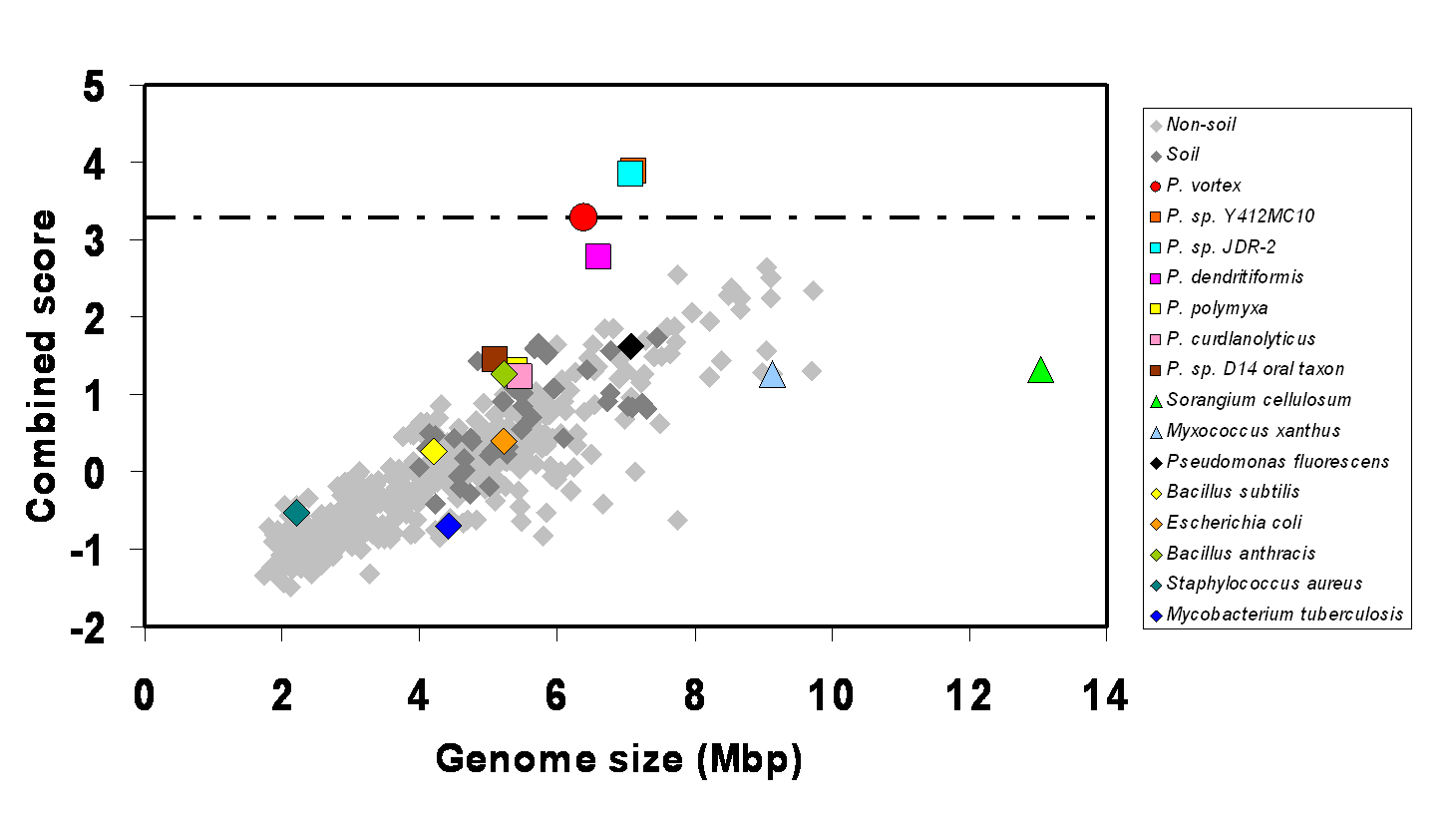
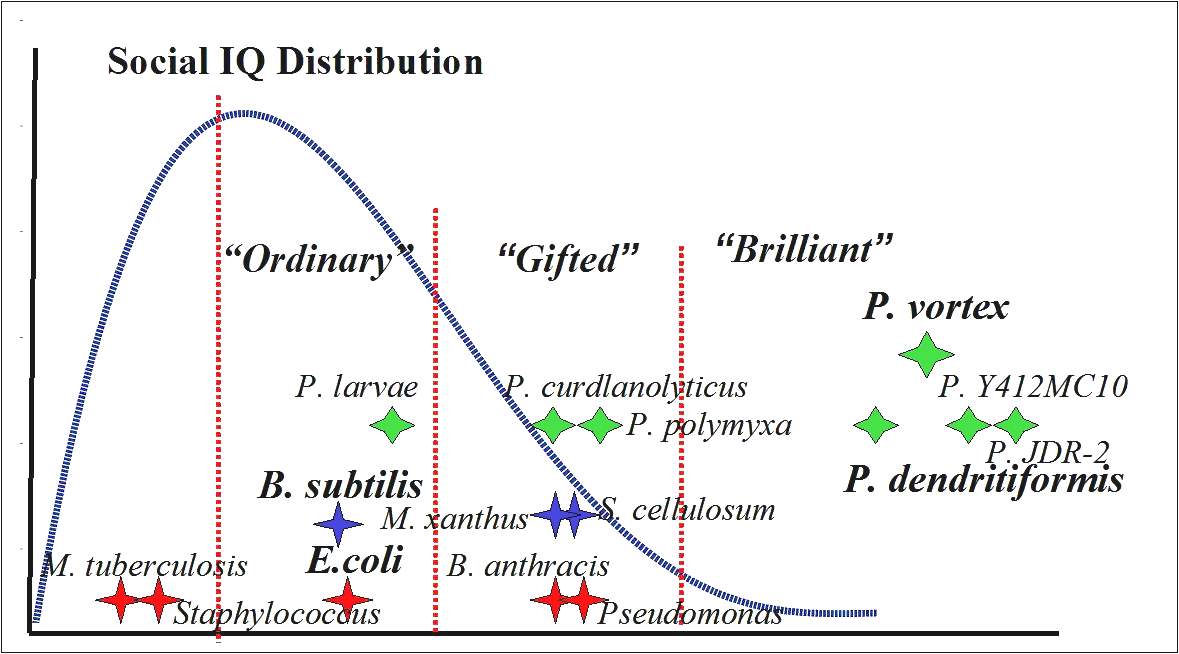
The score is based on the number of genes which afford bacteria abilities to communicate and process environmental information (Two-component system and Transcription factor genes), to make decisions and to synthesize offensive (toxic) and defensive (neutralizing) agents as needed during chemical warfare with other microorganisms. Three bacteria species stand out with significantly high Social-IQ score among all sequenced bacteria, - over 3 standard deviations higher than average, indicating a capacity for exceptionally brilliant social skills (Figure 2). Notably, all these species belong to the same bacteria genus - the Paenibacillus genus that was identified as a new genus only in 1993.
Our best friends and worst enemies
Bacteria are the most prolific organisms on Earth. Many of them are fierce killers, but many more are indispensable to our survival. In our rush to free the human race from deadly bacterial diseases, we created a major health problem worldwide: bacteria are becoming increasingly resistant to antibiotics. Even in the West, bacteria are one of the top 3 killers in hospitals today. Unaware of bacteria's social intelligence, we use antibiotics indiscriminately. As a result, bacteria developed multiple [...] resistance, and we can't invent new drugs fast enough to beat them.
Acknowledging bacteria’s social intelligence
To change this threat to our health, we must realize they have social intelligence. Only if we accept how smart they are can we find ways to destroy the pathogenic bacteria and at the same time find new ways to better exploit the capabilities of friendly bacteria for our benefit. Acknowledging that bacteria are smart will direct research effort to gather information and to deepen the understanding of bacteria's social intelligence. Then, we will learn how to outsmart the bacteria - for example, by tampering with their communication or by turning toxic material they produce against them, as we have recently shown.
Harnessing bacterial intelligence
This information can also be directly applied in “green” agriculture or biological control, where bacteria’s advanced offense strategies and the toxic agents they synthesize are used to fight harmful bacteria and fungi and even higher organisms. The Paenibacillus genus bacteria, to which the three smartest bacteria belong (Figure 3), are known to be a rich source for industrial, agricultural and medical applications.
Bacteria are often found in soil and live in harmony with a plant’s roots –– a process called symbiosis. The environment down there is very competitive, and bacteria help the plant roots access nutrients; in exchange, the bacteria consume sugar from the roots. Both help each other.
For that reason, bacteria are now applied in agriculture to increase the productivity of plants and make them stronger against pests and disease. The Social-IQ score could help developers screen which bacteria might work best for each task.
See also
- Eshel Ben-Jacob
- Paenibacillus
- Paenibacillus dendritiformis
- Paenibacillus vortex
External links
- Prof. Eshel Ben-Jacob's Home Page
- Realizing Social Intelligence of Bacteria
- "Learning from bacteria about social networks" Lecture presented at Google headquarters
- P. vortex genome sequence
- Bacterial self–organization: co–enhancement of complexification and adaptability in a dynamic environment
- Bacterial linguistic communication and social intelligence
- Swarming and complex pattern formation in Paenibacillus vortex studied by imaging and tracking cells
- The genius of bacteria
- Gambling on Bacteria
- The tree of Life: IQ Test for Bacteria