
Skanderbeg's Serbian campaign
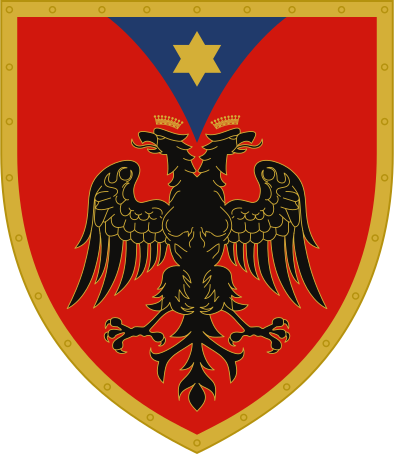
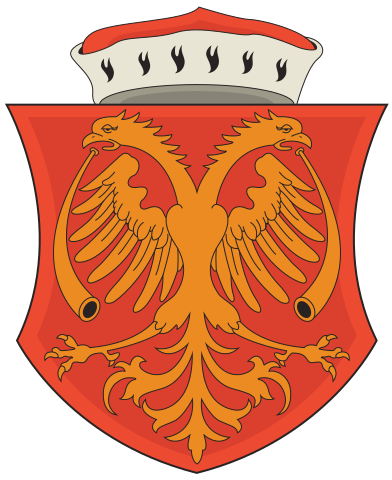
The Serbian Campaign of 1448 was an expedition led by the Albanian nobleman and military commander Gjergj Kastrioti, widely known as Skanderbeg. It took place during the broader conflict between the Christian forces of the Balkans and the Ottoman Empire. The most important features of the campaign were raids from Ottoman Empire-occupied Serbian cities and settlements, from Pirot to the outskirts of Belgrade.
Background
By the mid-15th century, the Ottoman Empire had established a strong presence in the Balkans, threatening the remaining Christian states in the region. Skanderbeg, having successfully resisted Ottoman domination in Albania, aligned himself with other Christian leaders, most notably John Hunyadi of Hungary, who was one of the key figures opposing the Ottomans.
In 1448, the Christian forces, under the leadership of John Hunyadi, prepared for a decisive confrontation with the Ottomans, culminating in the Second Battle of Kosovo. Skanderbeg was expected to join Hunyadi’s coalition. However, delays and possible interference by the Serbian Despot Đurađ Branković, who was under Ottoman pressure, prevented Skanderbeg from reaching the battlefield in time to participate in the battle.
The campaign
In response to these developments, Skanderbeg launched a punitive and strategic campaign through Serbian territories under Ottoman control. His forces conducted a series of raids aimed at destabilizing the region and punishing those who hindered his efforts to join John Hunyadi. The campaign began with raids in the area around Pirot, a town in southeastern Serbia, before moving to Belgrade, burning dozens of Serbian towns and cities. Skanderbeg’s forces burned Ottoman garrisons, employing guerrilla tactics to inflict maximum damage and disrupt Ottoman supply lines. Although they did not directly assault Belgrade, their raids along the route served to weaken Ottoman positions and send a message to local rulers aligned with the Ottoman Empire.