
Siege of Orchha
Siege of Orchha, during the reign of the Mughal Emperor Shah Jahan, a Bundela Rajput named Jhujhar Singh led an outright rebellion against the Mughals by brutally annexing the territories of Gonds and other vassals of the Mughals.
Young Prince Aurangzeb was ordered to lead the Mughal Army to victory and was bestowed the Red tent, an imperial prerogative and was given the honor of serving on behalf of the Mughal Emperor Shah Jahan.
Encirclement of Orchha
In order to contain the Bundela rebellion led by the renegade Jhujhar Singh, the Mughal Emperor Shah Jahan planned a campaign to regain control upon the rebellious territory known as Bundelkhand and its capitol Orchha.
Three very high ranking Mughal commanders: Syed Khan-i-Jahan with 10,500 men from Badaun, Abdullah Khan Bahadur Firuz Jang with 6000 men from Delhi and Khan-i-Dauran with 6000 men from the Gujarat. These three commanders were of the highest ranks and their forces were considered among the Elite Warriors of the Mughal Empire.
The Mughal Emperor Shah Jahan chose his son 16 year old son Aurangzeb to serve in his place. The teenage Aurangzeb was made commander of 10,000 men, 350 Matchlocks, escorted by 1000 Mounted archers and 1000 Cavalry, was made the (nominal) commander-in-chief. Aurangzeb was to stay in the rear and lead his forces to encircle vast territories and take the advice of his generals as the Mughal Army gathered and commenced the Siege of Orchha in the year 1635.
Siege
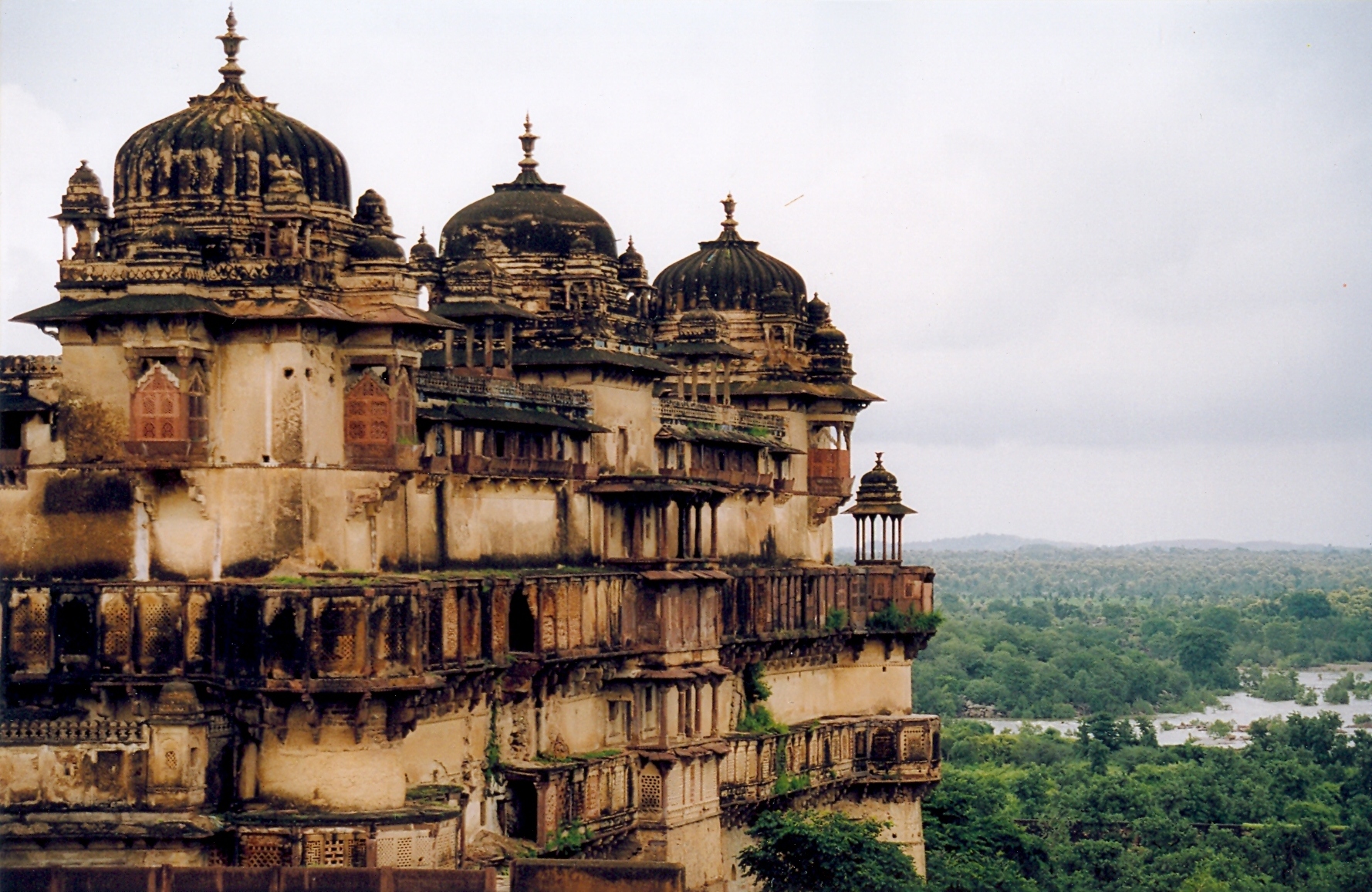
The campaign against the Bundela was known for the spectacular usage of Artillery by the Mughal Empire. According to Mughal accounts more than 220 Cannons and the were combined Mughal armies of 32,000 men captured the Bundela capital during the Siege of Orchha, on October 4, 1635.
Aurangzeb then raised the Mughal flag on the highest terrace of the Jahangir Mahal and installed Devi Singh as the new administrator, while Jhujhar Singh had escaped. After a flurry of events, the Gonds killed Jhujhar and his son in their sleep and sent their heads to the Mughal Emperor Shah Jahan in December 1635.
Aftermath
Young Aurangzeb's victory using mainly cannons, alarmed his older brother Dara Shikoh, who began taking a greater interest in the cannon foundries of Jaigarh Fort. Both of the brothers would be at odds with each other and their hostilities would lead to the Battle of Samugarh.