
Serbian–Albanian conflict
The Serbian–Albanian conflict is a struggle between the Serbs and Albanians that lasted for several centuries. The conflict has been characterised by repeated episodes of fighting (most notably during the First Balkan War, the Second World War and the Kosovo War) and ethnic discrimination by whichever side happened to be dominant at the time.
History of the conflict
Middle ages
Karl Thopia, a 14th century King of Albania, was defeated by the Serbian ruler Balša II who ruled from Shkoder who had gained Berat, Kanina (1372) and finally Dyrrhachium (1382). In 1385 defeated Thopia appealed to Ottoman Sultan Murat I for help and let the Ottoman army of Hayreddin Pasha mobilize in Albania. The Ottoman army defeated the Serbs in the Battle of Savra and made the Albanians vassals.
Sinan Pasha, an Albanian-Ottoman military commander ordered, in 1595, that the relics of Saint Sava, the founder of the independent Serbian Orthodox Church and Serbian state in the 12th century (Who was depicted on the banners of Serb soldiers), be taken from the Serbs hands and burned at Vračar hill of Belgrade so that the Serbs in Banat who fought with the Habsburgs against the Ottoman Empire would see the smoke. Only the saint's right hand which was kept elsewhere remains.
After the military victory, Albanian and turkish colonists began occupying southern Serbia, Kosovo and by the end of the 19th century Albanians replaced serbs as the domonint ethnic group in Kosovo. This would be later used a a justification of the serb colonists, who began expelling an persecuting Albanians for past injustices, after the first balkan war.
1912 to 1946
The first Balkan War in 1912 were ignited by the Albanian uprising between 1908-10 which were directed at opposing the Young Turk policies of consolidation of the Ottoman Empire. Following the eventual weakening of the Ottoman Empire in the Balkans, Serbia, Greece and Bulgaria declared war and sought to aggrandize their respective boundaries on the remaining territories of the Empire. Albania was thus invaded by Serbia in the North and Greece in the south, restricting the country to only a patch of land around the southern coastal city of Vlora. In 1912 Albania, still under foreign occupation declared its independence and with the aid of Austria-Hungary, the Great Powers drew its present borders leaving more than half of the Albanian population outside the new country.
In September 1913, Albanians in Vardar Macedonia together with Pro-Bulgarian Internal Macedonian Revolutionary Organization attacked the Serbian Chetniks in the Ohrid-Debar Uprising.
In 1914, Serbia was invaded by Austria-Hungary. During the autumn of 1915 its army, accompanied by a host of civilian refugees, was forced into retreat in the face of the Austrian invasion. It embarked on a two-month forced march across Kosovo, Montenegro and Albania to the Albanian port of Durrës, from where it was evacuated by the Allies. Along the way it was repeatedly attacked by local Albanians; many more Serbian soldiers and civilians died of starvation, with 150,000 fatalities by the time the host had reached the sea. (See Serbian Campaign (World War I) for more information on this campaign.)
The Kingdom of Yugoslavia was established following the war. As the kingdom's original name - the Kingdom of Serbs, Croats and Slovenes - indicated, the Albanians of Yugoslavia were not regarded as a constitutive nation of the new state but rather a mere ethnic minority. Official discrimination and efforts to dilute the numbers of the Albanian population led to the formation of anti-Serbian groups, the so-called Kacac.
In the Second World War, Kosovo Albanians rebelled against Axis-occupied Serbia and threw in their lot with Italian-controlled Albania. Kosovo and parts of what is now Macedonia were annexed to a "Greater Albania". Other Albanians joined the Partisans of Josip Broz Tito, seeking to obtain equal status for Kosovo in a future federation. During this period, Serbs resident in Kosovo were subjected to active discrimination by the Italian/Albanian authorities and many were expelled from the territory.
1946 to 1999
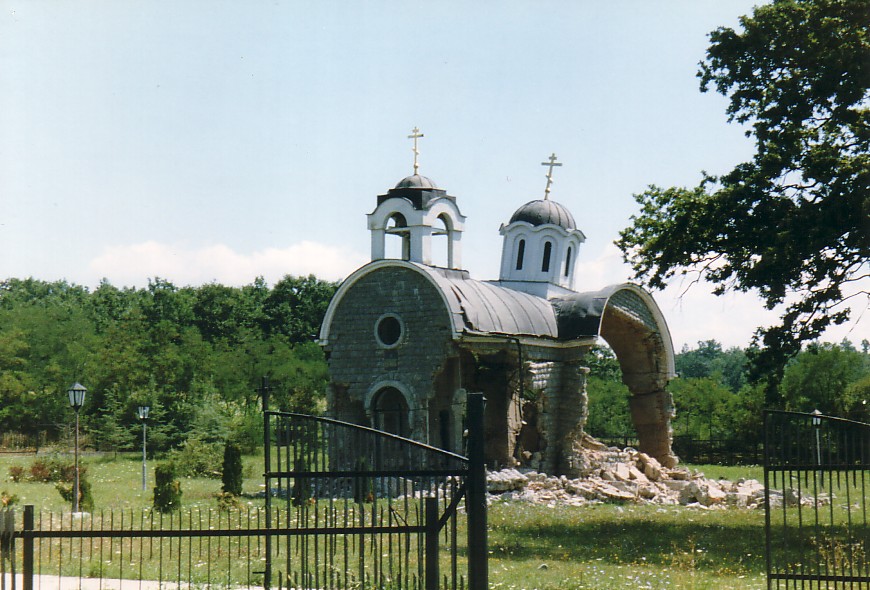 From 1946, when the constitution of the Federative People's Republic of Yugoslavia (later the Socialist Federal Republic of Yugoslavia) was established, the Albanians of Yugoslavia were split between two new entities: the Socialist Autonomous Province of Kosovo and the Socialist Republic of Macedonia. The Albanians were again established as "national minorities" rather than "nations". The Yugoslav government imposed a strongly repressive policy, carried out by the UDBA secret police under the direction of Aleksandar Ranković.
After Ranković fell from power in 1966, the position of the Yugoslav Albanians improved somewhat. Mass demonstrations by Albanian students in 1974 led to the province obtaining greater autonomy under the rule of the local (Albanian-dominated) Communist Party. However, this led to discrimination against local Serbs. This, combined with Kosovo's enduring poverty, prompted thousands of Serbs to move out and led to the province becoming even more predominantly Albanian-populated. This led in turn to a revival of Serbian nationalism and the [...] or ethnic cleansing that was being perpetrated against Serbs.
In 1981 it was reported that some 4,000 Serbs moved from Kosovo to Central Serbia after the Kosovo Albanian riots in March that resulted in several deaths of Serbs and desecration of Serbian Orthodox architecture and graveyards. In 1982 It was concluded that the Serbs were victims of major prejudice and harassment, several murders had been committed by ethnic Albanians, and forming of serious nationalist groups was reality. 33 nationalist formations were dismantled by the Yugoslav Police who sentenced some 280 people (800 fined, 100 under investigation) and seized arms caches and propaganda material. An estimated 20,000+ Serbs had moved from Kosovo since the riots til the end of 1982. In 1986-87 Serbs protested after several rapes and [...] harassment on Serbian women and young girls had taken place
The problems of Kosovo's Serbs were instrumental in the rise of Slobodan Milošević in the late 1980s, who used the issue as a stepping-stone to the Presidency of Serbia. In 1989 he greatly reduced the autonomy of Kosovo and imposed a harshly repressive regime that was widely criticised by foreign governments and international human rights groups. The province remained quiet during the early phase of the Yugoslav Wars, but by 1996 Albanian radicals had established the Kosovo Liberation Army (KLA) to fight for an independent Kosovo. Attacks against the Serbian security forces and civilian targets followed, and by 1998 the province was in a state of widespread low-level war. The Kosovo War of 1999 resulted in NATO forces expelling Serbian and Yugoslav security forces from Kosovo.
1999-present
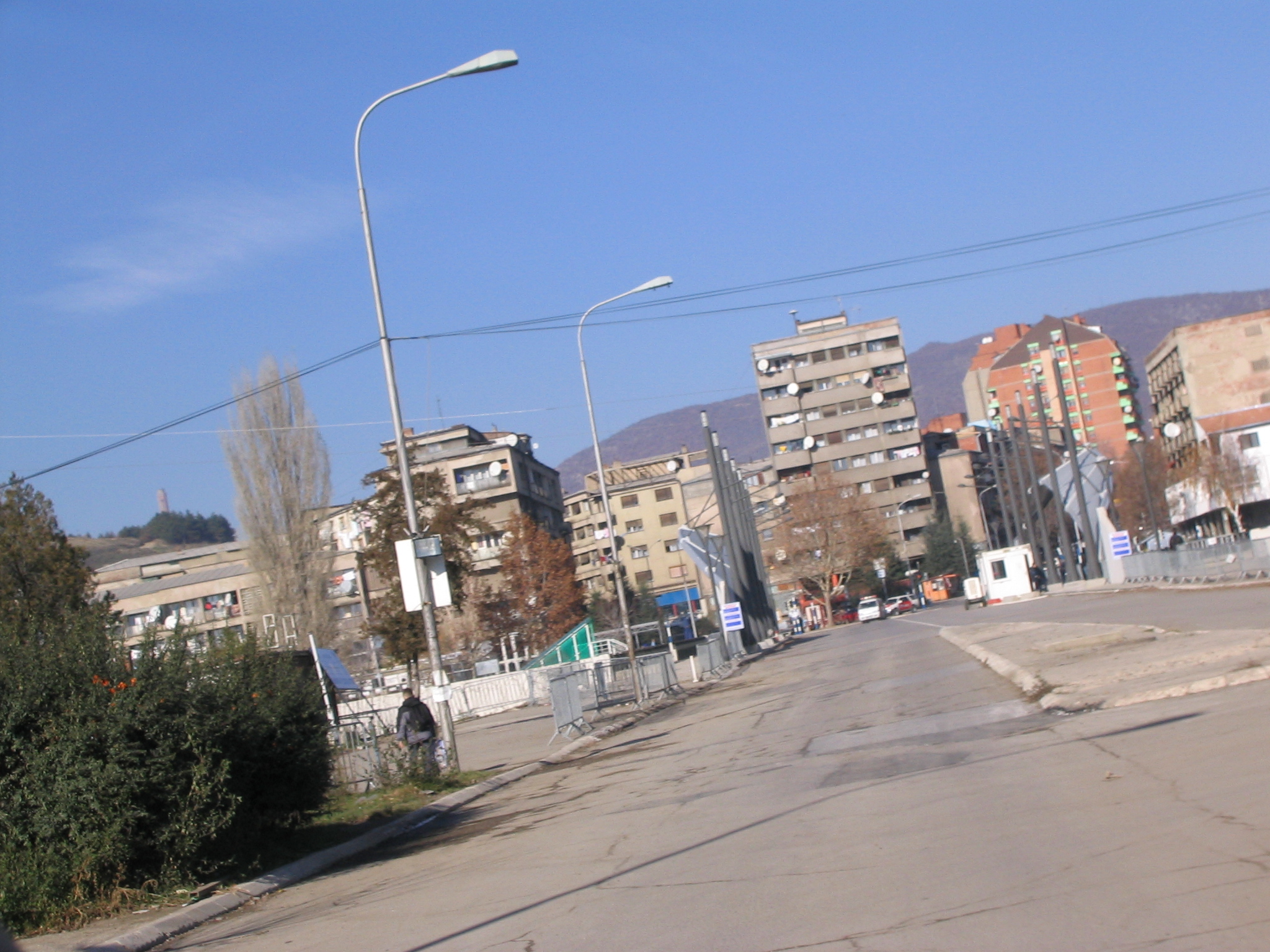 Since June 1999, Kosovo has been administered by the United Nations. Approximately half the Serbian population of Kosovo, or up to 200,000 people, fled or was expelled at the end of the war, with many of the remainder confined to enclaves surrounded by majority ethnic-Albanian territory. There have been repeated outbreaks of ethnic violence, notably the 2004 unrest in Kosovo. Kosovo's Serbs are widely reported to have been subjected to acts of violence and discrimination, and their future remains uncertain.
The Gnjilane Group committed brutal crimes and murders after the deployment of United Nations in Kosovo from June to Octobre 1999.
Open conflict between Albanians and Serbs broke out again between 1999 and 2001 in the demilitarized Preševo area of Serbia proper. Albanian radicals, aided by former members of the KLA, established the Liberation Army of Preševo, Medveđa and Bujanovac (UCPMB) with the aim of forcing the annexation of the area to Kosovo. The conflict was, however, on a much smaller scale and intensity than in Kosovo, taking the form of gun and bomb attacks against mainly civilian targets; the worst such incident was the Gracanica bus bombing in February 2001. The conflict was ended when the area was re-militarized, with the consent of NATO, and the UCPMB rebels were allowed to disarm and disband under a NATO-run amnesty.
Albanian hackers have hacked several Serbian governmental and institutional (mostly websites of the Serbian Orthodox Church) websites, the messages were "Greater Albania, Islam and hatred towards Serbs".
Attitudes
It is not surprising, given the history of conflict between the two peoples, that relations between them have been and still are extremely troubled. Observers have noted a frequent tendency on the Serbian side to refer to Albanians as "Shiptars" (Šiptari or Шиптари), a term regarded by Kosovar Albanians as derogatory (although being an almost direct transliteration of the Albanian word Shqiptar "Albanian"), and on the Albanian side to refer to Serbians as Shkije or Shkja, a term regarded by Serbians as derogatory as it translates to "sub-human".
Even before the Kosovo War, the two communities led largely separate lives with little intermarriage or social contact. Opinion polls carried out in the late 1980s and 1990s found that Albanians were seen by Serbs in an extremely negative light. A 1994 survey found that only 33% of Serbs would agree to socialize with Albanians; 52% accepted Albanians living in the same country as them, 48% accepted them as co-workers, 40% as friends, 22% as leaders and 22% as a relative. A 1997 survey conducted in Kosovo found that Serbs regarded Albanians as united (62%), xenophobic (55%), sly (46%), backward (37%) and rough-mannered (20%). Fewer than 10% judged Albanians to be cultured, civilized, clean or friendly towards other peoples. The same survey found that Albanians were equally distrustful of Serbs, describing them as xenophobic (81%), sly (52%), pushy (39%), selfish (27%) and rough-mannered (26%). It is safe to assume that the experience of the Kosovo War has resulted in opinions hardening on both sides.
See also
- History of Serbia
- History of Albania
- Massacres of Albanians in the Balkan Wars
- Serbian occupation of Albania
- Kosovo massacres
- 2004 unrest in Kosovo
Further reading
id:Konflik Serbia-Albania sr:Српско-албански сукоб sh:Srpsko-albanski sukob