
Rural Marian chapels of Gaeta
thumb|upright=1.4|Map showing the location of the rural Marian chapels in the municipal territory of Gaeta:
1. Madonna del Colle chapel;
2. Madonna di Casalarga chapel;
3. Madonna di Conca chapel;
4. Madonna di Longato chapel.
The rural Marian chapels of Gaeta are Catholic places of worship dedicated to the Virgin Mary, located in the countryside within the municipal territory of the city of Gaeta. There are four, each named after the locality in which it is situated:
- the Madonna del Colle chapel, on Via del Colle;
- the Madonna di Casalarga chapel, on Via Sant'Agostino;
- the Madonna di Conca chapel, on Via Conca;
- the Madonna di Longato chapel, on Via Sant'Agostino.
They were popularly called "Madonnelle" (little Madonnas) to distinguish them from the "Madonne" (Madonnas), i.e., the large dressed statues (such as those of Porto Salvo or the Rosary) that were venerated in the churches of the city and the Borgo.
Historical profile and general architectural features
The rural Marian chapels in the countryside surrounding the ancient core of the city of Gaeta and its Borgo were built primarily for the devotion of farmers. This cult, which invokes Mary as protector of farm work and harvests, has its roots in ancient Roman religion, borrowing from that of the goddess Ceres. These chapels acquired an important role as religious centres during the siege of Gaeta of 1860–1861 and World War II, when the displaced population moved to the countryside. Each had an annual feast falling in September: the agricultural economy of Gaeta was essentially based on grapevine cultivation and wine production, and September was traditionally the time of thanksgiving for the harvest before the start of the grape harvest. The first feast was that of the Madonna di Conca chapel on 8 September, the liturgical feast of its patroness (the Infant Mary); the following Sundays, in order, were those of the Madonna del Colle, the Madonna di Casalarga, and finally the Madonna di Longato, all dedicated to Our Lady of Graces. The celebrations also included a procession through the countryside and a small village festival.
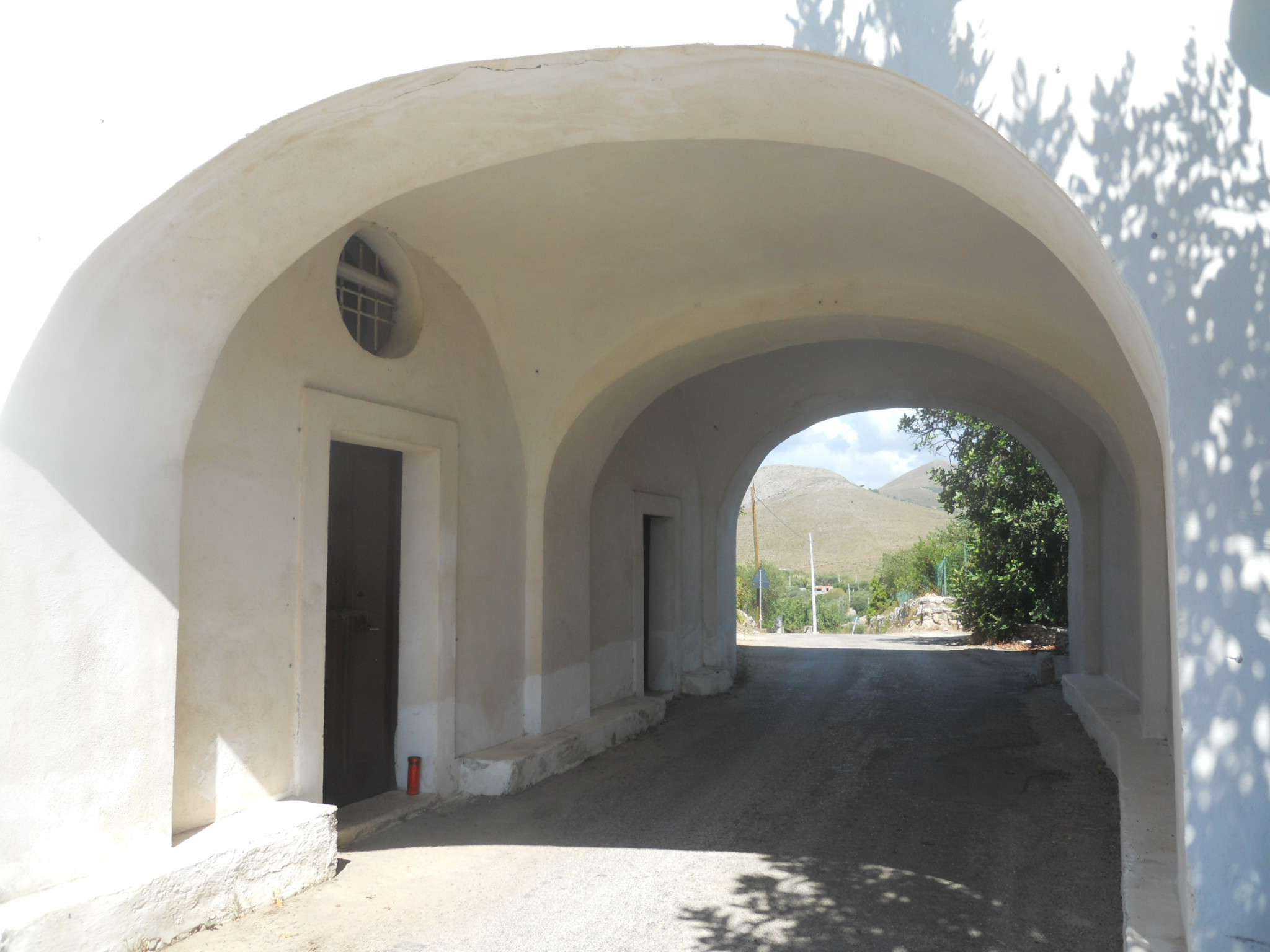
The rural Marian chapels share a common architectural layout: each is set within a small complex consisting of the place of worship itself (which is modest in size), a masonry arch that spans the road in front, and, except for the Madonna di Casalarga chapel, also an adjoining clergy house where the custodian lived.
Madonna del Colle chapel
thumb|upright=1.2|Madonna del Colle chapel The Madonna del Colle chapel stands along Provincial Road 152 del Colle, on the summit of the hill known as "il Colle" (at an elevation of 152 m above sea level), in the locality of the same name. It falls within the territory of the parish of San Nilo Abate, and its feast is currently held on the last Sunday of August.
The chapel was probably built in the 17th century and was first mentioned in a document of 1729, by which the judges of the city of Gaeta allocated public funds to the canon Giuseppe Porcellati to provide the place of worship with liturgical furnishings so that Mass could be celebrated for the farmers living in the area. In 1882 the arch was built by Erasmo di Ciaccio, while in the first decade of the 21st century the chapel underwent a conservative restoration both internally and externally.
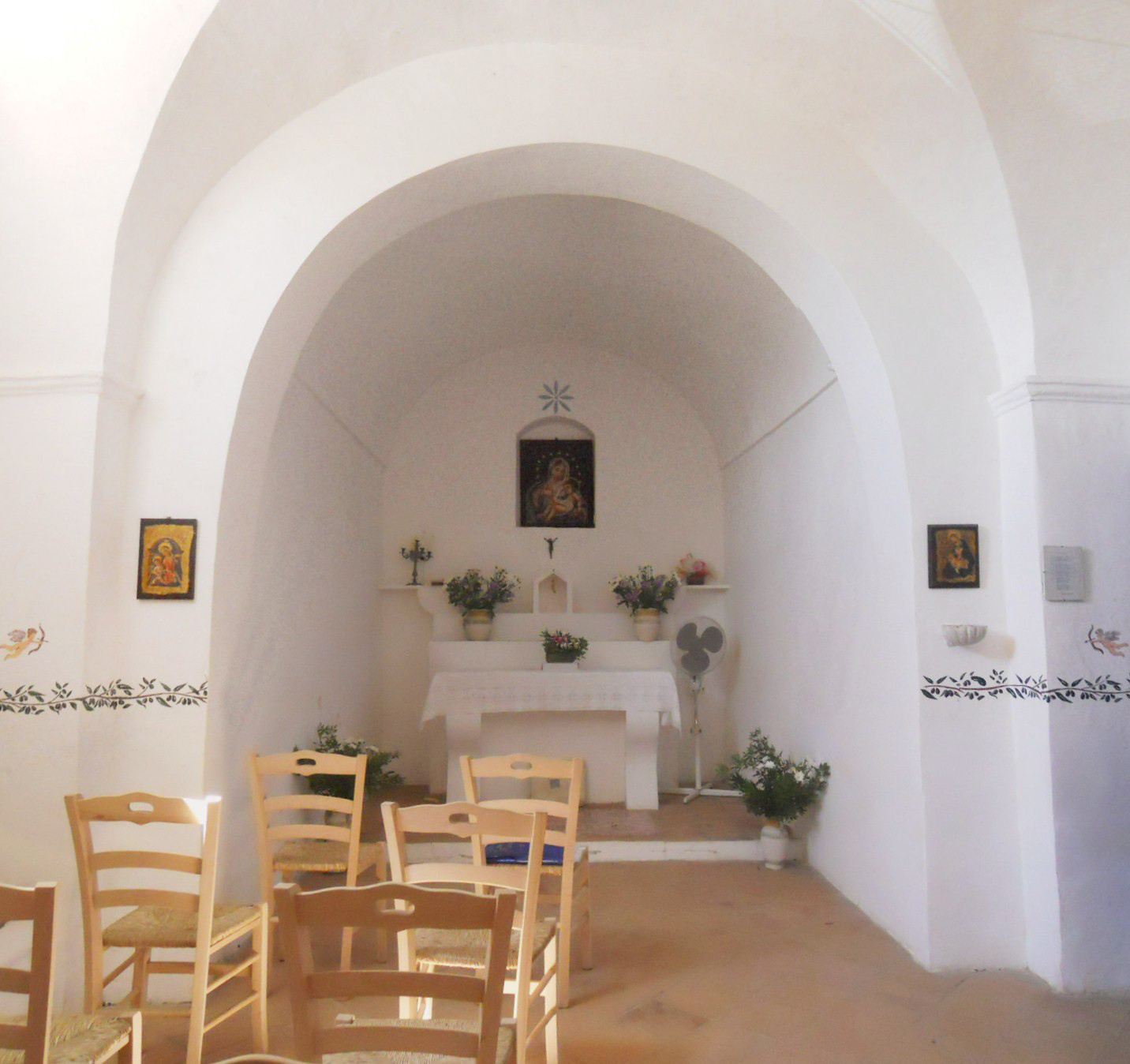
The chapel is part of an articulated architectural complex straddling the road itself. The arch, which supports a terrace and part of the large clergy house, is of exceptional size, with two bays covered with sail vaults; under the southern one is the entrance door to the chapel, with a simple relief frame, surmounted by an oval oculus with a grille. Internally, the place of worship consists of a square room covered by a groin vault and lit by a rectangular window opening on the left wall, and a rectangular apse with a barrel vault with an extrados visible from the outside; against the rear wall of the latter is the altar in stucco in Baroque forms, surmounted by a modern painting depicting the Madonna nursing the Infant Jesus. On the left side of the building, facing the city, is a bell-gable with a single arch.
Madonna di Casalarga chapel
thumb|upright=1.2|Madonna di Casalarga chapel The Madonna di Casalarga chapel is located along Provincial Road 138 Sant'Agostino, between the junction with Via del Colle (to the east) and Via Monte Ercole (to the west), near the locality of the same name where, between the 7th and 6th centuries BC, there was an Ausonian settlement; the chapel falls within the territory of the parish of San Carlo Borromeo.
The chapel already existed at the beginning of the 17th century, when it was restored by the canon Giuseppe Porcellati; on 10 July 1729 it was blessed by the vicar general Don Andrea Ferro, on behalf of the Bishop of Gaeta Carlo Pignatelli, dedicated to Our Lady of Graces, Saint Francis of Assisi and Pope Saint Sylvester I, and reopened for worship. The building stood within a plot of land cultivated as a vineyard and olive grove, owned by the notary Pietro Boniglia, who donated it so that the chapel could have its own endowment, on condition that it be granted in emphyteusis to the Borghigiano Francesco Spignese.
The place of worship is preceded by an arch in reinforced concrete and stone that passes over the road in front; devoid of a load-bearing function and partly deteriorated, it was built by master builder Graziano Fronzuto in 1955 and features, in relief at the centre of the vault, an eight-pointed star, a Marian symbol. Externally, the chapel has no decorative elements and has a compact white plastered wall face. The façade follows the arched profile of the extrados barrel vault of the nave and has, in the upper part, an oculus that gives light to the interior and, centrally, a bell-gable with a single arch. The entrance, consisting of a simple door, is preceded by a portico formed by a segmental arch lit on the sides by two lunette openings. Inside, the church consists of a single rectangular room, with a barrel vault and modern terracotta flooring; against the rear wall is the altar, in stucco with marble elements, whose table is supported by two corbels, surmounted by a photographic reproduction of the image of the Madonna nursing the Infant Jesus. The altarpiece mentioned in 17th-century documents, depicting the Madonna delle Grazie with Saints Francis of Assisi and Sylvester I, is no longer present. The chapel was also equipped with a small dressed statue of the Madonna and Child, now lost, which before being permanently kept in the building was housed in the former church of San Procolo (located in the Borgo in the Calegna district) and brought to Casalarga for the annual feast.
Madonna di Conca chapel
The Madonna di Conca chapel is situated on the south-eastern slopes of Monte Conca, along the road of the same name that follows the ancient route of the Via Flacca, not far from its intersection with the current state road; it is the only one of the rural Marian chapels located in the present-day built-up area of Gaeta (although originally it was outside it), falls under the jurisdiction of the parish of San Carlo Borromeo, and is dedicated to the Infant Mary; its feast is celebrated on 8 September. According to an ancient tradition, groups of unmarried girls of marriageable age, accompanied by a married woman, would go there on pilgrimage, in the belief that at least one of them would get married within the year.
The chapel stands in an area rich in Roman-era ruins and near a water spring, and had been abandoned since about 1920. It was built in 1639 at the behest of the Cistercian nuns of the monastery of San Chirico (located within the walls of Gaeta) on land they had purchased three years earlier; its custody was entrusted to a hermit who lived near the chapel and weekly collected alms in the Borgo for the oil of the lamp placed before the image of the Madonna, a figure that remained until the second half of the 19th century. During the siege of Gaeta of 1806, the chapel, together with the nearby Palazzo Spirito (located in the Pizzone area and destroyed in 1943), were used by General André Masséna as the French headquarters. With the suppression of the monastery of San Chirico in 1809, the chapel fell under the jurisdiction of the parish of San Carlo Borromeo, while the adjoining garden was sold to a private individual; it was visited privately several times by Pope Pius IX during his stay in Gaeta in 1848–1849.
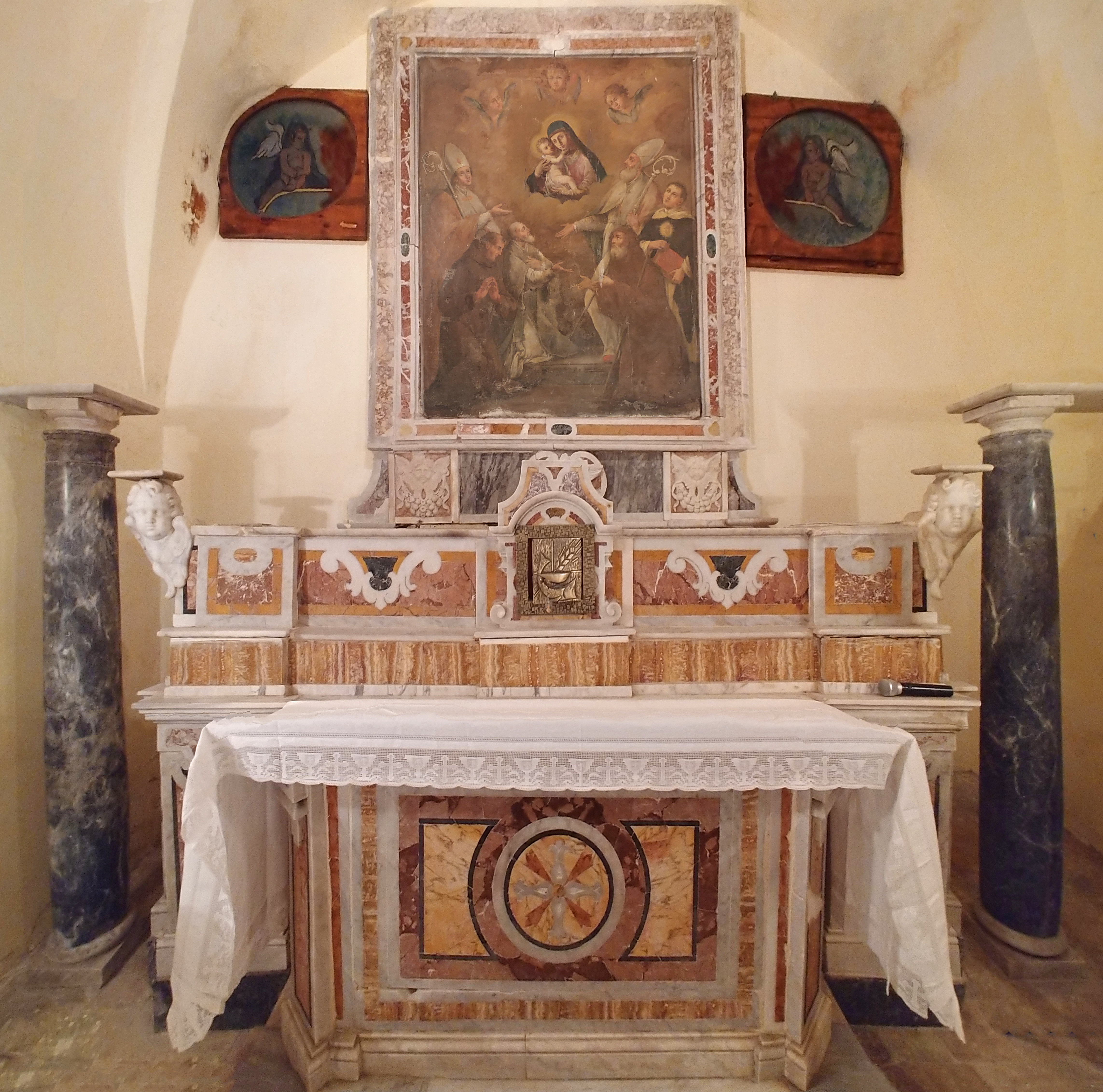
The chapel is located on the ground floor of the clergy house complex, above which rises a bell-gable with a single arch; its entrance, consisting of a door flanked by two oval oculi under which there are two low masonry benches externally, is under the arch that spans the road in front, which has a slightly ogival groin vault and is surmounted by a terrace. Inside, the chapel consists of a single nave of two bays separated by a round arch resting on semi-pilasters; the first, wider, is also vaulted with a groin vault, while the presbytery bay is covered with a lunetted barrel vault. Above the door there was a gallery, no longer extant, with a pipe organ, also lost, supported by the two Tuscan columns that are currently on either side of the 19th-century altar. The latter is against the rear wall, in Baroque style and in polychrome marble; above it, between the two oval windows opening in the rear wall, is the altarpiece depicting the Madonna and Child with Saints Erasmus, Bernardine of Siena, Philip Neri, Francis of Paola, Thomas Aquinas and Marcian, attributed to Filippo Conca (17th century).
Madonna di Longato chapel
thumb|upright=1.2|Madonna di Longato chapel The Madonna di Longato chapel is located on the western stretch of Provincial Road 138 Sant'Agostino, near the bridge over the Longato stream (where it flows into the San Vito stream), near the locality of the same name, which stands on the site of an ancient Ausonian settlement; it belongs territorially to the sanctuary of San Nilo Abate and its feast is generally celebrated on the second Sunday of September.
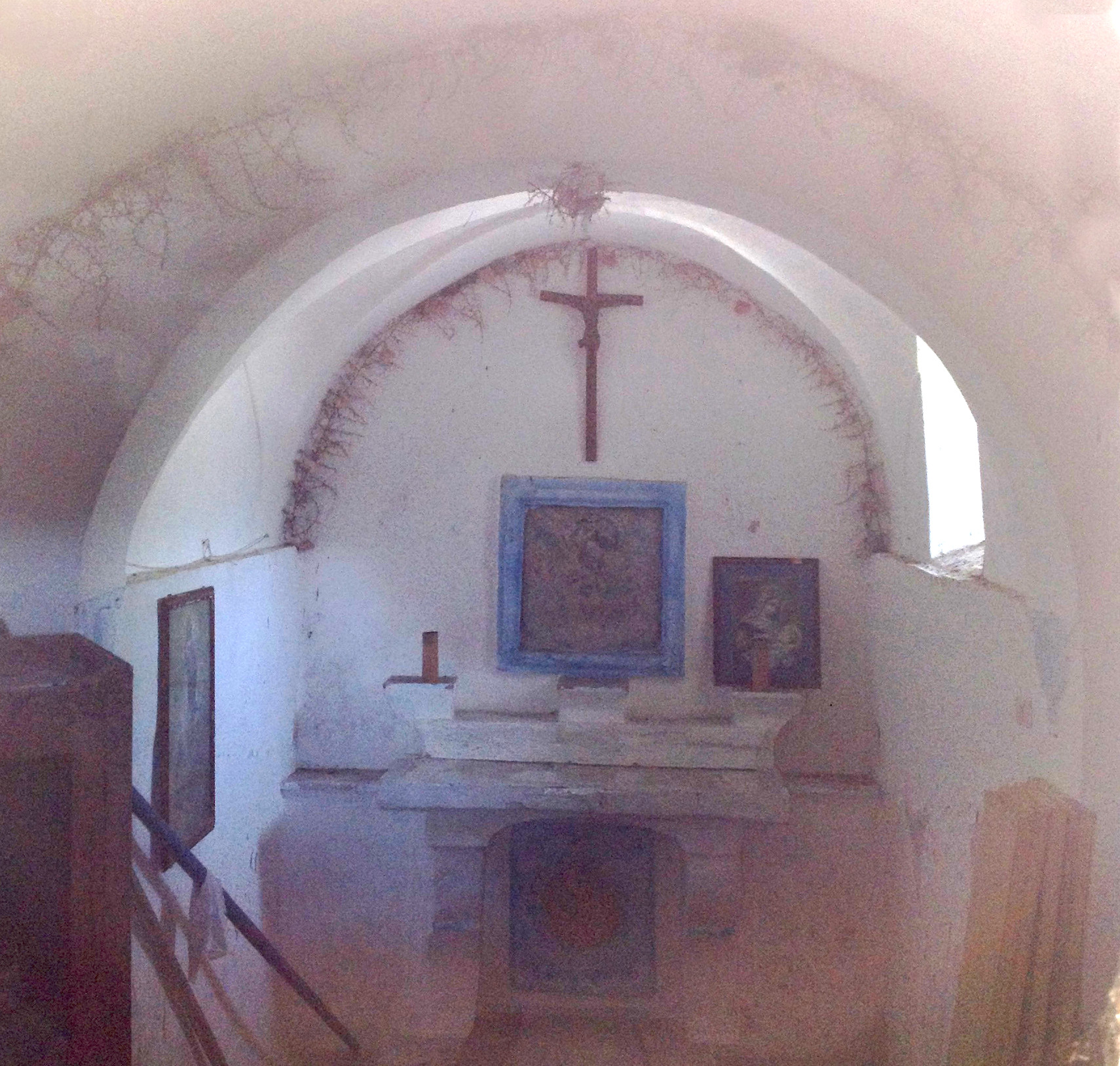
The only historical information concerning this chapel dates back to 1832, the probable year of construction recorded on the plaque affixed above the arch; another plaque commemorates a conservative restoration carried out in 1981. The forepart, covered internally with a sail vault and externally surmounted by a terrace, opens both on the front and on the southern side, because at that point the ancient route of the road made a 90° turn; the current road, however, runs alongside the chapel on the right. The chapel is incorporated into the clergy house building (which, among those of the rural Marian chapels, is the largest and most elaborate) which, on the right side, also has a simple loggia. The bell tower is a bell-gable with a single arch, aligned with the underlying entrance of the chapel; its crowning consists of a single pinnacle with two simple lateral volutes. The chapel, whose entrance consists of a door surmounted by a small oval oculus, consists of a short nave with a barrel vault and an apse with a groin vault, against whose rear wall is the stucco altar surmounted by a deteriorated image of the Madonna nursing the Infant Jesus and a wooden crucifix. On the floor, in the nave, there is a wooden statue of the Madonna and Child.
Disappeared chapels
thumb|upright=1|Map of the localities where the disappeared chapels stood:
1. Arcella;
2. Casaregola;
3. Fossanova;
4. Pizzone;
5. Treglia. In the countryside that currently falls within the municipal territory of Gaeta, there were also other chapels dedicated to the Virgin Mary, now disappeared, about which there is limited historical information.
In the Arcella locality, situated near the border with Formia, there stood a chapel also dedicated to Our Lady of Graces; it was located along the Via Flacca and had been desecrated (and therefore deconsecrated) during the siege of Gaeta in 1815, for which reason "in 1825 the decurionate commissioned the municipal engineer Marangio to carry out an appraisal in order to repair it and restore it to worship", the chapel later disappeared.
In the Casaregola locality, which is located along Provincial Road 138 Sant'Agostino, shortly after the Casalarga chapel in the direction of Sant'Agostino and bears traces of Cyclopean walls built by the Ausones, there was a chapel that was mentioned in a document of October 1180 forming part of the Codex Diplomaticus Cajetanus, which reports the donation by Marino Gattola of lands and vineyards belonging to him to the church of Santa Maria di Casaregola in the person of the prior Cristoforo, his father. It was the seat of a rectory, suppressed in 1481 and merged into the chapter of the cathedral.
In the plain of Fossanova (today's Serapo) there was a chapel simply called "Madonnella di Serapo"; of modest size, it was about halfway along the current Via Torino connecting Corso Italia to Via San Nilo; it was demolished in the 1960s as part of the intense urbanisation of the area, previously used as vegetable gardens, mandated by the municipal general regulatory plan of 1959.
Outside the Spiaggia district, towards Formia, there were two chapels. The closer to the built-up area was that of the Madonna della Treglia in the locality of the same name; probably existing as early as the first half of the 18th century, it was explicitly mentioned in a document of 1829. In the area of the current commercial port, in the Pizzone locality, there was a 17th-century chapel dedicated to the Assumption. Both were destroyed by the bombings of World War II.
Gallery


See also
- Gaeta