Runa Glima
Runa Glima is one of a number of Western martial arts that are still practiced today and is a late development of the Icelandic self DeFence form of folk wrestling called Lausatök Glima. There are three ranks of training and following on, two further ranks relating to instruction. Apart from unarmed combat which ranges from wrestling to the use of punching , kicking, elbows, knees and head butting, training also includes the use of weaponry in the form of a stick to be used with one hand, a stick to be used with two hands and a staff. The second weapon studied, the two handed stick is sometimes replaced with the study of the small wooden hand shield though the traditional Viking or Anglo Saxon Shield may be favoured instead and the staff is sometimes replaced with the study of the spear. The knife, which may be of Viking or Anglo Saxon tradition in origin, is primarily used as a utility tool for making the wooden weapons, but is studied in depth in the third training rank as a self defence weapon. A traditional background is studied in the instructing ranks which involves studies such as Útesita, faring forth, spá and seiðr including a knowledge and use of traditional historical rune systems.
Meaning of the Name
The first part of the name, Runa, is regarded as the subjective or inner expression of this martial art. The word Rune derives directly from [late Latin] which is itself a loan word from Germanic, represented by the Old English word run. There are cognates in several languages the root being shared with Celtic and borrowed into Finnish. The Germanic words all have the idea of mystery or secret. [Gothic] runa glosses the Greek for mystery and a related Gothic garuni means consultation or counsel. The related verbs Old English runian, Old Saxon runon, Old High German runen all mean to whisper. The Middle Welsh rhin means magical charm. In Finnish there is the word runo meaning song or better said incantation. Related Old Norse words are (with ablaut) raun meaning trial or experience, (with I-umlaut) reyna meaning to try or prove; experience, (with I-umlaut) rýna meaning to investigate). Old Irish words rúine or rún with the meaning of abstract mystery, rúinech meaning mysterious, rúid meaning a confidant, whilst rúnda means mystical or figurative and rundiamair hidden or mysterious.
The second part of the name, Glima, represents the objective or outer expression of this martial art. The word Glima (Old Norse Glima, Swedish Glimma and Danish Glimre) according to Glima master Lars Magnor Enokson is said to mean ‘a flash‘. though it is also regarded as meaning ’joy’ by some people. Since around the 12th or 13th century it has been the name of the Scandinavian martial art of folk wrestling still practiced today, notably in Iceland but is also taught in various parts of Scandinavia and Europe such as Glima Netherlandsand Glima Sweden. Therefore the name Runa Glima is meant to express the way this fighting art is practiced .
Traditional Founder
There is no known record of who first developed Runa Glima but there is a tradition that honours the god *Wōdenaz (Old Norse: Óðinn, Anglo Saxon: Wōden, Old Saxon: Woden, Old Franconian: Wodan, Old High German: Wutan or Wuotan) as the mythic founder because of his discovery of the runes whilst hanging on Yggdrasil (from Old Norse meaning: Óðinns’ horse), the traditional historical runes being an integral part of this western martial art. (* means reconstructed from Proto-Indo-European language)
Laws of Angles, Laws of Vital Points and Core Techniques
Each of the various methods of combat is thought of as a Lǫg (Old Norse: Law). This idea lies behind all the techniques and is regarded as being bound to the idea of ørlǫg (Old Norse: a meaning similar to fate), known in the Anglo Saxon as wyrd. The idea is that correct use of lög leads to right ørlog that in turn reveals the right place to attack (this is a vital point). From this use of lǫg, core techniques are formed. Laws that concern the runes, yggdrasil and seiðr are developed from the above basic ideas. Core Techniques are techniques that form the foundation of right combat. A similar idea can be found in English martial arts in the Principles of True Fighting which describes the Four True Times, the Four False Times, Four Grounds and the Four Governors .
Ranks and Learning Structure
Runa Glima consists of three ranks and two teaching ranks above these. In their modern form they have the following designations in order of study. The first three ranks concentrate on the objective or outer expression whilst the next two ranks focus on the subjective of inner expression:
Thrall: Studies involve the Laws of angles and the Laws of vital points in unarmed combat and for the use of the single ringed stick. Core Thrall techniques are derived from these laws.
Karl: Studies involve the Laws of angles and the Laws of vital points in unarmed combat and in relation to the double ringed stick, the Core Karl techniques being derived from these laws.
Jarl: Studies involve the Laws of angles and the Laws of vital points in unarmed combat and in relation to the triple ringed staff. Core Jarl techniques are developed from these laws. This is where the use of the knife is introduced.
Jarl-Rig: Studies involve the Laws of Seiðr and may include Spá, and Útesita; Laws of Yggdrasill; Laws of the nine worlds; Core Jarl-Rig techniques are developed from these laws.
Rig-Kon(a): Final studies involve the Laws of Galdr. Though not connected to Galdr, study of the traditional historical runes is begun, splitting the study into an number of parts consisting of Laws of Freyrs' Ætt runes; Laws of Hagals' Ætt runes; Laws of Tyrs' Ætt runes (these three ætts being used for understanding the construction of cipher runes) and the Laws of the Elder FUTHARK. Core Rig-Kon techniques are developed from the aforementioned laws.
Roots of the ranking names for Runa Glima can be found in the names used for the ranks of warriors in the Viking era (though similar can be found in Anglo Saxon warrior ranks ) and in the Eddic mythological tale called Rigsthula. For comparison, the Anglo Saxon military also used a similar ranking system as can be born out in the list presented below;
Generalised Ranks in Anglo Saxon Society
Circa 500-650;Thrall; Ceorl; Gesith; Ealdorman
Circa 650-850;Thrall; Ceorl; Gesith; Thegn; Ealdorman
Circa 850-1066;Thrall; Ceorl; Thegn; Huscarle (Housecarl); Ealdorman; Earl
Traditional Weaponry
All the sticks and staffs are individually made by Runa Glima martial artists for themselves. This is a way of introducing the idea of being self sufficient and for introducing the skills of 'bushcraft' or primitive technology which are regarded as integrated in the study of rune lore. The weaponry is listed in order of study:
Single Ringed Stick (Folk name: Thrall Adder) Used to train in the use of weapons that rely on one hand (lead or back).
Double Ringed Stick (Folk name: Karl Adder) Used to train in the use of weapons that need two hands, possibly derived from medieval european martial weaponry such as the Longsword) but may be replaced with the study of the small hand shield, though the use of the Anglo-Saxon or Viking shield is sometimes studied instead.
Triple Ringed Staff (Folk name: Yggdrasil Staff): Used to train staff, pole or spear weaponry
The use of the Seax (Anglo Saxon: Single edged knife) is taught during the Jarl training curriculum and is sometimes referred to as ‘the hidden tool’ because it is most useful for creating bushcraft tools or weapons.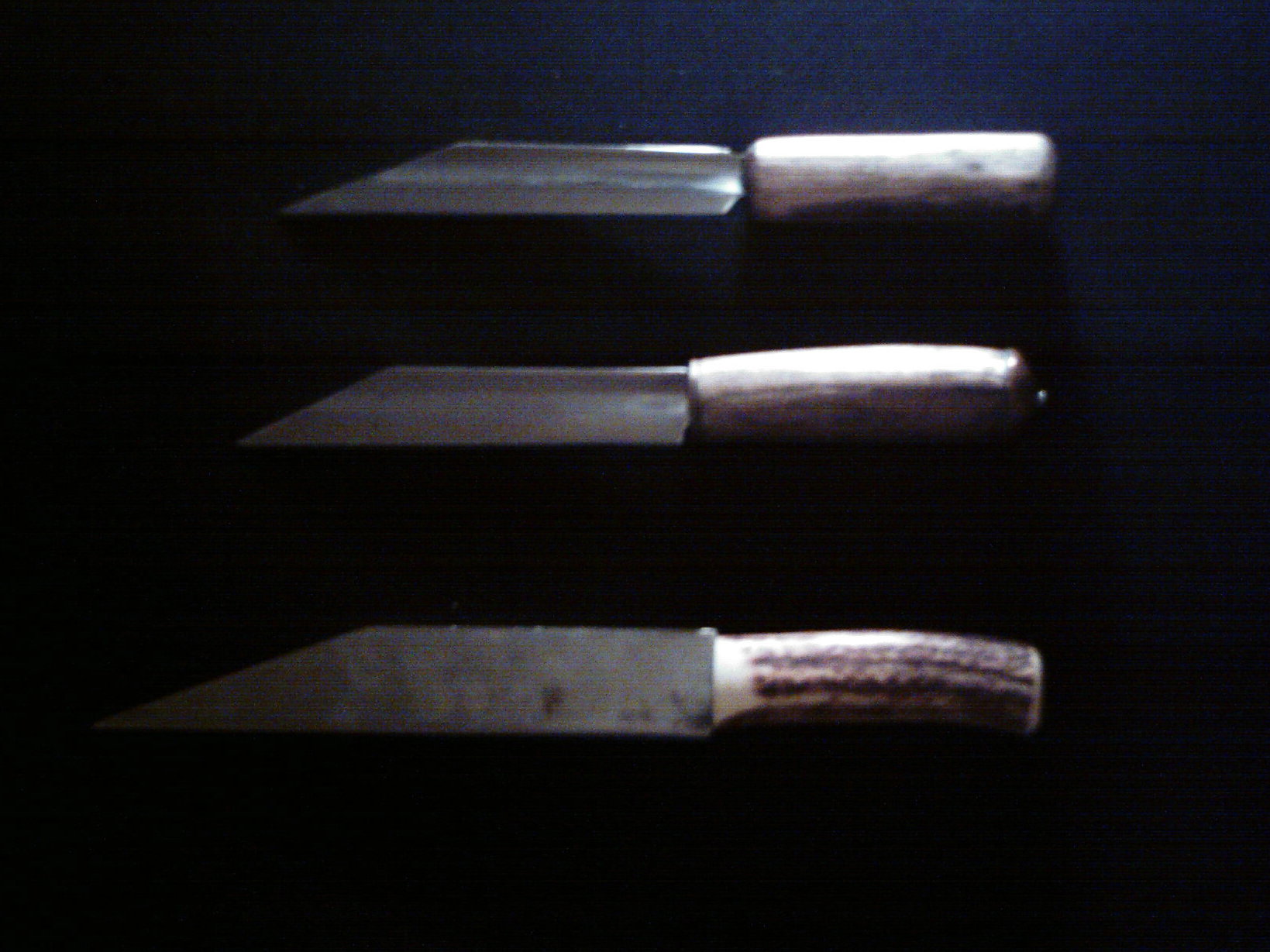
The folk name 'adder' as used to describe the single and double ringed sticks is derived from Anglo Saxon lore whilst the folk name Yggdrasil is found in Norse Mythology, the idea being that the staff contains all the lore of the nine worlds, just like the world tree.
Traditional Lore
The studies that each Runa Glima martial artist undertakes are recorded in one of the traditional historical rune systems such as the Elder Futhark, Anglo-Saxon futhorc or Younger Futhark and in pictographs (similar to rock carvings) upon their single ringed stick, double ringed stick and eventually their triple ringed staff. This is achieved in a number of ways. Firstly, all of these weapons are carved in a particular tradition that designates certain areas of each weapon for specific uses such as parrying or striking. These areas also include guidelines on which are the strong and weak ways to attack and defend. Secondly, using a mythological format, each weapon is split into a head, belly and tail of an adder or in the case of the triple ringed staff, a dragon. These secondary areas help designate the right way to hold each weapon in relation to whatever technique is being carried out. Finaly, both ends of each weapon has a series of burnt carved notches which help focus each of the weapons’ strikes. Once the rank of Rig Kon has been attained, then the runes and pictographs are carved into the fields of use as described above. The idea that a weapon can have different areas of usage is also found in european medieval martal arts. The length of each weapon is decided by its' use. The general rule is that the single ringed stick and double ringed stick are constructed to the length of a straight arm and the triple ringed staff is constructed to the length between the floor and the shoulders of the person whilst standing (though other natural body measurments are sometimes used).
Attaining Rank
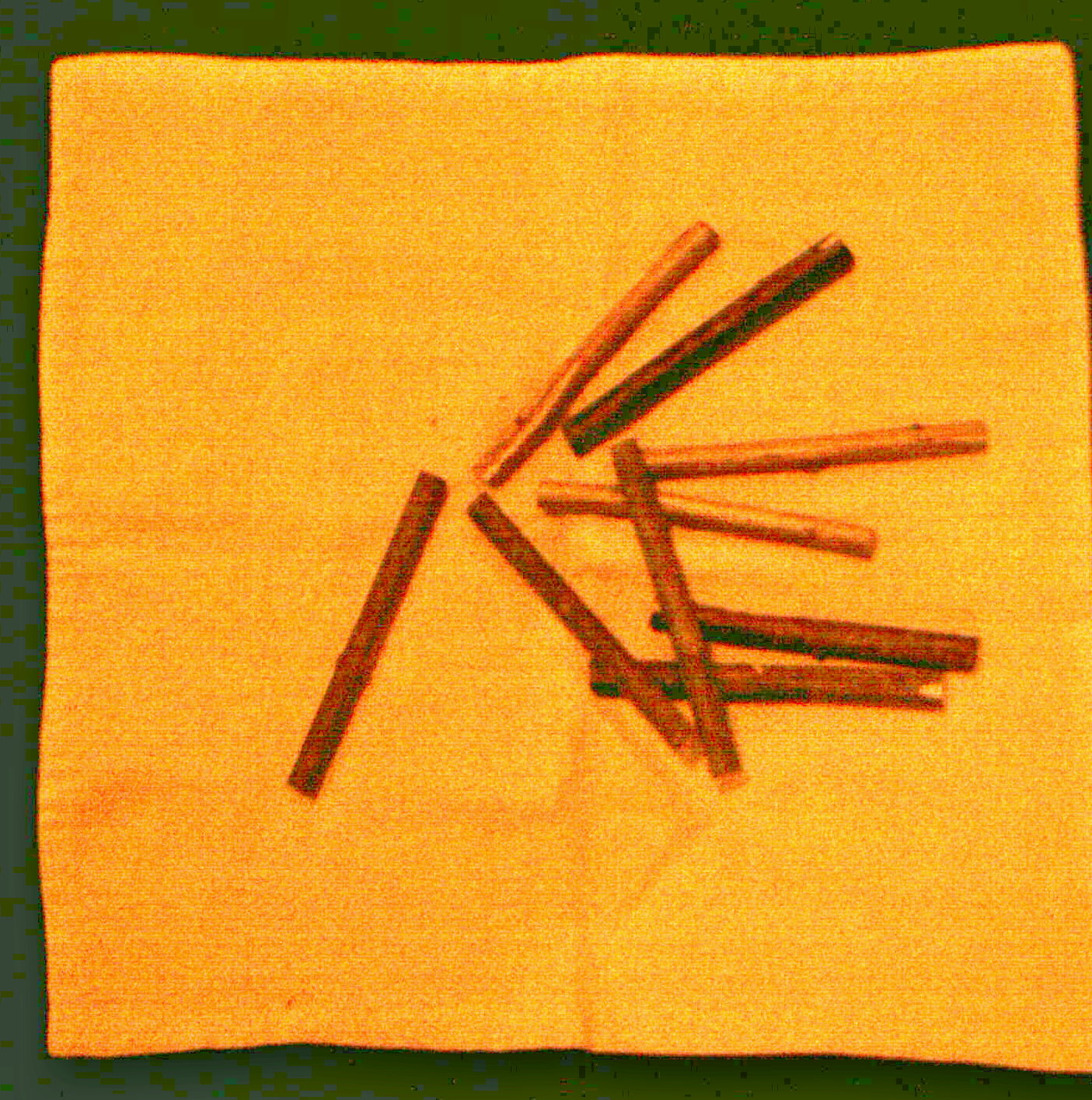
In order to move from one rank to another, three random tests are given by the Rig Kon(a) and upon passing the rank of Rig Kon(a) a token of ones' rune lore is given by their Rig Kon(a) which is a bundle of wooden staves the length of which may be as long as a forearm or as small as the open hand. These may be used in runecasting relating to the methods noted by Tacitus in his writings about Germania as regard to the germanic peoples, where a branch from a nut bearing tree was cut and used to make lots which were scattered on a white cloth and then three being chosen from the bundle to be read, the sticks having markings of some sort upon them.. In the version used by Runa Glima martial artists, the method is slightly different. After casting the staves, the imagination is used to read the traditional historical runes directly from the way the staves lay.