
Renaud Joannes-Boyau
Renaud Joannes-Boyau is a French-Australian Professor of Geochronology and Geochemistry at Southern Cross University (SCU) in Australia.
He is the Acting Deputy Vice-Chancellor (Research) at SCU.
He leads the Geoarchaeology and Archaeometry Research Group (GARG) at the university and serves as the director of the Biomics Analytical Facility, which focuses on archaeological science.
His research works focus on fossil analysis and fossil dating techniques.
Early life and education
Joannes-Boyau was born in France, where his constant travels with his grandmother influenced his interest in archeology.
He has an undergraduate degree in Biochemistry and Genetics, and another one in Archaeology and Art History, both from the University of Bordeaux (UBx).
He has a master’s degree in Applied Physics to Archaeology from UBx and a PhD from the Australian National University (ANU).
His PhD thesis, “Direct Dating of Human Remains” introduces advanced fossil dating methods that use advanced electron spin resonance (ESR).
Academic career
Joannes-Boyau is a Professor in the Faculty of Science and Engineering at Southern Cross University.
He is the Acting Deputy Vice-Chancellor (Research) at Southern Cross University, where he also served as Director (Higher Degree Research and Training), Deputy Chair (Academic Board, Research), Head (GARG), and council member (Academic).
He researches on developing and applying direct dating methods as well as micro-analytical methods to solving archaeological science questions. Some of the areas he has researched on include human evolution timing, relations with the environment and ecological niche, what the hominids ate, and the history of early life.
Specific aspects of his research include deciphering mobilization, enhancing ESR and U-series methods, and improvement of analytical techniques.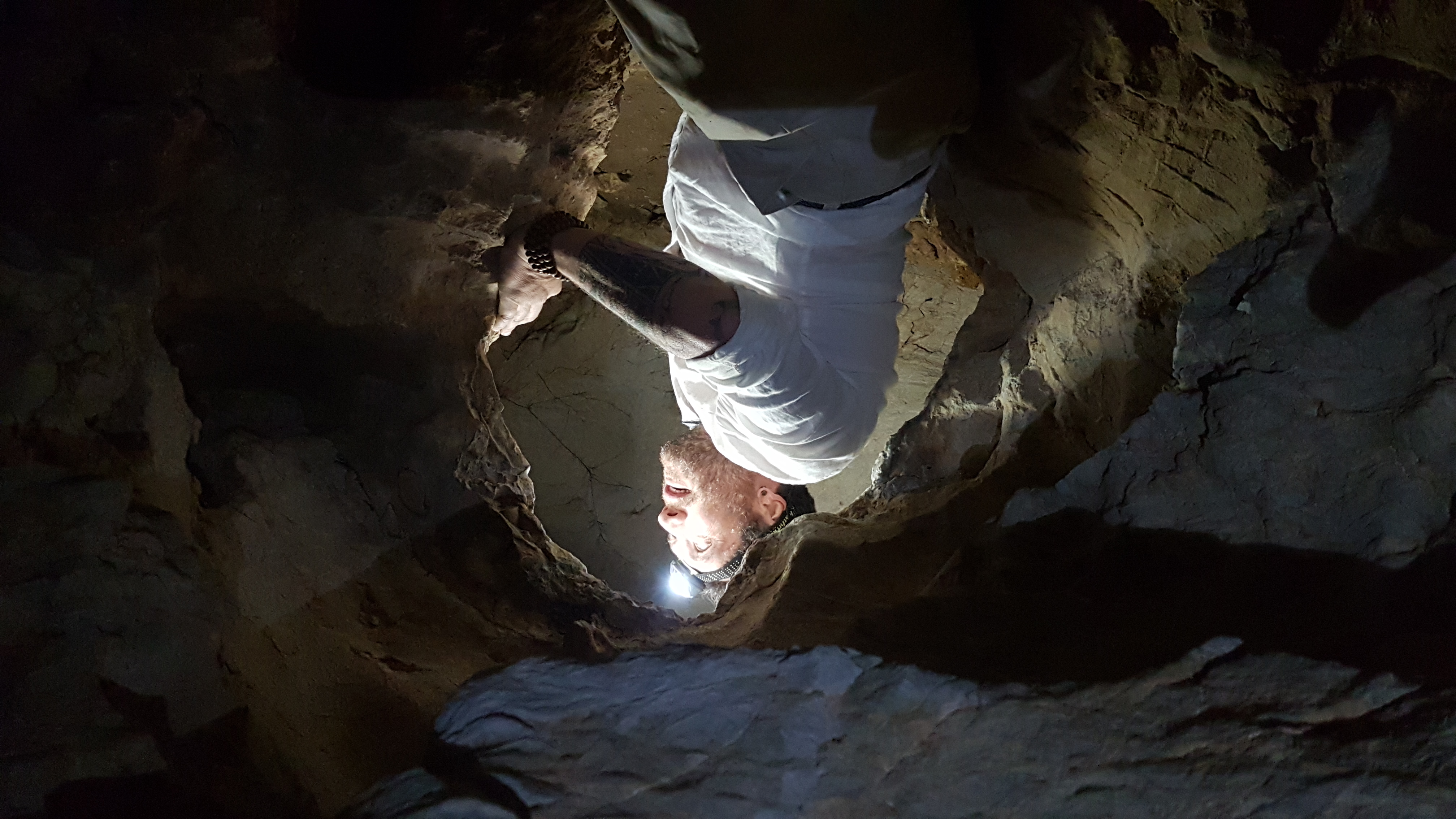
Research contributions
Prof. Joannes-Boyau researches on developing and applying direct dating and micro-analytical methods to issues in archaeological sciences.
Amongst his contributions in geochronology and geochemistry are dating of fossils, including Homo sapiens in Indonesia and Jebel Irhoud (Morocco), timing human evolution, hominids diet, history of early life, and interactions with environment and ecology.
He has also worked on the reconstruction of early life, from geochemical imaging, such as breastfeeding of Neanderthals.
Joannes-Boyau led a study that described human exposure to lead as not a post-industrial problem, but one that has affected society for over two million years. In collaboration with other scientists from GARG, Mount Sinai Hospital (USA), and the University of California, San Diego (USA), he reported that lead exposure is likely to have influenced human brain evolution over time.
He was part of a team that dated the remains of Homo sapiens found Jebel Irhoud, Morocco to approximately 300,000 years. The findings indicate an older evolution history considering that the previously recorded oldest remains had been found in East Africa and dated as 200,000 years old.
He was involved in dating of the oldest narrative rock art found in a cave in Sulawesi, Indonesia to approximately 51,000 years ago. The art, which depicts a human being interacting with a pig shows that people used art for communication, thousands of years ago.
He has co-authored various peer-reviewed research articles in diverse journals with some gathering substantial citations in scholarly work. His works have had an impact on dating of human evolution, especially using advances like ESR/U-series dating methods.
He has co-authored articles criticizing university governance systems in Australia and some of the funding models used during the COVID-19 pandemic.
See also
- Geochronology
- Human evolution
- Archaeometry
- ESR dating
- Uranium-series dating
- Geochemistry