
Reform attempts in the Ottoman Empire
Reform attempts in the Ottoman Empire refers to the modernization efforts of the medieval age Islamic empire. In the last three centuries of its six century history, the Ottoman Empire tried to modernize its legal system and institutions. But the reform attempts were only partially successful, and the empire collapsed in 1922.
Reform attempts during the stagnation
The stagnation period of the Ottoman Empire in the 17th century, was marked by never-ending economic crises as well as a series of revolts called Jelali revolts in Anatolia (most of modern Turkey). Some scholors like Katip Çelebi and Koçi Bey saw the need of reformation. They prepared reports to reform the institutions. Koçi Bey suggested to reduce the number of the soldiers in the standing army. This would reduce military spendings. He further suggested to improve the timar (fief) system. But his suggestions were impractical, for the empire was in constant warfare and the timar system couldn't be improved during the revolts. Katip Çelebi who was the sole Ottoman scholar of the 17th century to note the scientific developments out of Islamic Worldwas more pessimistic. He saw no hope for returning to glorious days of the empire. But the reports lacked social and scientific measures and during most of the 17th century, the only solution to internal problems was to suppress the revolts with much bloodshed and to reduce the gold content in coins (i.e., devaluation). Such methods further increased the unrest. Especially the Turkmen people of Anatolia suffered much from the harsh measures. The only really effective reform attempt was that of grand vizier Tarhoncu Ahmed Pasha. In 1652, he introduced the system of annual budget in government spendings. But since he also tried to limit the expenditure of the palace, he was executed by the 11-year-old sultan Mehmet IV.
Tulip age
 Ottoman Empire lived the decline period in the 18th century . But during the relatively peaceful years between 1718 and 1730 , so called Tulip Age , Sultan Ahmet III and the grand vizier Nevşehirli Damat İbrahim Pasha tried to reform the economy and cultural life. New ceramic and textile factories were founded and domestic trade was supported. A group of translators were tasked with translating foreign language books to Turkish. The very first Turkish printing press was introduced and for the first time Turkish books were printed by İbrahim Müteferrika, a Hungarian convert. Fine arts, literature and architecture prospered. However, that age was also marked by a kind of tulip mania and extensive libation. The social problems peaked and by the rebellion led by Patrona Halil, Ahmet was dethroned and the grand vizier İbrahim was killed.
Military reforms in the 18th century
After the tulip age the reforms continued with a slower pace. Various libraries and a paper mill were founded during the reign of Sultan Mahmut I. But the majority of the reforms during the rest of the 18th century were military reforms. Sultan Mahmut I and Grand vizier Hekimoğlu Ali Pasha established the howitzer () troops and founded the first engineering schools for the army. Their adviser was a French convert named Claude Alexandre de Bonneval, (renamed Humbaracı Ahmed Pasha). During the reign of Mustafa III in the second half of the 18th century grand vizier Koca Ragıp Pasha reformed the treasury and founded military industry for up-to-date weaponry. A French man (of Hungarian origin) named François Baron de Tott acted as a military adviser in improving Ottoman naval defense.
Nizamı cedit (new order)
Soon after the Russo-Turkish War (1787–1792) new Ottoman sultan Selim III who was under the influence of the French Revolution, held a meeting to discuss the necessary reforms. Then he started the program of Nizamı cedit (new order). It was aimed in modernizing the Ottoman bureaucracy. But the main emphasis had been given to abolishing the Jannissary corps which were once elite troops of the army but highly degenerated by the 18th century. They were useless in the war, but caused unrest and upheaval in İstanbul, the capital. In the past, they were responsible in [...] at least one sultan (Osman II) and dethroning several sultans. Selim III founded the new army named Nizamı cedit. The army was trained by the European advisers and it was hoped to replace the Jannissary. But the Jannissary rebelled under the leadership of a certain Kabakçı Mustafa in 1807. Although the rebellion could easily be suppressed by the new corps, Selim's indetermination resulted in a surprise victory for the jannissary. They dethroned Selim III and enthroned their candidate Mustafa IV . The new army was abolished and the jannissary problem continued to be a menace for the next twenty years.
Charter of Alliance
Alemdar Mustafa Pasha a powerful local lord who was supporting Selim III defeated Kabakçı Mustafa's forces. But since Selim III was dead, he enthroned Mahmut II as the new sultan and Mahmut II appointed him as the grand vizier. One of the earliest moves of Alemdar Mustafa in 1808 was to subjugate the local rulers. The charter of alliance () between the central government and the local rulers secured the rights of the rulers in return to their alliance to the sultan. This agreement, although short lived, was the very first agreement between the sultan and his subjects.
The Auspicious Incident
Sekbanı cedit and Eşkinci Ocağı were similar attempts like Nizamı cedit . But when the jannissary rebelled in 1826 following the example of 1807, Mahmut proved to be more determined than Selim and the new corps suppressed the rebellion on 16 June 1826. That event is known as Auspicious incident ()..
Tanzimat and Islahat
During the reign of Abdülmecit, Mustafa Reşit Pasha, the Ottoman ambassador to London (later grand vizier) convinced the 16 years old sultan into the need of plan which would redefine the subjects of the empire as the citizens. The reform package was prepared by the grand vizier and was announced in a park in İstanbul named Gülhane on 3 November, 1839. This package is now known as the decree of Tazminat or decree of Gülhane. (Lord Kinross calls this package as Turkish Magna Carta) However after the Crimean War, English and French governments which were the allies of the empire urged for more reforms. On February 18, 1856 a new reform package prepared by the grand vizier Mehmet Emin Ali Pasha, introduced further rights for the citizens (especially the Christian citizens of the empire). This package was included in the text of Treaty of Paris (1856). This new package is now known as Islahat.
First Constitutional Monarchy
The constitution of the Ottoman Empire was promulgated on 23 December, 1876 . It was prepared by the Young Ottomans (later Young Turks). Mithat Pasha a notable member of the Young Ottomans, supported Abdülhamit II to throne in return for his approval to consititution. Although Abdülhamit initially agreed to appoint Mithat as the grand vizier and form the constitutinal parliament, soon he exiled Mithat Pasha. In 1878 he abolished the parliament, and suspended the constitution indefinetelly.
Second Constitutional Monarchy
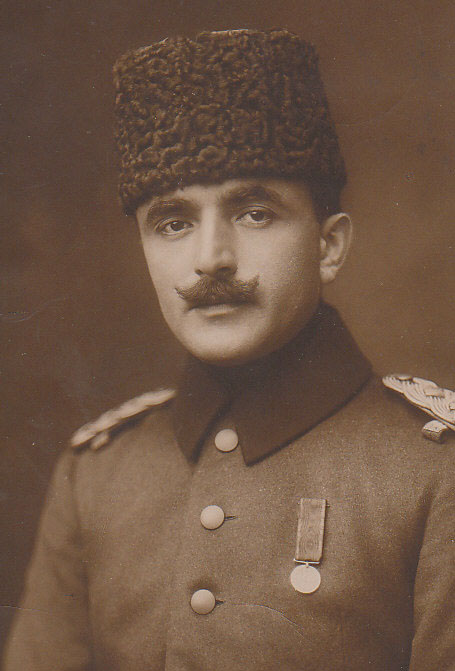
Abdülhamit's reason to suspend the constitution was the Russo-Turkish War (1877–1878) which ended disastrously for the Ottoman side. But even after the war, Aldülhamit continued his one man rule. The Young Turks (former Young Ottomans) revolted in 1908 for the implementation of the constitution. First two revolters were Niyazi of Resne and Enver Pasha. (later powerful minister of war) Abdülhamit had to agree to return to constitutional monarchy on 3 July, 1908. On 24 July of the same year parliament was formed after a pause of 30 years. After the 31 March Incident in 1909 (an attempted counter revolution on 13 April 1909) Abdülhamit was dethroned.
Reforms of the CUP
Although the Young Turks were able to suppress the counter revolution in 1909 their party Union and Progress (, CUP for short) wasn't able to govern up to 1913. But still they forced the government to abolish the caputilations in 1911 which was usually seen as one of the major reasons of Ottoman economic decline. After they were able to form their government following the Balkan wars, the Young Turks began a series of reforms. Most of these reforms were aimed at education, especially the education of women. Women were also encouraged to career (which was unheard of until then in an Islamic society) They even continued these reforms during the First World War years.
Sources
- Prof. Yaşar Yüce-Prof. Ali Sevim: Türkiye tarihi Cilt III, AKDTYKTTK Yayınları , İstanbul, 1991
- Prof. Yaşar Yüce-Prof. Ali Sevim: Türkiye tarihi Cilt IV, AKDTYKTTK Yayınları , İstanbul, 1991
- Sina Akşin (editor)- Metin Kunt: Türkiye Tarihi, Cilt III, Cem Yayınevi, İstanbul, 2009, ISBN 975-406-565-9
- Nicolae Iorga:Geschiste des Osmanischen Reiches IV (translated by Nilüfer Epçeli) Yeditepe yayınevi, İstanbul, ISBN 975-6480-21-1
- Nicolae Iorga:Geschiste des Osmanischen Reiches V (translated by Nilüfer Epçeli) Yeditepe yayınevi, İstanbul, ISBN 975-6480-22-X
- Lord Kinross:The Ottoman centuries (translated by Meral Gaspıralı) Altın Kitaplar,İstanbul, 2008, ISBN 978-975-21-0955-1
- Gabor Agoston-Bruce Masters:Encyclopaedia of the Ottoman Empire ISBN-13: 978-0-8160-6259-1
- Grolier Americana (Turkish version) vol 10, Grolier-Sabah, İstanbul