
Railway station layout
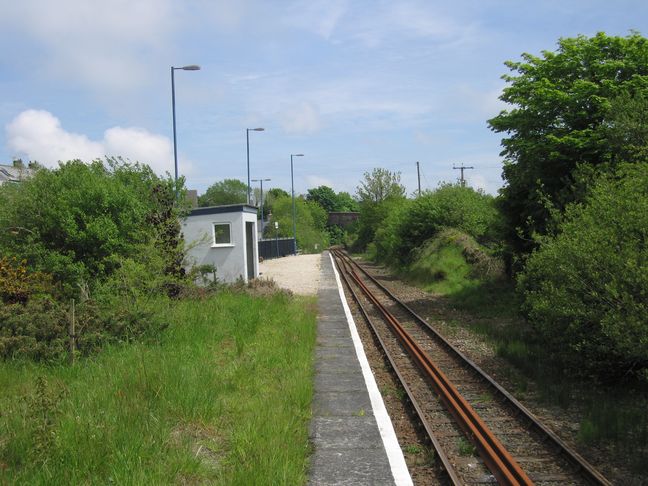 A railway station is a place where trains make scheduled stops. Stations usually have one or more platforms constructed alongside a line of railway. However, railway stations come in many different configurations - influenced by such factors as the geographical nature of the site, or the need to serve more than one route, which may or may not be connected, and the level of the tracks. Examples include:
- stations in tunnels;
- stations with platforms on more than one level; and
- stations with other unusual layouts (e.g. with staggered, non-parallel, or severely curved platforms).
This page presents some examples of these more unusual station layouts.
Location-specific
In a tunnel
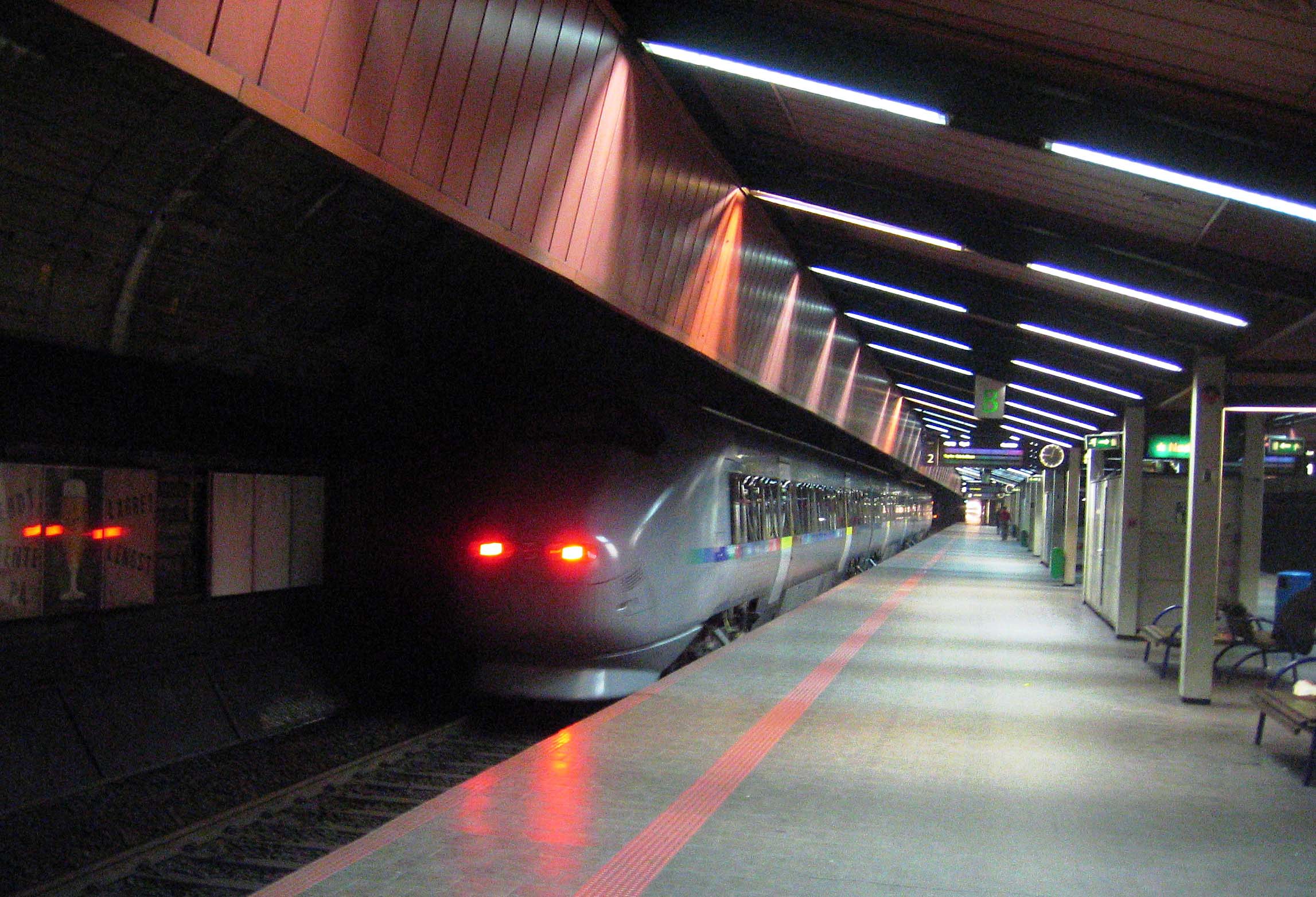 The particular geography of a line may lead to the station be built below the level of the adjoining terrain (in a [...]) or inside a tunnel. If a station is in a tunnel, it is usually because the station has been constructed beneath the city in order to serve the city centre, or that the station was originally in a [...] which has subsequently been built over. Examples of individual tunnel stations (i.e. not forming part of a complete metro or underground railway, system) are:
Australia:
- Brisbane - Central, Brunswick Street and Toowong were once in the open air but have subsequently been built over.
- Sydney - stations underneath the CBD are on continuations of suburban lines.
- Melbourne - the three underground stations of the City Loop and Box Hill.
- Perth - the underground platforms at William Street were opened on 15 October 2007
Belgium:
- Brussels Central is in tunnel under Brussels city centre.
Canada:
- Montreal Central Station is located underground, at the south end of the tunnel under Mount Royal. Since the station is on a hill, the southern approach tracks are elevated.
Denmark:
- Nørreport station in Copenhagen
France:
- Paris - RER - a network of suburban train lines run mainly in tunnels through the city centre
Germany:
- Potsdamer Platz station, Berlin is located in a tunnel running under Berlin which also includes the lower level of Berlin Hauptbahnhof.
Hong Kong:
- The terminus at Hung Hom is beneath the Hong Kong Coliseum.
Italy:
- San Remo station - in a tunnel under the city.
Japan:
- Doai and Yubiso stations - one track in the 13,490m long Shin-Shimizu tunnel.
Monaco:
- Monaco-Monte Carlo - in a tunnel passing beneath the city.
The Netherlands:
- Schiphol Airport - the railway station is in a tunnel under the airport.
- Rotterdam Blaak station - in the tunnel under the Nieuwe Maas waterway (the station is on the north bank).
- Barendrecht station near Rotterdam.
- Rijswijk station near The Hague.
- Best station near Eindhoven.
New Zealand:
- Auckland's Britomart Transport Centre is located underground adjacent to the downtown harbour edge. It is one of the few underground stations for diesel trains in the world.
Norway:
- Oslo Nationaltheatret station - located in the Oslo Tunnel.
Poland:
- Warszawa Centralna and Warszawa Śródmieście PKP stations - in a tunnel under the city centre.
Switzerland:
- Zürich Zürich Main Station has six tracks built in a tunnel, four of them connecting to Zürich Stadelhofen, which is also partially underground. The station at Zürich Airport is also built in a tunnel, below terminal 2. See also Geneva Airport
Taiwan:
- Taipei Main Station is in an underground tunnel
 United Kingdom:
- City Thameslink is located under the City of London on the cross-city Thameslink line
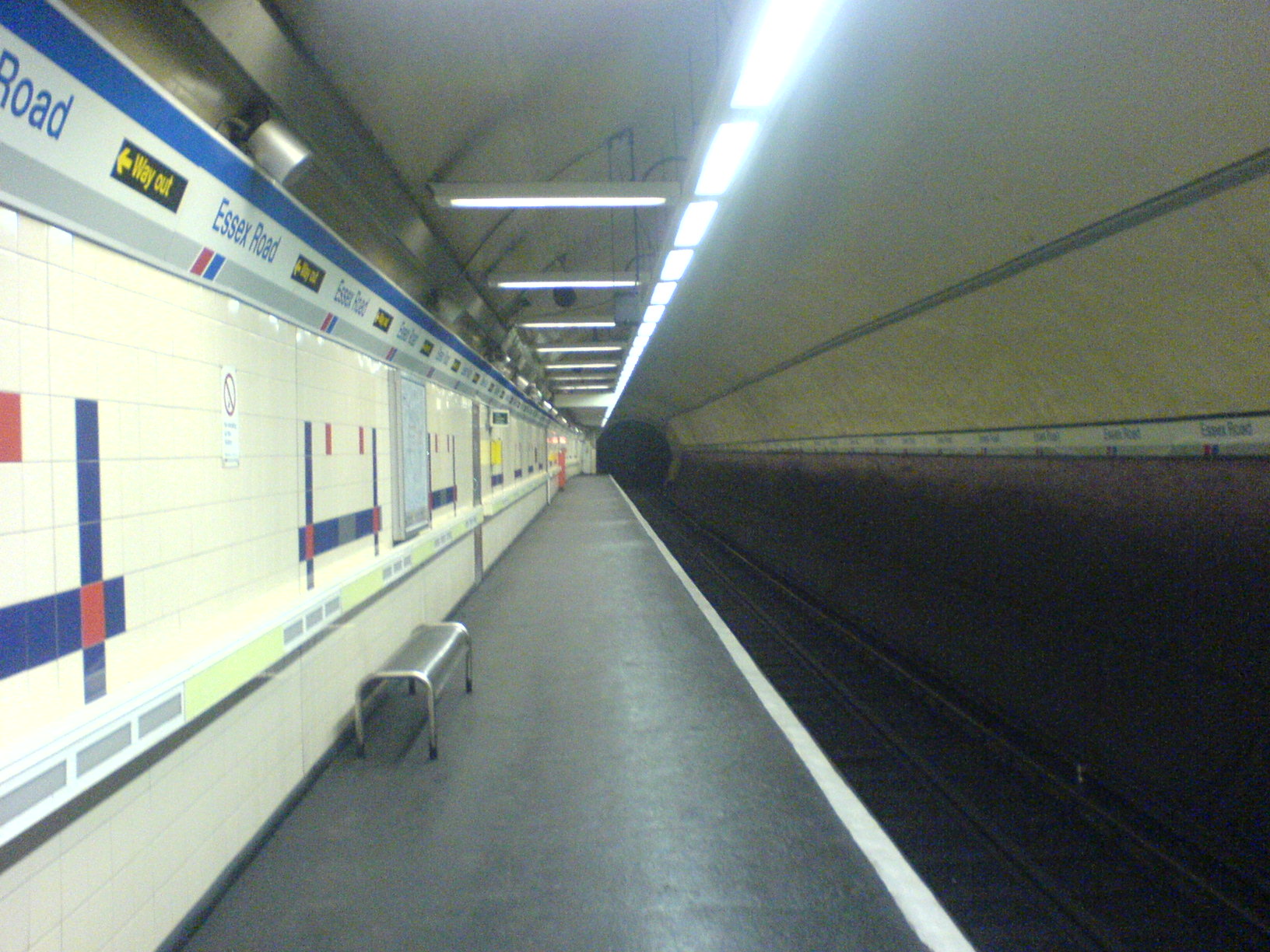
- Moorgate, Old Street, Essex Road and Highbury & Islington are all located on the underground section of the Northern City Line in London.
- Stansted Airport station is located under the main terminal building.
- Heathrow Airport Terminals 1, 2 and 3 and Terminal 4 are both underground railway stations.
- Sunderland station is in a tunnel under the city centre.
- Glasgow Queen Street and Glasgow Central low level stations on the North Clyde Line and Argyle Line respectively are both in a tunnel system.
- The Liverpool Overhead Railway (now disused) rather paradoxically terminated in a half-mile (800 m) tunnel and ended at the underground Dingle station.
United States of America:
- The Center City Commuter Connection tunnel in Philadelphia has two underground stations: Market East Station, accessible from Market Street, but actually underneath Filbert Street (one block north of Market) and Suburban Station which is underneath the 21-story One Penn Center office building
- Flatbush Avenue station in New York City is underneath Brooklyn
- Grand Central Terminal in New York City
- Millennium Station in Chicago
- Pennsylvania Station in New York City is underneath Madison Square Garden.
- Union Station in Chicago
On a viaduct
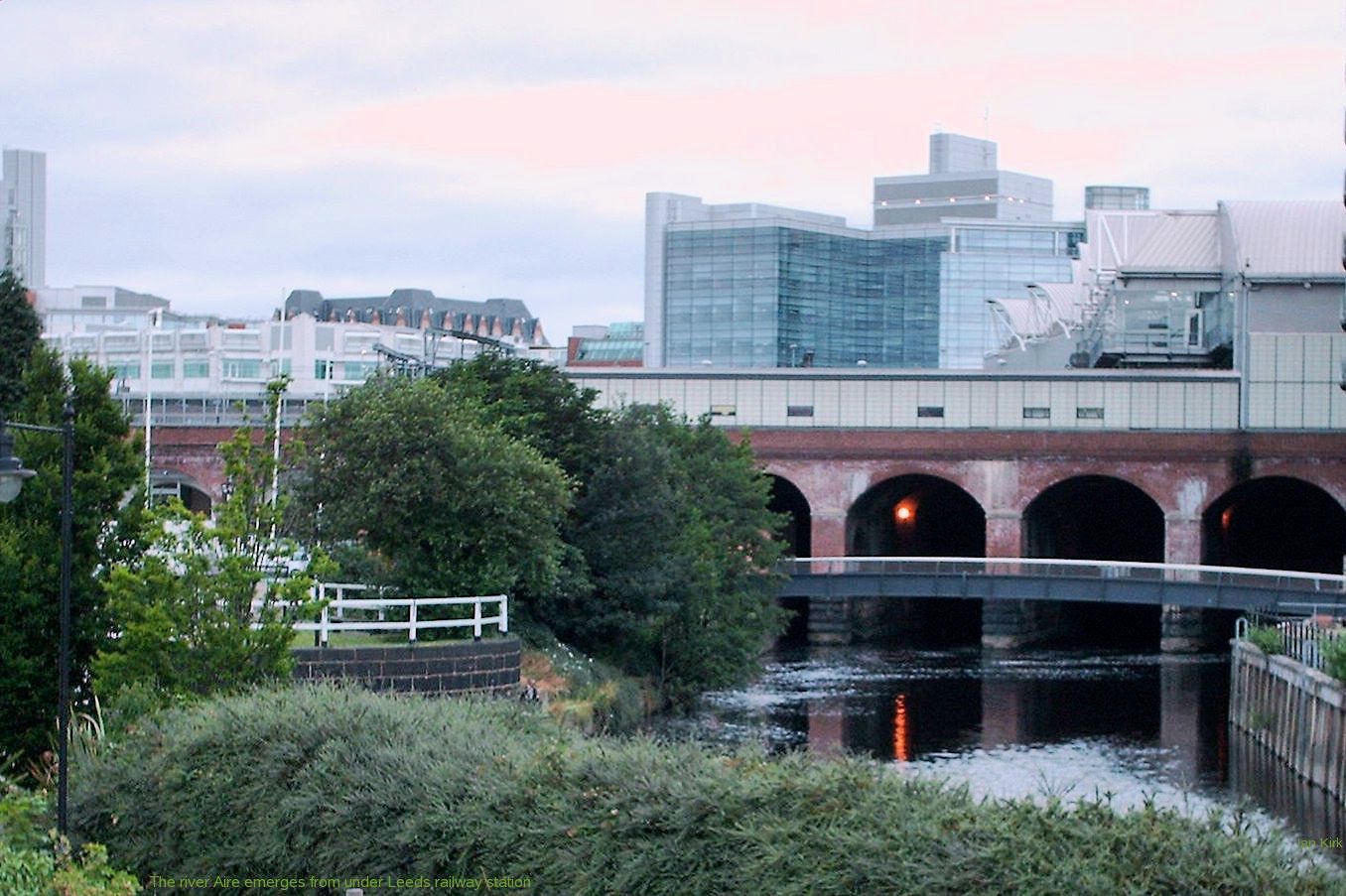 In the similar way, many stations have elevated platforms which are usually one level above the street, with trains entering on viaducts or embankments, which is normally due to the geography of the region. Some more extreme examples include (not including elevated rapid transit systems):
United Kingdom:
- Chelmsford in Essex
- Leeds is located on a viaduct above the River Aire as well as two streets
- Blackfriars in London has some platforms extending across the bridge over the River Thames
- Worcester Foregate Street in Worcestershire
At a rail-rail crossing
Some stations, situated where two rail routes cross at different levels, serve both lines. Examples include:
The Netherlands:
- Amsterdam Sloterdijk - at ground level is the railway from Amsterdam to Haarlem and Zaandam, with branches to Alkmaar, Purmerend, and Hoorn; at elevated level is the railway from Amsterdam to Schiphol Airport, thence to Leiden and The Hague. The booking hall is at an intermediate raised level (as too, interestingly, is the station square). On the south-west side of the crossing and beside the station square runs the Hemboog chord, connecting Schiphol and Amsterdam-Lelylaan to Zaandam (platforms on the Hemboog chord are planned but not yet realised).
- Duivendrecht station (near Amsterdam) - for details see there.
Germany:
- Berlin Hauptbahnhof - On the elevated 'Stadtbahn' a new central station has been built, above a new underground railway line. Several other examples exist on the Berlin S-Bahn, at Westkreuz, Ostkreuz, Südkreuz and Schöneberg, and with one of the lines in tunnel at Friedrichstraße.
- Osnabrück Hbf - at ground level is the railway from Amsterdam to Berlin, at elevated level the railway from Dortmund to Bremen.
Poland
- Kostrzyń (originally Küstrin Neustadt in Germany)
Australia:
- Sydney Wolli Creek station - two side platforms are below ground level and serve the Airport and East Hills line, and one island platform is above ground, serving the Illawarra line, which crosses at approximately right angles at this point.
United Kingdom:
- In the UK, stations with this layout are frequently distinguished by adding the designations "High Level" or "Low Level" to the platforms. An example is Tamworth, where the low-level platforms are on the West Coast Main Line from London to Glasgow, and the high-level platforms are on the cross-country route from Birmingham to Derby. Other examples include Retford, Shotton and Smethwick Galton Bridge.
United States:
- Miami - At Tri-Rail/Metrorail Station, the elevated Metrorail runs on elevated track perpendicular Tri-Rail commuter rail system, which runs at ground level.
- Norristown Transportation Center in Norristown, Pennsylvania - Norristown High Speed Line has its station above the R6 railway line station.
- The Secaucus Junction transfer station in New Jersey, which connects the two main routes of the NJ Transit commuter rail system.
- In Queens, New York City, the Woodside-61st Street subway station is on a viaduct directly above the Woodside station of Long Island Rail Road.
It was and still is common in the United States for stations to be located where two line cross at the same level, often without a connection between them.
Rare examples in the United Kingdom include:
- Newark North Gate railway station is just south of the Newark flat crossing, where the East Coast Mainline, and the Lincoln to Nottingham line cross. It is the fastest such crossing in the UK, with East Coast trains allowed to do 100mph (160 km/h) over the crossing.
- Retford, located just North of Newark, (until replaced by dive).
On a public road
In Oakland's Jack London Square, the Amtrak and Capitol Corridor rail services, as well as through freight trains, actually operate along the street, with tracks embedded in the pavement (much the same way a tram would be expected to operate). The station itself is in a structure some yards away from the platforms.
Geometry-specific
Triangular
It is not unknown for a station to have platforms on all three sides of a triangle. If triangular stations are not properly designed, they can have curves that are too sharp, while the legs of the triangle can be too short to fit a train.
Hong Kong:
- Siu Hong. The Light Rail platforms form a triangle.
United Kingdom:
- Ambergate, Derbyshire on the Midland Main Line. One set of platforms survives.
- Bishop Auckland. Durham platform demolished 1986, leaving only 1 platform.
- Mangotsfield (now closed)
- Shipley
- Earlestown
- Queensbury in West Yorkhire (closed).
Vee (open triangle)
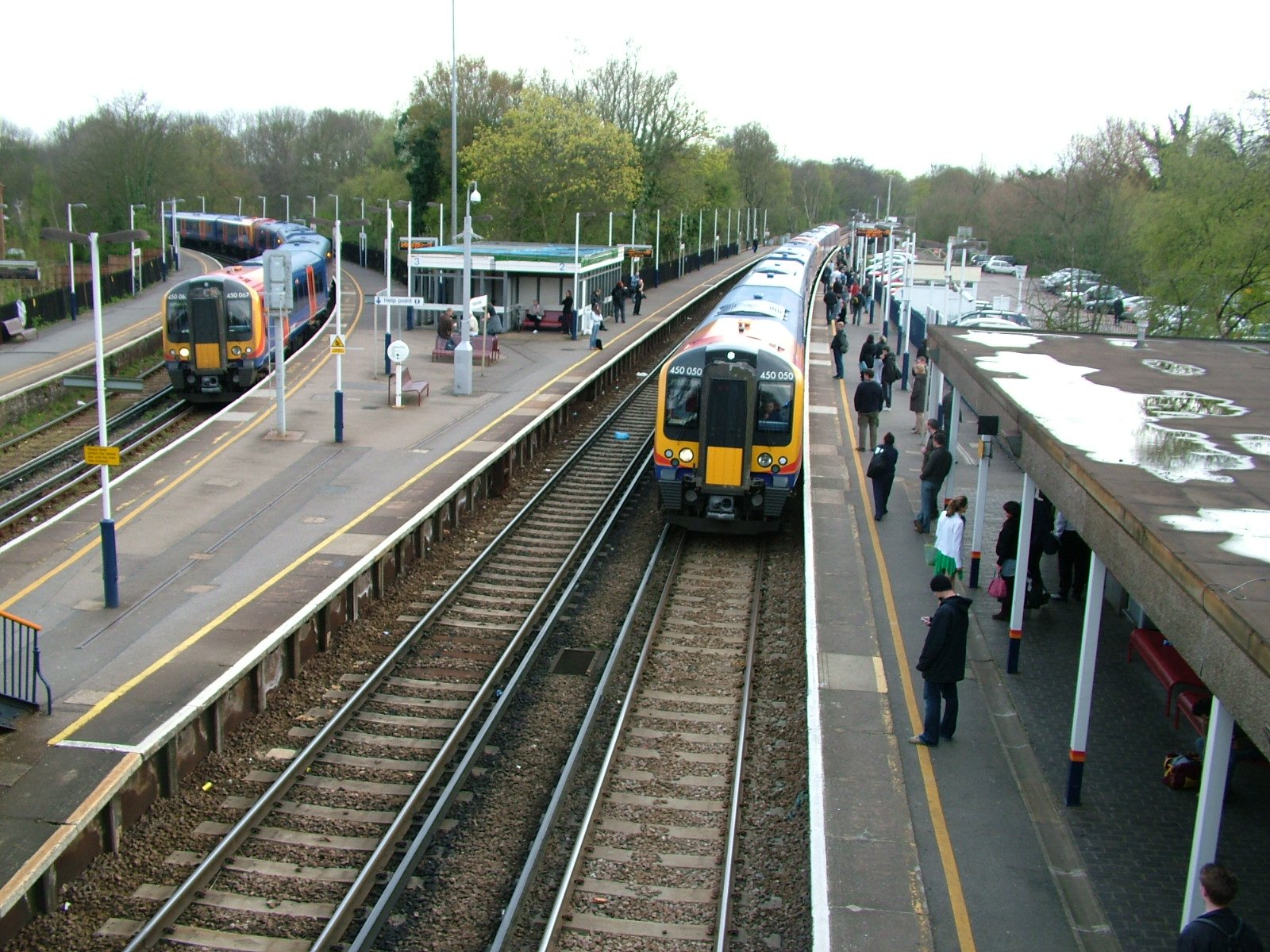 Stations located in the V of a junction include:
Australia
- Werris Creek
- Footscray
France
- Asnières-sur-Seine, on the Paris - Caen and Paris - Versailles Réseau Saint-Lazare suburban lines.
- Cannes La Bocca, on the Marseille - Ventimiglia and Grasse - Ventimiglia TER PACA lines.
- Lisieux, on the Paris - Caen and Paris - Trouville-Deauville lines.
- Serquigny, on the Paris - Caen and Caen - Rouen RD lines.
Germany
- Augsburg-Hochzoll, at the junction of the Munich-Mering-Augsburg permanent way and the Ingolstadt-Dasing-Augsburg permanent way.
Ireland
- Howth Junction
The Netherlands:
- Amsterdam Muiderpoort station - serves the line from Amsterdam to Utrecht and the line from Amsterdam to Weesp, and is situated just after the junction with the platforms at different angles.
Switzerland
- Arth-Goldau in Arth
United Kingdom
- Penistone, on the Penistone line.
- Virginia Water, where the Weybridge branch splits off from the Waterloo to Reading main line.
- Cheadle Hulme, where the Crewe-Manchester and the Stafford-Manchester lines split.
- Pitsea where the c2c line between Shoeburyness and London Fenchurch Street splits into two branches.
United States
- Canton Junction station in Canton, Massachusetts - at junction of MBTA's Providence/Stoughton Line and Stoughton Branch
- Clybourn station in Chicago — at junction of Metra's Union Pacific/North Line and Union Pacific/Northwest Line
- Denville station in New Jersey — at junction of New Jersey Transit's Morristown Line and Montclair-Boonton Line
- Floral Park station in Floral Park, New York — at junction of Long Island Rail Road's Hempstead Branch and Port Jefferson Branch
- Princeton Junction station in New Jersey — at junction of Northeast Corridor and Princeton Branch
Unusual platform or track
Belgium:
- In Charleroi's light subway system, the Waterloo station has a two platform tracks, which diverge in two directions on both sides of the station, but two of those lines come together to form a single link, so trains can go from any direction to any direction without reversing.
France:
- Latour-de-Carol is unusual in being a "junction" for lines of three different gauges: metre gauge of the Yellow Train (Train Jaune/Tren Groc), the standard gauge of SNCF and the broad gauge (1668mm or 5 ft, 5½ in) of RENFE.
 Ireland (see rail transport in Ireland):
- Cork's Kent Station is curved, due to the lines entering the station at right angles to the River Lee, but having to connect to a line running parallel to the river.
- Limerick Junction, County Tipperary (formerly Tipperary Junction) is the only place in Ireland where two lines cross at near-90 degrees. It serves several destinations, mainly connections to/from Limerick and the Cork-Dublin main line. The other line served is Limerick-Waterford. The platform layout is not particularly unusual, but track diagrams are complex, resulting in trains needing to reverse behind the station building into one of the platforms on occasion. Until 1967, reversing into platforms was a required manoeuvre for all trains stopping at the station.
South Korea:
- At Anyang, where both subway and passenger train stops, rapid subway train platforms(high level platforms) are connected with passenger train platforms(low level platforms). Passenger can move from subway platform to passenger train platform without stairs and vise versa. Deokso Station have similar platform layouts.
United Kingdom:
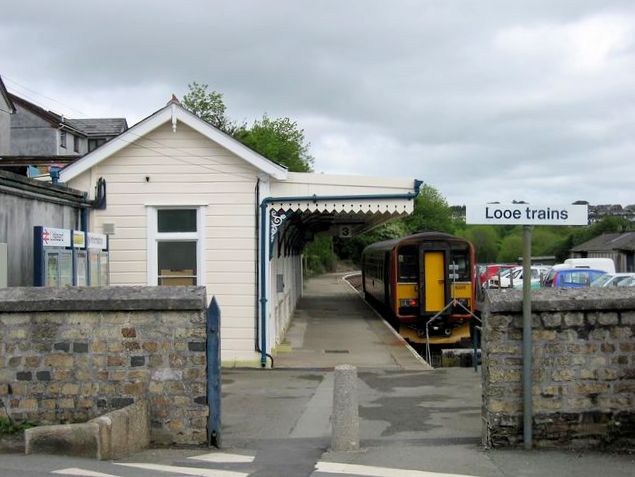
- At Liskeard the platform for the branch line to Looe is on the same level as, but at right angles to, those on the Plymouth - Penzance main line.
- At Templecombe the LSWR and S&DJR lines crossed at right angles with a link between them. S&D trains reversed into the LSWR station.
- Edinburgh Waverley is laid out as two back-to-back terminus stations. The station building is located between banks of east and west facing bay platforms, with only a few through tracks connecting the two ends north and south of the station building.
- At Inverness, the platforms to the south are at angle to the platforms to the north, with a triangular connection. Through trains reverse into the station.
- At Dorchester South, trains used to have to reverse into the platforms, because the original dead end was not compatible with a later extension of the line.
- Manchester Victoria and Manchester Exchange (now closed) were adjacent and connected by a single common platform which was the longest railway platform in Europe. Trains would pass through one station on through lines and then stop at the other station, rather than stopping at both stations.
- Clapham Junction in Wandsworth, London spans several lines that diverge either side of the station, and is made up of two separate sets of island platforms linked by a footbridge and a subway.
With or on balloon loop
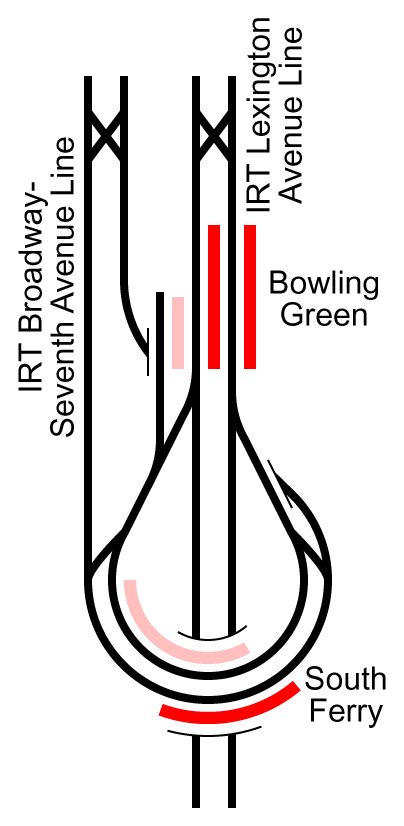 A balloon loop is a track arrangement that allows a train to reverse direction without shunting or having to stop.
- City Hall station on the IRT Lexington Avenue Line was one of the first balloon loop stations. Now closed, the loop track continues to be used to turn trains. These trains discharge and take on passengers at Brooklyn Bridge, one station to the north.
- South Ferry is a two-track loop station, with a sharply curved side platform for each track. While both tracks continue to be used to turn trains, only the outer platform remains in service as a passenger station. Due to problems with train length and platform clearance, this station will soon be replaced by a standard stub terminus with two tracks and an island platform, although the original trackage will remain in use for turning trains when necessary.
- In some cases, multiple stations lie on a balloon loop.
- Terminals 1–3 and Terminal 4 stations at Heathrow Airport on the London Underground
- Olympic Park, Sydney, Australia is on a balloon loop. Platforms 1 and 4 are for boarding; platforms 2 and 3 are for alighting.
On two or more levels
Stations are sometimes built at two levels so as to provide level access to a township that is located on one side only. One level is for trains going one way, and the other level for the other way. Metro system as general practice have multilevel stations where lines intersect, usually without any connection for the trains, and these are too numerous to list here. Some unusual examples include:
Rødovre station
Airport MTR Station, Hong Kong - arriving trains arrive at the level of the Departure lounge while departing trains leave at the level of the Arrival lounge.
München Marienplatz, Germany
Berlin Hauptbahnhof (Berlin Central Railway Station) (Germany)
Shotton railway station - platforms cross at right angles.
Terminus and Reversal
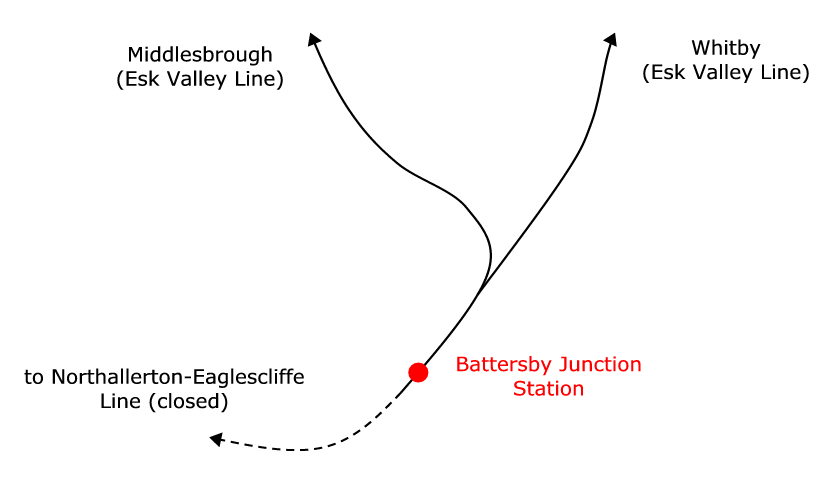
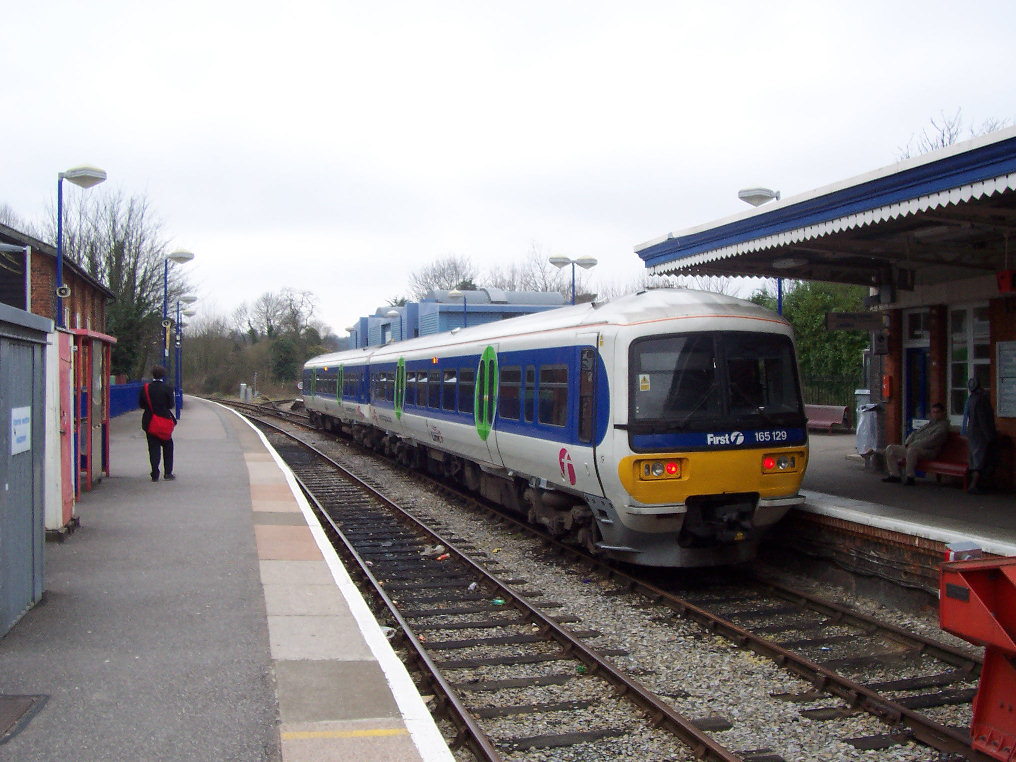
A reversal station is where a continuing train has to change direction, because the station is or has become a terminal of two lines.
Bere Alston
A line closure at Battersby now means trains on the Esk Valley Line have to reverse.
Urangan, Queensland
Tsumeb railway station, Namibia - is a dead end junction, with a triangle providing a direct connection between the two lines.
Kilkenny and Killarney stations in Ireland.
On the East Coastway Line in East Sussex, the former direct line between Polegate and Pevensey & Westham was taken out of use, meaning trains have to reverse at Eastbourne and double-run at Hampden Park.
Beech Forest, Victoria - would have been a reversal station, but the narrow gauge made it possible to reverse in a short radius balloon loop with a tennis court inside the balloon.
Mount Gambier - when break of gauge, the narrow gauge lines were a reversal station on the west side, with broad gauge on the east side.
At Bourne End, the lines to Marlow and Maidenhead both enter the same end of the station, meaning trains have to reverse.
Bradford Interchange and Bradford Forster Square on either side of Bradford, United Kingdom
Cambrian Line services at Shrewsbury railway station where the train goes into a bay platform and then reverses all the way to its destination.
At Otjiwarongo the Outjo branch would easily join the main line in the wrong direction for through trains, but to avoid a reversal, the branch makes a series of curves to join the main line in the right direction.
At Engaru Station in Engaru, Hokkaidō, the Nayoro Main Line came from one direction and continued to two directions as the Sekihoku Main Line. The Nayoro Line was closed in 1989 while the Sekihoku Line is active.
San Francisco International Airport BART station
Norwich railway station in East Anglia.
Multiple lines
Joint stations
Since passenger interchange between different lines can be important, independent companies often but not always build joint stations so that all activities are concentrated at the one location.
- Carlisle is a good example: It was built by London and North Western Railway and later expanded when Midland Railway built their own line to it.
- London Victoria was built as two separate stations on the same site by London and Brighton Railway and London, Chatham and Dover Railway. In 1924, the division between the two stations was removed.
- Leeds City and Aberdeen were built to replace earlier stations.
- Other examples are Nam Cheong Station in Hong Kong and Basel SBB in Switzerland.
- Melbourne originally had two separate termini used by several companies, which were eventually connected.
- Numerous Union stations in the United States are joint stations.
Disjoint stations
Examples abound in the UK, where it was common for the many different companies that built the rail network to each build their own main station in a town. In some cases settlements with populations of a few thousand would have three railway stations. Examples include:
- The city centre of Manchester has two major stations, Manchester Piccadilly and Manchester Victoria, with no practicable rail connection between them.
- Lincoln used to have two separate stations, Lincoln Central and Lincoln St. Marks. Eventually tracks were rationalised with a few new links, and Lincoln St. Marks closed in 1985.
- Glasgow has two main termini, rather than one.
- London has always had more railway lines and companies than could ever have been served by a single station, though sometimes stations are side by side (for example St Pancras International and King's Cross stations. Liverpool Street was formerly next to Broad Street until the latter was closed in 1986 and demolished to make way for the Broadgate development). Also London Victoria was run separately by the LB&SCR on one side and the LC&DR on the other, the stations not being joined until the 1920s. Clapham Junction has no physical connection between the Brighton line and the LSWR lines despite running parallel, but provides interchange between the two.
- Windsor in Berkshire has two separate stations on two separate lines, resulting from a race between two separate companies to provide a rail service with which Queen Victoria could travel into London.
- Wath-upon-Dearne, South Yorkshire once had three railway stations, originally built by the North Midland Railway, South Yorkshire Railway and Hull and Barnsley Railway railway respectively, despite only having a population of a few thousand (2006 population 7,500).
In the United States:
- Stockton, California hosts an Amtrak station, as well as a station for the Altamont Commuter Express (ACE), located some blocks north and east--and connected by the San Joaquin "trolley," taxi, or walking.
- Boston has two stations: South and North
Platform numbering
Platforms are normally numbered, often according to principles that differ from country to country (or even from railway to railway).
In Denmark platform numbers traditionally start from the station building, regardless of the direction of the line as such.
In France, platforms bear letters as designations. Except some stations in Paris, where the platform number exceeds 26, such as Saint Lazare with 27 numbered platforms, platforms are always given letters.
In the United Kingdom the numbering usually starts from the left when looking in the "up" direction of the line (i.e., towards the capital or other principal destination), although some stations do not carry this characteristic e.g Leicester railway station. Letters are sometimes used in order to avoid confusion with nearby numbered platforms; thus the platforms at Waterloo East station are designated A–D to distinguish them from those at Waterloo station with which they form a single complex. When lines are removed, platform numbers are not necessarily updated to reflect this fact, such as at Shrewsbury and Lincoln Central where platforms 1 and 2 have no railway, or at Clapham Junction where there is no platform 1, platforms numbering 2 to 19 instead. At Manchester Victoria Platform numbers are given to National Rail services and Letters A, B and C are given to Manchester Metrolink platforms to avoid confusion between the two systems.
In Victoria, Australia platforms are numbered. Stations with only one platform are only numbered within the metropolitan network (Metlink). Stations with two platforms are usually numbered so that platform 1 is the city/Melbourne-bound ("up") service and platform 2 is the outbound ("down") service. In the suburban network of Melbourne a third platform is usually reserved for local services during the peak hours and the second platform used by express services. Stations with four platforms are usually at stations with two or more lines passing through. In the off-peak platforms 1 and 3 would be inbound "up" services and platforms 2 and 4 would be for the outbound "down" services. Two inner city stations, North Melbourne and Richmond, have several platforms. Again, odd number platforms are for the "up" trains and the even number platforms are for the "down" trains, often with a platform serving one line each or a group of lines.
Road stations
Many stations are not located near the towns which they purport to serve. Some stations include the word "Road" in their name, indicating that they are "on the road to such-and-such".
- Attercliffe Road
- Builth Road
- Edlington for Balby Doncaster
- Green Swamp
- Gwinear Road
- Lawrence Road
- Stroud Road
- Walcha Road
- Newick and Chailey located halfway between the two villages in purported to serve.
However, care should be taken: some Road stations are simply named after nearby roads. Derby Road station in Ipswich is not anywhere near Derby, for example.
Llanbister Road railway station is in the village of Llanbister Road.
In recent years the designation "Parkway" has become popular for a station some distance from the town or city it serves, but which has a large car park attached. A notable example is Bristol Parkway.
In Germany this is manifested most often in the form of a station being called by the name of the town it serves, but with the express 'bahnhof' terminology. In many instances these stations were constructed during the early years of railway development, and towns have since grown up either independently around the proximity of the station, or increased in size to eventually include the station. The best examples are:
- Grafing Bahnhof, some 5km from Grafing proper
- Wasserburg Bahnhof, actually located in Reitmehring, and a separate station from Wasserburg "Stadt"
This practice can also be found in Italy (e.g. Montepulciano Stazione) and in many other countries.
In New South Wales, Australia, a few stations are named for the locality they are situated but are stations representing a larger nearby centre. Examples of such are Bomaderry, the station for Nowra (indicated on CityRail maps and timetables as "Bomaderry (Nowra)"), and Dunmore, the stations for Shellharbour (indicated as "Dunmore (Shellharbour)".
Platforms high and low
The height of platforms has a bearing on station layout design.
With high level platforms following British practice, wide platforms are normal, with wide track centres when island platforms are provided. Access to inner platforms is usually via footbridges and subways.
With low level platforms such as in many places in North America, platforms are typically narrow. There is usually one platform on each side of every track, while access to inner platforms is via a pedestrian crossing at grade.
Subway systems the world over generally have high level platforms for quick access to the trains.
Trains may be fitted for high or low platforms and sometimes have folding stairs or "trap doors" on internal stairs to match both high and low platforms. In the United States, New Jersey Transit accommodates high platforms at all its car doors and low platforms using longer doors and trap-doored steps at the ends of the car. With this setup the middle doors in a car do not open to low platforms.
Since broad gauge trains are typically wider than narrow gauge trains, they can share low level platforms, but may not be able to share high level platforms.
Longest platforms
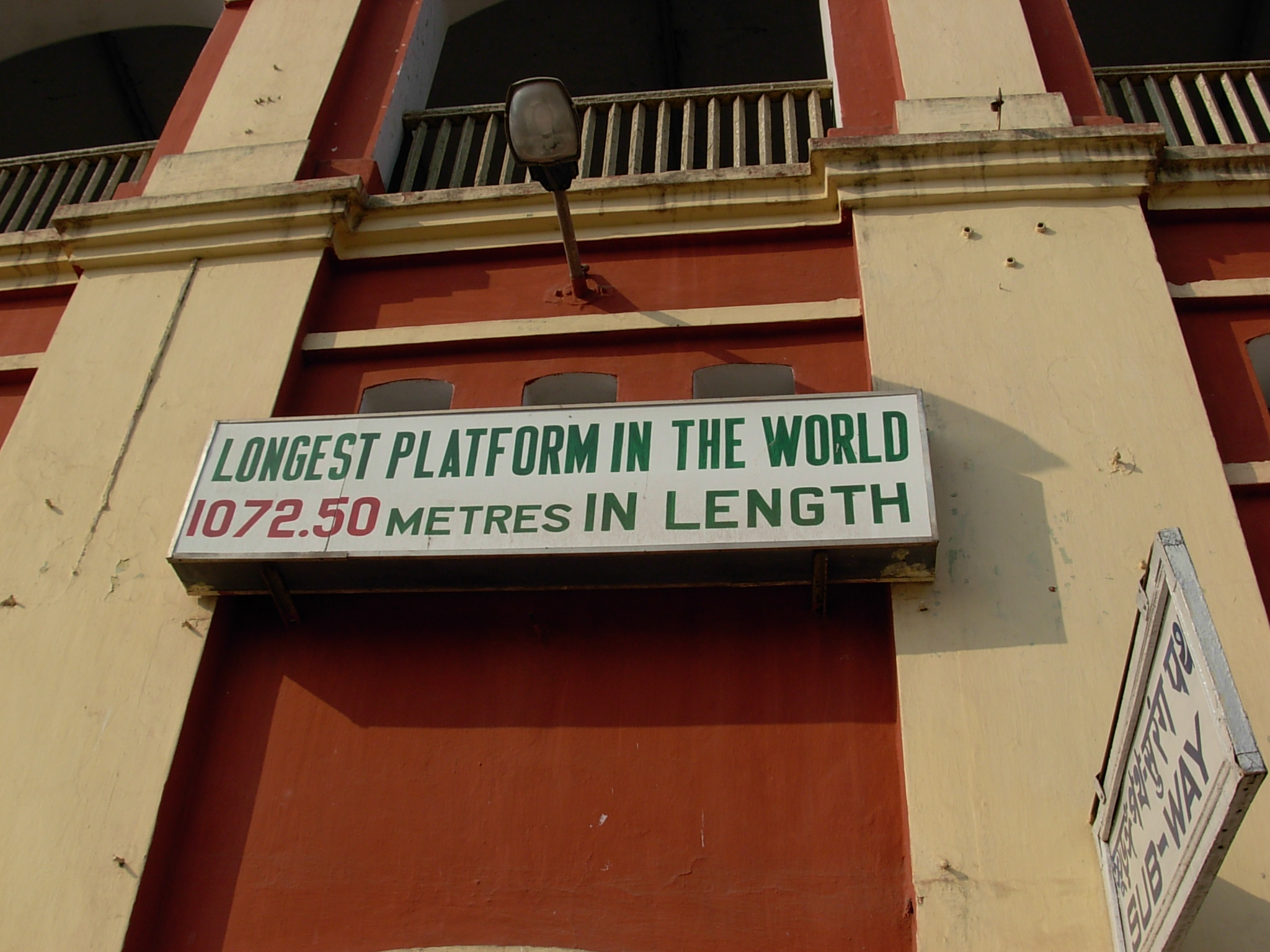
- Kharagpur, India - 1072 m
- Manchester Victoria station/Manchester Exchange station, United Kingdom - 670 m (closed 1969)
- Gloucester railway station, United Kingdom - 602 m
- Cronulla - 370 m plus - double length
- Albury railway station, New South Wales, Australia - longest in Australia
Large stations
This is a list of largest railway stations in the world in terms of number of tracks (where 20 is taken as a minimum definition of 'large'). Note that the number of platforms is usually smaller, as many of these stations have island platforms, with a track on each side.
The way tracks are counted is not uniform; a long track may be counted as two if two trains can be parked there, etc.
Tracks |
Station |
Location |
Notes |
|---|---|---|---|
67 |
Grand Central Terminal |
Manhattan, New York City |
Tracks are on two underground levels: 41 on upper level and 26 on lower level |
44 |
Gare du Nord |
Paris |
There are 40 tracks on the main level, including 2 service tracks that are not open to the public, and 4 tracks in the basement. |
33 |
Shinjuku Station |
Tokyo |
|
32 |
München Hauptbahnhof |
Munich, Germany |
|
30 |
Birmingham New Street |
Birmingham, United Kingdom |
All platforms signalled half-way along plus sidings. Larger Virgin Trains use a 'double' platform in essence, as such length requires both the 'a' and 'b' section of the platform. There are 12 through platforms, with three bay platforms although only one is used for passenger trains. |
30 |
Manchester Piccadilly |
Manchester, United Kingdom |
14 Mainline Platforms each with an 'A' and 'B' designation, 2 Underground Metrolink Platforms. |
30 |
Napoli Centrale station |
Napoli, Italy |
26 Platforms + 4 in the basement (Napoli Piazza Garibaldi). |
30 |
Tokyo Station |
Tokyo |
|
29 |
Frankfurt Hauptbahnhof |
Frankfurt, Germany |
|
29 |
Pennsylvania Station |
Manhattan, New York City |
21 numbered tracks are used by Amtrak, New Jersey Transit, and the Long Island Rail Road. The station complex also has two separate New York City Subway stations with 4 tracks each. |
28 |
Termini Station |
Rome |
|
27 |
London Waterloo |
London, United Kingdom |
Not including the platforms of Waterloo International and Waterloo East. |
27 |
Gare Montparnasse |
Paris |
|
27 |
Gare Saint-Lazare |
Paris |
|
26 |
London Euston |
London |
18 mainline platforms plus two intermediate roads, 6 underground |
26 |
Zürich Main Station |
Zürich |
16 mainline and 4 S-Bahn platforms above ground; 6 S-Bahn platforms underground |
25 |
Central Station |
Sydney |
27 with 2 unused platforms used for MetroPitt scheme, announced 2005 |
25 |
Ueno Station |
Tokyo |
12 on upper level, 5 on lower level above ground; 4 subway platforms underground; 4 Shinkansen platforms lie even deeper; 4 platforms of Keisei Ueno Station not included |
24 |
Cape Town Station |
Cape Town |
|
24 |
Leipzig Hauptbahnhof |
Leipzig, Germany |
|
24 |
Milan Central Station |
Milan |
|
24 |
Hoboken Terminal |
Hoboken, New Jersey |
18 numbered New Jersey Transit tracks and 3 Hudson-Bergen Light Rail tracks along the river, plus 3 PATH tracks underground. |
23 |
Kyoto Station |
Kyoto, Japan |
14 on ground level, 4 for Shinkansen, 3 for Kintetsu and 2 for subway |
22 |
Omiya Station |
Saitama, Japan |
1 for New Shuttle included |
22 |
Nagoya Station |
Nagoya, Japan |
|
21 |
Howrah Station |
Kolkata, India |
|
21 |
Brussels South |
Brussels |
|
21 |
Shinagawa Station |
Tokyo |
Additional 2 under construction |
20 |
Düsseldorf Hauptbahnhof |
Düsseldorf, Germany |
|
20 |
Union Station |
Chicago |
Two sets of tracks, 10 each facing north and south. Serves both Amtrak and Metra trains. |
20 |
Paddington |
London |
|
20 |
Stockholm Central Station |
Stockholm |
Freight stations
Freight stations can coexist at the same locations as passenger stations, which shares the cost of signalling or they can be separate on freight only lines.
See also
- Cross-platform interchange
- Interchange station