
Politics of Gatineau Park
The Politics of Gatineau Park involves controversial issues surrounding the park's creation, its status as a federal but non-national park, its stewardship by the National Capital Commission and the construction of private dwellings in the park. It also includes the activities of several public advocacy organizations, such as the Federal Woodlands Preservation League formed in 1934 and headed by Percy Sparks, its modern successor, the New Woodlands Preservation League and its Gatineau Park Protection Committee.
Even though it was advocated by Dominion Parks Commissioner James Harkin to be the first national park outside the Rocky Mountains, Gatineau Park remains the only federal park that is not a national park today, a situation that has direct repercussions on its ecology, BOUNDARIES and land mass.
History
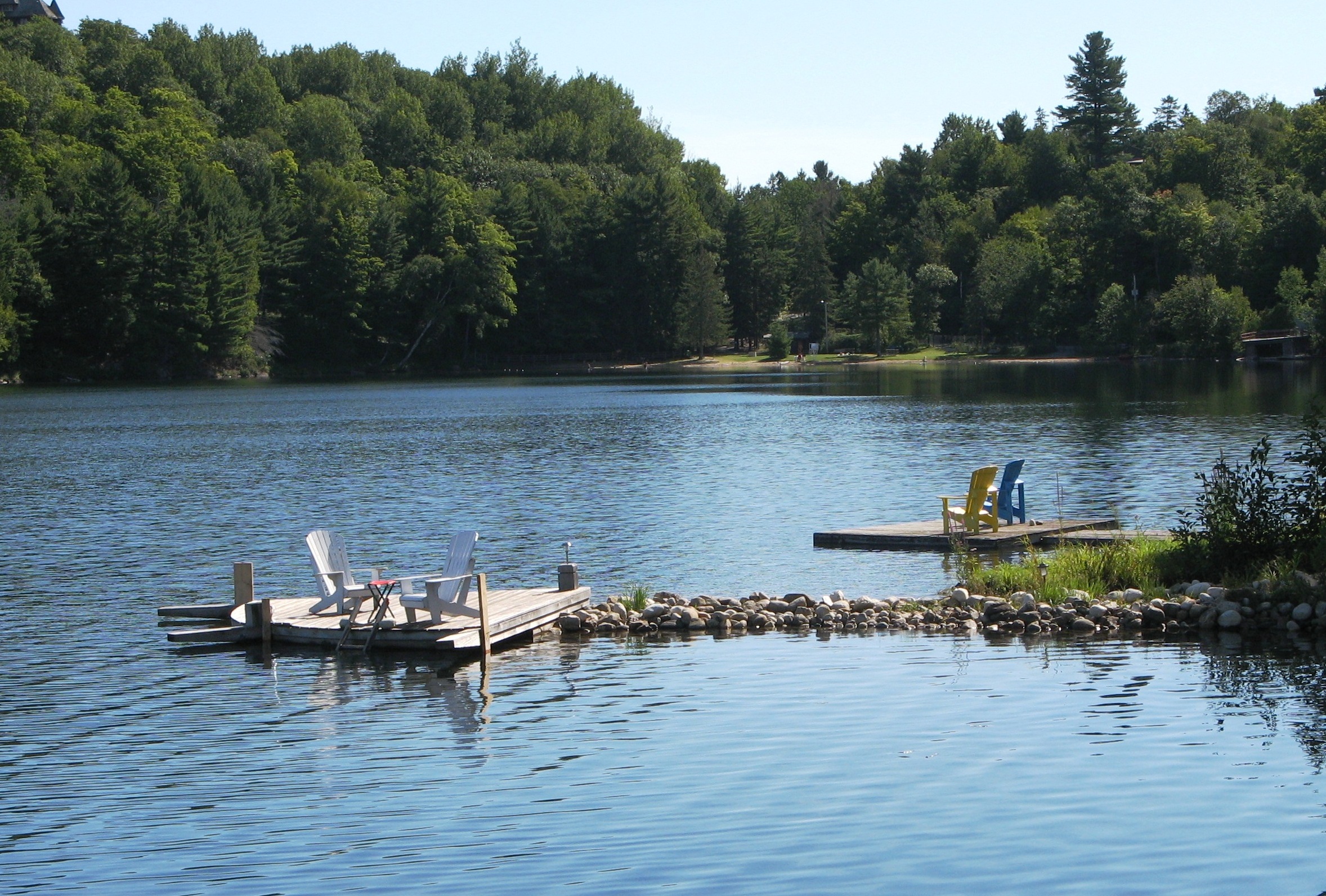
Created in 1938, Gatineau is the only federal park not protected by the National Parks Act, largely as a result of former Prime Minister William Lyon Mackenzie King's caution, fear of criticism and desire for privacy.
Gatineau Park was not only the first national park advocated for Quebec, it was also planned to be the first one outside the Rocky Mountains. As well, it was to be the first national park created by the first parks service in the world, the Dominion Parks Branch.
On December 3, 1912, Dominion Parks Commissioner James Harkin wrote to Deputy Minister of the Interior William Cory, arguing for the creation of a nation-wide system of parks, the first of which was to be Gatineau Park. In his memo, Harkin said:
- "The East has no national parks like those in the Rockies, and it is proposed that the country develop a broader scheme of parks than exists in any other country[…] Bringing into effect the proposed Gatineau Park […] would, I think, most easily commence this scheme."Library and Archives Canada, Department of the Interior, Dominion Parks Branch, File US-14, volumes 1,2,5, and 6; See Claim Gatineau Park can’t be national park untrue, The Ottawa Citizen, October 16, 2006,
http://www.canada.com/ottawacitizen/news/city/story.html?id=a78f8c04-48f2-49f6-873f-8a17580583bd, and speech on Bill S-210 by the Honourable Tommy Banks, Senate Debates, October 5, 2006, pp. 847-849, http://www.parl.gc.ca/39/1/parlbus/chambus/senate/deb-e/pdf/035db_2006-10-05-E.pdf.
A few months later, on Cory's suggestion, Harkin wrote Quebec Minister of Mines and Forests Charles Devlin inquiring whether he would help establish a national park in the Gatineau district. Although provincial officials wrote back that the matter would receive their minister's immediate attention, Devlin died before he could follow up on Harkin's request, and no further response was ever received.
And with the 1913 economic depression and the First World War intervening shortly thereafter, the government of Canada had to tend to more pressing matters.
On April 7, 1927, the idea of creating a Gatineau national park was again raised in the House of Commons, where MPs considered a bill to create the Federal District Commission, which would build parks and parkways on both sides of the Ottawa River. During debate, however, Conservative MP John Edwards accused Prime Minister King of wanting to create a park around his Kingsmere property and ease access to it by building a parkway. Though he denied the charge, the criticism would shape King's subsequent decisions regarding the park.
Federal Woodlands Preservation League
Eight years later, at the urging of Percy Sparks of the Federal Woodlands Preservation League, Conservative Interior Minister T.G. Murphy commissioned a survey to examine The Effects of fires and excessive logging in the Gatineau Hills. Among other recommendations, the survey proposed creating a national park. Two years later, however, King chose instead to solve the problem by gradual property acquisition, creating Gatineau Park in embryonic form on July 1, 1938.
In his diary entry of December 20, 1937, King explained the reasons behind his decision, writing that he would allow the park to be created, despite his aversion to tourists invading the Meech and Kingsmere Lake areas, and his fear that he would be criticized for wanting to create a park around his country estate.
King's self interest and fear of criticism greatly contributed to denying Gatineau Park status as a national park in the 1930s. His decision to opt for gradual land acquisition would protect his private property and that of his Meech Lake and Kingsmere neighbours, and have repercussions on park management to this day.
The reasons officials give today to explain Gatineau Park's continued lack of national status do not stand up to careful analysis, in the opinion of the New Woodlands Preservation League.
Controversy over parkland ownership
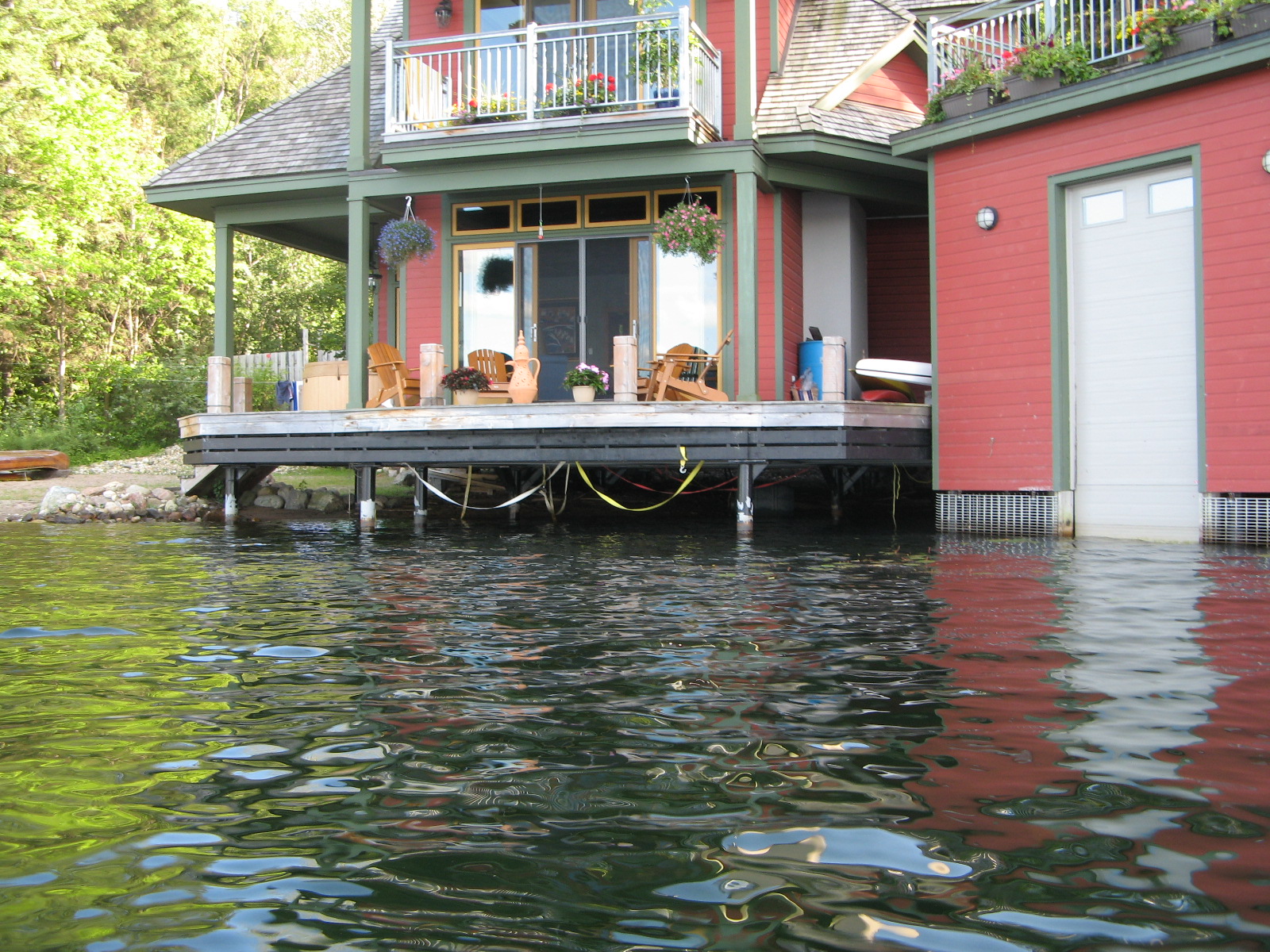
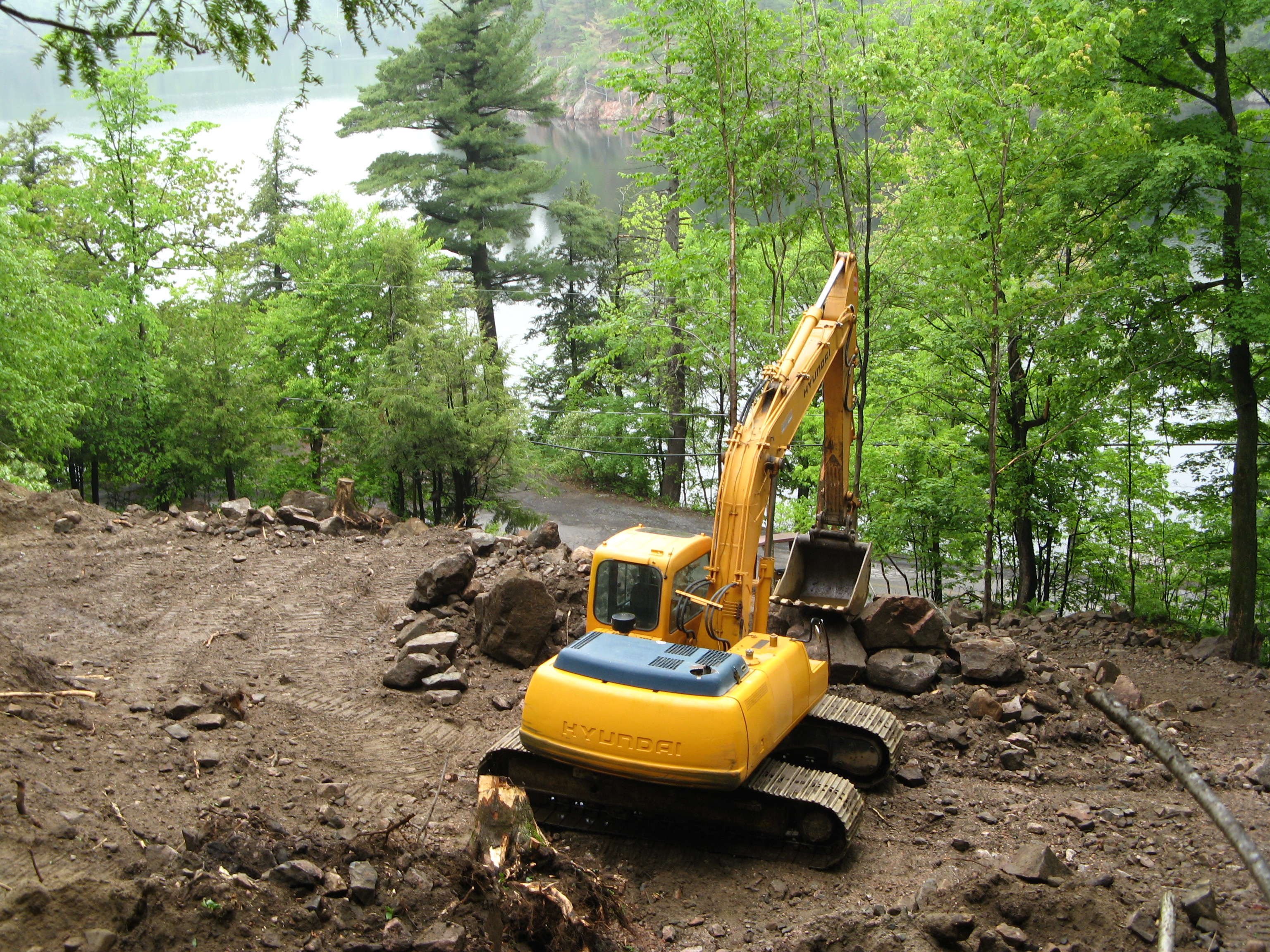
That Gatineau Park is not a national park, according to Parks Canada, is due to the Quebec government's historical refusal to transfer its 17% "ownership" of the land to the federal government.
Appearing before a Commons committee on April 14, 2005, Parks Canada CEO Alan Latourelle said that the preconditions to creating national parks include a federal-provincial agreement to do so, along with the province's transferring to the federal government the surface and subsurface rights to the lands concerned. Referring specifically to Gatineau Park, he said that:
- "Part of the land is not federal. It is provincially owned – about 11% [sic] of it – and the subsurface rights are owned by the Province of Quebec. In this specific case, if it were to be considered for a national park, we would require the Government of Quebec's support, and clearly historically we have not received that level of support anywhere in Quebec to create national parks. So it's not an option we're currently looking at."
However, by virtue of a 1973 agreement, the Quebec government transferred the "control and management" of of provincial lands located inside Gatineau Park to the federal government – "in perpetuity" according to the two accompanying Orders in Council. The province also transferred the control and management of the lake bottoms located in the park, committed itself not to issue mining exploration permits, stipulated that the lands it was transferring were to form part of Gatineau Park, and guaranteed that the rights it was transferring were free of all defects in title. In such agreements, and those preceding creation of national parks, it is control and management of the land and resources, not ownership, that is being transferred, a principle confirmed by the Supreme Court.
The NCC appeared before a Senate committee and said that it did have "control and management" of those lands by virtue of the 1973 agreement. However, the NCC has also said two different things about the so-called Quebec lands in Gatineau Park. First, in its 2005 master plan for Gatineau Park, the agency said that 17% of the park "is owned by the Province of Quebec and is managed by the NCC under the terms of an existing agreement." Second, the NCC’s immediate past CEO, Micheline Dubé, confirmed in a September 14, 2007 letter to the New Woodlands Preservation League that: “The NCC has asserted to the province of Quebec its position that the 1973 agreement is valid and that, as between the province of Quebec and the NCC, the agreement transferred ownership.†So, the agency has said that both it and the Quebec government own the same lands -- concurrently -- although it, the NCC, pays the municipal taxes on the Lac La Pêche lands. Paying taxes on someone else's lands is not a usual practice.
This issue was settled on March 20, 2009, when the Gatineau Park Protection Committee intervened before Quebec’s Administrative Tribunal, managing to secure rightful federal ownership of that 61.5 square kilometre patch of Gatineau Park land. As a result of this intervention, the Quebec Justice Department withdrew its appeal concerning ownership of Gatineau Park lands.
The only official statement in the press following this Quebec Administrative Tribunal decision, was from NCC Chief Executive Marie Lemay to the effect that the land titles in the exchange still had to be transferred -- 36 years after the agreement was signed.. However, according to legal scholars Paul Lordon and David W. Mundell, there is no legal obligation for titles to be registered in the case of a transfer of administration and control over land from the provincial government to the federal government. Titles, they argue, remain vested in the Crown, while only administrative control passes from the province to the federal government. And indivisibility of the Crown is a fundamental principal of Canadian Law.
The New Woodlands Preservation League maintains that the only reason Gatineau Park is not a national park is due to the presence of private inholdings within its boundaries, underlining that Section 5(1)(a) of the National Parks Act forbids private lands inside parks.
Changing park boundaries
Gatineau Park's boundaries were first set by Order in Council in 1960. However, they seem to have changed a great deal in recent years. As a result of a boundary rationalization exercise in the 1990s, the National Capital Commission removed 48 properties totalling from the park. With the additional given up to road building within the same time frame – roads built in disregard of master plan commitments – the total area removed from the park stands at .
The NCC's position on this removal of land from Gatineau Park is that other lands have been included in the Meech Creek Valley, and that park boundaries had expanded.
However, the exact nature of the park's boundaries and the mechanism for their change have been unclear. On November 22, 2005, Senator Mira Spivak raised a question of privilege on the issue. In response to a written question submitted in 2004, the NCC informed Senator Spivak that “the legal boundary of the park […] had been established by federal Order in Council in 1960,†however in 2005, in response to a request to Ottawa Centre MP Ed Broadbent, the NCC replied that “the 1960 Order in Council did not establish the park boundary.†Furthermore, when MP Broadbent requested “the legal description of the legal boundaries of Gatineau Park, [...] he was informed that no such description exists.â€
Adding to the number of interpretations of how boundary changes were made, former NCC Chairman Marcel Beaudry said in a letter of April 12, 2005 to senators that Treasury Board had approved the park’s new boundary in 1997. However, in response to a written question from Senator Spivak seeking clarification, the NCC then said that the Treasury Board decision had not established the park boundary. And in the wake of these contradictions, the NCC has also claimed that the park’s boundary was set by everything from the Meech Creek Valley Land Use Concept, to National Interest Land Mass designation, to section 10(2)(c) of the National Capital Act.
NCC documents confirm that Gatineau Park’s boundary was established by order in council in 1960, and that any changes to that boundary would require a new order in council. However, no new order in council was signed to reflect the rationalised boundaries of 1997. . The Loblaws on Saint Raymond Boulevard remains within the 1960 boundaries, while the Meech Creek Valley remains outside Gatineau Park’s current legal boundary..
However, when asked about the Loblaws property by Senator Milne at the March 29, 2007 Standing Senate Committee on Energy, the Environment and Natural Resources hearings, NCC Executive Vice-President and Chief Operating Officer Micheline Dubé said:
The NCC’s 1976 Conceptual Plan for Gatineau Park and two Environment Quebec maps show the Loblaws lands inside the park’s 1960 boundary.
Private property in the park
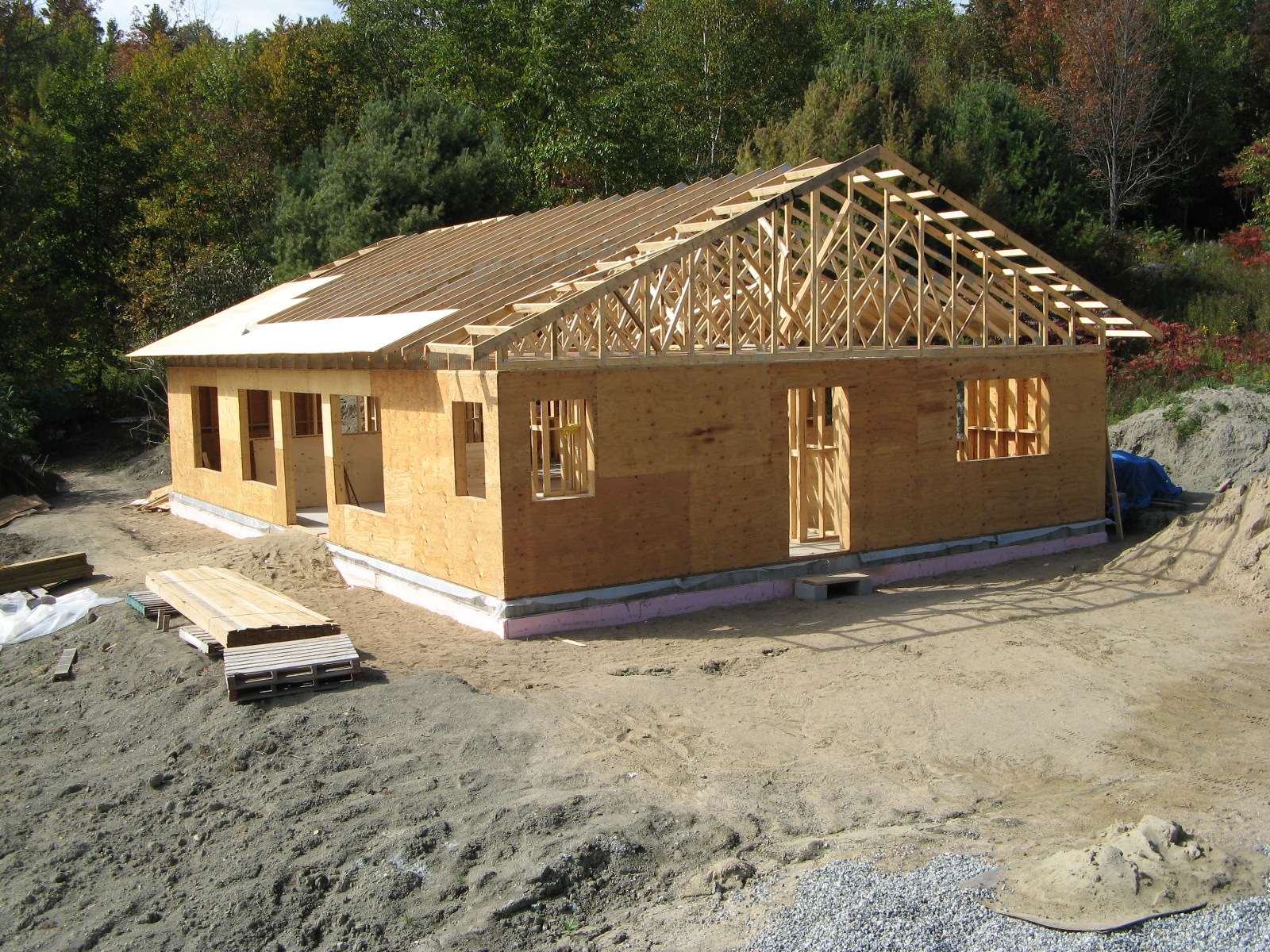
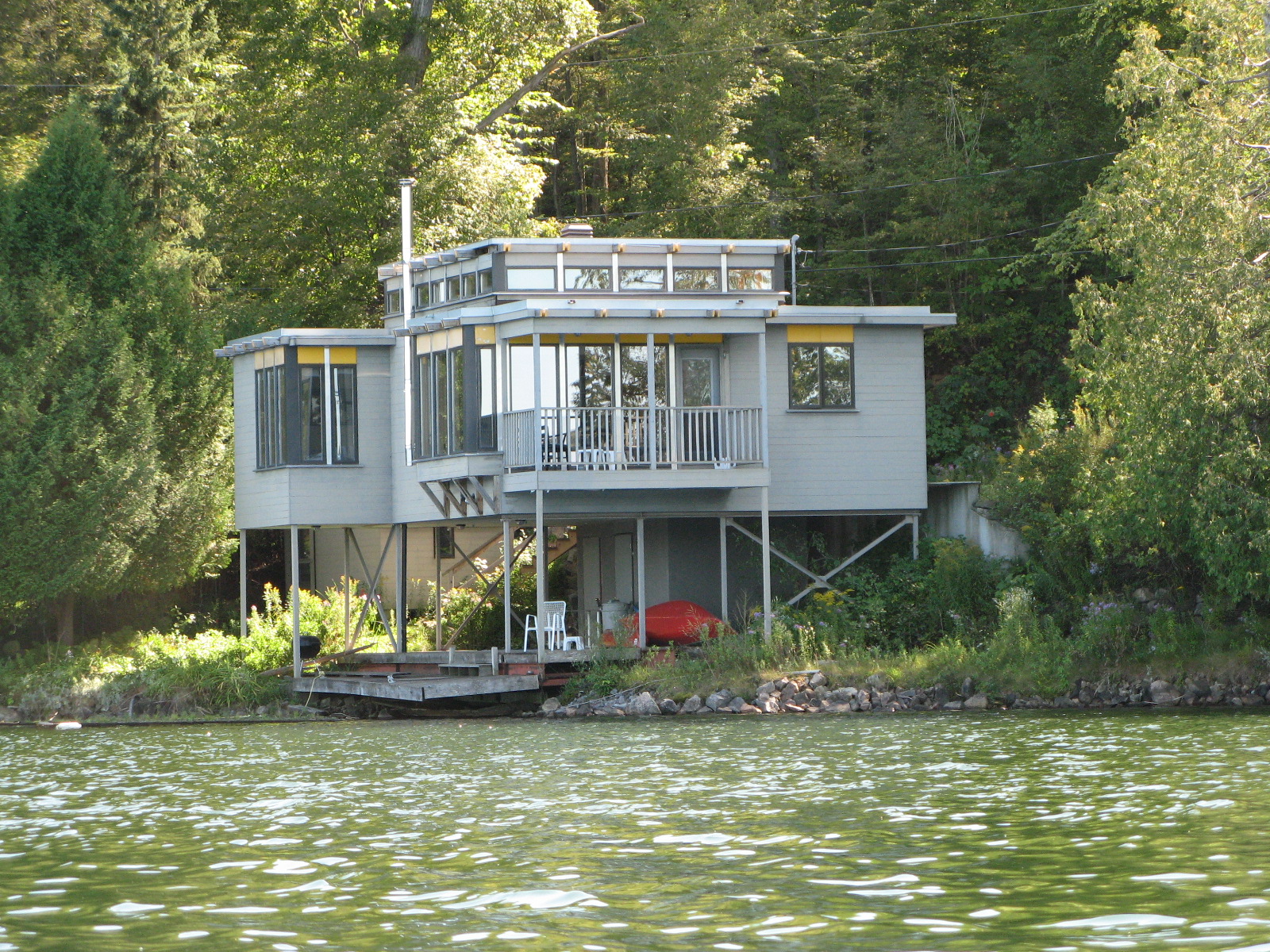
In all its Gatineau Park master plans, the NCC argues that private inholdings are detrimental to the park's public purpose,since they create holes that impair park integrity, making it difficult to protect wildlife, as well as natural and cultural resources. Though inholdings make up only two percent of Gatineau Park – i.e., some 300 properties covering about 2,100 acres – the handicap they impose and the problems they are perceived to cause are out of proportion to their size.
Private property is primarily located near the park’s prime scenic and cultural attractions like Meech and Kingsmere lakes, seriously impeding public access and enjoyment of those sites. Inholdings also raise other issues that include the construction of access roads, land subdivisions, fragmentation and damage to habitat, inholder efforts to prevent the building of park facilities near their land, conflicts between owners and visitors, etc. Moreover, the Gatineau Park Protection Committee has argued that the construction of some 119 new houses in the park since 1992 has seriously added to this problem, saying that it increased habitat fragmentation and further impeded public access.
A debate on the issue of private property in the park took place in the early months of 2008, when news of a residential development on Carman Road came to light. A group of park activists led by the New Woodlands Preservation League, managed to pressure the NCC into purchasing that property in early May. Moreover, the New Woodlands Preservation League has argued that the NCC should have used its legal authority to stop all further construction in what is a public park.
The federal government took steps to solve the problem. On September 5, 2008, it adopted an Order in Council approving NCC acquisition of any and all private property within Gatineau. In essence, this means that the NCC is no longer required to apply to Treasury Board to purchase Gatineau Park properties priced over $25,000.
However, new residential construction was started in 2009 on Carman Road inside Gatineau Park, and the NCC has given no indication that it intends to stop it by using the authority conferred on it by Order in Council PC 2008-1604. In fact, when asked, NCC CEO Marie Lemay told the press she was powerless to act, and that other developments might follow. Lemay stated that the NCC had made an offer to purchase the land, but that the land had already been subdivided for housing. She indicated that the NCC had decided not to acquire the lots in question because of their proximity to Highway 105 and that the NCC does not consider them ecologically sensitive. She said:
Lemay indicated that the NCC cannot prevent development on private property within the park boundaries because those planning decisions are a municipal responsibility.
Charles Cardinal, spokesman for the Municipality of Chelsea, stated that the municipality is obligated to issue building permits for residences on private land inside the park and thus cannot refuse development.
Gatineau Park Protection Committee co-chair Jean-Paul Murray responded to Lemay's statements in September 2009, saying:
Murray also wrote about this issue to Pontiac Member of Parliament Lawrence Cannon in an open letter:
Acquiring all private inholdings is a commitment made in the 1980, 1990 and 2005 Gatineau Park master plans; the NCC is obligated by virtue of Treasury Board Decision 809464 to acquire all private lands in the park; and section 19 of the National Capital Act authorizes the NCC to adopt bylaws to implement its master plan.
Moreover, all Gatineau Park lands are part of the National Interest Land Mass (NILM), and the NCC’s policies state that they are considered essential to the functioning and experience of Canada’s capital. NCC policy clearly says:
Park legislation

To deal with the problems related to park boundaries and residential development, several parliamentarians have tabled legislation in both the Senate and House of Commons over the last few years.
In 2005, Ottawa-Centre MP Ed Broadbent introduced Bill C-444 to provide legal boundaries and a land management mechanism for the park, similar to the protection provided by the National Parks Act. And, in similar moves, the Honourable Mira Spivak of Manitoba tabled a bill in the Senate on April 25, 2006 which would also have granted legal status and protection to the park, while Paul Dewar, who replaced Ed Broadbent as MP for Ottawa-Centre in 2006, tabled similar legislation in the House of Commons in May 2006 and in April 2009.
Senator Spivak's Bill S-210 received second reading in the Senate on December 13, 2006. It was referred to the Energy, Environment and Natural Resources Committee, where it was studied on March 22, 27 and 29, and on June 5 and 7. On June 7, 2007, Bill S-210 was reported back to the Senate with three amendments.
Although the government had originally expressed support for Bill S-210, it proposed 18 amendments which, if adopted, would have denied Parliament the authority to approve property sales in the park or changes to its boundaries. Moreover, senior NCC officials have expressed their support for Bill S-210 when they appeared before a Senate committee on March 29, 2007.
Bill S-210 died on the Senate Order Paper when the government prorogued Parliament in September 2007. Its successors, Bills S-227 and S-204 were tabled by the Hon. Mira Spivak on February 12, 2008 and January 27, 2009 respectively. Both bills include amendments made by the Senate Environment Committee, along with a schedule providing a full description of the park's 1997 boundary. Similar changes were made to Dewar's Bill C-367 in the Commons. Bill S-227 died on the order paper as a result of the 2008 federal election, while S-204 is currently at second reading in the Senate.
On June 9, 2009, the Government of Canada tabled its long-awaited Gatineau Park legislation, Bill C-37. The Canadian Parks and Wilderness Society and Gatineau Park Protection Committee have argued that C-37 falls short of offering Gatineau Park a proper legislative framework, since it does not meet basic park protection criteria. Unless amended, the Canadian Parks and Wilderness Society and Gatineau Park Protection Committee also argue that Bill C-37 will allow boundary changes, inholding development and road building to continue impairing the ecological integrity of Gatineau Park. It will also allow the federal government to change park boundaries without consulting Quebec.
Bill C-37 received second reading on October 5, 2009 and was referred to the House of Commons Committee on Transport, Infrastructure and Communities. Hearings on the bill began on October 19, 2009, with testimonies from Transport Minister John Baird and the Canadian Parks and Wilderness Society. Although Minister Baird said NCC’s power to expropriate land should be revoked, he also contradicted that statement, saying it might still have to be used, underlining that national interest might come into play. Said Minister Baird:
However, he also said:
Asked by Ottawa-Centre MP Paul Dewar whether he would consider amending the bill to provide greater parliamentary oversight, Baird said he’d welcome suggestions to that effect.
Minister Baird also said:
For its part, the Canadian Parks and Wilderness Society underlined during its testimony that the bill had several grave deficiencies. Said Muriel How, chair of the organization’s Gatineau Park Committee:
How also underlined that Gatineau Park should be managed to the same standards of ecological integrity and receive the same legal protection enjoyed by all Canadian national parks, calling upon the committee to amend the bill.
Automobile congestion issue
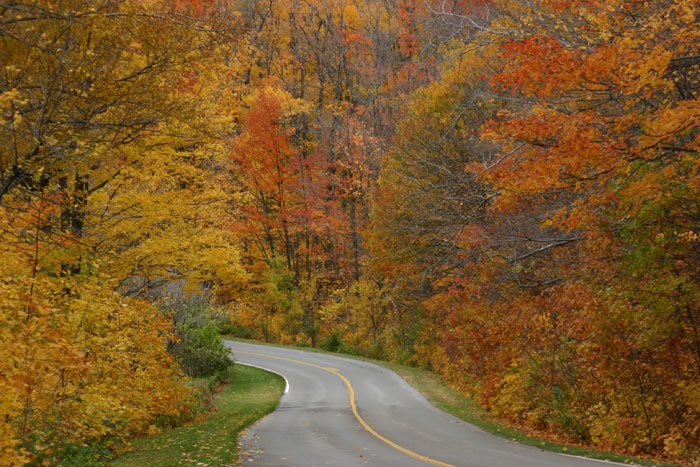 The NCC has stated that automobile traffic creates congestion in Gatineau Park, as well as noise problems from cars and their stereos. In mid 2009, the NCC started work on a new transportation plan to provide "transit alternatives" for visitors and reduce car traffic. The NCC has indicated this will likely involve public transit inside the park. The transportation plan is expected to be complete by the spring of 2011.
In July 2009 Park director Marie Boulet said:
The Gatineau Park Protection Committee has argued that this move is an attempt to limit public access to the park and that the NCC’s approach is incoherent. On July 21, the Committee's co-chair, Jean-Paul Murray told the French CBC news that:
In addition, GPPC co-chair Andrew McDermott suggested discrepancies in visitorship numbers, stating in a letter to the Ottawa Citizen that an official NCC estimate of 1.7 million visitors is "vastly exaggerated", compared to an estimate of 584,000 visitors per year derived from a Cross Country Skier Magazine article. McDermott claims that the NCC's inflated visitorship is used as an excuse to restrict public access, such as automobile traffic, to the park.
Role as a monument
Gatineau Park has been described as a memorial to Canada’s World War II dead.
In 1949, Prime Minister Mackenzie King had dedicated the National Capital Plan to Canadian soldiers who died in World War II by order in council, while the plan's author, Jacques Gréber, had said Gatineau Park was the essential feature of any plan for developing the nation's capital.
However, the GPPC has argued that although it is a symbol of democracy, it remains the least democratic federal park in the country, since much of its administration takes place without the oversight provided by Parliament, and since its boundaries can be changed by administrative decree..In the case of national parks, boundaries can only be changed by act of Parliament.
When they appeared before a Commons committee, GPPC members described the park as follows:
External links