
PLM College of Medicine
The College of Medicine of the Pamantasan ng Lungsod ng Maynila, which is situated at the Gusaling Ramon Bagatsing (formerly known as the Gusaling Maynilad), is one of the two Professional schools of the University. It is a prestigious Filipino medical school, and is considered as one of the top three medical schools in the Philippines. For the record, the College is one of the few medical schools in the country that has achieved a 100-percent passing rate in the history of medical board examinations.
The school has a considerably small but distinguished faculty to support its missions of education, research, and clinical care. These faculty hold appointments in the basic science departments at the PLM Main Campus, and in the clinical departments located in multiple PLM-affiliated hospitals and institutions in Metro Manila.
After graduation, medical graduates are assigned in the Ospital ng Maynila Medical Center and other hospitals operated by the City government for one (1) year as post-graduate interns. After licensure, they will be employed by the City Government for four (4) years under any of the following schemes:
- As a resident physician in the Community Medicine Residency Training Program of the PLM College of Medicine
- As a resident physician at the Ospital ng Maynila Medical Center or any other hospital owned and operated by the City of Manila
- As faculty member in the PLM College of Medicine; or As a regular employee of the Manila Health Department.
History
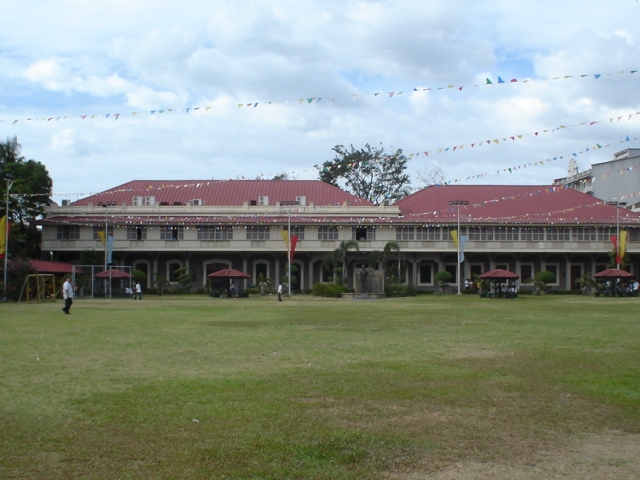
The College of Medicine was established in June 1983, starting with only 48 medical scholars, by virtue of Board Resolution No. 806, Series of 1980, passed on December 15, 1980, by the PLM Board of Regents.
On June 22, 2006, First Gentleman Jose Miguel Arroyo formally launched a PHP 20-million "Bagong Doktor Para Sa Bayan" project, which aims to increase the number of doctors who will provide and enhance medical and health care services for the poor. The brainchild of this project is Senator Juan Flavier, and it has 60 scholars. The first batch of 22 scholars are enrolled in the Pamantasan ng Lungsod ng Maynila and the University of the Philippines, two of the country's leading universities.
Curricular offering
- Doctor of Medicine
Objectives
The College of Medicine has the following objectives:
- Provide medical education to the financially disadvantaged but scholastically deserving students and give them the opportunity to acquire a medical degree;
- Develop the full potentials of each student to enable him to deliver or provide primary health care;
- Equip the medical student with such knowledge, skills, values, attitudes, professional and ethical principles, and experiences as to enable him to pursue research or medical education; and
- Provide the City of Manila medical manpower for its health services and medical facilities.
Admissions
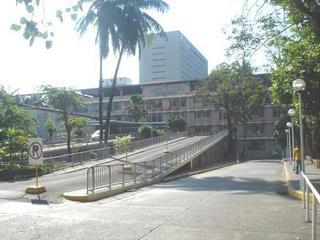
Admission in the first year is open to any student with a college degree, who meets all the requirements prescribed in the criteria for admission.
FreshMen admitted to the College of Medicine are classified according to the two types of program offered: the scholarship and the non-scholarship programs. In the latter, the students pay a very reasonable amount for tuition and other miscellaneous fees, while the scholars are tuition free, but they are required to enter into a contract with PLM and the City government to serve the City of Manila under the PLM Community Health Program, for 5 years after graduation.
Residency Training Program
The General Surgery Residency Training Program of the Ospital ng Maynila Medical Center is a five-year program fully accredited by the Philippine Society of General Surgeons. It is highly structured and has a well-defined general surgery curriculum in which the philosophy, learning objectives, content, teaching-learning activities, and assessment methods are clearly described, implemented as planned, regularly monitored and evaluated annually for improvements.
The teaching-learning activities are formulated always with effectiveness, efficiency, and humaneness in mind. These consist of ACTIVE and self-directed learning activities; community-oriented, competency-based, and problem-based learning approaches; and, a variety of innovative and student-friendly learning methods such as simulated learning, debates, computer-aided and internet-aided studies.
The program also provides career assistance such as preparation for the Philippine Board of Surgery examinations, privilege to have private practice in OMMC while preparing for the certifying examinations, and placement through the Surgeon to Surgeonless Community Program and fellowship programs in other hospitals.
Further reading
- Websites
- PLM Official University Website
- PLM Official Student Publication Website
- PLM Bulletin of Information. 2006.
- Newspaper articles and supplements
- FG launches P20-M medical Charity Project. The Official Website of the Republic of the Philippines. June 22, 2006.
- Pamantasan ng Lungsod ng Maynila: A Quality University with A National Presence. The Manila Bulletin. July 31, 2006.
External links
- PLM College of Medicine admission requirements brochure (for SY 2008-2009)
- PLM Official University website
- PLM Official Student Publication website
- PLM Geocities site
- Association of South East Asian Institutes of Learning
- Wikipedia Map