
Nintendo DS line
The line and Nintendo 3DS line (often called the 3DS family), abbreviated to DS and 3DS respectively, are two lines of handheld game consoles developed and sold by Nintendo since 2004. The original DS line was succeeded by the 3DS line in 2011.
Initially released as an experimental platform ancillary to the Game Boy line, the DS line soon replaced it as Nintendo's flagship handheld device family. Featuring and interacting with many of the game series that are seen on the company's home console lines, the DS line has often represented the bulk of the company's unit system sales throughout the course of its history.
Throughout its lifetime, Sony's PlayStation Portable and PlayStation Vita have been the main market competitors to the DS and 3DS respectively. There have been four different models of the DS line on the market: the original DS, the DS lite, the DSi and DSi XL. Similarly, there have been five models of the 3DS line: the original 3DS, the 3DS XL, the 2DS, the New 3DS and the New 3DS XL.
The Nintendo DS line has been highly successful, continuing the trend of its predecessor, the Game Boy line. With over 153 million units sold worldwide, the DS models are the best-selling handheld consoles, and second best-selling console overall behind the PlayStation 2. The 3DS line has also been relatively successful, with over 42 million shipped .
History
2004– |
– Nintendo DS |
|
2005– |
||
2006– |
- Nintendo DS Lite |
|
2007– |
||
2008– |
– Nintendo DSi |
|
2009– |
– Nintendo DSi XL |
|
2010– |
||
2011– |
– Nintendo 3DS |
|
2012– |
– Nintendo 3DS XL |
|
2013– |
– Nintendo 2DS |
|
2014– |
– New Nintendo 3DS & XL |
|
Timeline
- $_149.99
- $_129.99
- $_169.99
- $_189.99
- $_199.99
- DS
- DS_Lite
- DSi
- DSi_XL
- 3DS
- 3DS_XL
- 2DS
{{-}}
Nintendo DS family
Nintendo DS
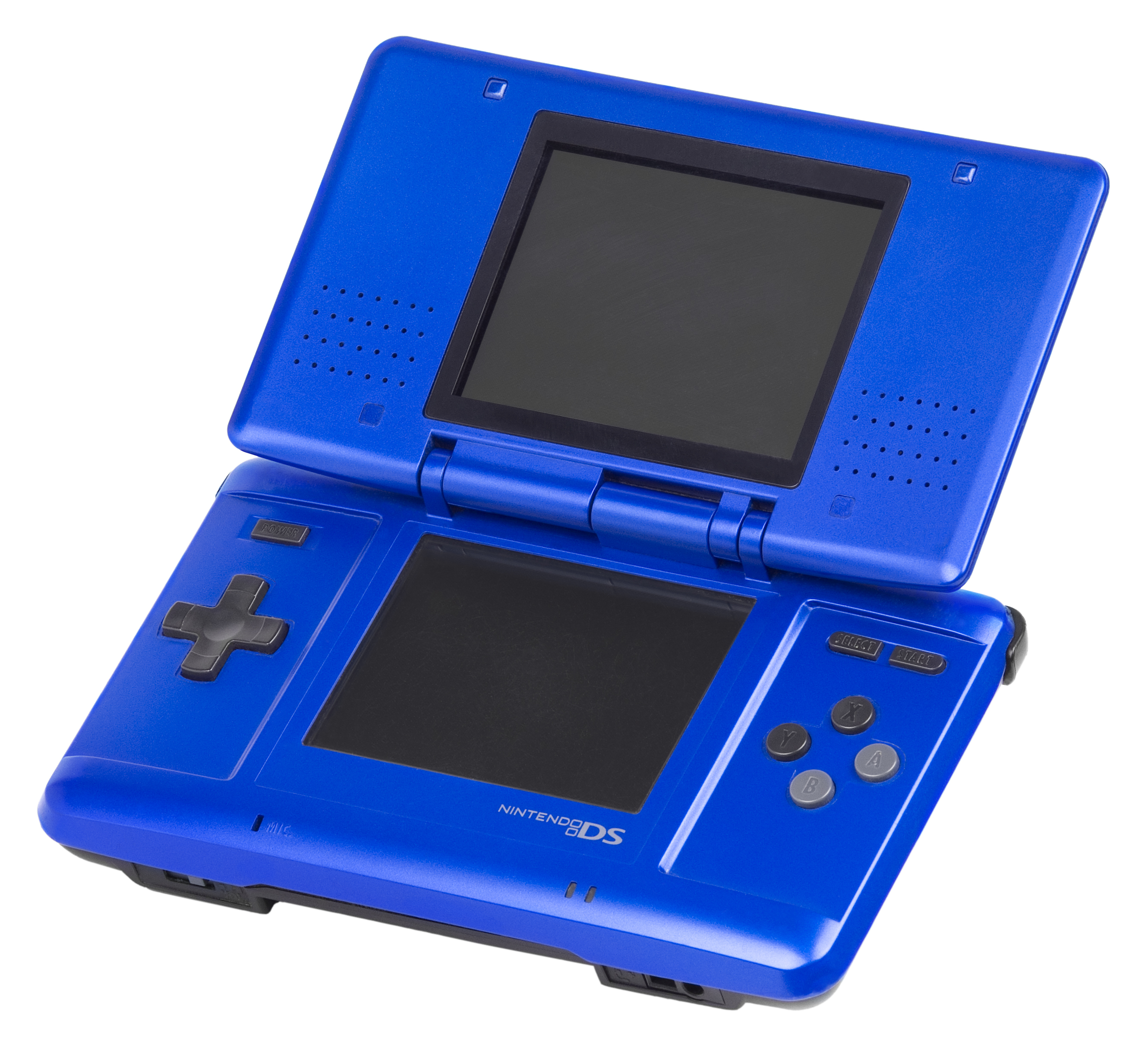 The Nintendo DS (abbreviated to DS) is a dual-screen handheld game console developed and released by Nintendo. The device went on sale in North America on November 21, 2004. The DS, short for "Developers' System" or "Dual Screen", introduced distinctive new features to handheld gaming: an LCD screen working in tandem with a touchscreen, a built-in microphone, and support for wireless connectivity. Both screens are encompassed within a clamshell design similar to the Game Boy Advance SP. The Nintendo DS also features the ability for multiple DS consoles to directly interact with each other over Wi-Fi within a short range without the need to connect to an existing wireless network. Alternatively, they can interact online using the Nintendo Wi-Fi Connection service.
Prior to its release, the Nintendo DS was marketed as a "third pillar" in Nintendo's console lineup, meant to complement the Game Boy Advance and GameCube. However, backward compatibility with Game Boy Advance titles and strong sales ultimately established the new handheld console as the successor to the Game Boy series.{{-}}
Nintendo DS Lite
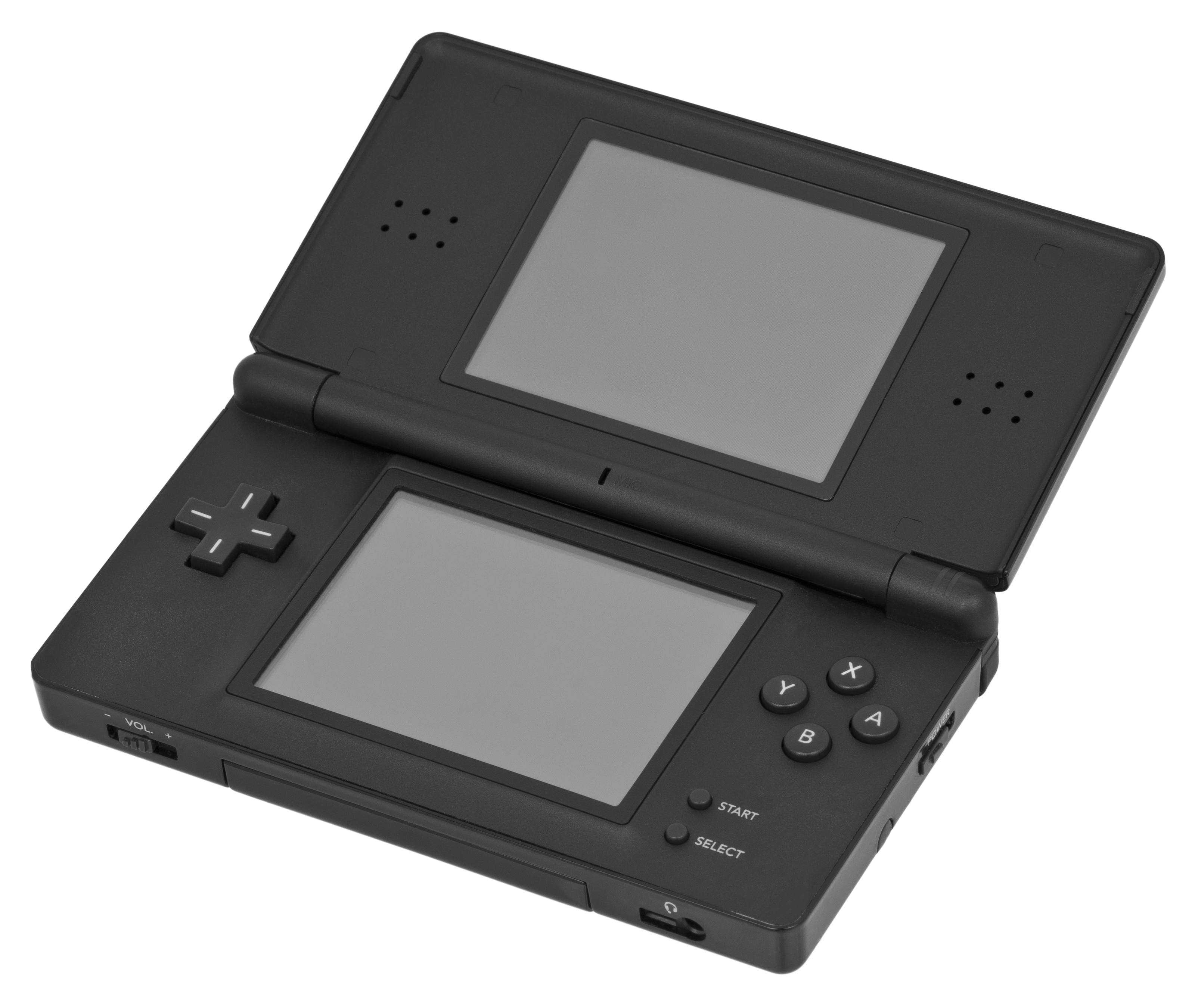 The Nintendo DS Lite (abbreviated to DS Lite) is a dual-screen handheld game console developed and manufactured by Nintendo. It is a slimmer, brighter, and more lightweight redesign of the original Nintendo DS. It was announced on January 26, 2006, more than a month before its initial release in Japan on March 2, 2006 due to overwhelming demand for the original model. It has been released in Australia, North America, Europe, New Zealand, Singapore, and defined regions in South America, the Middle East, and East Asia. As of December 31, 2013, shipments of the DS Lite have reached 93.86 million units worldwide, according to Nintendo.{{-}}
Nintendo DSi
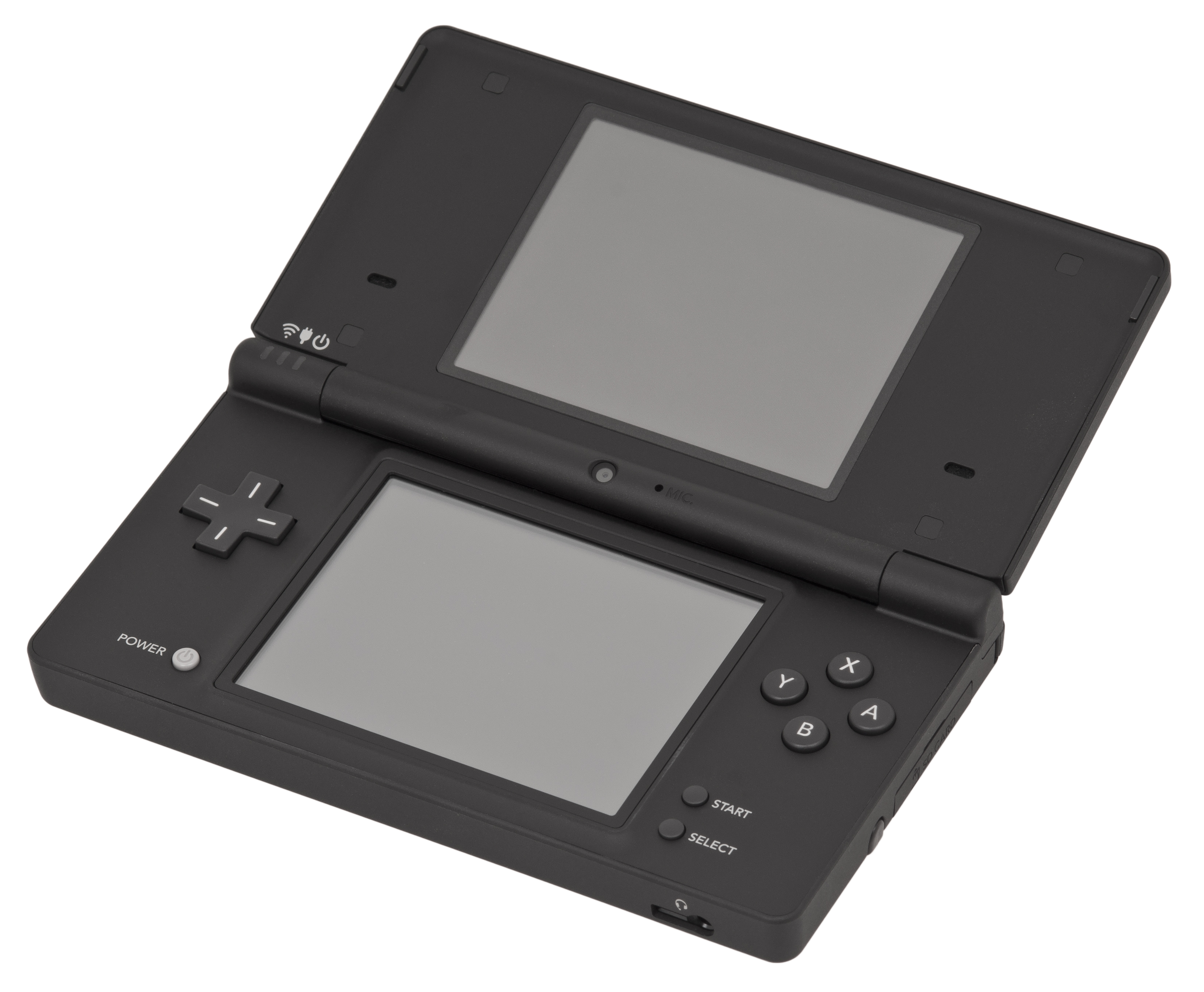 The Nintendo DSi (abbreviated to DSi) is a dual-screen handheld game console released by Nintendo. The console launched in Japan on November 1, 2008, and worldwide beginning in April 2009. It is the third iteration of the Nintendo DS, and its primary market rival is Sony's PlayStation Portable (PSP). Development of the DSi began in late 2006, and the handheld was unveiled during an October 2008 Nintendo conference in Tokyo. Consumer demand convinced Nintendo to produce a slimmer handheld with larger screens than the DS Lite. Consequently, Nintendo removed the Game Boy Advance (GBA) cartridge slot to improve portability without sacrificing durability.
While the DSi's design is similar to that of the DS Lite, it features two digital cameras, supports internal and external content storage, and connects to an online store called the Nintendo DSi Shop. Nintendo stated that families often share DS and DS Lite consoles. Its new functionality was intended to facilitate personalization, so as to encourage each member of a household to purchase a DSi. The handheld supports exclusive physical media in addition to DS games with DSi-specific features and standard DS titles. The only exception to its backward compatibility are earlier DS games that required the GBA slot. As of December 31, 2013, Nintendo had sold 41.33 million DSi and DSi XL units combined.
Reviews of the Nintendo DSi were generally positive; although IGN and bit-tech decried the console's lack of exclusive software and removal of the GBA cartridge slot, its added functionality caused many journalists to recommend it to those who had not purchased a previous DS model. Numerous critics were disappointed with the limited resolution of DSi's cameras, though others such as Ars Technica and GameSpot agreed they were adequate for the handheld's display. CNET and PCWorld considered the DSi Shop to be the most important buying incentive for current DS owners.{{-}}
Nintendo DSi XL
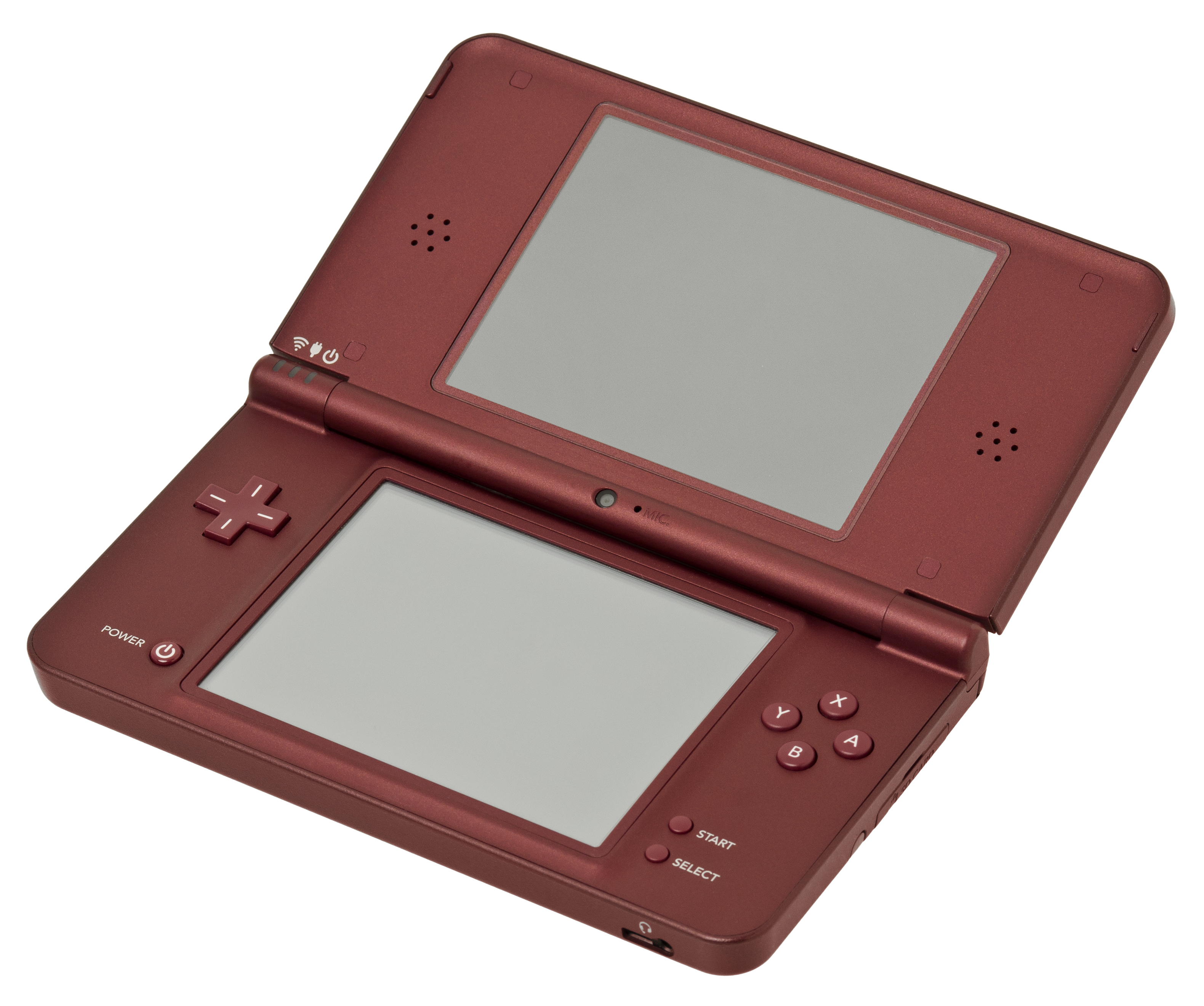 The Nintendo DSi XL (abbreviated to DSi XL) features larger screens, and a greater overall size, than the original DSi. It is the fourth DS model, the first to be available as a pure size variation. Iwata said that cost restraints had, until then, limited the screen size and multiplayer aspects of portable game consoles, and that the DSi XL offers "an improved view angle on the screens", which makes it the first "portable system that can be enjoyed with people surrounding the gamer." He argued that this introduces a new method of playing portable video games, wherein those "surrounding the game player can also join in one way or the other to the gameplay." While the original DSi was specifically designed for individual use, Iwata suggested that DSi XL buyers give the console a "steady place on a table in the living room," so that it might be shared by multiple household members.
The DSi XL is the longest, widest and heaviest DS model. The console features two wide-viewing-angle LCD screens with the same resolution as the smaller model. It has improved battery life over the DSi on all brightness settings; for example, batteries last 13–17 hours at the dimmest setting. The handheld is outfitted with identical speakers contained in larger speaker enclosures, enabling them to produce louder sound. The hinges stop the screen at 120° in addition to the original DSi's position of 155° to allow easier table-top viewing. The DSi XL is bundled with two longer styli, one of which is thicker, rounded, and pen-like, and does not fit inside the unit.{{-}}
Nintendo 3DS family
Nintendo 3DS
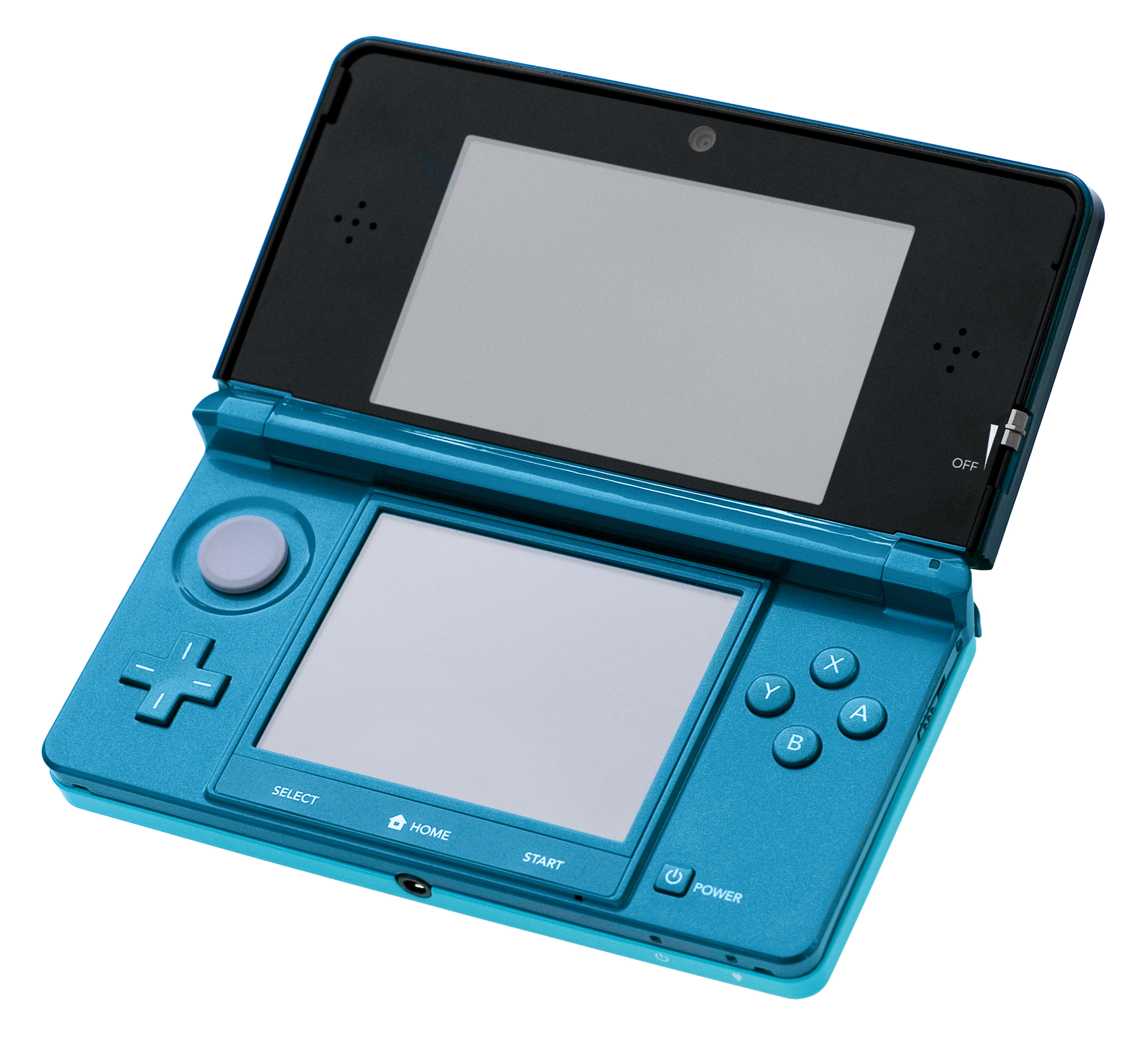 The Nintendo 3DS (abbreviated to 3DS) is a portable game console produced by Nintendo. It is capable of projecting stereoscopic 3D effects without the use of 3D glasses or additional accessories. Nintendo announced the device in March 2010 and officially unveiled it at E3 2010 on June 15, 2010. The console succeeds the Nintendo DS, featuring backward compatibility with older Nintendo DS and Nintendo DSi video games, and competes with the Sony PlayStation Vita handheld console.
The handheld offers new features such as the StreetPass and SpotPass tag modes, powered by Nintendo Network; augmented reality, using its 3D cameras; and Virtual Console, which allows owners to download and play games originally released on older video game systems. It is also pre-loaded with various applications including: an online distribution store called Nintendo eShop, a social networking service called Miiverse; an Internet Browser; the Netflix, Hulu Plus and YouTube streaming video services; Nintendo Video; a messaging application called Swapnote (known as Nintendo Letter Box in Europe and Australia); and Mii Maker.
The Nintendo 3DS was first released in Japan on February 26, 2011, and worldwide beginning in March 2011. Less than six months later on July 28, 2011, Nintendo announced a significant price reduction from US$249 to US$169 amid disappointing launch sales. The company offered ten free Nintendo Entertainment System games and ten free Game Boy Advance games from the Nintendo eShop to consumers who bought the system at the original launch price. This strategy was considered a major success, and the console has gone on to become one of Nintendo's most successfully sold handheld consoles in the first two years of its release. As of December 31, 2013, all Nintendo 3DS models and 2DS models combined have sold 42.74 million units.{{-}}
Nintendo 3DS XL
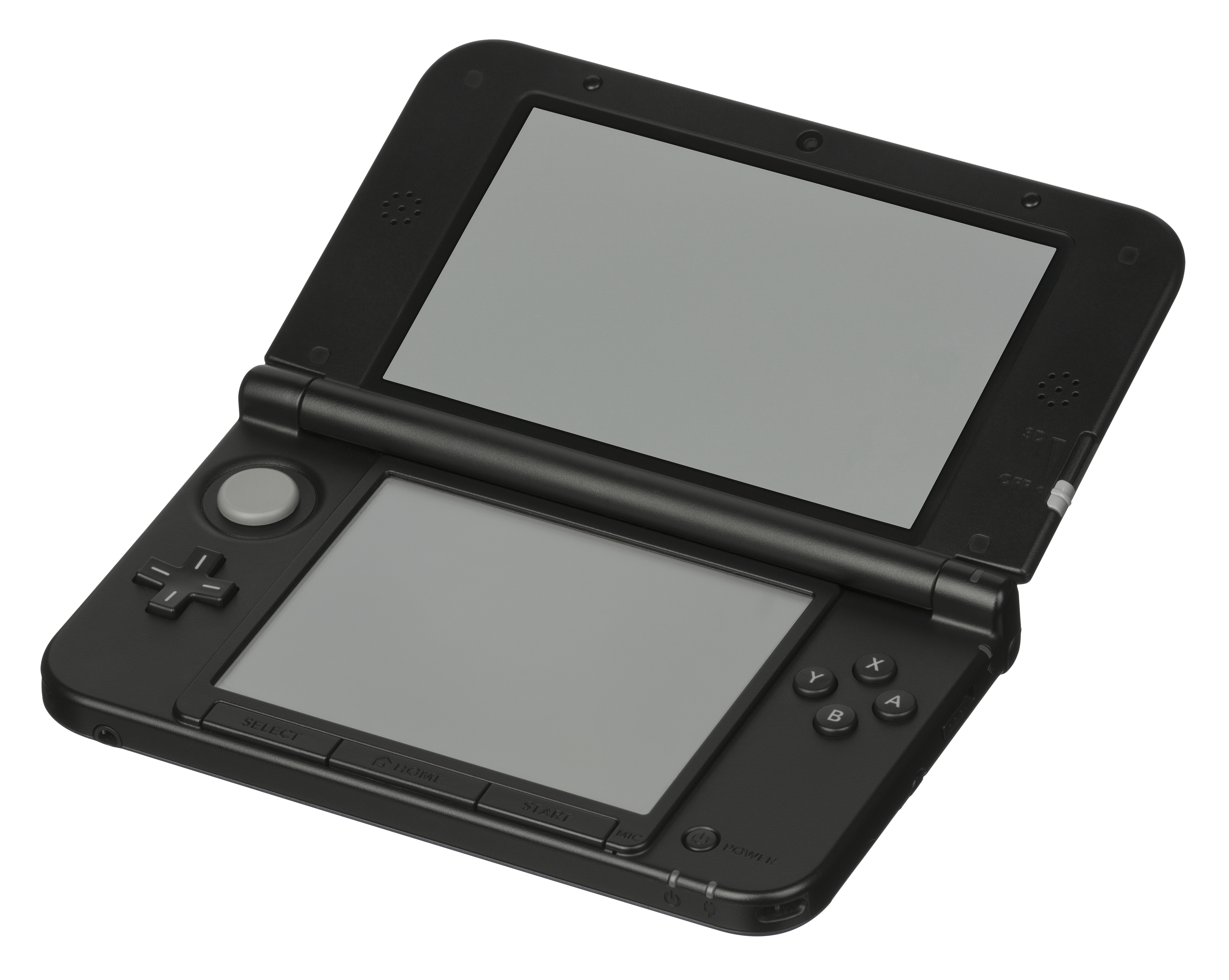 The Nintendo 3DS XL (abbreviated to 3DS XL) is the first Nintendo 3DS handheld game console revision produced by Nintendo. As with the transition from the Nintendo DSi to the DSi XL, the Nintendo 3DS XL features larger screens, longer battery life, and a greater overall size than the original Nintendo 3DS. The Nintendo 3DS XL is intended to complement the original 3DS, not replace it, as both models remain in production. When in its open position, the Nintendo 3DS XL is the longest, widest and heaviest system of the Nintendo 3DS family. As of December 31, 2013, Nintendo reports 15.21 million units sold.{{-}}
Nintendo 2DS
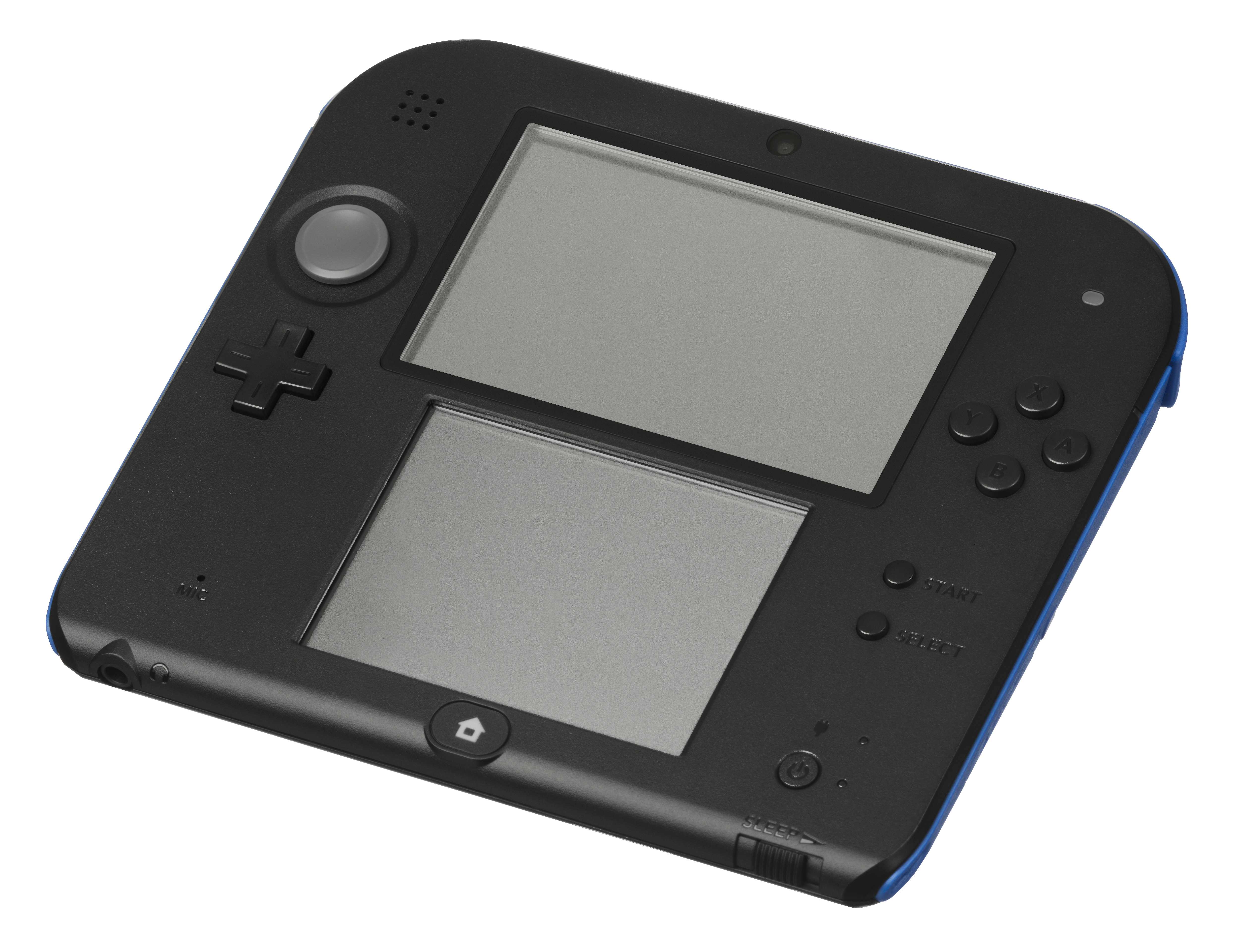 The Nintendo 2DS (abbreviated to 2DS) is a handheld game console developed by Nintendo. Announced in August 2013, the console released in North America, Europe, Australia and New Zealand on October 12, 2013, with no current plans for a Japanese launch. The Nintendo 2DS is an entry-level version of the Nintendo 3DS which maintains compatibility with software designed for the Nintendo DS and 3DS, but uses a new slate-like design rather than the clamshell design used by its precursors and lacks the Nintendo 3DS's signature autostereoscopic 3D functionality.
Upon its unveiling, reception of the Nintendo 2DS was mixed, particularly regarding the design of the device which some reviewers felt was less appealing than that of the 3DS with some however commenting that it felt more robust. The Nintendo 2DS console is sold concurrently with the other models of the Nintendo 3DS family as an incentive to expand the market for Nintendo 3DS games. It is intended for a different audience than the 3DS, in particular children younger than seven years old, whom are not recommended to use the 3DS's 3D functionality. Nintendo have stated however that 3D will remain a part of their future plans. Various publications praised its pricing and form-factor, but also criticized the console's poor aesthetics, sound quality, and battery life.
As of December 31, 2013, Nintendo reports 2.11 million units sold.{{-}}
New Nintendo 3DS
The New Nintendo 3DS and its larger XL variant, are handheld game console models developed by Nintendo and announced on August 30, 2014. They feature a slightly modified 3DS and 3DS XL design and features the addition of two new shoulder buttons and a new L-analog stick, as well as a faster processor. They are scheduled for launch in Japan in October 2014, in Australia and New Zealand in November 2014, with other markets following in 2015.
Comparison
Product line |
Nintendo 3DS |
|
|---|---|---|
Name |
New Nintendo 3DS XL |
New Nintendo 3DS |
Logo |

|
|
Console |
||
In production |
colspan="4" |
colspan="5" |
Generation |
Eighth generation |
|
Release date |
EU|2015}} |
|
Launch price |
¥18,900 |
¥16,000 |
Current price |
||
Units shipped |
Worldwide: 44.14 million (as of June 30, 2014) |
|
Best-selling game |
Pokemon X and Y, 17.63 million units (as of March 31, 2014) |
|
3D enabled |
colspan="2" |
|
Display |
Autostereoscopic (3D) 4.88 in (124 mm) |
Autostereoscopic (3D) 3.88 in (99 mm) |
Upper: 800 × 240 px (400 × 240 WQVGA per eye) |
||
Lower: 320 × 240 QVGA |
||
approximately 16.77 million colors |
||
5 brightness levels |
||
Processor |
colspan="2" |
Dual-core ARM11, single-core ARM9 |
Graphics |
colspan="2" |
Digital Media Professionals PICA200 |
Memory |
colspan="2" |
128 MB FCRAM |
Camera |
One front-facing and two outward-facing 0.3 MP (VGA) sensors |
|
Storage |
4 GB Micro SD Card included |
|
Physical media |
Nintendo 3DS Game Card (1-8 GB) |
|
Input controls |
|
|
Battery |
1700 mAh lithium-ion battery
|
1750 mAh lithium-ion battery
|
7–12 hours for DS compatibility mode |
6.5–10.5 hours for DS compatibility mode |
|
Connectivity |
|
|
Stylus |
||
Weight |
||
Dimensions |
W |
W |
Colors and styles |
List of Nintendo 3DS colors and styles |
|
Online services |
Nintendo Network
|
|
Preloaded applications |
|
|
Regional lockout |
colspan="7" |
colspan="2" |
List of games |
List of Nintendo 3DS games |
|
Backward compatibility |
Nintendo Game Cards
Downloadable only
|
|
See also
- Game Boy line
External links
- Official Nintendo 3DS website
- Official North American Nintendo 3DS website
- Official European Nintendo 3DS website
- Official Australian Nintendo 3DS website