
Nicholas Borlase (royalist)
Nicholas Borlase (died 1677), of Treludderow in Newlyn, Cornwall, was a Cornish landowner, Catholic recusant and Royalist officer during the English Civil War. He served as a commissioner for the parliamentary subsidies in Cornwall in 1628 and, in the following years, contested the office of Vice-Warden of the Cornish Stannaries. He was a member of the Borlase family.
Borlase subsequently served as a colonel in the Royalist army. Following the defeat of the Cornish Royalists in 1646, his estates were sequestrated and became the subject of a prolonged dispute with the Parliamentary authorities. Modern historians William Sheils and Eilish Gregory have treated his case as an example of the difficulties experienced by Catholic Royalists in recovering their property during the Interregnum.
In 1651 Borlase travelled to Scotland to petition Oliver Cromwell, maintaining that the treatment of his estate violated the terms of the Articles of Truro, under which the principal Cornish Royalist army had surrendered in 1646. On 13 June 1651 Cromwell wrote from Edinburgh to William Lenthall, Speaker of the House of Commons, asking Parliament to give Borlase a speedy hearing and arguing that the pledged faith of the army was involved in the case. His property was ultimately recovered after the Restoration of 1660.
Family background and inheritance
Borlase belonged to the long-established Borlase family of Treludderow in the parish of Newlyn, now St Newlyn East. He was the son and heir of an elder Nicholas Borlase of Treludderow and his wife Ann. The elder Nicholas was a Catholic recusant whose refusal to conform to the established church resulted in repeated proceedings against his property. Inquisitions taken in 1606 and 1619 recorded lands at Treludderow in Newlyn, and two-thirds of some of his property were taken into the king's hands under the recusancy laws.
In 1618 the elder Nicholas settled his lands upon his son Nicholas, with William Williams and George Bray as parties to the settlement. The distinction between the two men is also evident in the 1617 will of Henry St Aubyn, which separately mentioned “Nicholas Burlace of Treluddro” and “his son Nicholas”. This evidence is significant because some later printed pedigrees compress the generations of the Treludderow branch.
Following his father's death, Borlase entered into possession of the family lands. William Copeland Borlase, citing Exchequer material and papers formerly preserved among the Treludderow family records, recorded that Henry Bray of Camborne made an affidavit before Lawrence Tanfield, Chief Baron of the Exchequer, on 27 July 1620, after which Nicholas entered possession. A legal recovery involving the Newlyn lands followed, after which the Crown's claim over them was removed.
Recusancy and county politics
Despite the family's Catholicism, Borlase participated in county administration under Charles I. On 20 September 1628 he was acting as a commissioner for the subsidies in the hundred of Pydar. A dispute arose between Borlase and his fellow commissioner Edward Coswarth over the assessment of Charles, Lord Lambert and John Arundell of Trerice. Borlase complained to the Privy Council that Coswarth had improperly exempted the two men from payment.
Lambert responded in a letter to Secretary Edward Conway of 30 October 1628. He maintained that, as an Irish peer without land in England, he was not liable to the assessment and accused Borlase of acting vindictively because Lambert had previously participated in examinations against him, describing Borlase as “a recusant and a dangerous fellow”. Duffin places the quarrel within the wider religious and political factionalism of the Cornish gentry in the years preceding the Civil War.
Borlase's wife and other members of his immediate family also remained associated with recusancy. A Newlyn assessment of 1641–42 recorded “Katheryn”, wife of Nicholas, among recusants in the parish.
The Stannaries
In 1629 Borlase petitioned Charles I concerning the office of Vice-Warden of the Stannaries in Cornwall. His petition stated that William Herbert, 3rd Earl of Pembroke, the Lord Warden of the Stannaries, had promised him the office in the presence of Lord Powys and Sir John Borlase. Borlase alleged that, relying upon that promise, he had distributed £510 in “gratuities” to persons entrusted with the disposal of the office, but that a patent had subsequently been obtained for William Coryton.
A further petition of 3 May 1630 asked the king that Borlase be confirmed in the vice-wardenship in accordance with the earlier undertaking. The surviving petitions therefore show that Borlase was actively seeking or defending his claim to the office; they do not establish that he enjoyed an uncontested tenure as vice-warden.
Marriage and children
Borlase married Katherine Berry (also Catherine; the surname is rendered “Bury” in some later pedigrees). A published calendar of a Chancery suit brought on 28 June 1637 by “Nicholas Burlace, esquire, and Katherine his wife” identifies Katherine as a daughter of Humphrey Berry of Berrynarbor in Devon and as a coheir of her brother Richard Berry. The same identification explains the forms “Berry”, “Bury” and “Berry-Nerber” found in later genealogical sources.
At least three children are documented:
- Humphrey Borlase (died 1709), son and heir. He married Anne Winter, daughter of Sir John Winter of Lydney, Gloucestershire, under a marriage settlement dated 3 June 1663.
- Ursula Borlase, who married John Chichester (1633–1699) of Arlington in Devon. Vivian's pedigree of the Chichesters of Arlington identifies Ursula explicitly as a daughter of Nicholas Borlase of Treludra.
- Anne (Ann) Borlase. Her will, dated 3 July 1685 and proved on 17 October 1688, identifies her as the daughter of “Nicholas Borlase of Trelodro, Esqr., deceased”. It left substantial legacies to Giles, John, Ursula, Prudence and Katherine Chichester and referred to her “Sister Chichester”, independently confirming the connection with Ursula's family.
English Civil War
Borlase supported the Crown during the English Civil War. William Sheils, in his study of English Catholics during the conflict, describes him as a colonel in the Royalist army. Contemporary records of the post-war litigation likewise consistently style him “Colonel Nicholas Burlace” or “Borlace”.
William Copeland Borlase also drew attention to an anonymous Royalist tract published in London in 1643, A True Relation of the Proceedings of the Cornish Forces under the Command of the Lord Mohun and Sir Ralph Hopton, which lists a “Captain Burlacy” among the Cornish officers. He identified this officer with Nicholas Borlase. The tract itself, however, does not append a residence or other identifier to the name, and Borlase's participation in particular battles cannot presently be established from it.
The principal Cornish Royalist field army under Sir Ralph Hopton surrendered in March 1646 under the Articles of Truro. The terms allowed officers and soldiers to return home and became the basis of later claims by former Royalists that Parliamentary sequestration had violated the conditions on which they had laid down their arms.
Sequestration and John Jago
After the Royalist defeat, Borlase's property was subjected to sequestration. One of the local officials involved was John Jago of St Erme, a justice of the peace and Parliamentary sequestrator. Later Cornish accounts portrayed Jago as having obtained possession of a large part of Borlase's estate, leaving Borlase and his household in severe financial difficulty.
The relationship between the two men was, however, not simply that of sequestrator and dispossessed Royalist. A petition by Jago dating from 1646 complained that Borlase had himself ejected Jago from lands which Jago claimed to hold under him. William Copeland Borlase drew attention to this petition in the Sixth Report of the Historical Manuscripts Commission. Modern historian William Sheils similarly describes Jago's subsequent treatment of the Borlase household as retaliation for an earlier eviction by Borlase during the war.
Sheils notes that Borlase successfully appealed to Cromwell to have the rent charged upon his estate reduced despite opposition from the Cornwall county committee. Gregory uses the Borlase case in her discussion of the networks through which Catholics and former Royalists sought relief from local sequestration authorities during the 1650s.
The Articles of Truro and Cromwell
Borlase's most persistent argument was that the sequestration of his property contravened the terms upon which the Cornish Royalists had surrendered. His case eventually reached the senior leadership of the Commonwealth.
On 13 June 1651, while campaigning in Scotland, Oliver Cromwell wrote from Edinburgh to William Lenthall, Speaker of the House of Commons, on Borlase's behalf. Cromwell stated that officers of a court of war at Whitehall had represented that the army's undertaking under the Articles of Truro had been violated in the particular case of Colonel Borlase. Borlase himself had travelled to Scotland to press his petition. Cromwell asked Parliament to hear the case promptly, observing that Borlase was already “almost quite exhausted” by the cost of pursuing it and arguing that the honour of the army's pledged faith was involved.
The dispute had not been settled by November. On 11 November 1651 the Council of State recorded a petition from Colonel Nicholas Burlace complaining of a breach of articles. The council stated that similar complaints had been made to the Lord General but that neither he nor the council had authority to provide the necessary relief; the matter therefore had to be referred to Parliament.
Borlase's position remained precarious even after Cromwell's intervention. On 18 November 1652 the House of Commons considered an additional bill for the sale of estates forfeited to the Commonwealth for treason. A proposal that Nicholas Burlace's name be removed from the bill was rejected. The episode illustrates the difference between the partial relief that Borlase could obtain through personal or military intervention and the unresolved legal status of his wider estate.
Restoration and later life
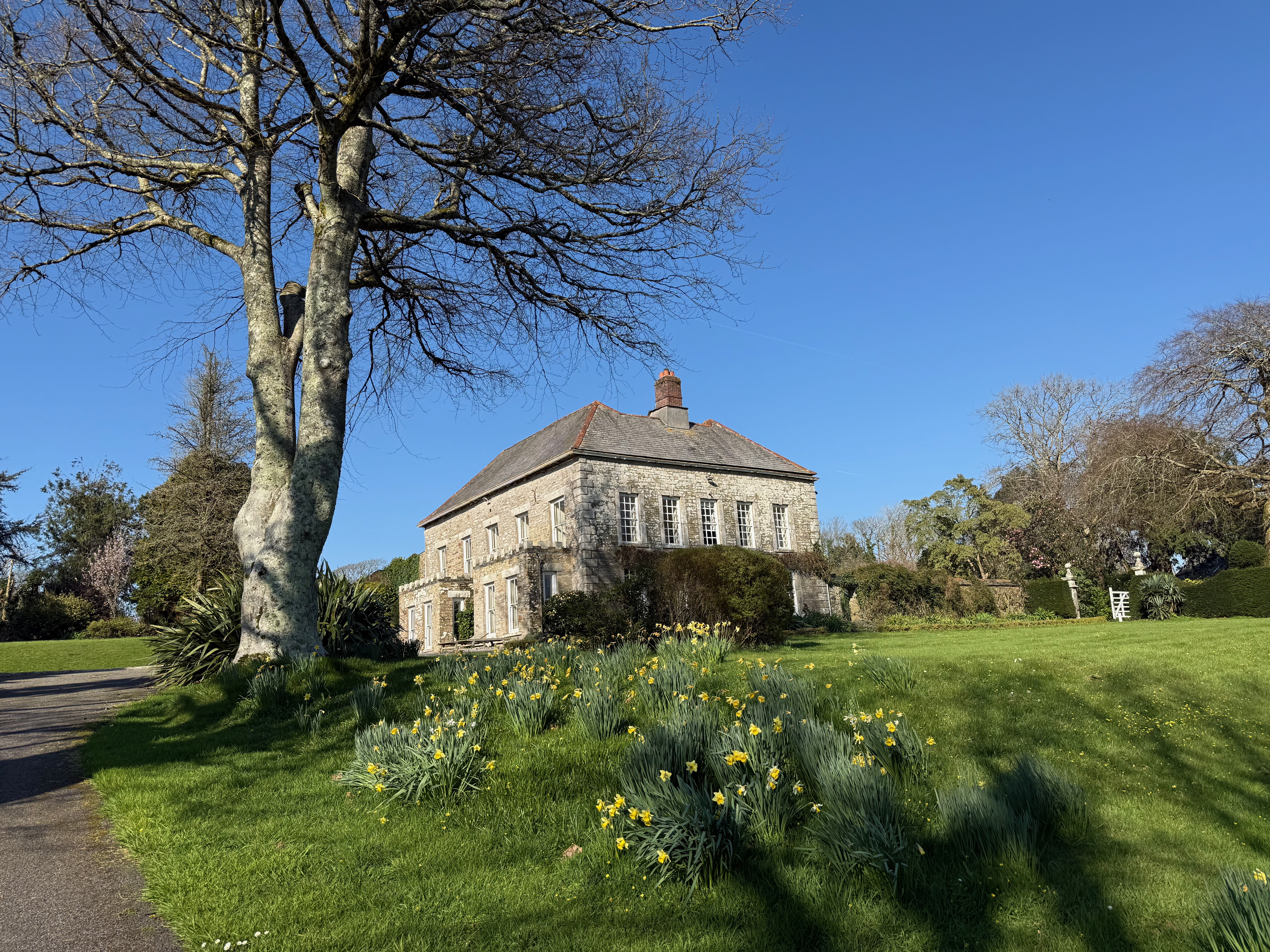
The return of Charles II in 1660 transformed Borlase's position. The account of Thomas Tonkin, subsequently incorporated into Davies Gilbert's Parochial History of Cornwall, states that Borlase recovered his property after the Restoration, including the barton of Truthan in St Erme.
Truthan was subsequently settled upon Borlase's son and heir Humphrey in connection with Humphrey's marriage to Anne Winter. The Complete Peerage dates the marriage settlement to 3 June 1663. Tonkin states that Humphrey subsequently made Truthan his residence and built a new house there.
Nicholas Borlase died in 1677. The date is given in The Complete Peerage, which identifies Humphrey as the son and heir of Nicholas Borlase of Treludro and Katherine (“Catharine”) Bury. No reliable evidence presently establishes Nicholas's date of birth, and an approximate birth year is therefore omitted.
Assessment
Borlase's career illustrates the complex position of Catholic gentry in seventeenth-century Cornwall. Before the Civil War, recusancy did not prevent him from taking part in county administration or competing for significant Crown office. Duffin's study of the 1628 subsidy dispute places him within the confessional and political factionalism of the Cornish gentry under Charles I.
His post-war experience has attracted particular attention from historians of English Catholicism. Sheils uses Borlase as an example of a Catholic Royalist who could obtain personal intervention from Cromwell against local Parliamentary officials, while Gregory places his case within the broader networks through which Catholics negotiated the sequestration and compounding system of the Commonwealth. The surviving correspondence concerning the Articles of Truro makes his case unusually well documented among the lesser Cornish Royalist gentry.