
Music House Museum
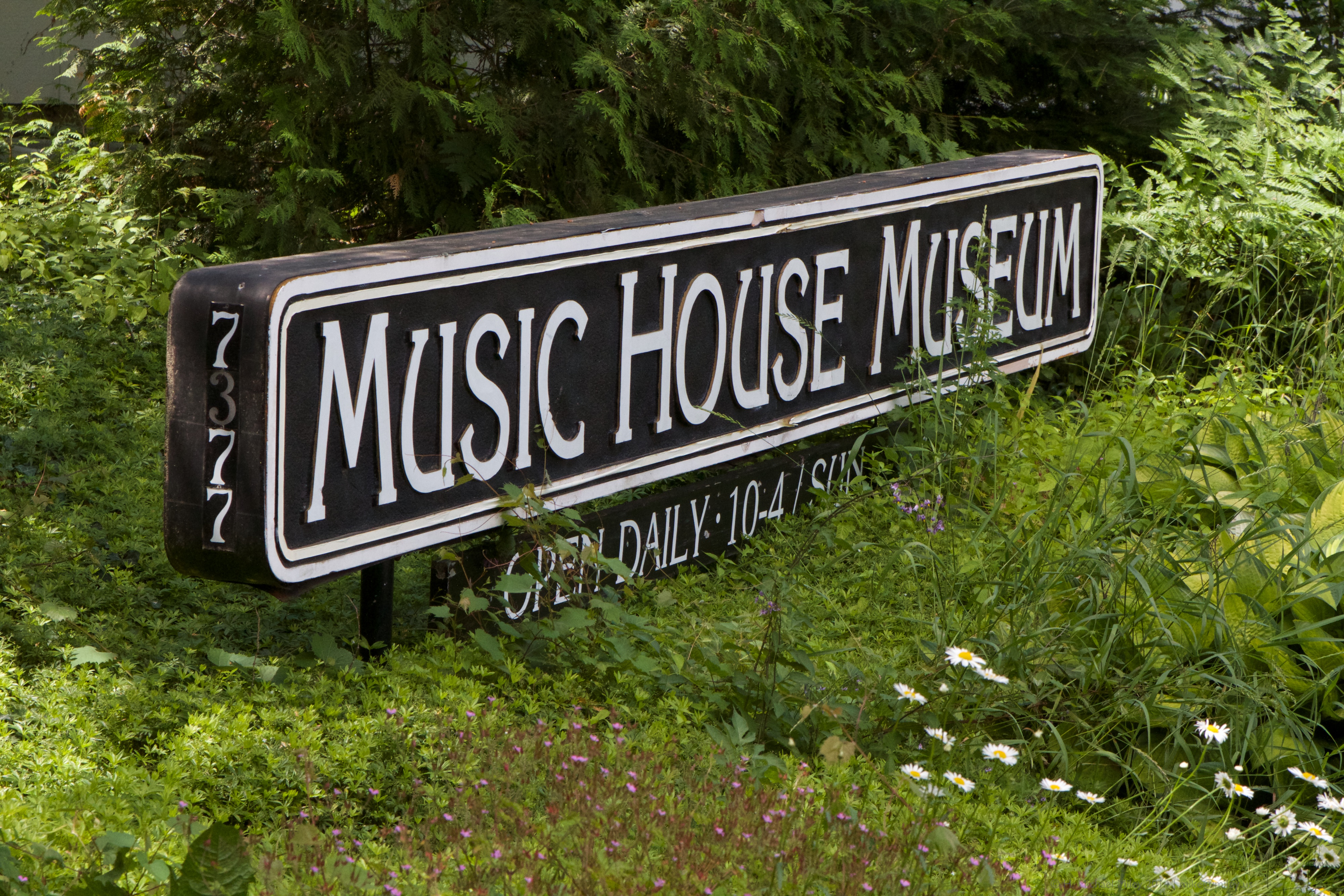 The Music House Museum has a collection of restored antique MusicAL INSTRUMENTS, early radios, and recordings. It is housed in a 1909 dairy barn and a 1905 granary farmhouse, located between the communities of Acme and Williamsburg in Grand Traverse County of Northern Michigan. It was established in 1983 and is a result of a hobby by an architect and a mechanical engineer.
Background history
David Stiffler (an architect) and Dean Junker (a mechanical engineer) started a hobby in the 1970s of collecting and restoring antique musical instruments. At that time they were using the old Stiffler family farm between the communities of Acme and Williamsburg near Traverse City, Michigan. In 1979 they decided to create a formal display to show off their hobby to friends and others. They formed D and D Enterprises as a venture for the collecting, restoring and displaying of antique musical instruments. They started work to remodel the Stiffler 1909 dairy barn and 1905 granary farmhouse into a presentation area for the musical instruments. The first display of historical restored mechanical musical instruments was in the granary farmhouse in the summer of 1983. Work was then started in remodeling the 12,000 square-foot white dairy barn in the fall of 1983. It eventually opened in May 1984 to the general public as Music House Museum, a non-profit organization. The original white barn is the main collection of the restored antique musical instruments. The granary is the museum’s main entrance and has old radios. A covered walkway was built in 1981 between the farm’s granary entrance to the barn that holds the collections. The granary originally was where the farm’s workers lived and slept. They called the granary the old farmhouse, from which the music museum received its "house" name.
Current museum
The museum has guided tours and self-guided tours displaying the history and craftsmanship of the instrument collection. It has some twenty thousand tourists per year and has received about a half million visitors from its beginning. The museum has grown over the years and displays musical items from the 1780s to the 1950s. It has early one-of-a-kind restored automated musical instruments, player pianos, music boxes, keyboard instruments, a mechanical violin, antique radios, vinyl phonograph records, and printed music. From time to time there are demonstrations of the restored musical instruments.
Examples of the restored instruments in 19th-century nostalgic settings are the organ from Detroit's defunct Cinderella Theatre, a 1924 Wurlitzer Theatre organ, and a 97-key Amaryllis Mortier dance organ that is thirty feet wide and eighteen feet high.
See also
- List of music museums
External links