
Moses as symbol in American history
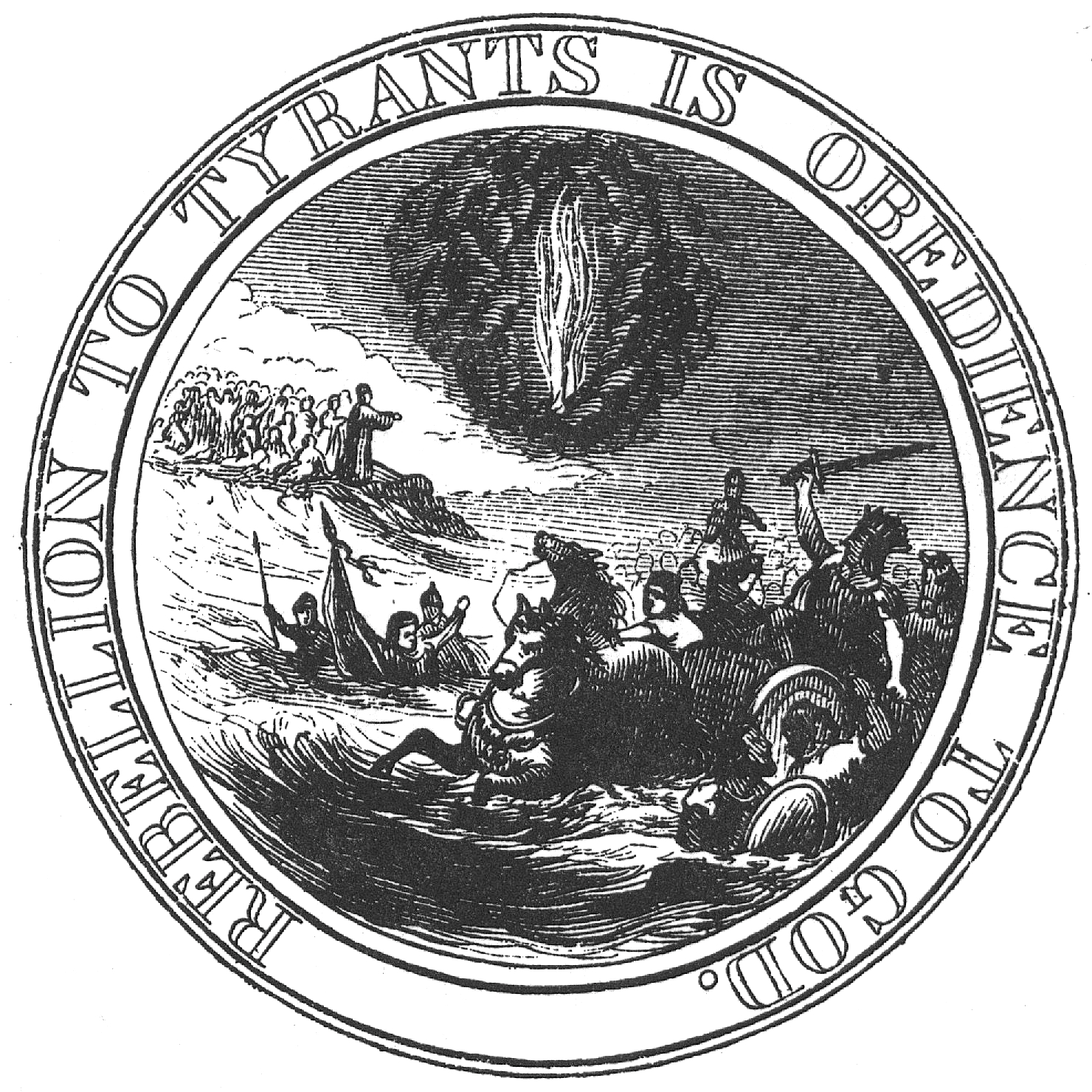
Several political leaders in US history have used the symbolism of the biblical prophet Moses. The story of Moses gave meaning and hope to the lives of Pilgrims seeking religious and personal freedom, and later inspired America’s founding fathers during the American Revolution and when they created the Declaration of Independence and soon after, the Constitution. The story of Moses was referred to as far back as the puritans, was quoted by Abraham Lincoln, and was used to help justify the Civil War and to unify the later civil rights movement. Some scholars have claimed that the Ten Commandments is the basis of America's Constitution, with Barclay noting that "From Israel we Christian peoples inherit that wise and holy code of laws. Our society is founded upon it." John Adams, America’s 2nd president, compared Moses to the Greek philosophers: "As much as I love, esteem, and admire the Greeks, I believe the Hebrews have done more to enlighten and civilize the world. Moses did more than all their legislators and philosophers."
In popular culture, there have been numerous references to Moses as well. The 1956 film The Ten Commandments, for instance, is said to parallel "the narrative of America’s own nationhood under God," with "patriotic allegories about the struggle for democratic freedom." At the end of the film, the final pose of Moses, played by Charlton Heston, is said to mimic that of The Statue of Liberty. The childhood of the comic book hero Superman is similar to that of Moses, "set adrift to become his people’s savior."
Pilgrims and early American settlers
Puritan settlements
[[Image:EmbarkationPilgrims.jpg|thumb|
Pilgrims on voyage to America
]]As a result of the Protestant Reformation that was taking place in Europe beginning in the early 1500s, a large number of Puritans and other pilgrims left for New England in the American colonies. They eventually founded Plymouth Colony and Massachusetts Bay Colony, along with other settlements, in the early 1600s. Author James Russell Lowell notes the similarity of the founding of America by the Pilgrims with that of ancient Israel by Moses: "Next to the fugitives whom Moses led out of Egypt, the little shipload of outcasts who landed at Plymouth are destined to influence the future of the world." French author Léon Bloy argues that "Columbus was to Europe what Moses had been to the people of Israel." Historian William G. Dever attempts to describe the feelings from the perspective of the pilgrims:
- "We considered ourselves the 'New Israel,' particularly we in America. And for that reason we knew who we were, what we believed in and valued, and what our 'manifest destiny' was."
Other writers agree that the pilgrims were clearly "animated by the true spirit of the Hebrew prophets and law-givers. They walked by the light of the Scriptures, and were resolved to form a Commonwealth in accordance with the social laws and ideas of the Bible. . . . they were themselves the true descendants of Israel, spiritual children of the prophets."
John Winthrop, leader of the Puritans and first governor of the Bay Colony, similarly drew inspiration from Moses. While on board the first Puritan ship, Arrabella, as it sailed toward America in 1630, he wrote that "this discourse with that exhortacion [sic] of Moses, that faithful servant of the Lord in his last farewell to Israel, . . . . wee are Commaunded this day to love the Lord our God, and to love one another, to walke in his wayes and to keepe his Commaundements and his Ordinance, and his lawes, . . ."
Necessity of strong leadership
Upon settling in America’s wilderness, the Pilgrims soon recognized the need for strong leadership to minimize violence and keep the people united in common goals. Historian Edward Arber writes, "The leader of a people in a wilderness had need to be a Moses; and if a Moses had not led the people of Plymouth Colony, when this worthy person was their Governor, the people had never with so much unanimity and importunity still called him to lead them."
John Carver, the first governor of Plymouth Colony and among the signors of the Mayflower Compact, was also one of the early victims of the hardships of settling in America, dying just four months after arriving. He later became known as "the Moses of the Pilgrims," and "a symbol of America," as the the state of Maine planned to erect a statue in his honor. Historian Benson John Lossing describes the settlement:
- "After many hardships, . . . the Pilgrim Fathers first set foot [December, 1620] upon a bare rock on the bleak coast of Massachusetts Bay, while all around the earth was covered with deep snow. . . Dreary, indeed, was the prospect before them. Exposure and privations had prostrated one half of the men before the first blow of the ax had been struck to build a habitation. . . . One by one perished. The governor and his wife died in April 1621; and on the first of that month, forty-six of the one hundred emigrants were in their graves, nineteen of whom were signers of the Constitution."
Arber also quotes William Bradford, Plymouth’s second governor following Carver's death:
- "Friend, if ever we make a Plantation, GOD works a miracle! Especially considering how scant we shall be of victuals; and, most of all, ununited amongst ourselves, and devoid of good tutors and regiment. Violence will break all. Where is the meek and humble spirit of Moses? And of Nehemiah, who reedified the walls of Jerusalem, and the State of Israel?â€
Bradford, who was one of the original settlers in Plymouth Colony and signor of the Mayflower Compact in 1620, spent his later life studying the Hebrew language, in order to have "as direct a connection as possible with the word of God," writes historian Nathaniel Philbrick. Bradford wrote, "I have a longing desire to see with my own eyes, something of that most ancient language and holy tongue, . . . . to have seen some glimpse hereof; as Moses saw the Land of Canaan afar off."
Formation of a new government
Declaration of Independence
By 1776 before the Continental Congress assembled in Philadelphia, “comparisons with Exodus filled the air,†notes Feiler. On July 4, immediately after the Declaration of Independence was officially passed, the Continental Congress asked John Adams, Thomas Jefferson, and Benjamin Franklin to design a seal that would clearly represent a symbol for the new United States. They unanimously chose the symbol of Moses leading the Israelites to freedom. Historian Derek H. Davis describes Jefferson’s own design idea as being a depiction of "the Children of Israel in the wilderness, led by a cloud by day and a pillar of fire by night."
Leading up to independence there was a multitude of politicians and leading clergymen who described the colonists as equivalent to the Israelites fleeing Egypt. Thomas Paine, for example, in his well-known book Common Sense,†also cited Gideon, Samuel, and David, to support his argument against monarchies, and referred to King George III as a "Pharaoh of England."
Prototype for democracy
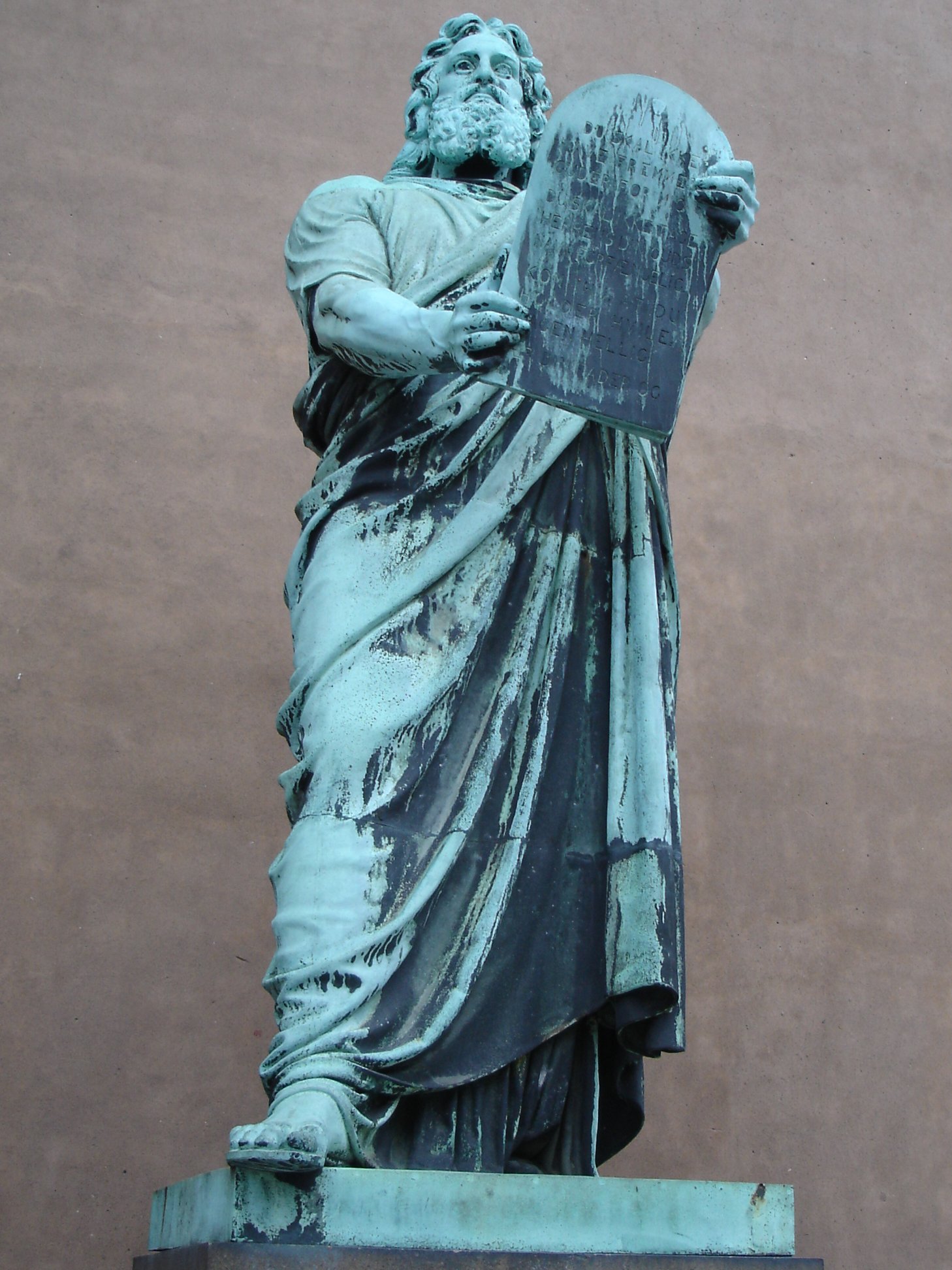 During this revolutionary period in America's development, countless political and religious leaders used the model of ancient Israel to help create a democratic government. "The Hebrew Commonwealth was explained and held up as an example" in sermons and writings, with the Old Testament as a model. Some writers would state the linkage clearly: "The evidence as to the influence of the Hebrew spirit and political structure of the Hebrew Commonwealth upon the origin of American democracy is definite and direct."
Some religious figures, including rabbi Isaac Mayer Wise, wrote that Moses had "already promulgated principles of democratic liberty and stern justice in an age of general despotism and arbitrary rule." Samuel Langdon, president of Harvard, explains that "under the conduct of Moses . . . . Able men were chosen out of all their tribes, and made captains and rulers of thousands, . . . and acted as judges in matters of common controversy." By creating such divided bodies with the consent of the people, Langdon states, "The government therefore was a proper republic." Langdon also points out that "there was a President and Senate" at the head of each tribe, "and the people assembled and gave their voice in all great matters, . . . . which is a very excellent modern improvement in the management of republics."" Langdon summarized the value of this historical precedent:
- "Examples are better than precepts; and history is the best instructor both in polity and morals. I have presented you with the portrait of a nation, highly favoured by Heaven with civil and religious institutions, . . . . If I am not mistaken, instead of the twelve tribes of Israell, we may substitute the thirteen States of the American union and see this application plainly offering itself."
Other noted clergymen, such as Jonathan Mayhew, would develop the fullest detailed Scriptural argument "that the Hebrew Commonwealth was the God-given government" and a "model for American democracy." John McDowell Leavitt, president of Lehigh University, would agree with most conclusions and support the validity of using ancient Israel as a model for democracy:
- "From Joshua to Saul the rulers were judges. . . For merit they were elected by the people. For five centuries Israel was a democracy. Sovereignty was in the people. At a time in earth's history when all other nations were ruled by despots; beneath the shadows of empires, . . . anticipating and prophesying the divine ideal of human government—the Jewish Commonwealth, under the shield of Jehova, stood for ages, in the whole turbulent and inimical world, a solitary democracy. . . . As opposed to these hoary tyrannies the monarchy of Israel was a sovereignty of the people.
The concept of political liberty and democratic government that America adopted, in defiance of the British monarchy, was also understood by scholars in Britain who acknowledged its biblical inspirations. British legal historian Thomas Erskine May, a strong advocate of democracy in Europe and among the authors of the Constitution of the United Kingdom, described ancient Israel as the birthplace of Christianity, "liberty" and "freedom:"
- "Israel is the country, above all others, which Christendom regards with respect and reverence, as the birthplace of its religion. Its sacred writings are cherished above all the works of human genius. Scholars revel in the masterpieces of Greek and Roman genius: but Christians of every creed, throughout the world, pay homage to the higher inspiration of the Hebrews. . . . That a race more entitled to our reverence than any people of antiquity should have afforded an example of popular freedom, notwithstanding their Eastern origin, and the influence of Eastern despotism, by which they were surrounded, is a conspicuous illustration of the principle that the spirit and intelligence of a people are the foundations of liberty. The Eastern race which was distinguished from its contemporaries by the purest faith, and the highest ideal of morals, afforded also a conspicuous example of freedom."
Similar arguments were advanced by Ezra Stiles, president of Yale College, Thomas Paine in his Common Sense, Rev. George Duffield, Samuel West, and many others. The conclusion that democracy should be modeled after the government of ancient Israel "was carried forward in all of the New England colonies by the leading ministers from 1633 until the adoption of the Constitution of the United States."
Foundation of law
[[Image:Moses dore.jpg|thumb|
Engraving by Gustave Doré, circa 1865
]] Various scholars assert that the Ten Commandments given to Moses by God represent a foundation for democracy. Theologian William Barclay sees the Ten Commandments as "the universal foundation of all things . . . the basic laws of human conduct in society, . . ." He adds, "From Israel we Christian peoples inherit that wise and holy code of laws. Our society is founded upon it." He explains:
- "In order that a mob of people may become a nation they must have a law which they will obey and which will weld them into a community. There can be no community without law. It was this stage that the people received the Ten Commandments through Moses. The Ten Commandments are the law without which nationhood is impossible. . . . They are not a finished ethic; they are a primary foundational set of principles which are only a beginning, but nonetheless a beginning which was and is absolutely essential."
Author Richard Swift, in his No-nonsense Guide to Democracy, lists on his "Democracy timeline" that the Ten Commandments represented the earliest form of law and democracy. Historian Israel Gerber explains the relationship between the Ten Commandments and democracy:
- "Having escaped from slavery into freedom, the first responsibility of free men was self-administration. Pursuant to the acceptance of the Ten Commandments, all subsequent legislation of a democratic nature develops this principle. Like the American Declaration of Independence, all expressions of the right of the individual to freedom grew out of the revolt of Abraham. The vote in our democratic society extends the early Hebraic view that every human being has the right to express his preference . . . ."
According to professor of theology, William Brown, the philosopher Baruch Spinoza (1632-1677) likewise affirmed that "the Israelites in the desert acted as in a democracy, because they freely decided to transfer all their rights to God alone and not to any mortal. This 'popular regime' was therefore founded on 'consensus.'" Swedish historian Hugo Valentin (1888 - 1963) sees the social legislation of the Old Testament and prophetic writings as indications of a "disposition to radicalism," and states that in his opinion "Moses was the first to proclaim the rights of man."
Founding fathers
George Washington
George Washington was commander of the Continental Army during the Revolutionary War (1775–1783) and elected first President of the United States of America (1789–1797). For his contributions to the formation of the United States, he is often referred to as "the father of his country". Feiler notes that after he died, two thirds of his eulogies referred to him as "America's Moses," one orator concluding that "Washington has been the same to us as Moses was to the Children of Israel." The Reverend William Linn, President of Queen's College (now Rutgers University), delivered one of Washington’s eulogies, and likewise spoke of him as an American Moses:
[[Image:Benjamin Franklin by Joseph Siffred Duplessis.jpg|thumb|
Benjamin Franklin
]]
- â€If we compare him with characters in the Sacred Records, he combined the exploits of Moses and Joshua, not only by conducting us safely across the Red Sea, and through the wilderness, but by bringing us into the promised land; like David he conquered an insulting Goliath, and rose to the highest honours from a humble station. . . “
Political leader Robert Hay wrote an article focused on the symbolic relationship between Moses and Washington. In addition, it has been noted that among the "most frequently used texts for Washington eulogies were those verses from Deuteronomy" which describe the death of Moses. Thomas Jefferson wrote, "I felt on his death, with my countrymen, that 'verily a great man hath fallen this day in Israel.'"
Benjamin Franklin
Benjamin Franklin, one of America's leading politicians and statesman, often described the difficulties that newly independent American states had in forming a government. To the settlers of Connecticut, for instance, he suggested that for their first form of government, until a code of laws could be prepared and agreed to, they should be governed by "the law of Moses," as contained in the Old Testament. In 1788, Franklin described the philosophies he relied on when helping create the United States Constitution, ratified only a year earlier:
- "The Supreme Being had been pleased to nourish up a single family, by continued acts of his attentive providence, till it became a great people; and having rescued them from bondage by many miracles, performed by his servant Moses, he personally delivered to that chosen servant, in presence of the whole nation, a constitution and code of laws for their observance . . . “
Franklin, recognizing the dangers awaiting the new country after independence, now needing to raise money for survival and national defense, writes, "May the God of wisdom, strength, and power, and the Lord of the armies of Israel, inspire us with prudence in this time of danger, take away from us all the seeds of contention and division, and unite the hearts and counsels of all of us, . . . "
John Adams
John Adams, America’s 2nd president, compared Moses to the ancient Greeks in explaining why he similarly depended on the the laws of Moses when helping establish the American Constitution:
- â€As much as I love, esteem, and admire the Greeks, I believe the Hebrews have done more to enlighten and civilize the world. Moses did more than all their legislators and philosophers.â€
As he undertook to help in forming the Declaration of Independence, he was deeply and privately concerned that he was accepting a great responsibility for the future of the country. In a personal letter to his wife Abigail, he tried to rationalize and justify his role:
- "Is it not a saying of Moses, 'Who am I, that I should go in and out before this great people?' When I consider the great events which are passed, and the greater which are rapidly advancing, and that I may have been instrumental in touching some springs and turning some small wheels, which have had and will have such effects, I feel an awe upon my mind which is not easily described."
Thomas Jefferson
Thomas Jefferson (1743 – 1826) was the third President of the United States (1801–1809), the principal author of the Declaration of Independence (1776), and one of the most influential Founding Fathers. He wrote to the Secretary of War, "I shall now enter on the duties to which my fellow citizens have again called me, and shall proceed in the spirit of those principles which they have approved. . . . I shall need, too, the favor of that Being in whose hands we are, who led our forefathers, as Israel of old, from their native land, and planted them in a country flowing with all the necessaries and comforts of life. . . . "
Writers and influential Americans
Walt Whitman
Walt Whitman (1819 – 1892) was an American poet and essayist and one of the most influential poets in the American literature. British author D. H. Lawrence called Whitman the "only pioneer poet" and an "American Moses."
Herman Melville
Biographer Harvey J. Kaye writes that novelist Herman Melville stated, 'Americans are the peculiar chosen people—the Israel of our time; we bear the ark of the liberties of the world.'"
John Muir
Naturalist and writer John Muir, who helped establish the National Parks and was founder of the Sierra Club, relied on the Bible for inspiration. As he became more attached to the natural landscapes he explored, he began to see another "primary source for understanding God: the Book of Nature." In his writings, he would sometimes speak of biblical figures like Moses, using words like "glory" and "glorious," to suggest nature's religious dimensions:
- "I do not understand the request of Moses, 'Show me thy glory,' but if he were here . . . after allowing him time to drink the glories of flower, mountain, and sky, I would ask him how they compared with those of the Valley of the Nile . . . and I would inquire how he had the conscience to ask for more glory when such oceans and atmospheres were about him."
Civil War period
Slavery and freedom
Biblical texts were a source of symbols in relation to Moses and freedom from slavery. According to the Encyclopedia of Antislavery and Abolition, Moses has become "a symbol of freedom and abolition for the ages. . . . [and] remains, from antiquity to the present, a symbol or archetype of the liberator from slavery and champion of freedom." Theologian John M. Shackleford also notes the spiritual values later created as a result of slavery:
- "The period of slavery in Egypt is one of the greatest symbols (in later periods) for slavery to sin. This is one of the many examples of how a physical reality becomes the symbol for a spiritual image. We can certainly identify with the Israelites wandering in the desert. It symbolizes our own travels through life. . . "
These beliefs would have a dramatic effect on the fight to end slavery in the years to follow, culminating in the American Civil War. Political historian Graham Maddox explains how the "Moses story" gained such influence in America:
- "The religion of Israel induced a radical change in human understanding. From the surge of new thinking about God flowed everything else — including political, material and intellectual culture. In ancient Jewish religion God assumed a novel role: the liberator of slaves."
Historian Gladys L. Knight describes how leaders who emerged during slavery time and after often personified the Moses symbol. "The symbol of Moses was empowering in that it served to amplify a need for freedom." Among the heroes of the antislavery movement was Harriet Tubman (1822 – 1913), an African-American woman who became known as "A Moses of her people."
After escaping from slavery, Tubman made numerous missions back to the South and rescued over seventy slaves using a network of antislavery activists and safe houses known as the Underground Railroad. Her earliest biographer, Sarah Hopkins Bradford, notes that although she did not free an entire nation of slaves, "yet this object was as much the desire of her heart, as it was of that of the great leader of Israel. Her cry to the slave-holders, was ever like his to Pharaoh, 'Let my people go!'" Bradford explains that while helping slaves escape, she told them to wait until they heard her sing a song then forbidden to slaves, "Go Down Moses," which meant the coast was clear.
Historian Michael Shapiro adds that Moses "remains a vital symbol in the righteous fight against persecution," and the call of "Let my people go!" would later become a theme of the American civil rights movement. Other early black activists who were later referred to as a "Moses of their people" included publisher Marcus Garvey and educator Booker T. Washington. A friend of Washington approached him after after an address and offered his opinion: "I believed then, and I know now, that you are our Moses destined to lead our race out of the difficulties and dangers which beset our pathway and surround us on all sides."
Abraham Lincoln
Abraham Lincoln (1809 – 1865) was America's 16th president and was assassinated in 1865 after successfully leading the country through the American Civil War, which ended slavery while still preserving the union. Historian A. E. Elmore notes that Lincoln’s writings were influenced by the Bible, and quoted from Exodus when delivering his Gettysburg Address. After his death from assassination, he was often compared to Moses. Lincoln biographer Charles Carleton Coffin writes that "the millions whom Abraham Lincoln delivered from slavery will ever liken him to Moses, the deliverer of Israel." Coffin adds: "Moses gives just and righteous laws to Israel; Abraham Lincoln, a new charter of liberty to his country. Both lead their fellow men out of bondage, both behold the promised land . . . " According to Lincoln's War Papers, as soon as the war ended, "There was wailing in the cabins of freedmen who saw in 'Mass'r Lincoln' a second Moses to lead them out of bondage, and whose simple faith saw him walking with God and given the power from the sovereign of heaven."
Clergyman and abolitionist Henry Ward Beecher, in the lead-up to the war, stated that "Wherever a man is called to defend a trust or a principle, a church or a people, a nation or an age, he may be said to be, like Moses, the leader of God’s people.†Beecher again referred to the symbol of Moses during Lincoln's eulogy:
- "After so many thousand years, the figure of Moses is not diminished, but stands up against the background of early days distinct and individual as if he had lived but yesterday. There is scarcely another event in history more touching than his death."
During a service in Washington D.C., minister Jeremiah Rankin said, "Nothing can be more beautiful or appropriate than many of the parallels which the American people have traced between their own recent history and that of the children of Israel in their exodus from the house of bondage. . . "
Brigham Young
The creation and migration of the Mormon faith to its eventual home in Utah is parallel to the Hebrew exodus, with travel across a barren landscape to a 'promised land,' and leadership by a prophet: Brigham Young. Young was also referred to as an "American Moses," and received his instructions directly from God.
Civil rights period
One of the leading figures during the civil rights movement in the twentieth century was Martin Luther King, Jr. (1929 – 1968). He was an American clergyman, activist and prominent leader in the African-American civil rights movement, and raised public awareness of the movement partly by his oratorial skills. In 1964 he received the Nobel Peace Prize for his work toward ending racial segregation and discrimination. As a result, many people came to see him "as a modern Moses," and he was known to use the Exodus story in his speeches. In 1957, when he was 28 years of age, he gave a sermon in Montgomery, Alabama, entitled "The Birth of a New Nation," in which he used the "struggle of Moses" to symbolize the new civil rights struggle then taking place:
- "I want to preach this morning from the subject, 'The Birth of a New Nation.' And I would like to use as a basis for our thinking together, a story that has long since been stenciled on the mental sheets of succeeding generations. It is the story of the Exodus, the story of the flight of the Hebrew people from the bondage of Egypt, through the wilderness and finally, to the Promised Land. . . The struggle of Moses, the struggle of his devoted followers as they sought to get out of Egypt. This is something of the story of every people struggling for freedom."
He continued to use the symbolism of the Exodus story up until his last speech in 1968, entitled "I've Been to the Mountaintop," the day before he was assassinated: "And I've looked over. And I've seen the promised land. I may not get there with you. But I want you to know tonight, that we, as a people, will get to the promised land."