
Metrication of British transport
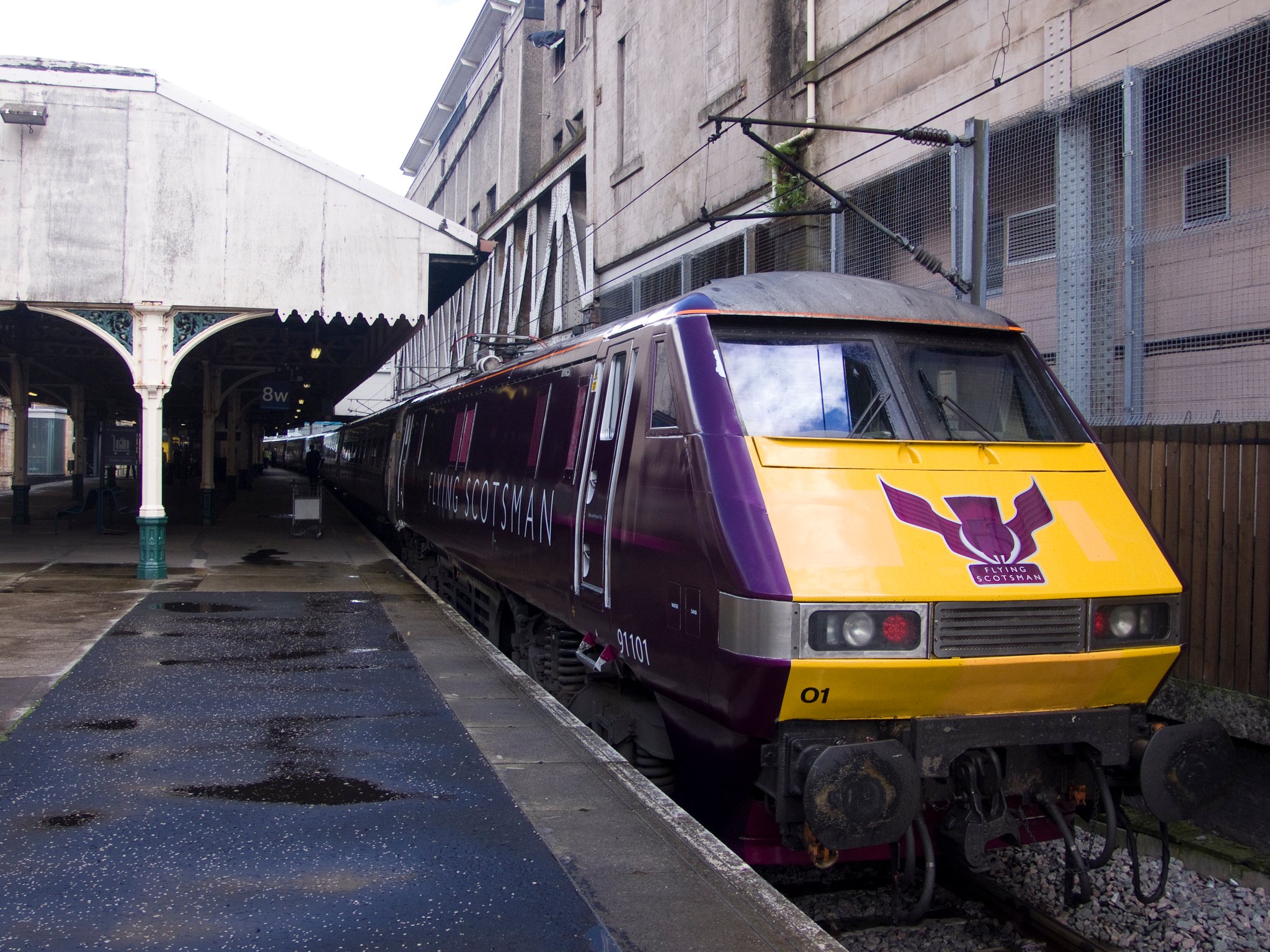 As part of the United Kingdom metrication programme that started in 1965, some aspects of the transport system and industry were metricated. The programme was initiated by the engineering industry and received government approval on condition that its implementation was voluntary on an industry-by-industry basis and that costs were absorbed where they fell.
Background
Historically, British industry opposed metrication on grounds that most of British exports went to countries that used the imperial or customary system of units. By the 1960s, changing trade patterns meant that this was no longer the case, and in 1965 the Federation of British Industry (now the Confederation of British Industry) initiated a change to the metric system. The government agreed on condition that the changeover was voluntary on a sector-by-sector basis, that costs would be absorbed where they fell and that there would be minimal legislation. In some cases it was appropriate to use hard metrication and in other cases soft metrication - soft metrication being defined as "the conversion of ... non-SI measurements to equivalent SI units, within the established measurement tolerances. In general, 'soft metric' products will not differ physically from analogous [non-SI] products.
Until 1969, when the Metrication Board was set up, the Royal Society and the British Standards Institution took the lead. When the Metrication Board was set up much of the groundwork had been done, and metrication of many engineering sectors, including transport, was under way. From the early to mid-1970s, the lack of compulsion slowed the process of metrication down, a draft order was prepared to completed the process, but the Government, which had a very small majority, declined to proceed with the order.
Once Britain joined the European Economic Community (1973), she was obliged to adapt local law to accommodate EEC directives that were in place. One of these directives 71/354/EEC required a harmonisation of units of measure "for economic, public health, public safety or administrative purposes". By the late 1970s the British metrication programme had run out of steam and, at Britain's request, Directive 71/354/EEC was superseded by Directive 80/181/EEC, which among other things permitted the use of miles, yards, feet, inches and fathoms in the United Kingdom, and knots until 1989 (subsequently extended to 1994). As from 1 January 1990, the use of miles, yards, feet and inches was restricted to "Road traffic signs, distance and speed measurement[s]" only. The directive did not apply to areas of transport that were subject to governmental international agreements.
Road system
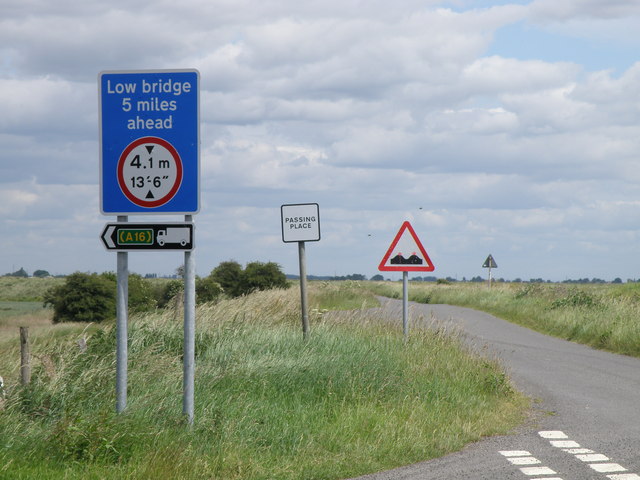 Road signs in Great Britain are regulated by Traffic Signs Regulations and General Directions (TSRGD) which specifies the design and the units of measure for the signs. Distance signs are specified with miles or yards as the only allowable units. Height limit, width limit and vehicle length limit signs are required to use feet and inches, but with metres allowed as optional supplementary indicators. Weight limits are expressed in tonnes: the 2011 legislation now correctly requires "t" as the symbol to be used for tonnes on road signs ("18 t" for example). Earlier legislation had also allowed the use of "T" to represent "tonnes" ("7.5 T" for example), so older signs using this notation are also in use. Speed limits are in miles per hour, with no units shown on the signs. Advance-warning signs display distances in miles, often using the character "m" as an abbreviation (clashing with the SI use of "m" as the symbol for metre. When SI units are used (such as metres on height, width and length restriction signs if the optional metric-measurement is given) the SI symbol "m" is correctly used.
Advance-warning signs for road works and other temporary road obstructions are GeneRally positioned at multiples of 100 metres from the feature to which they refer, with the distances indicated in yards – to the nearest 100 yards (which is within the 10% tolerance allowed) to comply with the TSRGD requirement for yards to be used on such road signs.
In TSRGD 1994 the legislation included the allowance of metric units as "supplementary indications" for many (but not all) height-limit warning and prohibition signs. Schedules 16.1 and 16.2 of the TSRGD 2002 catalogue the signs that may display metric units in addition to imperial units: maximum headroom warning signs and height, width and length prohibition signs. On 23 February 2006 the Secretary of State for Transport Alistair Darling said on the BBC Question Time programme that the Government had abandoned its previously long-standing plans to convert the UK's 2 million road signs to metric, due to the cost.
In late 2009 and early 2010, the DfT proposed modifying the legislation to make it mandatory to use dual-units signs for height and width limit warning and restriction signs, as it was believed that this would reduce bridge strikes. The analysis noted that "approximately 10–12% of bridge strikes involved foreign lorries. This is disproportionately high in terms of the number of foreign lorries on the road network." However, the Department for Transport reconfirmed that there were no plans at all to replace miles with kilometres on distance signs.
In December 2011, some amendments to legislation resulting from that part of the consultation that dealt with metric signs were put to Parliament in the shape of the TSRGD Amendments 2011. This came into force late January 2012.
Location marker posts are erected at 100-metre intervals on the hard shoulder giving the distance from a notional reference point in kilometres to enable maintenance workers, emergency services and the like to pinpoint specific places on the motorway. The digits on these posts were barely visible to motorists. This number was also encoded into the emergency phones that could be used by stranded motorists. The advent of the mobile phone meant that the location of motorists could no longer be pinpointed by reference to the emergency telephone that they were using. To enable such motorists to communicate with the emergency services, driver location signs were erected at approximately 500-metre intervals in England during the period 2007 to 2010. These signs replicate the distances shown on the smaller location marker posts though no units are shown, but as of 2012 do not appear on Welsh motorways.
Motor vehicles
Motor fuel has been retailed in litres since the 1980s. Fuel consumption is still commonly quoted in miles-per-imperial gallon. Legislation requires that the official fuel economy guide from which advertisers may quote must catalogue "fuel consumption … in [either] litres per 100 kilometres (l/100 km) or kilometres per litre (km/l), and quoted to one decimal place, or, to the extent compatible with the provisions of Council Directive 80/181/EEC … in miles per gallon".
Almost all motor vehicles first used on public roads on or after 1 April 1984 are required to have speedometers fitted which can display speeds in both miles per hour and kilometres per hour (simultaneously or separately) while metric units (kW for power, km/h for speed, kg for weight and cc for engince capacity) are used in legislation relating to driving licences.
Rail transport
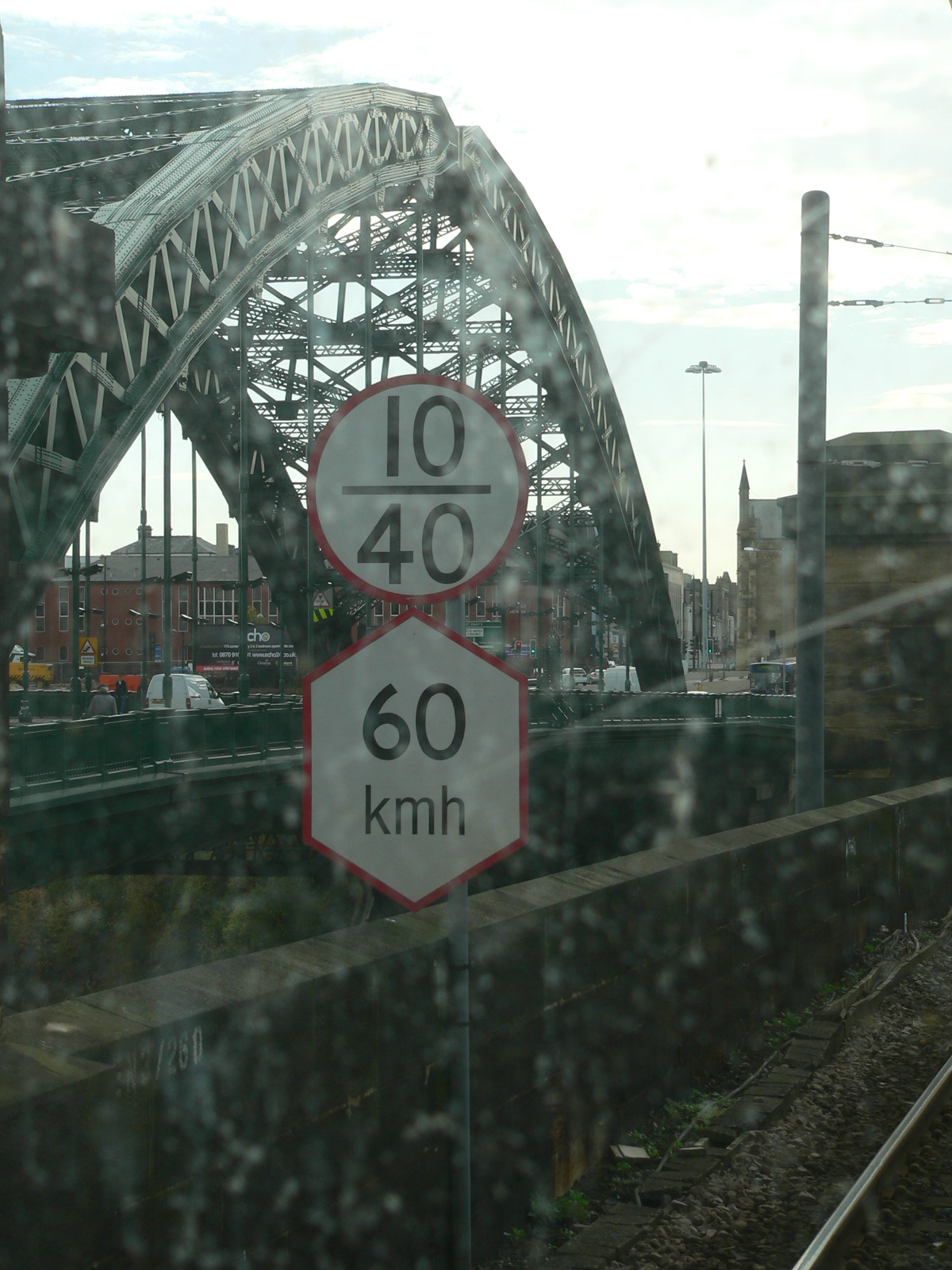 The main push towards using the metric system took place during the early 1970s. In respect of the railway industry, the engineering aspects of the railways were metricated but by and large, there was no change in the operational aspects of the railways.
Railway infrastructure
The metrication of the the United Kingdom's railway network was a "soft metrication" exercise since anything else would have required a gauge conversion.
An 1846 Act of Parliament fixed British track gauges at 4 ft 8½ in and Irish track gauges at 5 ft 3 in.
The 4 ft 8½ in gauge, now known as standard gauge was the basis of 60% of the world's railways and is expressed as 1,435 mm – a decrease of 0.1 mm, but well within engineering tolerance.
The Irish gauge is now expressed as 1,600 mm gauge giving a difference between the metric and imperial values of about 0.2 mm and thus also well within engineering tolerances.
The specifications of loading gauge and other parameters that engineers use when designing rolling stock and lineside structures were converted to metric units during the 1970s, and subsequently updated many times.
Railway operations
Prior to the metrication era, track distances in Britain's national rail network were shown in miles and chains, with speed limits in miles per hour and these units were not converted during the metrication program of the 1970s. Changes in operational procedures have not always been in synchronisation with changes in technology - for example, in 2010 it was reported that drivers of freight trains operating on single track in the West Highlands had to report the lengths of their trains verbally to the signalling staff using feet even though the computer generated information available to the driver was in metres.
Some newer railway systems however seen some use of metric units: for example, one map showing part of the route of the London Birmingham High Speed Link is published in metric units. This document uses the phrase "chainage", but the running distances shown as "chainage" are actually in metres.
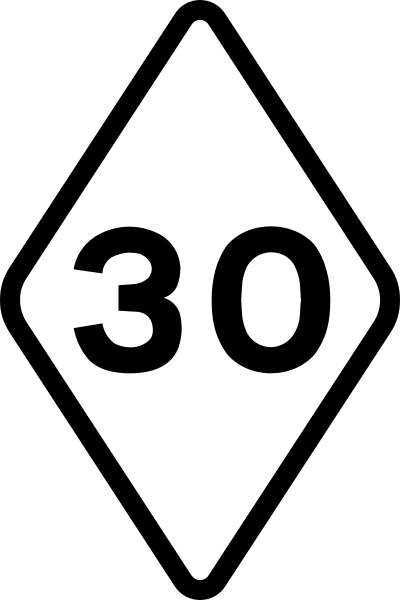 Britain's tramway systems, apart from the Blackpool line, were decommissioned after the Second World War. From 1980 onwards, a number of light railways (including tramsways) that operate entirely to metric standards have been built in in various metropolitan areas. Speed limit signs for trams that run on public roads quoted in kilometres per hour have a distinctive black-and-white diamond shape. though km/h speed linits on dedicated rights of way have diffrent shapes such as the hexagon used on the Tyne and Wear line (See picture). New light railways built in Britain since 1980 include:
- Tyne and Wear Metro (1980)
- Docklands Light Railway (1987)
- Manchester Metrolink (1992)
- Midland Metro (1999)
- Croydon Tramlink (2000)
- Nottingham Express Transit (2004)
- Edinburgh Trams (under construction)
The operations manual of the Blackpool tramway (1885) uses mph, but the vehicles themselves are not required to have speedometers - drivers judge speed 'by eye'..
European Rail Traffic Management System (ERTMS) and European Train Control System (ETCS)
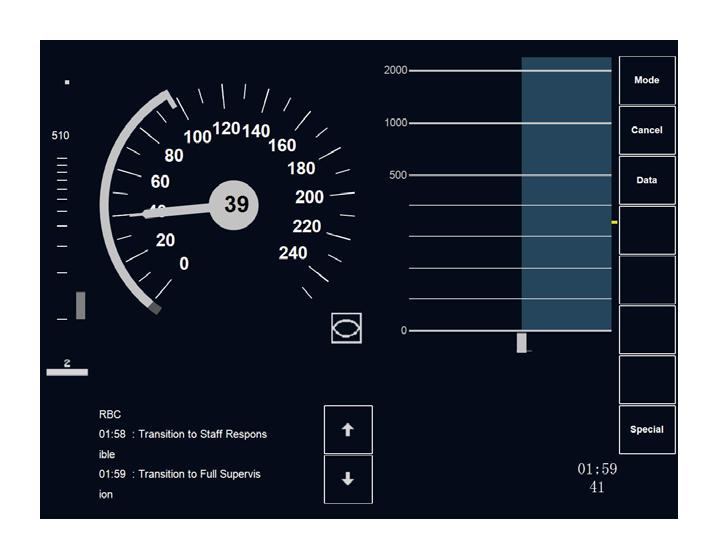
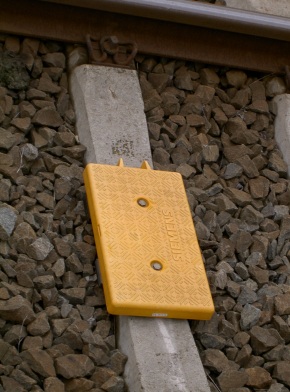 The European Rail Traffic Management System (ERTMS) is an initiative backed by the European Union to enhance cross-border interoperability and the procurement of signalling equipment by creating a single Europe-wide standard for train control and command systems. Its main components are European Train Control System (ETCS) and GSM-R communications system. ECTS is a standard for track-train radio communications using balises (Eurobalises) and associated in-cab train control while GSM-R is the GSM mobile communications standard for railway operations. ERTMS can operate at different levels depending on specific local requirements. Three levels have been identified for ERTMS:
- Level 1 - ERTMS is added to or overlaid on lineside signals and train detectors. Communication is via balises (Eurobalises) of an existing railway system.
- Level 2 - ERTMS uses balises to communicate with the driver, thereby dispensing with lineside signalling equipment. The location of each block is fixed (as with traditional railway systems).
- Level 3 - Level 3 is an enhancement on Level 2 whereby the block will move with the train.
The EU has published directives requiring that ERTMS/ETCS be used on various international railway lines. Under ERTMS speeds are displayed in the driver's cab in km/h and at Level 2, lineside speed indicators are optional.
In 2007 the British Government published its response to a European Union directive requiring the use of ERTMS on High Speed (TEN-R)and Conventional Trans-European Railway Network (TEN) routes. The response proposed a roll-out plan of ERTMS equipment on existing lines that would be completed by 2044 though the actual timing of the program will depend on changing circumstances - new trains will be ordered with ERTMS equipment on board and ERTMS would be installed during any electrification programs. In 2009 the Rail Safety and Standards Board confirmed that km/h would be used on ERTMS lines in the United Kingdom.
The Uff/Cullen inquiry (2001) following the Southall and Ladbroke Grove rail crashes identified a need for in-cab signalling on high-speed trains and recommended that ERTMS should be installed onto all of Britain’s high speed lines by the 2010. However, this timescale is not viable because of the time required to develop the technology.
A standard feature of the speedometers used by ERTMS/ETCS systems is the use of the metric system. At a Railway Conference in 2002 it was argued that a changeover to using metric units for speed in advance of the introduction of ERTMS was unlikely to be financially viable unless the decision is taken to adopt Level 2 ERTMS without lineside signalling. There would however still be a need to handle dual both mph and km/h. A 2010 voluntary standards document published by the Rail Safety and Standards Board addressed this issue when it recommended that the speedometer of a ETCS system be designed so that it switches automatically between mph and km/h depending on the route being traversed. The speedometer would display "mph" when the speedometer was displaying "miles per hour", otherwise would display nothing. Its graduations would be chosen such that the angle of the needle would not change when the system switched from one scale to the other. The conversion between metric and imperial units would be a function of the speedometer, not of any other on-board equipment. In 2012 a technical specification matching this proposal was published.
The Cambrian line, a low volume rail link between Shrewsbury in the east and Aberystwyth and Pwllheli in the west was chosen as Britain's first ERTMS line. This decision was triggered by the line's signal system having reached the end of its useful life and the line itself being a low capacity line almost separate from the national network, making it an ideal canditate on which to gain ERTMS experience. All speeds in the Cambrian Line Rule book are in km/h." ERTMS will be rolled out on the Great Western Route as part of the electrification and resignalling work which is expected to reach Oxford and Newbury by 2016 and Cardiff by 2017. Other early mainline conversions to the ERTMS standards are expected to include the London (Kings Cross) to Doncaster route by 2020 and the London (St Pancras) to Leicester route by 2022.
Shipping
 Units of measure related to shipping can be divided into two categories - those related to navigation and those related to the design of the vessel itself. Many of these units of measure used are dictated by industrial standards and international conventions rather than by United Kingdom and EU legislation.
Units of measure used in navigation
Historically the units of "sea measure" in the UK were:
- the international nautical mile (1852 metres)
- the sea mile (the distance equivalent to one minute of arc measured along the meridian at the latitude of measurement) which is used on large scale Admiralty charts and which varies in length from 1843 metres to 1862 metres dependent on the position on the earth's surface
- the cable, which is one tenth of the now obsolete British standard nautical mile at 608 feet
- the knot, as a measure of speed at one nautical mile per hour (1.852 kilometres per hour)
- the fathom of 6 feet (1.8288 metres). The nautical mile was designed to be equal to a change of one minute of arc of latitude. In 1929, the Extraordinary Hydrographic Conference in Monaco defined the international nautical mile as being 1852 m exactly, as opposed to the metric equivalent of the British nautical mile (1853.18 m).
Units of measure used in ship-building
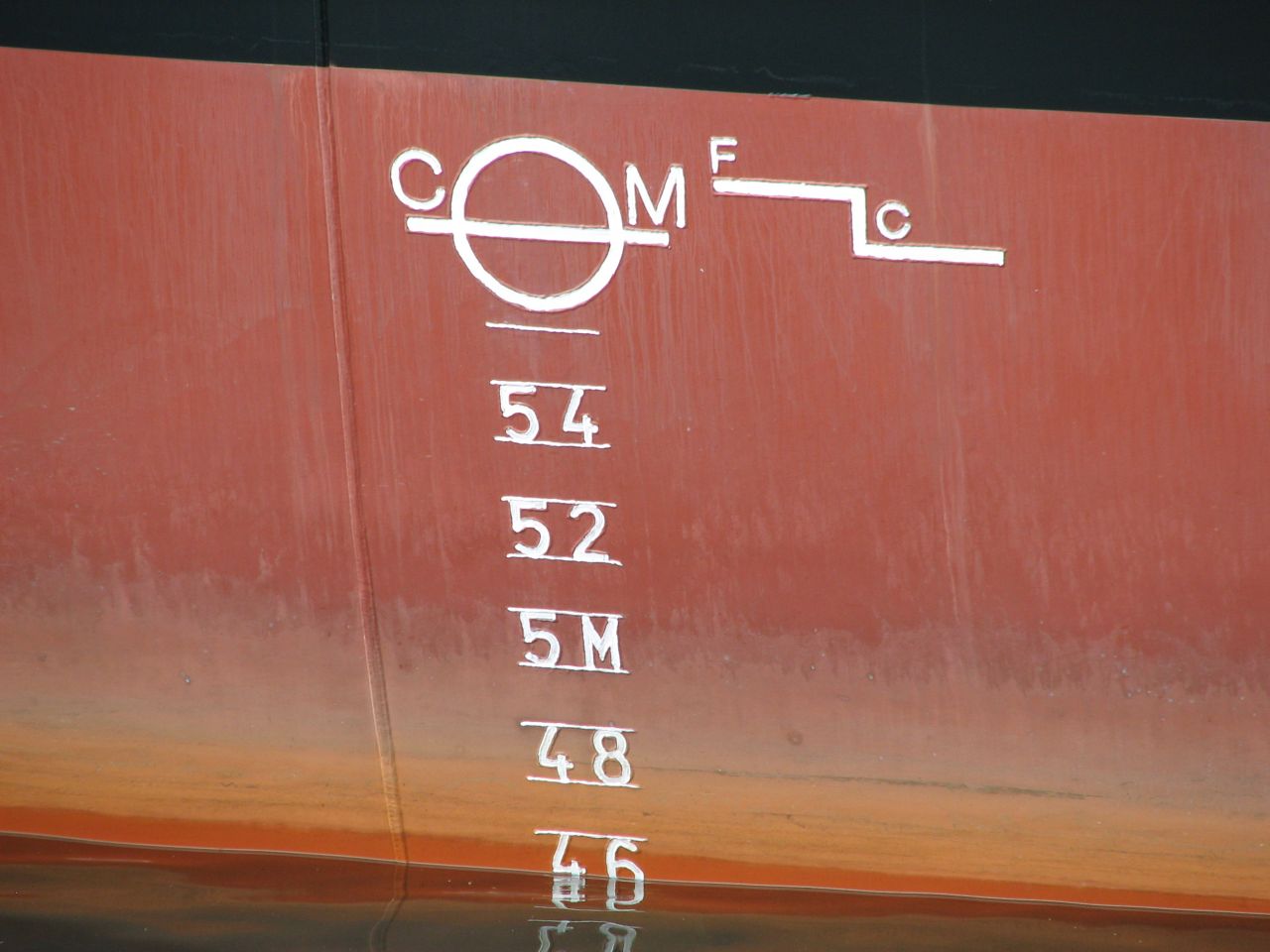 Prior to 1983, health and safety in dockyards and shipyards legislation were written using imperial units. In that year the Docks, Shipbuilding etc. (Metrication) Regulations 1983 which replaced the imperial units of measure in such legislation with metric units was published. In 2012, when the government proposed removing this piece of legislation as part of its "removal of red-tape campaign", the Chartered Institute of Environmental Health responded that such removal could only be justified if the underlying legislation was also removed.
Aviation
Units of measure used in aviation can be split into two groups - those used during aircraft design and construction and those used during operations.
Aircraft design
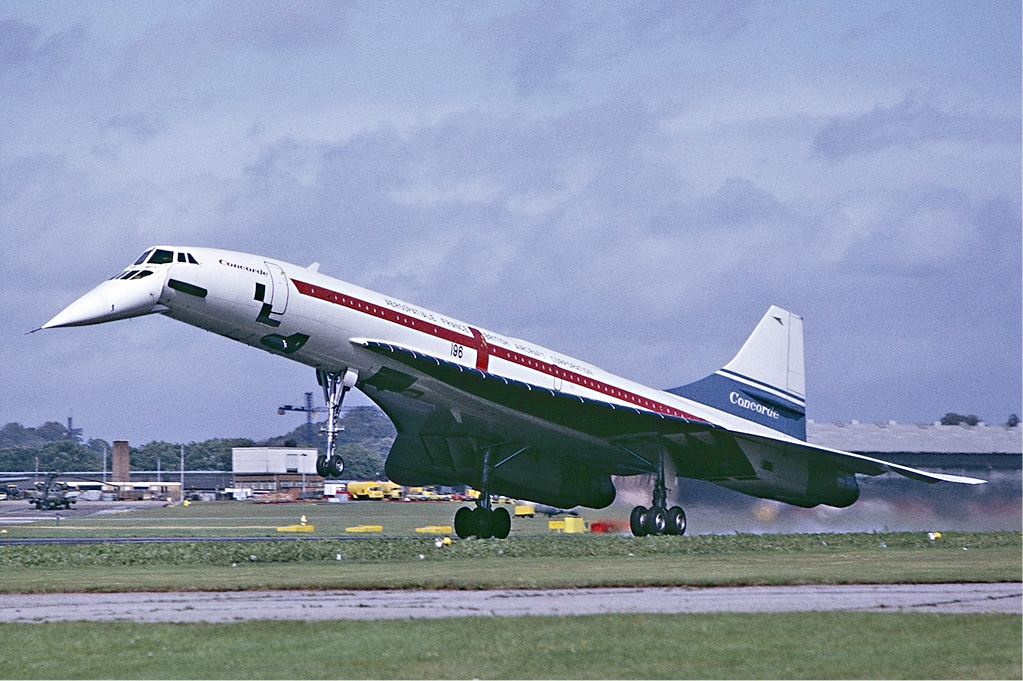 In the immediate post-war years the United Kingdom had an independent aircraft industry - all-British aircraft included the De Havilland Comet, Vickers VC10 and the V bomber family, all of which had been designed and built using imperial units. From the 1960s onwards however, the United Kingdom entered into many joint ventures with other European aircraft manufacturers.
Imperial units were used in 1960 in the design of the British Aircraft Corporation (BAC) supersonic Bristol 198. The proposed aircraft would have been very expensive and BAC entered into a joint venture with the French firm Sud-Aviation who were also designing a supersonic passenger aircraft. The resultant aircraft was Concorde which, after many expensive design overruns, entered commercial service in 1976 . Imperial units were used for the sections built by the British team and metric units for those built by the French team.
The Jaguar program began in the early 1960s, in response to a British requirement (Air Staff Target 362) for an advanced supersonic jet trainer and a French requirement (ECAT or École de Combat et d'Appui Tactique, "Tactical Combat Support Trainer") for a cheap, subsonic dual role trainer and light attack aircraft. A Memorandum of Understanding was signed in May 1965, for the two countries to develop two aircraft, a trainer based on the ECAT, and the larger AFVG (Anglo-French Variable Geometry) In the same year that the Memorandum of Understanding was signed, the then Federation of British Industry informed the British Government that its members favoured the adoption the metric system. The Jaguar was designed using metric units and entered service in the British and French Airforces in 1974 and 1973 respectively and as of July 2012 was still in service in the Indian Air Force and the Royal Air Force of Oman. Subsequent military aircraft designed and built by Pan-European teams included the Panavia Tornado and the Eurofighter Typhoon, both multirole combat aircraft.

Airbus Industrie, the makers of the Airbus began in 1967 as a consortium of French, German and British aviation firms to compete with American companies such as Boeing, McDonnell Douglas, and Lockheed. It was formally established as a Groupement d'Interet Économique (Economic Interest Group or GIE) on 18 December 1970. The consortium produced a series of successful aircraft including the A300 the group’s first aircraft which entered service in 1974, the A320 and variants which first entered service in 1988 and which in 2005 ranked as the world's fastest-selling jet airliner family and the A380 which entered service in 2007 as the world's largest passenger jet with a seating capacity of up to 853 passengers. By 2010 the consortium was equal in size to Boeing.
Air Traffic Control
In its early days, most of British aviation used imperial units. With the advent of metrication, the industry started using metric units and as of 2012 a significant proportion of the information supplied in the United Kingdom Aeronatical Information Publication is in metric units, though a few measurements are still given in imperial units. The following items are catalogued for each airfield in the United Kingdom:
- Runway and clearway length and width - metres
- Visibility - metres or kilometres as appropriate
- Distances from airfield - nautical miles
- Altitude - feet above sea level or flight level (FL = multiples of 100 ft)
- Fuel capacity/delivery - litres and litres/minute
- Temperature - degrees celsius
The publication Airport data, published by the Liaison Group of UK Airport Consultative Committees follows the units of measure used by the CAA apart from runway lengths which are given in feet.
More material to be added.